Proxy Consultation: What the Specialist Needs From You
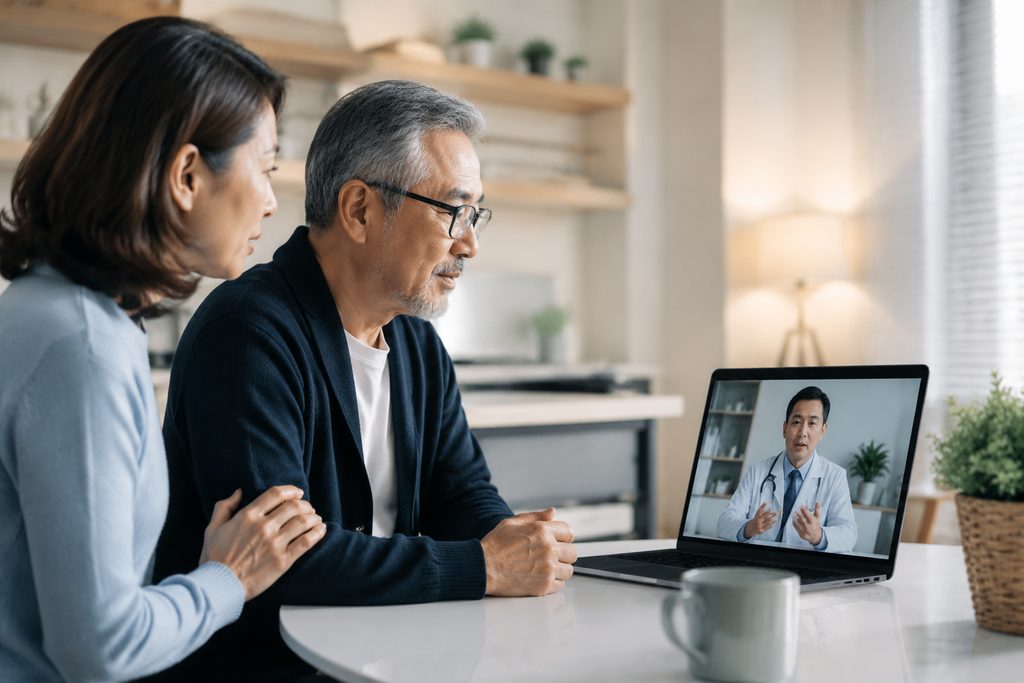
When 47-year-old Daniel from Manchester first searched for cardiac surgery options abroad, he had a folder of echocardiogram reports, a referral letter from his NHS cardiologist, and no idea how to get a Chinese specialist to actually review them. His local wait for aortic valve surgery stretched past nine months. He kept hearing about heart valve replacement cost China being a fraction of UK private rates, but the logistics felt impenetrable. What he needed was not another brochure. He needed to know exactly what a specialist would require before offering any meaningful opinion.
That is what a proxy consultation solves. You stay home. We take your existing medical records to the right department in a top-tier Chinese hospital. A specialist reviews them. You receive a written assessment, treatment direction, and a realistic recommendation on whether traveling makes sense. But the quality of that assessment depends almost entirely on what you send. This article explains precisely what the specialist needs from you.
How This Actually Works, Step by Step
The proxy consultation model exists because flying to another country for an initial hospital visit is expensive and often unnecessary. Chinese public hospitals generally require in-person registration before any outpatient appointment. You cannot book a specialist from overseas through the standard channel. The international department or VIP channel is different, but it still helps to have a local coordinator handle the paperwork and physical presence.
Here is the sequence:
Step 1 — You send records. These include recent imaging reports, lab results, discharge summaries, current medication list, and a brief description of symptoms and goals. Scans themselves matter less than the written reports, though DICOM files help for complex cases.
Step 2 — We translate and organize. Medical translation is not just language. It is formatting lab values, standardizing terminology, and sequencing documents so a Chinese specialist can read them in the expected order. A poorly organized file wastes the specialist’s time and lowers the quality of the opinion.
Step 3 — The specialist reviews. Depending on the case, this is a single senior consultant or a small team. They assess the diagnosis, the appropriateness of prior treatment, and what they would recommend if you were sitting in their clinic.
Step 4 — You receive a written second opinion. This covers the specialist’s interpretation, suggested next steps, whether surgery or another intervention is indicated, and what additional testing would be needed in person.
Step 5 — Decision point. You either proceed with a video consultation for a live discussion, or you move toward travel coordination. No commitment is required at the second-opinion stage.
The whole process, from document submission to written opinion, typically takes five to ten business days. Faster for straightforward cases. Longer if the specialist requests additional records.
What the Specialist Actually Reviews — and Why It Matters
Specialists in China’s top hospitals see enormous patient volumes. A senior cardiac surgeon at Fuwai Hospital may evaluate dozens of valve cases in a single week. They are not impressed by thick files. They are impressed by the right information, cleanly presented.
For a proxy consultation, the specialist needs:
- Recent echocardiogram report — within six months for valve disease, ideally three. This is non-negotiable for any cardiac surgical assessment.
- Coronary angiography or CT coronary report — if available. For patients over 40 or with risk factors, this determines whether bypass grafting is needed alongside valve work.
- Current medication list — anticoagulants, antihypertensives, antiarrhythmics, everything. Dosages matter.
- Comorbidities — diabetes, renal function, prior stroke, lung disease. These change surgical risk stratification.
- Prior surgical history — especially any previous sternotomy or catheter-based intervention.
- Functional status — what can you physically do today? Walk a flight of stairs? Sleep flat? This is a NYHA-class proxy and specialists read it carefully.
What the specialist does not need: your entire medical history since childhood. A 15-page chronological narrative of every cold you have had is counterproductive. The goal is a focused, current, problem-oriented file.
For oncology cases, the requirements shift. A best oncology hospital for international patients China will want pathology reports, immunohistochemistry markers, staging scans (CT, PET-CT, MRI), and a summary of any chemotherapy or radiotherapy already completed. Without pathology, no oncologist can offer a meaningful opinion.
A Realistic Timeline
People underestimate the waiting steps. The proxy consultation itself is not the bottleneck. Preparation is.
| Stage | What Happens | Typical Duration |
|---|---|---|
| Day 1–3 | You gather records from your home hospital. Radiology departments often take 24–72 hours to release reports. | 1–3 days |
| Day 3–6 | We translate and organize the file. Complex oncology or cardiac cases with 100+ pages take longer. | 2–4 days |
| Day 6–12 | Specialist review and written opinion. Urgent cases can be expedited. | 3–7 days |
| Day 12–20 | Optional video consultation. Scheduling depends on the specialist’s clinic and operating days. | 1–2 weeks |
| Week 4–8 | If you decide to travel: S2 visa application, hospital coordination, travel planning. | 3–6 weeks |
The S2 visa is the applicable category for medical treatment and private affairs. Processing times vary by embassy, but plan for at least two to four weeks. Supporting documents from the hospital help, but no visa is guaranteed.
For patients asking about book cardiac surgery package Beijing timelines, the reality is that no ethical provider can lock a surgery date from overseas before an in-person assessment. The proxy consultation is the first filter. If the specialist says surgery is indicated and feasible, the in-person visit is the second filter. Only after that does scheduling become concrete.
What Can Go Wrong — and What Happens Then
Honesty here matters more than reassurance. Proxy consultations fail for predictable reasons.
Missing or outdated imaging. A cardiac surgeon cannot assess valve disease from a two-year-old echo. If the specialist requests a repeat study, you get it done locally and resubmit. This adds one to three weeks. It is the most common delay.
Poor translation. Machine-translated records with garbled lab values or ambiguous terminology force the specialist to guess. We use medical translators, not generic ones. But if a source document is illegible or incomplete, we will ask you to obtain a clearer copy.
The specialist recommends against travel. This happens. Sometimes the disease is too advanced for safe long-haul travel. Sometimes the proposed treatment is not superior to what is available at home. Sometimes the patient’s anatomy makes them a poor surgical candidate. In these cases, the proxy consultation saved you thousands of dollars and weeks of disruption. That is the point of the service.
The specialist disagrees with your local team. A second opinion that contradicts your home cardiologist creates tension. The right response is a video consultation where both perspectives can be clarified. We do not push you toward one conclusion. We present the Chinese specialist’s reasoning and let you decide with your local doctor.
How to Evaluate Whether a Proxy Consultation Is Worth It for You
Not every case benefits equally. The proxy model works best when:
- You have a confirmed diagnosis but are weighing treatment options or surgical timing.
- Your local wait time is long and you want a second opinion on urgency.
- You are considering traveling to China but want a specialist’s view before committing to flights and accommodation.
- You have complex imaging that benefits from a high-volume specialist’s review.
It works less well when you have no diagnosis and no imaging. A specialist cannot diagnose from a symptom list alone. You need at least a working diagnosis and basic studies before a proxy consultation adds value.
Some patients ask whether it is safe to have brain surgery in China. The honest answer is that safety depends on the specific hospital, the surgeon’s volume, and the complexity of the procedure. China’s top neurosurgery departments perform thousands of complex cranial procedures annually. But the question should not be “is China safe” — it should be “is this specific hospital and this specific surgeon the right match for my case.” A proxy consultation helps answer that second, much more precise question.
Similarly, patients comparing liver transplant price abroad comparison often start with cost. But transplant candidacy, donor availability, and post-operative immunosuppression protocols matter far more than the headline price. A proxy consultation with a hepatobiliary team clarifies whether you are even a candidate before you spend time comparing costs.
Practical Considerations: Records, Visa, Payment, and Follow-Up
Records. Request digital copies of everything. PDF is standard. For imaging, ask for the written report plus DICOM files on a CD or USB if the case is surgical. Most hospitals release records within a few days, but some require signed consent forms. Start early.
Visa. For medical treatment in China, the S2 visa applies. Family members accompanying you also apply for S2. The hospital’s invitation letter and treatment plan support the application. Processing times vary by country and embassy workload. We provide guidance, but the visa decision rests with Chinese consular authorities.
Payment. The proxy consultation fee for a written second opinion from a top-tier specialist ranges from $300 to $500. A video consultation with a senior specialist runs $500 to $800. These fees are for the coordination and professional review service. They are credited in full toward on-the-ground coordination if you proceed to travel within 90 days. That credit applies to the coordination fee only, never to hospital treatment charges.
Insurance. Most international insurers reimburse second-opinion services if pre-authorized. Chinese public hospitals require prepayment; reimbursement is between you and your insurer. Private international hospitals like United Family or Jiahui often bill insurers directly. Which model fits you depends on your policy.
Follow-up at home. Any treatment plan developed in China needs a local physician willing to continue care. Before you travel, confirm that your home cardiologist, oncologist, or neurologist will accept the Chinese records and manage follow-up. Most will. Some will not. Find out early.
If you are still comparing options, our guide to China’s top-ranked hospitals breaks down the Fudan-ranked institutions by city. For cardiac cases specifically, the cardiac surgery department rankings show which hospitals lead in valve and bypass volume.
Frequently Asked Questions
A written second opinion from a specialist in the relevant department, based on your translated and organized medical records. It covers diagnosis confirmation, treatment options, and whether an in-person visit is recommended. It is a professional review, not a prescription.
Typically two to three weeks from initial document submission to written opinion. Video consultation adds another one to two weeks depending on the specialist’s schedule. Urgent cases can sometimes be expedited, but document preparation is usually the limiting factor, not the hospital.
Yes. When you submit your records, include a written list of questions. Specialists will address cost ranges, surgical approach (mechanical vs. biological valve, minimally invasive vs. sternotomy), and recovery expectations. Cost figures are estimates that vary by hospital and case complexity.
Then you have saved yourself an expensive trip. The written opinion will explain the reasoning and recommend a monitoring interval. You can revisit the decision in six or twelve months with updated imaging. There is no pressure to proceed.
Yes. Records are shared only with the reviewing specialist and the coordination team. We do not publish, sell, or distribute patient information. You can request that specific documents be redacted before submission if you prefer.
Your Next Step
The proxy consultation exists to answer one question: does it make sense for you to travel to China for treatment? Everything else — cost, logistics, visa, recovery — follows from that answer. We are a medical coordination team, not a hospital and not a treatment provider. We translate, organize, connect you with the right department, and handle the on-the-ground logistics if you decide to come. We do not promise outcomes, and we do not sell access.
If you have records ready and want a specialist’s view, start with a free consultation at our patient services page. Tell us your diagnosis, what you have already tried, and what you are hoping to achieve. We will tell you honestly whether a proxy consultation is worth your time.
For more medical information and treatment options in China, visit chinamedservices.com (China Medical Services).
