Full Companion for Complex Treatment Journeys: Navigating China’s Top Hospitals
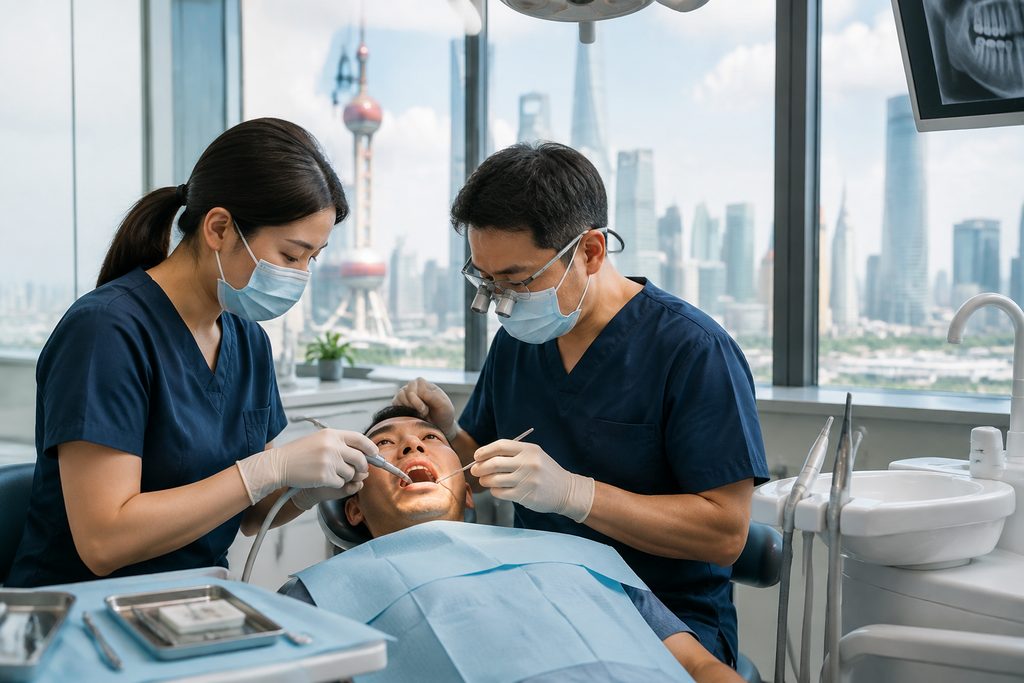
You have probably heard that traveling abroad for major surgery means going it alone. That you will be stranded in a foreign hospital corridor, clutching a translation app, trying to explain your symptoms to a nurse who does not speak your language. The reality for patients who use a full companion for complex treatment journeys is quite different. A structured support system changes the entire experience.
We coordinate care for international patients at 340+ top-ranked hospitals across 37 cities in China. Our team has seen how the right logistics transform a daunting medical trip into a manageable, even calm, process. This article explains what a full treatment companion actually does, what it costs, and whether it makes sense for your situation. We will also look at the cancer treatment cost China international patients typically encounter, because that number is often the starting point for the conversation.
Key Takeaways
- A full companion service coordinates hospital matching, appointments, interpretation, and logistics — it does not replace medical decision-making.
- Complex surgery in a top Chinese public hospital often costs 70–90% less than the same procedure in the United States, with comparable clinical volume.
- China’s public hospital system requires in-person registration for most outpatient visits; a companion cannot bypass this rule, but can navigate it efficiently.
- Visa type matters: medical travelers use an S2 visa, not an M visa. Getting this wrong causes entry delays.
The Problem: A Broken System for Complex Care at Home
In the United States, a coronary artery bypass graft costs over $120,000 on average. In Canada, the median wait time between referral and treatment for orthopedic surgery reached 27.4 weeks in 2023, according to the Fraser Institute. In the United Kingdom, over 7.5 million people sat on NHS waiting lists in early 2024. These are not abstract statistics. They are the reason patients start searching for alternatives.
Now add a complex diagnosis. Cancer. A failed joint replacement. A congenital cardiac defect. Suddenly the local system feels even slower. You need a specialist who sees your condition weekly, not yearly. You need a hospital where your specific procedure is routine. That search often leads patients to look abroad. But the logistics of arranging care in a country where you do not speak the language, do not understand the hospital system, and do not know which of 35,000+ hospitals is legitimate — that is where most people give up.
That is the gap a full companion for complex treatment journeys fills.
Why a Full Companion for Complex Treatment Journeys Changes the Math
Let us be direct about what a companion service is and is not. We are not doctors. We do not diagnose. We are case managers who translate records, coordinate with hospital international departments, arrange bilingual escorts, and handle the physical logistics of being a patient in China. The medical decisions remain between you and your treating physicians.
What the companion model does is remove the friction that stops patients from accessing care they have already decided to pursue.
Clinical Volume You Cannot Easily Find Elsewhere
Fuwai Hospital in Beijing performs over 14,000 cardiac surgeries annually — the highest volume of any cardiac center in the world. A surgeon there may complete more valve replacements in a month than a regional US hospital completes in a year. Volume matters. Study after study links higher procedural volume to lower mortality rates, especially in complex surgery.
For oncology, hospitals ranked among China’s top 10 for cancer care treat patient populations that dwarf most Western centers. A single outpatient oncology department may see 10,000 patients in a day. That scale creates deep clinical experience, particularly for advanced or rare presentations.
Cost Structures That Do Not Punish You for Being Foreign
The cancer treatment cost China international patients face is typically one-fifth to one-tenth of the equivalent US bill. A radical prostatectomy that runs $40,000–$70,000 in the United States might cost $8,000–$15,000 at a top Chinese hospital’s international department. A total knee replacement: $35,000–$50,000 in the US versus $10,000–$18,000 in China.
Why the gap? Chinese public hospitals operate on massive economies of scale. Labor costs are lower. Administrative overhead is leaner. The international department charges a premium over the standard public ward — usually 1.5 to 2 times — but that premium still lands far below Western prices. It is not charity pricing. It is structural efficiency.
Technology Without the Waiting List
China’s top hospitals adopted robotic surgery platforms, proton therapy, and AI-assisted imaging at a pace that surprises most Western patients. The catch is that accessing these technologies requires navigating a system that does not run on English. Hospital websites are in Mandarin. Appointment systems require a Chinese phone number. Payment counters do not accept foreign credit cards at many public hospitals. A bilingual companion handles these frictions daily.
What a Full Companion Actually Does: A Day-by-Day Breakdown
This is the section most people search for when they type “full companion for complex treatment journeys.” What does the service look like in practice? Let us walk through a realistic timeline for a patient traveling to Shanghai for complex surgery.
Week 1 — Remote evaluation. You send existing scans, pathology reports, and physician notes. We translate them into medical Chinese and forward them to the relevant specialty department at a hospital we have matched to your condition. The hospital’s international office reviews the files. A written second opinion from a top specialist costs $300–$500. A video consultation with that specialist runs $500–$800.
Week 2 — Decision and scheduling. If the specialist confirms that treatment in China is appropriate, we coordinate an in-person consultation. Here is the hard truth about Chinese public hospitals: you cannot book surgery from overseas. The surgeon must see you in person first. That means at least one trip for the initial consultation, then a return trip for the procedure — unless the hospital’s VIP international channel arranges a consolidated timeline, which some do for complex cases at 1.5–2 times the standard international rate.
Week 3 — Arrival and consultation. A bilingual medical companion meets you at the airport. They accompany you to the hospital, handle registration, payment, and queue management. They sit with you during the consultation and translate both directions. They ensure you understand the surgical plan, the risks, and the expected recovery timeline.
Week 4 — Surgery and initial recovery. Your companion coordinates admission, communicates with the nursing team, and keeps your family updated. After discharge, they arrange follow-up appointments and medication pickup. If you need rehabilitation, they connect you with the appropriate department or a TCM adjunct program.
That is the full companion model: not a concierge who books hotels, but a case manager who keeps the medical process moving.
How to Find a Medical Companion for Surgery in Shanghai — and What to Verify
Searches for how to find a medical companion for surgery in Shanghai spike among patients considering treatment at Zhongshan Hospital, Ruijin Hospital, or Shanghai’s private international facilities. The question is not whether companions exist — they do — but how to distinguish a legitimate coordinator from a middleman who adds cost without adding value.
Three things to verify before committing.
First, ask whether the companion works through official hospital channels. A legitimate case manager coordinates with the hospital’s international department or VIP clinic. A questionable operator promises to “get you in” through personal connections. That language signals an access fee model, which reputable services avoid. We describe our work as case management: translation, coordination, and bilingual support labor. We never promise a specific surgeon or a specific surgery date. Anyone who does is not being honest about how Chinese hospitals operate.
Second, confirm what the daily rate covers. Bilingual medical companion services generally start at $300 per day for an 8-hour shift. That fee should include hospital navigation, interpretation, queue management, and payment assistance. It should not include the hospital’s own charges, which are billed separately.
Third, ask about the refund policy for appointment coordination. If a coordinator charges from $300 to arrange a consultation and fails to secure the appointment, a full refund should be standard. We operate on that principle.
Is It Safe to Travel Alone for Major Surgery Abroad?
This is one of the most honest questions a patient can ask. Is it safe to travel alone for major surgery abroad? The answer depends less on the destination and more on the support structure you build around yourself.
China’s top hospitals are safe. The international departments at Peking Union Medical College Hospital, West China Hospital, and Fuwai Hospital meet JCI standards or equivalent domestic benchmarks. Infection rates are comparable to Western academic centers. But safety is not only clinical. It is also logistical.
Traveling alone means you will be responsible for every administrative step while you are physically compromised. Registration forms in Mandarin. Payment counters that require a local bank card or WeChat Pay. Pharmacy instructions you cannot read. Post-operative follow-up appointments scheduled on a system you cannot access. None of this is dangerous in the hands of a prepared patient. But all of it becomes harder when you are recovering from anesthesia.
A full companion does not make the surgery safer in a clinical sense. It makes the surrounding process safer by reducing the chance that you miss a critical instruction, misunderstand a medication schedule, or fail to attend a follow-up. For many patients, that is the difference between a smooth recovery and a stressful one.
Complex Surgery Packages with Interpreter China: What Is Included and What Is Not
Any reputable case management service refunds the coordination fee in full if the appointment you paid for is not secured. This is a standard policy we operate under. The refund applies to the coordination fee only — not to hospital charges, which are billed separately by the hospital itself.
Some international insurance plans cover treatment at JCI-accredited private hospitals in China, like United Family or Jiahui. Coverage at public hospital international departments is less common, and most patients pay upfront and claim reimbursement. Check with your insurer before committing. Ask specifically about direct billing arrangements, because the answer varies widely by plan and by hospital.
At the top-ranked public hospitals, yes. The Fudan University hospital rankings identify the top 100 hospitals in China, and the top tier of that list meets international standards for clinical volume, technology, and outcomes. The difference is operational: Chinese public hospitals are high-volume and process-driven, which can feel impersonal without a companion. The clinical care itself is not inferior.
Your Next Step
If you are weighing complex treatment abroad, the first step is not booking a flight. It is getting an honest assessment of whether a Chinese hospital can actually treat your condition, and at what cost. We help with that — we are China Medical Services, a coordination team that connects international patients with 340+ top-ranked hospitals across 37 cities. We are not a hospital and
Frequently Asked Questions
Yes. The hospitals used for international patients are JCI-accredited and follow the same international safety standards as top hospitals in the US and Europe. Surgical teams perform high volumes of procedures — often more than their Western counterparts — which studies show leads to better outcomes.
Costs vary by procedure and hospital, but international patients typically save 40-80% compared to US prices — even when factoring in travel and accommodation. A consultation with our team will give you an exact, all-inclusive quote with no hidden fees.
Send us your existing medical reports to get started. We handle everything from hospital selection and appointment scheduling to visa assistance and post-operative recovery planning. Your medical records are reviewed by the specialist before you even book a flight.
For more medical information and treatment options in China, visit chinamedservices.com (China Medical Services).
