Full Companion for Cancer Treatment: Costs, Safety & Hospital Access in China
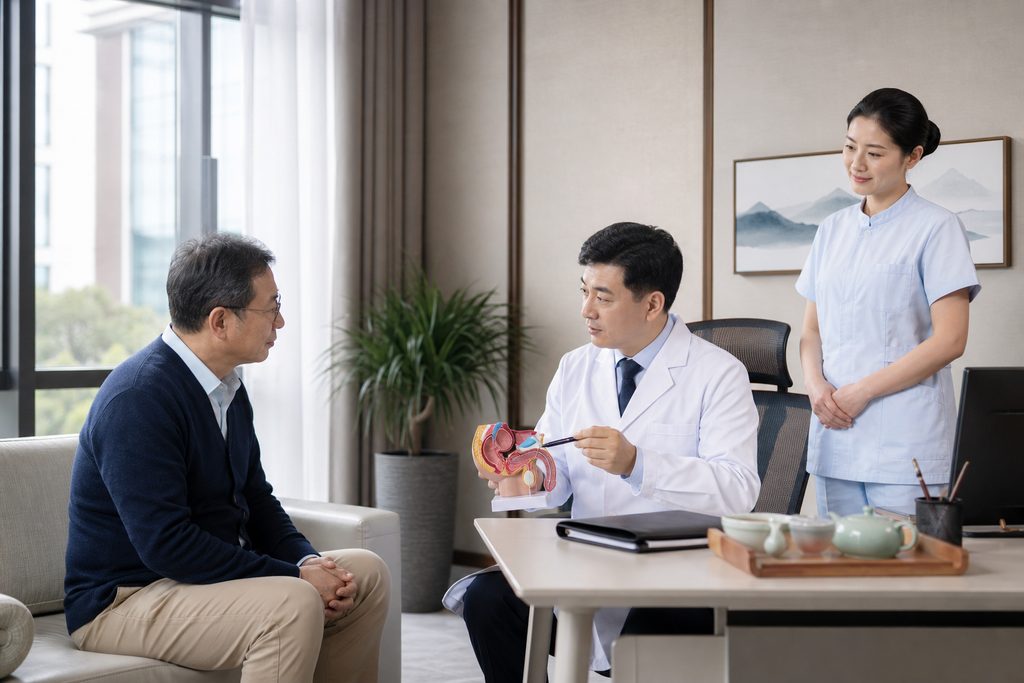
In the United States, a single year of checkpoint inhibitor immunotherapy averages $150,000 to $250,000. In China, the same class of drugs through a top-tier public hospital’s international department typically runs $30,000 to $60,000 annually. Before you dismiss that gap as a data artifact, consider this: Fudan University’s hospital ranking system places 100 hospitals in its top tier, and 23 cities host at least one of them.
That price differential drives a growing number of Western patients to ask a harder question — not just “what does cancer treatment cost China,” but “what does it actually look like when I arrive, and who is standing next to me in the oncology ward?” This guide answers both. It covers pricing, hospital selection, safety, and the logistics of having a full companion for cancer treatment in a system that does not operate like the one you know.
Full Companion for Cancer Treatment: The Short Answer
A full companion for cancer treatment in China means a bilingual coordinator who handles hospital registration, payment queues, translation during consultations, imaging and lab navigation, and discharge paperwork. It is not a medical role. The companion does not diagnose, prescribe, or make clinical decisions. What they do is remove the friction that makes a foreign patient’s hospital day collapse into confusion.
The cost for this labor runs from $300 per day. Hospital charges are separate. So is the coordination fee for booking a top specialist, which typically starts at $800 and is refundable if the appointment cannot be secured. The real question is whether you need it — and for most first-time international patients at a Chinese public hospital, the answer is yes.
Who This Is Right For — and Who It Isn’t
Let’s be direct. A full companion service for cancer treatment in China suits a specific profile.
Good candidates:
- Patients with a confirmed diagnosis and existing pathology slides, imaging, and treatment history who need a second opinion or continued treatment
- Families traveling with a patient who cannot manage Chinese-language hospital systems alone
- Patients seeking specific therapies — CAR-T, proton therapy, certain targeted agents — where Chinese hospitals have high case volumes and lower prices
- Those who want a written second opinion from a top oncologist before committing to travel
Who should not pursue this:
- Patients with unstable conditions requiring ICU-level care during transit
- Those whose cancer is so advanced that a long-haul flight poses disproportionate risk
- Anyone expecting a Western-style appointment system where you book online and show up — Chinese public hospitals do not work that way
- Patients unwilling to pay upfront and seek insurance reimbursement later
If you are in the second group, stay home. Your local oncologist remains your best option. That honesty matters more than any sales pitch.
The Options, Compared
You have three realistic paths for cancer care in China. Here is how they stack up.
| Path | Typical Cost Range | English Support | Wait to First Consult | Best For |
|---|---|---|---|---|
| Public hospital, standard outpatient | $50–$150 per consult | None | Same-day queue, hours of waiting | Mandarin speakers living in China |
| Public hospital, international/VIP department | $150–$400 per consult | Partial to full | 1–5 days with coordination | Foreigners needing top specialists |
| Private international hospital (JCI-accredited) | $300–$800 per consult | Full | 1–3 days | Insurance-direct billing, Western-style flow |
The public international department is where most of our patients land. You get the same senior oncologists who run the standard wards, but with English-speaking staff and shorter queues. The price is roughly 1.5 to 2 times the standard outpatient fee — still a fraction of US private rates.
Private hospitals like United Family or Jiahui offer the smoothest experience. Direct insurance billing, English everywhere, no queues. But their oncology departments, while competent, do not carry the same case volume as a Fudan-ranked public hospital’s cancer center. For rare or aggressive cancers, volume matters.
Best Cancer Hospital Shanghai for Foreigners: What the Rankings Actually Say
Shanghai hosts 18 of the Fudan Top 100 hospitals — second only to Beijing’s 21. For oncology specifically, Fudan University Shanghai Cancer Center and Zhongshan Hospital Fudan University consistently rank among China’s top 10 for oncology in the Fudan specialty reputation rankings. Both operate international departments with English-speaking coordinators.
But “best cancer hospital Shanghai for foreigners” is not a single answer. It depends on your cancer type. Thoracic cancers? Shanghai Chest Hospital. Liver cancer? Zhongshan. Breast cancer? Fudan Cancer Center. The Fudan specialty rankings break down 45 departments, and the oncology list names specific institutions — not generic “cancer hospitals.”
Beijing offers Peking Union Medical College Hospital and Cancer Hospital Chinese Academy of Medical Sciences. Guangzhou has Sun Yat-sen University Cancer Center. Each city has its own strengths. That is why a specialty-by-specialty hospital comparison matters more than a city-level recommendation.
And here is the thing most articles skip: you cannot simply book a bed at these hospitals from overseas. Public hospital rules require an in-person outpatient visit before any surgery or admission can be scheduled. The workaround is the hospital’s international department, which can pre-arrange consultations through proper channels. That is not a bribe. It is the official VIP pathway, and it costs more for a reason.
Is Cancer Treatment Safe in China? A Data-Grounded Answer
Safety is the question every patient asks. The honest answer is layered.
At top-tier Fudan-ranked hospitals, clinical protocols for major cancers align closely with NCCN and ESMO guidelines. Chinese oncologists publish extensively in international journals. Surgical volumes are extraordinary — a single top cardiac center performs over 14,000 operations annually, and oncology departments operate at similar scale. Volume builds competence.
But safety is not uniform. China has 35,000+ hospitals. The top 5% — roughly 340 institutions — deliver care that meets or approaches international benchmarks. Below that tier, variability is real. That is why hospital selection is the single most important safety decision you will make.
Infection control, surgical checklists, and pathology standards at JCI-accredited or Fudan Top 100 hospitals are rigorous. The risk is not the medicine. The risk is choosing the wrong hospital because you could not read the Chinese-language reputation data. A companion who knows the system eliminates that specific failure mode.
How Much Does Immunotherapy Cost in China?
Let’s put numbers on the drug that changed oncology.
Imported checkpoint inhibitors — pembrolizumab, nivolumab — list at $8,000 to $15,000 per cycle in China’s private and international departments. Domestic PD-1 inhibitors, which have demonstrated comparable efficacy in multiple Chinese and international trials, run $2,000 to $5,000 per cycle. A full year of domestic immunotherapy: $30,000 to $60,000. In the US, the same year costs $150,000 to $250,000 for imported agents.
CAR-T therapy tells an even starker story. China approved its first domestic CAR-T product in 2021. List prices run $120,000 to $180,000 for the full treatment course — versus $375,000 to $475,000 in the United States. These are not small differences. They are life-altering for families liquidating assets to fund care.
What drives variance? Drug choice, hospital tier, whether you use the international department, and whether your protocol includes radiation or surgery alongside systemic therapy. Always get a written treatment plan with itemized costs before committing.
Oncologist Second Opinion Beijing: The Smart First Step
Before booking a flight, get a written second opinion. It costs $300 to $500. You send your pathology reports, imaging, and treatment history. A senior oncologist at a top Beijing or Shanghai hospital reviews everything and writes a formal analysis with treatment recommendations.
This is not a prescription. It is a directional document. But it answers three questions cheaply: Does this hospital think your current treatment is correct? Would they recommend something different? Is there a therapy available in China that you cannot access at home?
For $500 to $800, you can upgrade to a video consultation with the same specialist. For $1,500 to $2,000, a multidisciplinary team reviews your case together. Any of these fees — the full amount — credits toward on-the-ground coordination if you later travel for treatment. That credit applies to coordination only, never to hospital charges.
And if you already know which hospital you want, you can designate the city, hospital, or department. We handle registration, create the hospital medical card, and conduct an in-person proxy visit using your materials. Admission still depends on hospital rules. No one can promise otherwise.
What It Costs: A Realistic Budget
At Fudan Top 100 or JCI-accredited hospitals, treatment protocols for major cancers align with international guidelines, and surgical volumes often exceed Western benchmarks. Safety at these institutions is comparable. Below that tier, variability increases. Hospital selection is your primary safety lever.
Domestic PD-1 inhibitors run $2,000 to $5,000 per cycle, totaling $30,000 to $60,000 annually. Imported checkpoint inhibitors cost $8,000 to $15,000 per cycle. CAR-T therapy lists at $120,000 to $180,000 for the full course. Prices vary by hospital and drug choice.
Admission is always subject to hospital rules and clinical assessment. No service can guarantee admission. What a coordination service can do is arrange the outpatient consultation, present your complete records, and facilitate communication. If the specialist determines you are not a candidate for treatment in China, you will have that answer in writing — and the coordination fee for an unsecured appointment is refunded.
If you speak Mandarin and have experience navigating Chinese public hospitals, you can manage alone. Most foreign patients do not. The companion handles registration, payment queues, translation, and wayfinding. For $300 per day, it converts a chaotic hospital day into a focused medical visit. Whether that is worth it depends on your language ability and stress tolerance.
Your Next Step
Cancer treatment cost China runs a fraction of US prices at top-tier hospitals — but the savings only materialize if you choose the right hospital, navigate the system correctly, and arrive with complete records. That is where we come in. China Medical Services maintains a database of 340+ top-ranked hospitals across 37 cities and provides bilingual coordination for international patients. We are not a hospital, we do not diagnose, and we never promise clinical outcomes.
Start with a written second opinion. It costs $300 to $500, it is fully creditable toward coordination if you travel, and it tells you whether this path is worth pursuing before you spend thousands on flights and logistics. Request a free consultation to discuss your case and options.
Get the facts first. Then decide. That is the only sequence that makes sense when your life is on the line.
Frequently Asked Questions
Yes. The hospitals used for international patients are JCI-accredited and follow the same international safety standards as top hospitals in the US and Europe. Surgical teams perform high volumes of procedures — often more than their Western counterparts — which studies show leads to better outcomes.
Costs vary by procedure and hospital, but international patients typically save 40-80% compared to US prices — even when factoring in travel and accommodation. A consultation with our team will give you an exact, all-inclusive quote with no hidden fees.
Send us your existing medical reports to get started. We handle everything from hospital selection and appointment scheduling to visa assistance and post-operative recovery planning. Your medical records are reviewed by the specialist before you even book a flight.
For more medical information and treatment options in China, visit chinamedservices.com (China Medical Services).
