Is Knee Replacement Safe in China? What the Data Shows
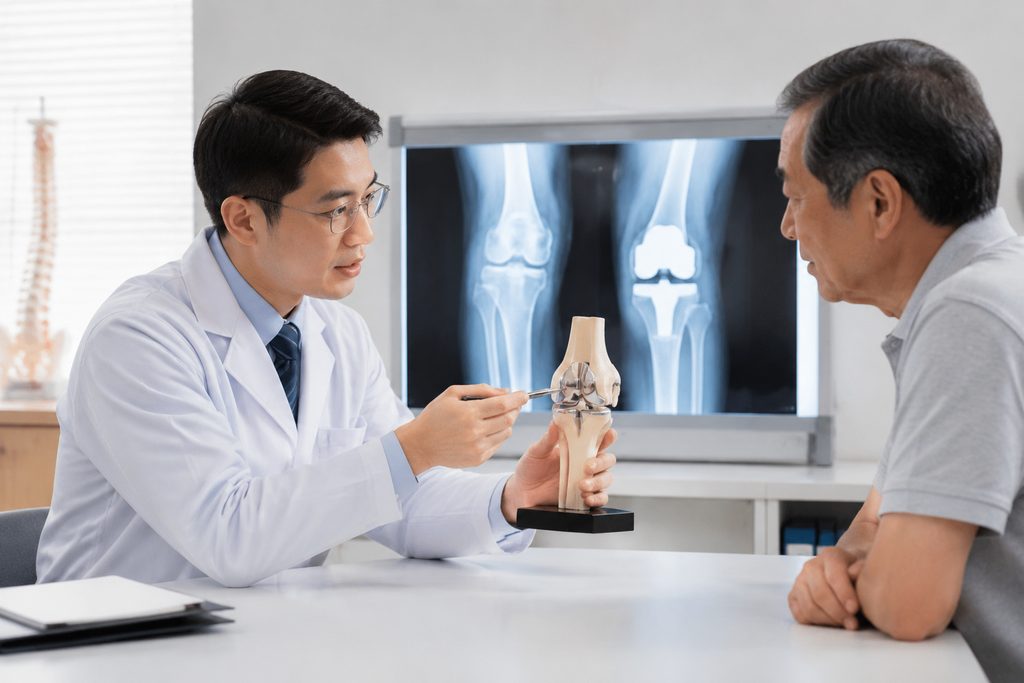
You have probably heard that having major surgery in China means trading quality for a lower price. The reality, backed by volume and published outcomes data from top-tier orthopedics departments, points in a different direction. The question “Is knee replacement safe in China?” deserves an answer grounded in how Chinese hospitals actually run their joint replacement programs, what safety means in practice, and where the risks genuinely lie for an international patient. This article breaks down the clinical reality, the real knee replacement cost China range, and the practical path to evaluating a hospital without falling for marketing noise.
How This Actually Works, Step by Step
If you are outside China, you cannot simply book a surgery date online and show up. Public hospitals, including the top-ranked orthopedic centers, run on a face-to-face consultation model. That means the first step is always getting your existing imaging and medical records in front of a Chinese orthopedic surgeon. You send your X-rays, MRI reports, blood work, and any prior surgical notes. Our team translates these documents into Chinese and submits them through the hospital’s official international department or special-service channel.
The surgeon reviews your films and history. For a knee replacement, they will assess the degree of joint-space narrowing, alignment, bone quality, and any prior infection risk. You receive a written second opinion from $300 to $500, or a video consultation from $500 to $800 with a top specialist. What comes back is not a price quote. It is a clinical assessment: whether you are a candidate, what implant system fits your anatomy, and what pre-operative workup you need.
Only after the surgeon confirms surgical indication do we move to scheduling. That means coordinating a date for your in-person outpatient visit, then admission, then surgery. The waiting time at a high-volume public orthopedic department can be two to six weeks for the initial consultation, depending on the surgeon’s schedule. This is not a system designed for instant booking. It is a system designed for clinical triage first.
Is Knee Replacement Safe in China? The Clinical Reality
Safety in joint replacement comes down to three measurable factors: surgeon volume, infection control protocols, and implant quality. China’s top orthopedic departments score well on all three, but the distribution matters enormously. A surgeon at a Fudan-ranked hospital in Beijing or Shanghai may perform 300 to 500 knee replacements per year. That volume is associated with lower complication rates in multiple international registry studies. The same cannot be said for a low-volume county hospital.
Infection control is where the gap between China’s best hospitals and its average hospitals becomes stark. Top-tier public hospitals follow protocols aligned with international standards: laminar-flow operating theaters, antibiotic prophylaxis within 60 minutes of incision, and postoperative surveillance cultures. Some private international hospitals in China hold JCI accreditation, which requires documented infection rates and corrective action systems. But not every hospital advertising “international services” meets that bar.
Implant choice also varies. Chinese orthopedic surgeons commonly use the same implant systems you would find in the US or Europe: Zimmer Biomet, Stryker, DePuy Synthes, Smith & Nephew. Domestic Chinese implant manufacturers also produce components that meet national registration standards. The key question to ask any hospital is not “do you use imported implants?” but “which registry do you report outcomes to, and what is your 90-day revision rate?” A hospital that cannot answer that question is not one you want cutting your knee open.
A Realistic Timeline
| Stage | What Happens | Typical Duration |
|---|---|---|
| Day 1–7 | You send existing records; our team translates and submits them | 3–7 days for document prep |
| Week 1–3 | Orthopedic surgeon reviews your case; written second opinion or video consult scheduled | 7–21 days depending on surgeon availability |
| Week 3–6 | If surgery is indicated, you apply for an S2 visa with the hospital’s invitation letter | 5–15 business days at the embassy or consulate |
| Week 4–8 | You travel to China; in-person outpatient consultation at the hospital | 2–3 days for consultation and pre-op tests |
| Week 5–9 | Admission and total knee arthroplasty | 4–7 days inpatient stay |
| Month 2–4 | Early rehabilitation in China or at home; suture removal, first follow-up imaging | 6–12 weeks |
| Month 3–6 | Return to normal walking; ongoing physiotherapy at home | Ongoing |
The waiting steps people forget are document translation and visa processing. A rushed translation that misstates your prior infection history or anticoagulant use can delay surgical clearance. And the S2 visa requires a formal invitation or supporting letter from the treating hospital. That letter only comes after a surgeon has reviewed your case. So the timeline is sequential, not parallel.
What Can Go Wrong — and What Happens Then
The honest failure modes for knee replacement in China are not unique to China. They are the same risks anywhere: periprosthetic joint infection, deep vein thrombosis, implant loosening, stiffness requiring manipulation under anesthesia. What differs is how you handle a complication as a foreign patient.
If you develop a post-operative infection after returning home, your local orthopedic surgeon will manage it. The Chinese hospital that performed the surgery should provide your complete operative note, implant stickers, and discharge summary in English. Without those documents, your home surgeon is working blind. That is why we insist on obtaining full records before you leave China. Not a summary. The complete chart.
If a complication arises while you are still in China, the treating hospital is responsible for managing it. Public hospitals in China do not typically offer the kind of concierge follow-up you might expect from a private clinic in Singapore or Bangkok. That is where a bilingual medical companion earns their fee: navigating the outpatient department, getting imaging ordered, and making sure the surgeon who operated on you actually sees your post-op films. The system works, but it does not hold your hand. You need someone who speaks the language and knows the corridors.
Best Hospital for Knee Replacement China: How to Choose
The Fudan University hospital rankings publish a specialty reputation list for orthopedics every year. Hospitals like Peking University Third Hospital, Shanghai Sixth People’s Hospital, and West China Hospital consistently appear in the top tier. But “best” is not a single answer. It depends on your case complexity, your budget, and your tolerance for a high-volume public hospital environment.
Shanghai Sixth People’s Hospital runs one of the largest orthopedic surgery programs in the country. If you are asking “how much is knee surgery in Shanghai,” the answer at a top public hospital through the international VIP channel typically ranges from $15,000 to $25,000 for a primary total knee replacement, including implant, hospital stay, and surgeon fees. That compares to $35,000 to $70,000 in the United States for an uncomplicated case. But the Shanghai price assumes no major medical complications and a standard implant. Complex revisions cost more.
Private international hospitals in Shanghai, such as Jiahui or United Family, charge more — often $30,000 to $45,000 for the same procedure — but offer English-speaking staff throughout, direct insurance billing, and a calmer environment. The trade-off is surgeon volume. A private hospital orthopedic surgeon may do far fewer knee replacements per year than a public hospital specialist. For a straightforward primary knee replacement in a healthy patient, that volume difference may not matter. For a revision or a patient with multiple comorbidities, it matters a lot.
Our orthopedics department rankings break down which hospitals lead in joint replacement volume and academic output. And the Shanghai hospital guide covers the practical differences between public and private options in that city.
Practical Considerations: Records, Visa, Payment, and Follow-Up
Bring every image you have. Not just the report. The actual DICOM files from your MRI and X-rays. Chinese orthopedic surgeons want to measure alignment angles themselves, not read a radiologist’s summary written in another country. If you have had a prior arthroscopy or ligament reconstruction on the same knee, bring the operative note from that procedure too.
Your visa is the S2 category, issued for private affairs including medical treatment. The hospital’s international department provides a supporting letter once a surgeon has agreed to evaluate you. Family members traveling with you apply for the same S2 visa. Do not let anyone tell you an M visa is the right one for surgery. It is not.
Payment at public hospitals is pre-paid. You deposit funds at admission, and the hospital draws down as charges accrue. Insurance reimbursement is typically retrospective: you pay, you collect itemized receipts, you submit to your insurer. Some private international hospitals bill insurers directly. Ask before you commit. A bilingual medical companion from $300 per day handles the payment windows, the pharmacy queues, and the discharge paperwork.
Follow-up at home is non-negotiable. You need a local orthopedic surgeon or physiotherapist who will see you at two weeks, six weeks, three months, and one year. The Chinese hospital will provide a written rehabilitation protocol. Your home provider executes it. If your home provider refuses to touch a surgery done abroad, that is a problem to solve before you book the flight, not after.
Frequently Asked Questions
At top-ranked Chinese orthopedic centers, the safety profile is comparable for primary knee replacement. High surgeon volume, modern implants, and standardized infection protocols produce outcomes similar to Western registries. The risk lies in choosing a hospital without verified volume or accreditation. The safety gap in China is between the best hospitals and the average ones, not between China and the West.
For a primary total knee replacement through the international VIP channel at a top public hospital in Shanghai, expect $15,000 to $25,000. Private international hospitals in Shanghai charge $30,000 to $45,000. These figures vary by implant choice, length of stay, and case complexity. A revision surgery or a patient with significant medical comorbidities will push the cost higher.
No reputable public hospital will book a surgery date without an in-person consultation first. What you can do is complete the remote evaluation — written second opinion or video consultation — so that when you arrive, the surgical indication is already confirmed and the admission can be scheduled efficiently. Anyone offering a fixed-price “surgery package” without reviewing your films first is selling something other than medical care.
The consistent themes in reviews from international patients are: the clinical skill is high, the hospital environment is crowded and bureaucratic, and language support is the single biggest determinant of a smooth experience. Patients who brought a bilingual companion or used the hospital’s international department report far less stress than those who tried to navigate alone. The complaints are rarely about the surgery itself.
You can return to the original Chinese hospital for revision, or you can have the revision done at home. Either way, you need your complete original operative records. We help patients obtain those records before they leave China. Without the implant stickers and operative note, a revision surgeon anywhere in the world is working with incomplete information.
Your Next Step
The question “Is knee replacement safe in China?” has a qualified answer: yes, at the right hospital, with the right preparation, and with the right support on the ground. The risk is not the surgery itself at a top orthopedic center. The risk is navigating a system you do not know, in a language you do not speak, while recovering from a major operation.
Our team at China Medical Services handles the case management: translating your records, coordinating with hospital international departments, arranging bilingual companions, and guiding the visa process. We do not perform surgery, we do not guarantee outcomes, and we do not promise access to any specific surgeon. We make sure your case gets a real clinical review before you spend a dollar on a flight.
If you want to know whether your knee is a candidate for replacement in China — and what it would actually cost — start with a free consultation. Send your imaging. Let a surgeon look at it. Then decide.
For more medical information and treatment options in China, visit chinamedservices.com (China Medical Services).
