Post-Surgery Recovery: Support That Stays Close
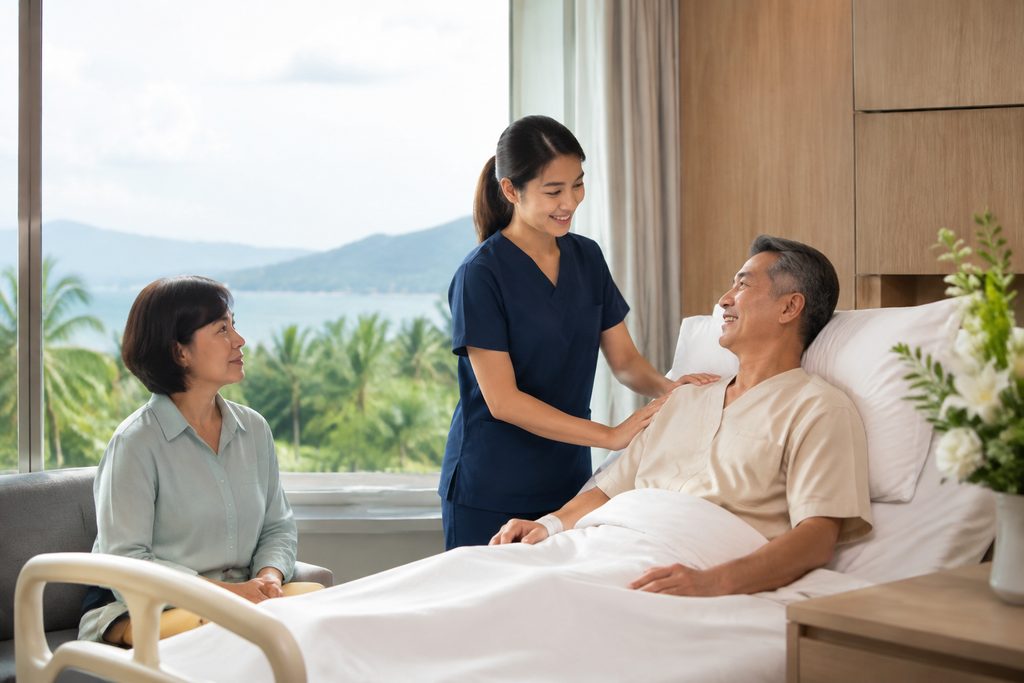
Post-Surgery Recovery: Support That Stays Close
A post surgery recovery package China combines hospital-based rehabilitation, nursing care, and structured follow-up into a single coordinated plan. Instead of flying home days after a major procedure, you stay near your surgical team while your body does the hardest work. That proximity matters. A 2023 analysis in The Lancet found that complications after complex surgery most often appear between day 3 and day 14 — precisely when many international patients are boarding return flights.
For patients considering surgery abroad, the question is not just who operates but who watches over you afterward. This article explains what recovery support actually looks like in China’s top hospitals, what it costs, and how to decide whether staying close is the right call for your case.
Key Takeaways
- China’s top-tier hospitals run dedicated post-operative rehabilitation wards with physician-led daily rounds, not just nursing check-ins.
- A structured recovery stay in Shanghai typically costs $150–$400 per day, compared to $1,500–$3,000 per day for comparable inpatient rehab in the United States.
- Language barriers in Chinese public hospitals are real — without a bilingual companion, even routine post-op instructions can get lost.
- No recovery package can guarantee a complication-free outcome; the value lies in rapid detection and response when something feels wrong.
The Problem: Flying Home Too Soon After Surgery
Roughly 1 in 6 surgical patients experiences a post-operative complication, according to a 2022 study published in JAMA Surgery covering over 40,000 procedures across 28 countries. Many of those complications are minor — wound drainage, medication adjustments, a fever that resolves. But some are not. A pulmonary embolism after orthopedic surgery, an anastomotic leak after gastrointestinal surgery, an infection that needs IV antibiotics. None of these announce themselves politely.
Now add a 12-hour flight. Cabin pressure changes, dehydration, prolonged immobility. The risk of deep vein thrombosis after surgery is already elevated for up to six weeks, per the American Society of Hematology. Sitting in economy class for ten hours does not help. And if something does go wrong after you land, you are now explaining a surgery performed in Shanghai to an emergency room doctor in Manchester who has never seen the operative report.
That is the core tension of medical travel: the surgery may be excellent, but the after is where patients get stranded.
Why China’s Recovery Infrastructure Delivers Results
China’s top hospitals are not just surgical factories. They are integrated systems where surgery, rehabilitation, and follow-up happen under one roof. That structural difference changes what recovery looks like.
Physician-Led Rehab Wards, Not Just Nursing Floors
At hospitals like Zhongshan Hospital Fudan University and Peking Union Medical College Hospital, post-operative patients are not discharged to a vague “rehab facility.” They move to a rehabilitation ward within the same hospital, where the surgical team that operated on them remains the attending team. Daily rounds are led by surgeons, not just nurses. That continuity is rare in Western systems, where surgery and rehab are often separated by different facilities, different electronic records, and different doctors.
For cardiac surgery patients, Fuwai Hospital operates one of the highest-volume cardiac rehabilitation programs in the world — the hospital performs over 14,000 cardiac surgeries annually, and its post-op pathways are refined to a degree that smaller centers simply cannot replicate.
Integrated TCM Rehabilitation as a Complement
China’s rehabilitation model includes options most Western patients have never encountered. Acupuncture for post-operative pain management, tuina massage for mobility restoration, and herbal formulations for digestive recovery after abdominal surgery. These are not replacements for standard rehab — they run alongside it. The traditional Chinese medicine departments at major public hospitals are staffed by licensed physicians, not spa therapists. For patients who respond poorly to opioid-based pain management, TCM offers a genuine alternative pathway.
Cost Structure That Makes Longer Stays Feasible
The economics change the decision. In the United States, a week of inpatient rehabilitation after major surgery can cost $10,000–$20,000. In China, a week in a top public hospital’s international rehabilitation ward typically costs $1,000–$2,800. That means patients can afford to stay for the full two-week window when complications are most likely — rather than being financially forced onto a plane at day five.
Lower cost does not mean lower quality. It reflects structural differences: lower labor costs for nurses and therapists, higher patient volumes that spread fixed costs, and a system designed around hospital-based recovery rather than separate rehab facilities. The clinical protocols at Fudan-ranked hospitals are benchmarked against international standards, and many hold JCI accreditation.
What a Post-Surgery Recovery Package in China Actually Includes
Packages vary by hospital and by surgical specialty, but the core structure is consistent across China’s top-ranked hospitals. A typical post surgery recovery package China for an international patient includes:
- Inpatient rehabilitation bed in the hospital’s international or VIP ward, with daily physician rounds
- Nursing care — wound dressing changes, drain management, medication administration
- Physical therapy sessions — typically 1–2 per day, depending on the surgery
- Diagnostic monitoring — blood work, imaging as needed, vital sign tracking
- Bilingual coordination — either through the hospital’s international department or a third-party companion
- Discharge planning — medication reconciliation, follow-up imaging schedule, and a written summary in English for your home physician
What a package does not include: guarantees of complication-free recovery, unlimited specialist consultations, or hotel-style amenities. This is medical care, not a resort.
How Long to Recover After Surgery Abroad: A Realistic Timeline
The honest answer to how long to recover after surgery abroad depends on the procedure. But here is a framework based on standard clinical pathways at major Chinese hospitals:
| Surgery Type | Hospital Stay (China) | Recommended On-Site Recovery | Full Recovery Timeline |
|---|---|---|---|
| Cardiac bypass (CABG) | 7–10 days | 2–3 weeks | 3–6 months |
| Joint replacement (hip/knee) | 3–5 days | 2–4 weeks | 3–6 months |
| Spinal fusion | 5–7 days | 3–4 weeks | 6–12 months |
| Gastric sleeve / bypass | 2–3 days | 1–2 weeks | 3–6 months (diet adaptation) |
| Craniotomy (brain tumor) | 7–14 days | 2–4 weeks | 3–12 months |
These are ranges, not promises. Your surgeon will adjust based on your age, comorbidities, and intraoperative findings. But the pattern holds: the hospital stay is the beginning, not the end. The two to four weeks after discharge from the surgical ward are when rehab matters most — and when staying close to your surgical team has the greatest clinical value.
Is Post Surgery Rehab Safe in China? What the Record Shows
Is post surgery rehab safe in China? The concern behind this question is legitimate. A foreign patient in an unfamiliar system, unable to speak the language, recovering from major surgery — that is a vulnerable position.
The safety record at top-tier Chinese hospitals is strong. Fudan-ranked hospitals are subject to the same accreditation standards as Western academic medical centers. Many hold JCI certification, which requires meeting international patient safety goals: correct patient identification, safe medication administration, infection prevention protocols. The international wards at these hospitals are designed specifically for foreign patients, with English-speaking nursing staff and documentation in both Chinese and English.
But safety has a prerequisite: you must be in a hospital that operates at this standard. China has over 35,000 hospitals. The top 5% — roughly the 340+ institutions in our China Medical Services database — deliver care comparable to any Western academic center. The bottom tier does not. Choosing the right hospital is the single most important safety decision you will make.
Best Hospital for Post Op Care Shanghai: Where Patients Actually Go
Shanghai is China’s most international medical city, and the question of the best hospital for post op care Shanghai has a nuanced answer. The right choice depends on your surgery.
For cardiac and thoracic recovery, Zhongshan Hospital Fudan University runs one of the most experienced post-operative cardiac rehab programs in the country. Its cardiology and cardiac surgery departments rank among China’s top 10 in the Fudan specialty rankings, and its international ward handles a steady stream of overseas patients.
For orthopedic and joint replacement recovery, Shanghai Sixth People’s Hospital is the reference point. It performs more than 10,000 joint replacements annually, and its rehabilitation protocols are refined by sheer volume. The hospital’s international department coordinates directly with foreign patients on recovery planning.
For oncology surgery recovery, Fudan University Shanghai Cancer Center offers integrated post-operative care that includes nutrition support, pain management, and early mobilization protocols. Its oncology department consistently ranks among China’s top 5.
You can explore these and other options in our Shanghai hospital guide, which breaks down specialties and international services by institution.
Medical Tourism Aftercare Cost China: What You Will Actually Pay
Medical tourism aftercare cost China varies by hospital tier, ward type, and surgical complexity. Here is a realistic picture based on current international ward pricing at top public hospitals:
| Recovery Component | China (Top Public Hospital, International Ward) | United States (Comparable Level) |
|---|---|---|
| Inpatient rehab bed (per day) | $150–$400 | $1,500–$3,000 |
| Physical therapy session (per hour) | $40–$80 | $150–$300 |
| Nursing care (per day, included in bed) | Included | Often billed separately |
| Diagnostic imaging (CT/MRI follow-up) | $100–$300 | $500–$2,000 |
| Bilingual medical companion (per day) | From $300 | N/A (rarely available) |
These figures are ranges, not quotes. Final pricing depends on the specific hospital, the complexity of your case, and the length of stay. Always request a written estimate before committing. And note that public hospitals in China generally require prepayment — international insurance reimbursement happens after the fact, not at the point of care.
Practical Considerations: Documentation, Visas, and Payment
If you are planning a surgical stay plus recovery in China, the logistics start well before your flight.
Visa: Medical treatment in China falls under the S2 visa category, which covers short-term private affairs including medical treatment. Your accompanying family members also apply for S2 visas. The hospital’s international department will provide a treatment confirmation letter and admission documents that support your application. Processing times vary by embassy, so apply at least 4–6 weeks before your planned arrival. For stays exceeding 180 days, an S1 visa applies.
Medical records: Bring everything — operative reports, imaging on CD or USB, pathology results, current medication list, allergy information. Your Chinese surgical team will want to review your full history before finalizing the recovery plan. Have key documents translated into Chinese if possible; our team handles this as part of the coordination process.
Payment: Public hospitals require prepayment for international ward stays. Bring a credit card with a high limit, or arrange a bank transfer in advance. Private international hospitals like United Family and Jiahui often accept direct insurance billing — but their recovery packages cost more. Decide which trade-off matters more to you: lower cost with prepayment, or insurance convenience at a premium.
Language: Even in international wards, moments arise where English is not enough — a night-shift nurse, a pharmacy technician, a radiology scheduler. A bilingual companion who stays with you through recovery closes that gap. It is not a luxury; it is a safety layer.
Do not book a recovery package without first confirming which ward you will be admitted to. “International ward” and “VIP ward” are not the same thing at every hospital. Ask specifically: Is the nursing staff bilingual? Are daily rounds conducted in English? Will my discharge summary be written in English? Get these answers in writing.
Book Recovery Retreat After Surgery China: When It Makes Sense
Some patients ask about the book recovery retreat after surgery China option — a hybrid model where you stay in a hotel or serviced apartment near the hospital and attend outpatient rehab sessions daily. This works well for patients who are mobile, have a companion traveling with them, and are recovering from procedures with lower complication risk.
It works poorly for patients who are alone, have complex wounds or drains, or are recovering from major thoracic, abdominal, or neurosurgical procedures. In those cases, inpatient rehab is the safer choice — the difference between a nurse checking your surgical site twice a day and you checking it yourself in a hotel mirror is not trivial.
If you do choose the retreat model, pick accommodation within 15 minutes of the hospital. Traffic in Shanghai and Beijing is unpredictable, and a missed rehab session or delayed wound check is not worth saving $50 a night on a hotel further out.
Frequently Asked Questions
An S2 visa for medical treatment can be issued for stays of up to 180 days, which covers even the longest recovery timelines discussed here. Your hospital’s international department will provide documentation confirming your treatment and recovery plan. If complications extend your stay, visa extensions are possible through the local exit-entry administration, though they require hospital documentation.
Your Chinese surgical team will provide a complete discharge summary in English, including operative details, medications, and a follow-up schedule. You should share this with your home physician immediately upon return. For non-urgent questions, most international departments at top Chinese hospitals offer follow-up video consultations. For emergencies, you would seek care locally — which is why the discharge summary matters so much. It tells your local doctors exactly what was done.
In Fudan-ranked and JCI-accredited hospitals, yes. These institutions train nurses to international protocols and their international wards are staffed with English-speaking nurses. What differs is the nurse-to-patient ratio in standard public wards, which can be lower than in Western hospitals. International and VIP wards maintain higher ratios. If nursing intensity is a priority for you, specify that when selecting your package.
The hospital’s English-speaking staff are available during their shifts and within their departments. But a medical companion is yours — present at every transition, every pharmacy pickup, every imaging appointment, every moment when the system expects you to know where to go next. For patients recovering from surgery, that continuity reduces stress and catches miscommunications before they become problems.
Your Next Step
Recovery is where surgery succeeds or fails. Staying close to your surgical team for the critical two to four weeks after a procedure is not an indulgence — it is clinical common sense, and China’s top hospitals make it financially feasible in a way most Western systems cannot match. Our team at China Medical Services helps international patients navigate hospital selection, recovery package coordination, and bilingual support throughout the process. We are not a hospital and we do not provide medical advice — we connect you with the institutions and specialists who do.
Start with a conversation. Tell us what surgery you are considering, and we will help you understand what recovery support looks like at the hospitals that match your needs. Request a free consultation and let us map out the options together.
For more medical information and treatment options in China, visit chinamedservices.com (China Medical Services).
