Remote Second Opinion: How We Present Your Case to Chinese Specialists
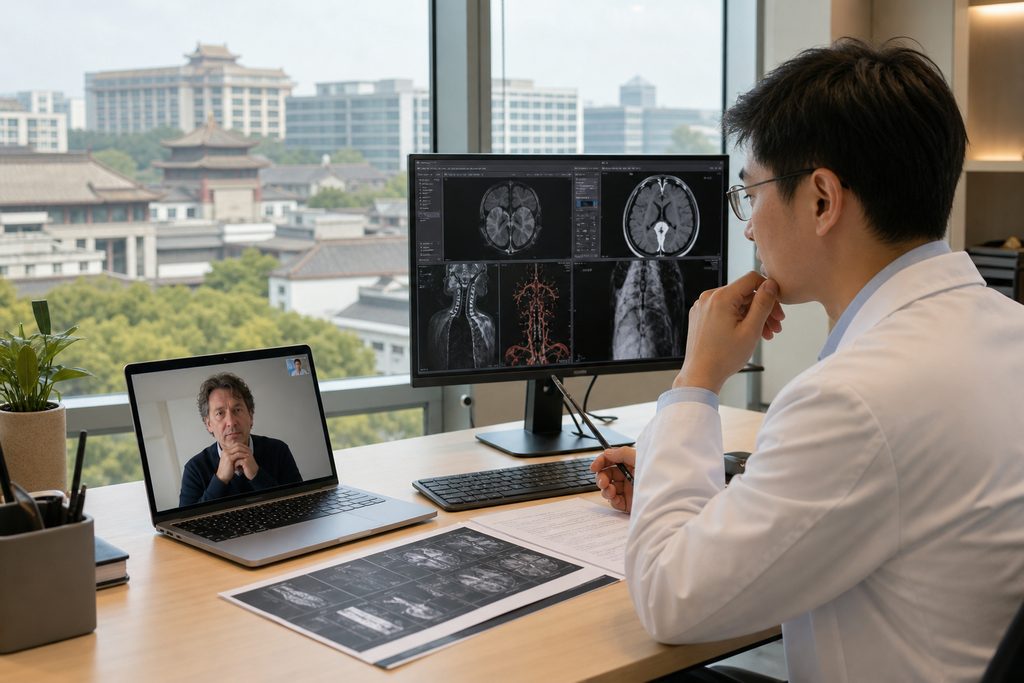
You might assume that getting a medical second opinion from a hospital on the other side of the world means flying there, waiting in long lines, and struggling with a language you don’t speak. The reality has shifted. A remote second opinion from a Chinese specialist can happen from your living room, often within two weeks of submitting your records. What matters is how your case gets presented — the translation quality, the hospital selection, the specific questions you ask. Get that wrong, and even the best specialist can’t help you. Get it right, and you receive a written analysis that either confirms your current treatment plan or points you toward options your local team hasn’t considered.
This article explains the full process. We’ll walk through what we actually do with your medical records, what the review looks like from the specialist’s side, realistic timelines, failure points, and what a second opinion service cost China actually covers. No vague promises. Just the mechanics.
How This Actually Works, Step by Step
The sequence matters. Here is the real flow, from the moment you decide to pursue a remote opinion to the moment you hold a written report in your hands.
Step 1: You send us what you have. Discharge summaries, imaging reports (CT, MRI, PET scans), pathology slides, blood work, current medication lists. If your records are in English, German, Arabic, French, or Russian, that’s fine. If they’re in another language, we’ll tell you what needs professional translation before a Chinese specialist can review them. You don’t need to organize everything perfectly. Our team sorts it.
Step 2: We translate and restructure. This is not Google Translate. Medical terminology has exact equivalents in Chinese, and a cardiology report requires different vocabulary than an oncology report. Our translators are medical professionals, not general linguists. They convert your records into the format Chinese specialists expect — chronological, complete, with lab values in the units used in Chinese hospitals. A missing unit conversion can lead to a misread. We don’t let that happen.
Step 3: We match your case to the right department. You don’t get a generic “second opinion.” You get a specialist in the exact subspecialty relevant to your diagnosis. If you have a rare liver tumor, we’re not sending your file to a general oncologist. We’re looking at the 45 specialty rankings and identifying hospitals with strong hepatobiliary surgery programs. Our database covers 340+ top-ranked hospitals across 37 cities. The match is based on your specific condition, not on which hospital is most famous.
Step 4: The specialist reviews your translated records. They examine your imaging, read your pathology report, review your treatment history. They form an independent assessment. They’re not being asked to rubber-stamp your local doctor’s plan. They’re being asked: What would you do if this patient walked into your clinic in Beijing or Shanghai tomorrow?
Step 5: You receive a written report in English. The report includes the specialist’s assessment of your diagnosis, their view on your current treatment plan, alternative approaches available in China, and specific recommendations. It is a document you can take back to your local doctor. It is not a prescription. It is a professional medical opinion, clearly marked as such.
Step 6: You decide what to do next. Some patients use the report to feel confident in their current plan. Others schedule a video consultation to ask follow-up questions. Some begin planning travel to China for treatment. There is no pressure from us at any point. The report is yours.
What “Presenting Your Case” Actually Means
Written second opinions from top-tier specialists generally range from $300 to $500. Video consultations with senior specialists run $500 to $800. Multidisciplinary team reviews cost $1,500 to $2,000. These are reference ranges — the final price varies by hospital and case complexity. If you later come to China for treatment, consultation fees are credited toward our coordination service within 90 days.
Yes. The entire process is remote. You send records electronically, the specialist reviews them in China, and you receive the written report by email or secure download. If you want a video consultation, that’s also done remotely. You only travel to China if you decide to pursue treatment there after reviewing the opinion.
Will my local doctor accept a second opinion from a Chinese hospital?
Most doctors welcome additional input, especially from a specialist who has seen high volumes of cases similar to yours. The report is written in standard medical language, with clear reasoning. Some local doctors will want to verify the specialist’s credentials — we can provide that information. A few may be dismissive. That’s rare, but it happens. The report is yours to use as you see fit.
Frequently Asked Questions
Yes. The hospitals used for international patients are JCI-accredited and follow the same international safety standards as top hospitals in the US and Europe. Surgical teams perform high volumes of procedures — often more than their Western counterparts — which studies show leads to better outcomes.
Costs vary by procedure and hospital, but international patients typically save 40-80% compared to US prices — even when factoring in travel and accommodation. A consultation with our team will give you an exact, all-inclusive quote with no hidden fees.
Send us your existing medical reports to get started. We handle everything from hospital selection and appointment scheduling to visa assistance and post-operative recovery planning. Your medical records are reviewed by the specialist before you even book a flight.
For more medical information and treatment options in China, visit chinamedservices.com (China Medical Services).
