How to Verify a Second Opinion Document: Validating Chinese Hospital Reports
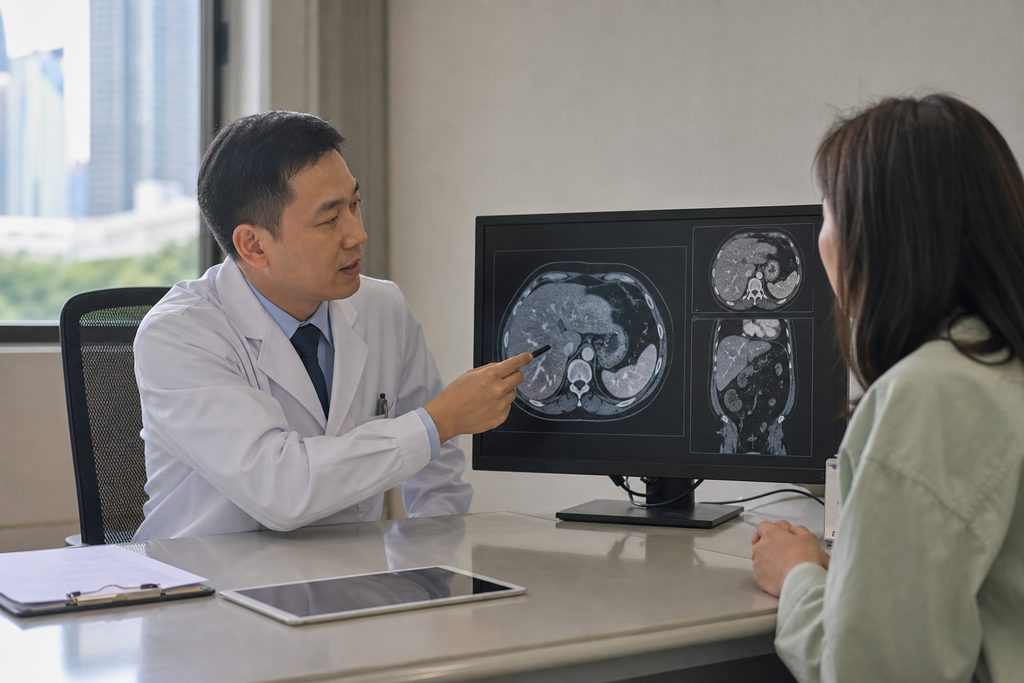
A second opinion document is a written medical report from a specialist who was not involved in your original diagnosis. It reviews your existing records, imaging, and pathology. It either confirms the first diagnosis or proposes an alternative. When that document comes from a hospital in another country with a different language and regulatory system, verifying it becomes a practical challenge. The second opinion price China ranges from $300 to $800 for a written report from a top-tier specialist, but the real question is whether the document is genuine, complete, and clinically usable. This guide explains exactly how to verify a second opinion document from a China hospital, what makes it valid, and where the common failure points are.
Key Takeaways
- A legitimate written second opinion from a top Chinese hospital typically costs $300–$500, while a top-specialist video consultation runs $500–$800.
- Verification requires checking three layers: the issuing physician’s credentials, the hospital’s official letterhead and stamp, and the document’s internal clinical consistency.
- The biggest risk is not forgery — it is a shallow report written by a junior doctor without access to your full imaging files.
- You should never make a treatment decision based on a second opinion document alone without a live discussion with the reviewing specialist.
The Problem: A Piece of Paper You Cannot Read, From a System You Do Not Know
Around 12 million people worldwide are misdiagnosed in outpatient settings every year, according to a 2014 study in BMJ Quality & Safety. For cancer patients, the stakes are higher. A 2015 study from Johns Hopkins found that pathology second opinions changed the diagnosis for 1.4% of cases and refined it for another 19%. So the impulse to seek a second opinion is rational. But when you request that opinion from a hospital 7,000 miles away, you receive a PDF written in medical English by a doctor you have never met, stamped with a red seal you cannot authenticate. How do you know the document is real? How do you know the doctor actually reviewed your scans? And how do you know the hospital is what it claims to be?
These are not paranoid questions. Medical tourism fraud exists. More common, though, is a subtler problem: a legitimate hospital issuing a legitimate but superficial report. The doctor glances at a translated summary instead of your DICOM imaging files. The report confirms the obvious and misses the critical detail. The document is real. The medical value is not.
Why Chinese Hospitals Are Worth This Verification Effort
The numbers are stark. Peking Union Medical College Hospital handles over 2.2 million outpatient visits per year. Zhongshan Hospital in Shanghai performs more than 17,000 cardiac interventions annually. For oncology, the top cancer centers in Beijing and Guangzhou each manage tens of thousands of new cases per year. When you send your records to a specialist at one of these institutions, you are tapping into a diagnostic engine that has seen your condition — or a variant of it — hundreds of times before. The question is whether your specific file gets that depth of attention.
Here is the operational reality. You submit your existing records — pathology slides, CT or MRI DICOM files, surgical notes, treatment history. Our team translates them into Chinese where necessary and routes them to the appropriate department at a hospital from our database of 340+ top-ranked hospitals. A specialist reviews the materials and produces a written analysis. The report typically includes a summary of findings, a diagnostic assessment, and treatment recommendations. The second opinion price China for this written service starts at $300 and runs to $500 depending on the hospital and the complexity of the case. A video consultation with a top specialist costs $500–$800. These are the prices you should expect — anything dramatically lower should raise questions about who is actually reviewing your file.
How to Verify a Second Opinion Document From a China Hospital
This is the section that matters most. A second opinion document from a Chinese hospital should contain several verifiable elements. Check each one. Missing elements do not automatically mean fraud, but they do mean you should ask questions before relying on the report.
Layer One: The Hospital’s Identity and Credentials
Every legitimate report carries the hospital’s full official English name on the letterhead. Cross-check that name against the hospital’s official website and against independent rankings. The Fudan University hospital rankings are the most authoritative in China. If a hospital claims to be “top-ranked,” verify it appears in the Fudan Top 100 or in a specialty reputation list. You can check our Top 100 hospital database to confirm. The report should also carry the hospital’s official seal — a red circular stamp, usually in Chinese characters. Some international departments use an English-language stamp. Both are acceptable. What matters is that the seal matches the hospital’s registered name.
Layer Two: The Physician’s Identity and Specialty
The report must name the reviewing physician. That name should include the doctor’s title — Chief Physician, Associate Chief Physician, or Attending. In the Chinese system, “Chief Physician” is the highest clinical rank, roughly equivalent to a senior consultant. Verify the doctor’s specialty matches your condition. A report on a lung nodule signed by a general surgeon is not the same as one signed by a thoracic oncology specialist. You can search the doctor’s name on the hospital’s official website or on Chinese medical databases. If the doctor is not listed, ask why.
Layer Three: Internal Clinical Consistency
Read the report carefully. A genuine second opinion engages with your specific case. It references your imaging findings, your pathology report, your prior treatment. It notes discrepancies. It may disagree with your original diagnosis. A shallow report reads like a textbook chapter — generic statements about the disease with your name inserted at the top. Look for specifics: “The 2.3 cm nodule in the right upper lobe shows spiculated margins on the March CT, but no significant growth compared to the January scan.” That is a doctor looking at your case. “Lung nodules should be monitored according to Fleischner criteria” is not.
Is a Second Opinion From China Hospital Valid for My Home Doctor?
This is the question most patients actually ask. The answer is nuanced. A second opinion from a Chinese hospital is a medical document, not a legal one. Your home doctor can consider it. Your home hospital is not obligated to follow it. Insurance companies may or may not accept it as justification for a treatment change. The document’s validity depends on three factors: the issuing hospital’s reputation, the reviewing physician’s credentials, and the quality of the clinical reasoning in the report.
In practice, Western oncologists and surgeons often respect opinions from top Chinese institutions — especially for conditions where Chinese hospitals have unusually high case volumes, like certain liver, esophageal, and nasopharyngeal cancers. But respect is not the same as acceptance. Your home doctor will want to see the underlying reasoning, not just the conclusion. That is why the written report should be detailed enough to stand on its own.
What Makes the Document Clinically Usable
A usable second opinion document contains four things. First, a clear statement of the diagnosis or differential diagnosis. Second, the evidence supporting that conclusion — which findings from your records the doctor relied on. Third, specific treatment recommendations with rationale. Fourth, a note on what additional testing or information would change the recommendation. If a report lacks any of these four elements, it is incomplete. Ask for a revision. Any legitimate hospital will provide one.
Common Failure Points in Verification
The most common failure point is not fraud. It is the quality of the records you submitted. If you sent a translated summary instead of original DICOM files, the reviewing doctor is working with degraded information. If your pathology slides were not available, the oncologist is guessing about tumor grade and subtype. The second common failure point is a mismatch between the reviewing physician’s specialty and your condition. A general oncologist reviewing a rare sarcoma case is less useful than a sarcoma specialist. The third failure point is language. If the report was written in Chinese and machine-translated into English, clinical nuance gets lost. A legitimate international second opinion service provides a report written in medical English by the reviewing physician or a medically qualified translator.
Second Opinion Price China: What the Numbers Actually Mean
Let us talk about cost directly. The second opinion price China varies by hospital tier and service type. Here is the current landscape:
| Service Type | Price Range (USD) | What You Receive | Turnaround Time |
|---|---|---|---|
| Written second opinion — standard hospital international department | $300–$500 | Written analysis of your records, diagnostic assessment, treatment suggestions | 5–14 days |
| Video consultation — standard specialist | $100–$300 | Live online discussion with the specialist, verbal recommendations | 3–10 days to schedule |
| Video consultation — top specialist | $500–$800 | Live discussion with a senior specialist from a top-ranked department | 5–14 days to schedule |
| Multidisciplinary team (MDT) video consultation | $1,500–$2,000 | Multiple specialists review your case together and provide a coordinated opinion | 10–21 days to schedule |
These figures are starting points. Final pricing varies by hospital and case complexity. A medical second opinion cost Shanghai tends to sit at the higher end of these ranges because Shanghai hosts several Fudan Top 100 hospitals with strong international departments. Beijing is similar. Prices in second-tier cities like Chengdu or Hangzhou can be 20–30% lower.
Compare this to the United States. A written second opinion from a major US academic center typically costs $700–$1,500 without insurance. A video consultation can run $500–$1,000. So the Chinese option is meaningfully cheaper, but not absurdly so. If someone quotes you $50 for a “top specialist second opinion” from China, that is not a bargain. That is a red flag.
Best Hospitals in China for Second Opinion Oncology
For oncology specifically, the strongest second opinion institutions cluster in a few cities. In Beijing, Peking Union Medical College Hospital and the Chinese Academy of Medical Sciences Cancer Hospital are the reference points. In Shanghai, Fudan University Shanghai Cancer Center and Zhongshan Hospital lead. In Guangzhou, Sun Yat-sen University Cancer Center is the regional powerhouse. These are the hospitals where a second opinion in oncology carries the most weight internationally.
But the best hospital for your case depends on your specific cancer type. A hospital strong in lung cancer may not be the best choice for a rare lymphoma. The Fudan specialty reputation rankings list top 10 hospitals for each of 45 specialties. That is the resource to consult. Our specialty department pages break this down by condition. Do not pick a hospital by overall reputation alone. Pick by specialty reputation for your exact diagnosis.
How to Book a Second Opinion Online From a China Hospital
The mechanics are straightforward, but the preparation matters. You cannot simply email a hospital and expect a response. Most Chinese public hospitals do not have a streamlined international second opinion intake process. The international department handles these requests, but the process is manual and slow. Here is what actually works.
First, gather your complete records. That means original DICOM files from CT, MRI, or PET scans — not just the radiology report. It means pathology slides or at minimum the full pathology report. It means your surgical notes, discharge summaries, current medication list, and a concise treatment history. Incomplete records produce incomplete opinions.
Second, choose the right hospital and department. Use specialty rankings, not general reputation. If you are unsure, a service like ours can match your case to the appropriate department across our hospital database.
Third, submit through a channel that actually reaches the department. That might be the hospital’s international office, a third-party coordination service, or a telemedicine platform the hospital partners with. Expect to pay before the review begins. Chinese hospitals operate on prepayment for international services.
Fourth, schedule a live discussion if possible. A written report is useful. A video consultation where you can ask the specialist questions is better. The medical second opinion cost Shanghai for a video session with a top specialist is $500–$800. That conversation is often where the real diagnostic value emerges.
Practical Considerations: Documentation, Payment, and Follow-Up
You will need to handle several logistics regardless of which hospital you choose. For documentation, request that the report be issued in English. Most top hospitals can do this. If the report arrives in Chinese, ask for a certified medical translation — not a machine translation. The difference matters when your home doctor reviews it.
For payment, international bank transfers work but are slow. Many hospitals accept major credit cards through their international departments. Some accept PayPal or Alipay international. Confirm the payment method before you submit. And keep the receipt — some insurance plans reimburse second opinion costs, though many do not. Check your policy.
For follow-up, understand that a Chinese second opinion is a snapshot, not an ongoing relationship. If the specialist recommends a treatment change, you will need to discuss that with your home doctor. If you decide to pursue treatment in China, the second opinion does not automatically transfer into a treatment plan. You would need a formal consultation at the hospital. That is a separate process.
One more thing. If you are considering traveling to China for treatment after receiving a second opinion, the visa category matters. Medical travelers use an S2 visa, which covers private affairs including medical treatment. Family members accompanying you also apply for S2. The M visa is for commercial and trade activities and is not appropriate for medical travel. Requirements vary by embassy, so check the latest rules before applying.
Frequently Asked Questions
Is a second opinion from a China hospital legally valid in my home country?
No, not in a legal sense. It is a medical document, not a court order. Your home doctor can consider it, and many do — especially from top-ranked Chinese institutions. But your home hospital is not obligated to follow its recommendations. Its practical value depends on the issuing hospital’s reputation and the quality of the clinical reasoning in the report.
How do I know the doctor actually reviewed my scans and not just a summary?
Look for specific references to your imaging findings in the report. A genuine review mentions concrete details — nodule size, location, change over time, specific features. If the report reads like a generic disease overview with your name attached, the review was likely superficial. Ask for clarification. A legitimate hospital will provide it.
What if the second opinion contradicts my original diagnosis?
That is not a failure — that is the point of a second opinion. A disagreement means you now have two expert views to weigh. Bring both to your home doctor and discuss the reasoning behind each. If the disagreement is fundamental, consider a third opinion or an MDT review. Do not act on a conflicting opinion without understanding why the two specialists disagree.
Can I book a second opinion online without traveling to China?
Yes. Written second opinions and video consultations are both available remotely. You submit your records electronically, the specialist reviews them, and you receive a written report or a live discussion. No travel required. If you later decide to pursue treatment in China, that involves a separate in-person consultation.
Why is the second opinion price China lower than in the US or Europe?
Lower physician labor costs and lower hospital overhead. A senior specialist in Shanghai earns less than a comparable specialist in Boston or London, and hospital administrative costs are lower. The clinical training and case volumes at top Chinese hospitals are comparable to leading Western institutions. Lower price does not mean lower quality — but it does mean you should verify the hospital and physician carefully, just as you would anywhere.
Your Next Step
Verifying a second opinion document from a Chinese hospital is not complicated once you know what to check: the hospital’s credentials, the physician’s specialty, and the clinical specificity of the report. The second opinion price China is transparent — $300 to $800 depending on the service level — and the value can be substantial when the reviewing specialist engages deeply with your case. We are China Medical Services, and we help international patients navigate this process — matching cases to the right departments, coordinating document translation, and arranging written or video consultations. We are not a hospital and we do not provide diagnoses. If you are considering a second opinion from a Chinese hospital, start by understanding your options. A conversation costs nothing.
For more medical information and treatment options in China, visit chinamedservices.com (China Medical Services).
