Card Payment Encryption Check Online: Verify Your Transaction Is Secure
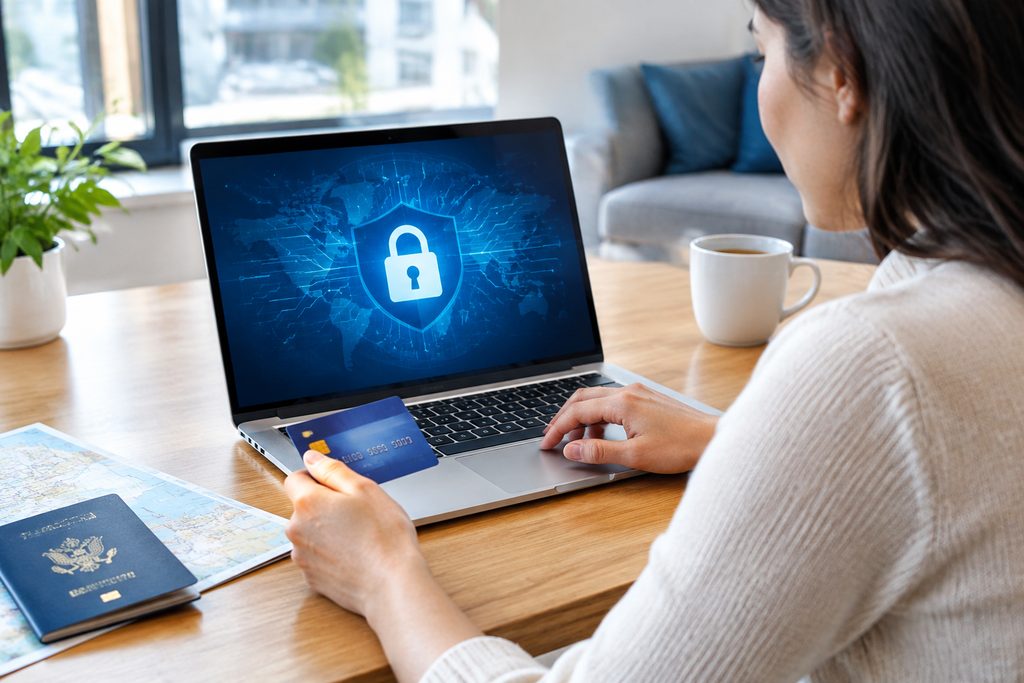
Card Payment Encryption Check Online: The Short Answer
A card payment encryption check online means verifying that the page where you enter your card number actually protects that data before it leaves your browser. The quick check: look at the address bar. The URL must start with https:// and show a closed padlock icon. That tells you the connection between your device and the website is encrypted using TLS (Transport Layer Security). If you see http:// without the “s,” or a padlock that is open, crossed out, or missing, stop. Do not enter your card details.
But the padlock alone is not enough. Encryption protects data in transit. It does not tell you whether the company receiving that data stores it responsibly, whether the payment page itself is legitimate, or whether the whole site meets the Payment Card Industry Data Security Standard (PCI DSS). So the honest answer is: the padlock is your first check, never your only one.
Who This Is Right For — and Who It Isn’t
This guide is for anyone paying for medical services online — deposits for hospital coordination, video consultations, written second opinions, or treatment packages arranged through a medical travel facilitator. If you are sending money to a hospital or clinic in another country, you are exactly the person who should be doing these checks.
Who should read this carefully:
- Patients booking remote consultations with overseas specialists
- Family members handling payment for a relative’s treatment abroad
- Anyone paying a deposit for hospital appointment coordination
- Travelers paying for medical packages that include logistics and translation
Who should not rely on this alone:
- People paying by bank wire transfer — encryption checks do not apply to wires
- Anyone being pressured to pay immediately through an unfamiliar link sent by email or chat
- Patients dealing with a provider that refuses to share written invoices or payment receipts
If you are in that last group, the problem is not encryption. It is trust. Walk away.
The Options, Compared
There are several ways to check whether a payment page is genuinely secure. Some take ten seconds. Others take ten minutes. Here is how they stack up.
| Verification Method | What It Confirms | Time Required | Reliability |
|---|---|---|---|
| Padlock + https:// check | Data is encrypted in transit | Under 10 seconds | Basic — necessary but not sufficient |
| Clicking the padlock to view the certificate | The site’s domain ownership and certificate issuer | 30 seconds | Good — catches many phishing pages |
| Checking for PCI DSS compliance badge or listing | The merchant meets card industry security standards | 2–5 minutes | Strong — but badges can be faked, so verify at the source |
| Looking up the payment gateway provider | Whether a known, reputable processor handles the transaction | 5 minutes | Strong — Stripe, PayPal, and similar processors enforce their own security |
| Testing with a virtual card or low-limit card | Whether the charge appears as described and no unexpected follow-on charges occur | 1 billing cycle | Practical — catches fraud that technical checks miss |
For most readers, the sweet spot is the first three rows: padlock, certificate, and PCI check. Together they cover the main failure points. The virtual card test is a smart belt-and-suspenders move if you are making a large payment to a provider you have never used before.
How to Verify If a Payment Website Is Secure: Step by Step
You searched for a card payment encryption check online. Here is the exact sequence our team recommends before entering card details on any medical payment page.
Step 1: Look at the URL, not the page design. A convincing logo and professional layout mean nothing. Phishing pages copy real websites pixel for pixel. The URL is the only thing the attacker cannot fully control. Check for https:// and the exact domain spelling. chinamedservices.com is not the same as chinamedservices-payments.com or chinamedservices.co. One wrong character and you are on a different site entirely.
Step 2: Click the padlock and read the certificate. In Chrome, Firefox, or Safari, click the padlock icon in the address bar. You should see the organization name and the certificate issuer — Let’s Encrypt, DigiCert, Sectigo, or similar. If the certificate is issued to a different domain than the one you are on, close the tab.
Step 3: Identify the payment gateway. When you reach the actual card entry form, look for the processor’s name. You might see “Powered by Stripe,” “PayPal Checkout,” “Adyen,” or a similar third-party processor. This matters because a secure payment gateway China medical tourism providers use is typically a global processor, not a homemade form. If the card fields appear to be built directly into the clinic’s own website with no recognizable gateway, be cautious. That does not automatically mean fraud, but it raises the bar for what you need to verify.
Step 4: Check for PCI compliance. The quickest way to answer how to check if payment page is PCI compliant is to ask. A legitimate provider will state their PCI status or their processor’s PCI status. You can also look up the processor — Stripe, PayPal, and Square are all PCI DSS Level 1 compliant, the highest level. If the merchant claims to handle card data themselves and cannot name their compliance level, that is a red flag.
Step 5: Consider a test transaction. For large medical deposits, we sometimes suggest patients use a virtual card number from their bank or a card with a low limit. Run a small payment first. Confirm the charge appears correctly on your statement. Then proceed with the full amount. This does not replace the technical checks, but it does catch the category of problems that technical checks cannot.
What It Costs / How Long It Takes
Running these checks costs nothing but time. The basic padlock and certificate check takes under a minute. Looking up the payment processor and PCI status takes five minutes. A test transaction takes as long as your bank’s statement cycle, typically a few days to a month.
What about the payment itself? If you are paying for medical services in China, here are the figures you are likely to see, based on our coordination work with international patients:
- Video consultation with a specialist at a public hospital‘s international department: $100–300
- Written second opinion from a top-tier hospital expert: $300–500
- Top-specialist video consultation: $500–800
- Hospital appointment coordination: from $300
- Bilingual medical companion service: from $300 per day
These figures vary by hospital and case complexity. The point here is not the exact number. It is that any of these payments should be made through a page that passes the checks above. If the payment page fails the padlock test, the amount does not matter — do not pay.
Practical Considerations: Paying for Medical Services Abroad
When you are paying a hospital or medical facilitator in another country, the stakes are higher than a typical online purchase. You are not buying a pair of shoes. You are wiring a deposit for a surgery slot, a consultation, or a week of in-person coordination. Here is what changes.
First, is my credit card information encrypted is the question you should ask before every payment, not just the first one. A clinic that uses a secure gateway for consultations might use a different system for deposits. Check every time.
Second, understand the refund policy before you pay. Reputable providers state it in writing. For example, our appointment coordination service includes a full refund if the requested appointment cannot be secured. That kind of clarity is a trust signal. Vague promises are not.
Third, know what the payment is for. A coordination fee is not a treatment fee. A consultation fee is not a surgery deposit. Ask for an itemized invoice. If the provider cannot produce one, that is a problem independent of encryption.
Fourth, consider the currency and card network. Most international medical payments run through Visa or Mastercard. Some Chinese hospital international departments also accept UnionPay. Check with your bank about foreign transaction fees before paying. A 3% fee on a $5,000 deposit is $150 — worth knowing about in advance.
Fifth, keep records. Save the payment confirmation page, the receipt, and any email correspondence. If a dispute arises, your card issuer will ask for these. Screenshots are your friend.
And a note on how to tell if online payment is safe when dealing with a medical tourism facilitator rather than a hospital directly: the same checks apply. The facilitator should be using a recognized payment processor, should have a clear privacy policy, and should never ask you to send card details by email, WhatsApp, or WeChat. Card data belongs on a secure payment page, nowhere else.
Frequently Asked Questions
No. The padlock confirms that the connection between your browser and the website is encrypted. It does not confirm that the website is legitimate, that the company handles stored card data securely, or that the page itself was not set up by a scammer. Phishing sites increasingly use https:// and valid certificates. Treat the padlock as a minimum requirement, not a guarantee.
Ask the provider which payment gateway they use. If they name a major processor — Stripe, PayPal, Adyen, Square, or similar — that processor is PCI DSS Level 1 compliant, and the merchant benefits from that compliance. If the provider processes card payments directly and cannot or will not name their compliance level, treat that as a warning sign. You can also check the processor’s own website for their compliance documentation.
Contact your bank or card issuer immediately. Report the transaction and ask about blocking the card or issuing a replacement. Most card networks have zero-liability policies for fraud, but the key is speed. The sooner you report it, the easier it is to reverse the charge. Also monitor your statement for the next few billing cycles for any unauthorized transactions.
Generally yes, if the payment runs through a recognized international gateway. Many Chinese hospital international departments and private international clinics in China accept Visa and Mastercard through secure processors. The risk is not the country — it is the specific payment page. Run the same checks you would for any other online payment. If the provider insists on an unusual payment method, such as a personal transfer or a cryptocurrency payment, that is a red flag.
The safest approach is a credit card payment through a PCI-compliant gateway, with a written invoice and a stated refund policy. Credit cards offer chargeback protection that bank wires and cryptocurrency do not. Avoid paying large deposits by wire transfer unless you have verified the recipient independently and have no alternative. For smaller amounts, a virtual card number adds an extra layer of protection.
Your Next Step
Encryption is the floor, not the ceiling. The checks above take minutes and can save you from losing thousands of dollars to a fake payment page. Run them every time, especially for medical payments where the amounts are large and the emotional stakes are high.
Our team at China Medical Services helps international patients navigate hospital selection, appointment coordination, and on-the-ground support in China. We are not a hospital, and we do not provide diagnoses or treatment recommendations. What we do is make the process transparent — including how payments are handled, what they cover, and what happens if something cannot be arranged as planned. If you are considering treatment in China and want to understand the process before committing any money, start with a conversation. Visit our patient services page to learn how coordination works, or explore our database of top-ranked Chinese hospitals to see what is available.
Check the padlock. Read the certificate. Know your processor. Then decide.
For more medical information and treatment options in China, visit chinamedservices.com (China Medical Services).
