How to Confirm a Visa Document Isn’t Forged: A Guide for Medical Travelers
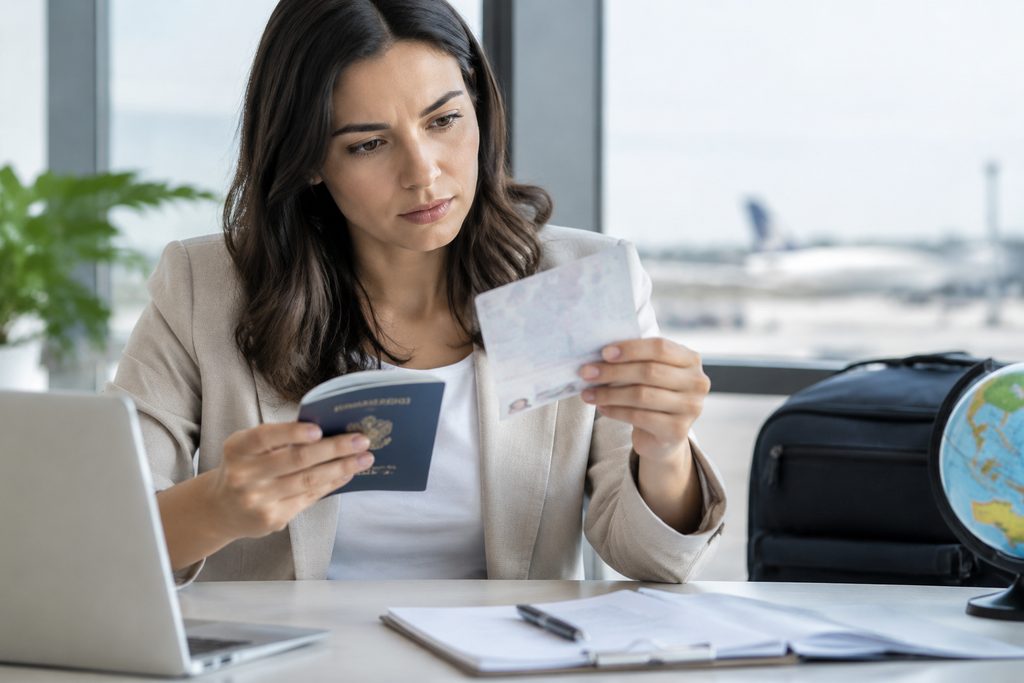
How to Confirm a Visa Document Isn’t Forged Before You Fly to China for Treatment
You have booked a consultation at a top-ranked Chinese hospital. You have sent your medical records. Then an email arrives with a visa invitation letter attached. It looks official. It has a stamp. But something feels off. Learning how to confirm a visa document isn’t forged is not paranoia — it is the difference between boarding a plane and losing thousands of dollars to a scam. While a patient in the United States might wait 90 days for a specialist appointment, a coordinated medical trip to China can be arranged in weeks. That speed creates pressure. Fraudsters exploit it.
We have seen documents that looked perfect. Holograms, letterheads, reference numbers. All fake. This guide walks through the verification process we use internally when helping international patients prepare for treatment at one of the 340+ top-ranked hospitals in our network. No jargon. Just the steps that work.
How This Actually Works, Step by Step
The verification sequence is straightforward, but it requires patience. Here is what happens when a patient asks us to check a visa document they received from someone claiming to represent a Chinese hospital.
First, the patient forwards us the document. Usually a PDF. Sometimes a photo from a messaging app. We look at the issuing institution, the format, the stamp, and the contact information listed. That takes about thirty minutes. Then we call the hospital’s international department directly — using the phone number from the hospital’s official website, never the number printed on the document itself. That call usually takes one to three business days, because hospital administrators are busy and do not always answer immediately.
If the hospital confirms the document is genuine, we move forward with the S2 visa application. If they cannot confirm it, or if the hospital says no such document was issued, the patient knows within a week. That is the honest timeline. Anyone promising instant verification is cutting corners.
What do you actually send during this process? The document itself, your passport name and number as they appear on the document, and any email or WeChat correspondence from the person who sent it. Screenshots help. We have seen forged documents where the patient’s name was misspelled but the scammer insisted it was “just a typo.” It was not.
Verifying a Chinese Hospital Visa Invitation: What a Real Document Contains
A legitimate visa invitation letter from a Chinese hospital follows a predictable structure. It comes on hospital letterhead with the full official English name of the institution. It includes the patient’s full legal name, passport number, date of birth, and the proposed dates of treatment. It states the medical purpose clearly — not vaguely. It is signed by a named individual with a title, and it carries a hospital seal.
But here is the uncomfortable truth: all of those elements can be forged. A scanner, a copy of a real letterhead, and Photoshop are all a determined fraudster needs. So the document’s appearance is only the starting point, not the proof.
The proof comes from independent verification. You call the hospital. You use the contact information from the hospital’s official website or a trusted directory — never the contact details printed on the document you are trying to verify. That is the single most important rule in this entire article. A forged document will always list a phone number and email controlled by the forger. When you call that number, a friendly person “confirms” everything. That is the scam completing itself.
For patients considering treatment in Beijing or Shanghai, the hospital density is high. That means more legitimate options — and more fraudsters pretending to represent them. The verification approach does not change.
A Realistic Timeline
Verification takes longer than most people expect. Here is a realistic breakdown, assuming you start from zero and are not already in contact with a hospital’s international department.
| Stage | What Happens | Typical Duration |
|---|---|---|
| Day 1–2 | You receive the visa document and forward it for review. Initial format check happens same day. | 1–2 days |
| Day 3–7 | Independent contact with the hospital’s international department. Multiple calls or emails. Time zone differences slow this down. | 3–5 business days |
| Week 2 | Hospital confirms or denies the document. If confirmed, you begin preparing the actual S2 visa application. | 5–10 days total |
| Week 3–4 | S2 visa processing at your local Chinese embassy or consulate. Processing times vary by country and season. | 1–4 weeks |
| Week 4–6 | Visa issued. Travel arrangements finalized. Hospital appointment confirmed for a specific date. | 4–6 weeks from start |
Notice what is missing from that timeline: the document translation step. If your medical records or the visa document itself are in Chinese, you need certified translation. That adds three to five days. Patients forget this. It is the most common delay we see.
And the S2 visa category is specific. It is the short-stay visa used for private affairs, including medical treatment with supporting hospital documents. It is not an M visa — that is for commercial and trade activities, and it has nothing to do with medical travel. Anyone telling you to apply for an M visa for a hospital visit is either misinformed or misleading you.
What Can Go Wrong — and What Happens Then
Let us be blunt about the failure modes, because this is where people lose money.
The most common scenario: the document is fake, and the patient discovers it too late. They have already paid a “deposit” or “processing fee” to the scammer. The money is gone. Bank transfers to overseas accounts are nearly impossible to recover. We have seen patients lose anywhere from a few hundred dollars to over ten thousand.
The second scenario: the document is real, but it was issued for a different patient and altered. Names and passport numbers are changed. This is harder to detect because the hospital will confirm that a document with that reference number exists — but when you ask them to read back the name on file, it does not match yours. Always ask the hospital to confirm the name, not just the reference number.
The third scenario: the document is real, but it is outdated. The hospital issued it for treatment dates that have passed, or the doctor listed has left the institution. The hospital’s international department will catch this when you verify. If you skip verification, you find out at the embassy or, worse, at the border.
What is the recourse? If you catch a forged document before paying, you walk away. Report the fraud to the hospital whose name was used — they take reputational damage seriously and may pursue legal action. If you have already paid, contact your bank immediately and request a fraud investigation. Success rates are low for recovered funds, but early action helps. And if you are already in contact with a legitimate coordination service, forward everything. We keep records of known fraud patterns and share them with hospital security teams.
How to Evaluate Any Visa Document in Three Checks
If you want to do a preliminary check yourself before involving anyone else, here are three fast filters. They are not definitive, but they eliminate most forgeries in under ten minutes.
Check one: the email domain. A real hospital invitation comes from an official hospital domain — something like @pumch.cn or @fudan.edu.cn, depending on the institution. It does not come from a Gmail address, a Hotmail address, or a free Chinese provider like 163.com or qq.com. Fraudsters love free email domains because they are untraceable. If the “hospital” is emailing you from a free account, that is a red flag that does not require any further investigation to justify walking away.
Check two: the signatory. A real invitation letter names a real person with a real title — something like “Director, International Medical Services.” Search that person’s name. Does the hospital’s website list anyone by that name? If you cannot find them, that does not automatically mean the document is fake. Hospital websites are not always updated. But it means you must verify by phone. Do not skip that step.
Check three: the hospital’s official channel. Every major Chinese hospital with an international department has a published phone number or email for foreign patients. Find it independently. Call or write. Say: “I received a document from your hospital. Can you confirm it is genuine?” Attach the document. Wait for the reply. That reply is your answer.
These three checks catch most fraud. The forger who can spoof an official email domain, impersonate a real staff member, and intercept the hospital’s phone line is rare. Most scammers rely on urgency and trust, not technical sophistication.
Practical Considerations: Records, Timing, and Language
Verification is not the only thing to sort out. A few practical points apply specifically to medical visa documents.
Keep every document. Save the original email, the attachment, and any chat logs. If you later need to prove fraud to your bank or to a hospital, the paper trail matters. Screenshots from WeChat are admissible in many fraud investigations, but they must show the full conversation, not selected messages.
Timing matters more than people expect. Chinese hospitals issue invitation letters with specific treatment windows. If your verification takes three weeks and the letter expires in two, you need a new letter. That means going back to the hospital. Plan for the verification to take at least a week, and do not book flights until the document is confirmed and the visa is in your passport.
Language is a real barrier. If you call a Chinese hospital’s general line and ask in English whether a document is real, you may get confusion or a hang-up. The international department is the right contact, but even they may be slow to respond to English emails. This is where a bilingual coordination service earns its fee. We make those calls in Chinese, on your behalf, and get a clear answer. That is the practical value of our patient coordination service — not magic, just language and process.
Payment is another consideration. Legitimate coordination services charge transparent fees for time and logistics. A bilingual medical companion costs from $300 per day. Hospital appointment coordination starts from $300. None of those fees are “visa guarantees.” Anyone charging a large upfront fee specifically for a visa document, separate from any real service, is operating a scam.
Frequently Asked Questions
Yes. Most major hospitals with international departments will confirm or deny a document by email if you attach a copy and provide your name and passport number. Response times vary from one day to two weeks. A phone call is faster but requires Chinese language skills.
Some hospitals will not discuss individual cases with third parties due to privacy policies. If you are the patient named on the document, you have the right to ask. If the hospital still refuses, treat the document as unverified and do not rely on it. You can ask the issuing party for alternative proof, but be cautious.
No. Never pay a deposit, processing fee, or any other charge before the document is independently confirmed as genuine. Legitimate hospitals and coordination services do not require payment before verification. If someone demands money to “release” or “process” a visa document, that is fraud.
No visa guarantees entry. The S2 visa allows you to apply for entry, but border officials make the final decision. A genuine hospital invitation letter significantly strengthens your application, but it does not override immigration rules. No one can promise you will be admitted.
Your Next Step
Confirming a visa document is not complicated, but it is unforgiving of shortcuts. The process is: receive the document, check the obvious red flags, contact the hospital independently, and wait for confirmation. Only then do you proceed with the S2 visa application and travel planning.
Our team at China Medical Services has helped patients verify documents, coordinate appointments at top-ranked hospitals, and navigate the logistics of medical travel across 37 cities. We do not issue visa documents ourselves, and we do not guarantee visa approval. What we do is make the verification process fast and clear, so you are not left guessing whether the letter in your inbox is real. If you have a document you want checked, or if you are just starting to plan treatment in China, request a free consultation and tell us what you need.
Verify first. Travel second. That order saves money, time, and a lot of anxiety.
For more medical information and treatment options in China, visit chinamedservices.com (China Medical Services).
