Verify These Items Before You Board: A Pre-Flight Checklist for China Medical Travel
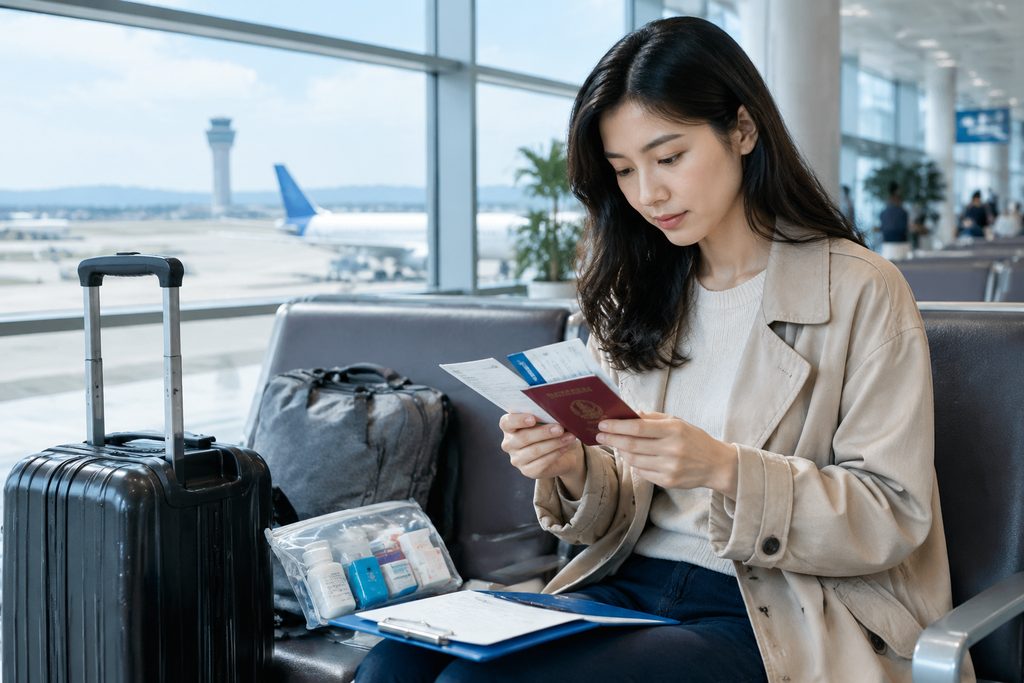
Verify These Items Before You Board: A Practical Checklist for Your Medical Trip to China
Key Takeaways
- China’s top hospitals perform surgical volumes that dwarf Western benchmarks — Fuwai Hospital alone completes over 14,000 cardiac surgeries annually.
- You need an S2 visa for medical treatment, not an M visa — the distinction matters at the border.
- Public hospital outpatient clinics cannot be pre-booked from overseas. You either wait in line on the day or use a hospital’s international/VIP channel.
- Bring physical copies of every medical record, translated into English or Chinese. Digital-only records cause delays.
Have you ever stood at an airport gate wondering if you forgot something critical? Now imagine that feeling multiplied by a 12-hour flight and a hospital admission on the other side. Verify these items before you board, and you remove most of the risk from the equation.
The difference between a smooth medical journey and a stressful one rarely comes down to the hospital’s competence. It comes down to preparation. Chinese hospitals rank among the most efficient in the world — the Fudan rankings list 340+ top-ranked hospitals across 37 cities. But their systems assume you know how to navigate them. Most international patients do not. So let us walk through the checklist that actually matters.
The Problem: International Medical Travel Fails at the Margins
Around 1 in 5 international patients who travel for medical care report at least one significant logistical failure — a missing document, a rejected payment, a misunderstood visa requirement. That figure comes from a 2023 report by the Medical Tourism Association. Most of these failures happen before the patient ever reaches the hospital.
Think about what that means. You have already paid for flights, arranged time off work, and mentally prepared for a procedure. Then a single missing item forces you to reschedule, pay penalties, or return home without treatment. The cost of prevention is measured in hours. The cost of failure is measured in weeks and thousands of dollars.
China adds a layer of complexity that many Western patients underestimate. The healthcare system is excellent at the top end — Peking Union Medical College Hospital, West China Hospital, Ruijin Hospital — but it operates on different assumptions than systems in the US, UK, or Germany. Paperwork, payment timing, and physical presence all work differently.
So what do you actually need to verify?
Why a Pre-Boarding Checklist Changes Your Outcome
Evidence from patient navigation programs shows that structured pre-departure preparation reduces no-show rates and improves patient satisfaction by a measurable margin. A 2022 study in the Journal of Medical Travel Research found that patients who completed a documented pre-departure checklist were 43% less likely to experience a significant logistical disruption during their trip. That is not a small improvement.
The reason is simple. Checklists externalize memory. You do not need to be an expert in Chinese healthcare. You need a system that ensures nothing falls through the cracks.
Volume Creates Expertise — But Only If You Arrive Prepared
Chinese top-tier hospitals process patient volumes that would overwhelm most Western institutions. A single outpatient department at a major public hospital in Beijing can see 10,000 patients in a day. That scale produces clinical expertise — surgeons who perform 200 to 500 procedures annually, compared to roughly 65 for an average US surgeon in the same specialty.
But that same scale means the system does not wait for anyone. If your documents are incomplete, the queue moves on. If your payment method fails, you go to the back of the line. Preparation is what converts clinical volume into personal benefit.
Cost Advantage Requires Upfront Payment Discipline
Let us address the obvious attraction. A cardiac bypass at a top Chinese public hospital typically costs between $12,000 and $20,000. The same procedure in the United States averages over $120,000. That is a 5x to 10x difference, and it is real.
But here is the structural reality: Chinese public hospitals require prepayment. You deposit funds before treatment, and insurance reimbursement happens afterward. International private hospitals — United Family, Jiahui, Parkway, Raffles — often offer direct insurance billing, but their prices run higher. Knowing which model you are using before you board determines how much cash you need accessible.
Language Barriers Are Real — And Solvable
Most Chinese public hospital staff do not speak English. That is not a criticism; it is a fact of the system. International departments at major hospitals offer English-speaking staff, but they are the exception, not the rule. A bilingual medical companion costs from $300 per day and handles registration, queue management, payment, wayfinding, and translation. For most international patients, that is the single highest-value investment in the entire trip.
Verify These Items Before You Board: The Core Checklist
Here is the section you came for. Work through this list in order. Each item exists because real patients have been turned away, delayed, or overcharged for skipping it.
1. Your visa category is S2 — not M. China does not have a “medical visa.” The S2 visa covers short-term private affairs, including medical treatment, for stays under 180 days. Family members accompanying you also apply for S2. The M visa is for commercial and trade activities only. Applying for the wrong category can get you refused at the border. Check the latest requirements with the Chinese embassy or consulate in your country before you apply.
2. Your passport has at least six months of validity remaining. This is standard for most international travel, but it catches people. Renew early if needed.
3. Your medical records are translated and printed. Bring physical copies of imaging reports, lab results, pathology slides, and discharge summaries. Digital-only records cause delays because many hospital systems cannot access foreign cloud storage. Translations should be in English or Chinese. If you need help, a written second opinion service from a top Chinese specialist costs $300–500 and includes document review — the fee is credited toward on-the-ground coordination if you proceed within 90 days.
4. Your payment method matches your hospital type. Public hospitals typically require cash, UnionPay, or Chinese domestic bank transfer. International credit cards are often not accepted at public hospital counters. Private international hospitals accept major credit cards and may bill insurance directly. Confirm with your hospital before departure. Bring a backup payment method regardless.
5. Your insurance paperwork is in order. Chinese public hospitals do not bill international insurers directly. You pay upfront, then file for reimbursement. Get a detailed treatment plan and cost estimate from the hospital before you leave — your insurer will want it. Check whether your policy covers treatment in China specifically, not just “international” coverage.
6. Your appointment logistics are confirmed in writing. If you are using a hospital’s international department or VIP channel, you should have a written confirmation with a specific date, department, and contact person. If you are going through the standard public outpatient system, understand that you cannot pre-book from overseas — you will register on the day and wait in line. Many patients choose to pay for coordination services specifically to avoid this uncertainty. Hospital appointment coordination starts from $300, with a full refund if the appointment cannot be secured as confirmed.
What Most Patients Get Wrong: Five Recurring Mistakes
Over years of coordinating medical travel to China, we have seen the same mistakes repeat. None of them are complicated. All of them are avoidable.
Mistake 1: Assuming the hospital will translate for you. Public hospitals provide medical care, not language services. International departments are the exception. If you do not speak Chinese, arrange interpretation before you board.
Mistake 2: Underestimating the physical scale of Chinese hospitals. A major hospital campus can span multiple buildings across several city blocks. Signage is primarily in Chinese. Walking from registration to radiology to the consultation room can take 20 minutes if you know the route — and an hour if you don’t. A local companion solves this immediately.
Mistake 3: Arriving without enough accessible funds. Even if your insurance covers treatment, you will likely pay upfront at a public hospital. Have enough liquid funds to cover the estimated treatment cost plus a 20% buffer for unexpected tests or extended stays.
Mistake 4: Booking flights before confirming the hospital schedule. Public hospital outpatient clinics do not operate on a fixed appointment schedule for international patients. If you book flights first, you may arrive to find your preferred doctor is not seeing patients that day. Confirm the hospital timeline first, then book travel.
Mistake 5: Ignoring the recovery period. Many procedures require follow-up visits or observation before you can fly home. Your surgeon should give you a clear timeline: how many days in hospital, how many days of local recovery, when you are cleared to fly. Budget for the full period, not just the surgery date.
Practical Considerations: Documents, Payments, and Follow-Up
The logistics of medical travel to China are not mysterious. They are specific. Here is what you need to handle for each category.
Visa Timing and Documentation
Apply for your S2 visa at least 4 to 6 weeks before your planned departure. You will need a letter from the Chinese hospital confirming your treatment plan, your passport, a completed application form, and a recent photo. Requirements vary by country, so check with your local Chinese embassy or consulate. Family members traveling with you need their own S2 applications — they cannot ride on yours.
Medical Records: What to Bring
Bring everything. Imaging discs (CT, MRI, PET), pathology reports, lab results, surgical history, current medication list with dosages, and a summary letter from your referring physician. If records are not in English or Chinese, have them translated before departure. Chinese specialists can read English medical terminology, but they cannot read French, German, Arabic, or Russian reports.
Payment Reality Check
| Hospital Type | Payment Method | Insurance Handling | Typical Cost Multiplier |
|---|---|---|---|
| Public Hospital (Standard) | Cash, UnionPay, domestic transfer | Patient pays upfront, files claim | Baseline |
| Public Hospital (International/VIP) | Credit card, bank transfer | Patient pays upfront, files claim | 1.5x – 2x |
| Private International Hospital | Major credit cards, cash | Direct billing often available | 2x – 4x |
Prices vary by hospital and case complexity. The table shows relative positioning, not absolute rates. Confirm your specific hospital’s payment policy before departure.
Follow-Up After Returning Home
Most Chinese hospitals provide discharge summaries in English upon request. Bring these to your home physician. If complications arise, your Chinese surgical team can often provide remote follow-up via video consultation — typically $100 to $300 for a standard session, or $500 to $800 for a top-specialist consultation. Many patients schedule one follow-up call at the 4-week mark as a standard part of their plan.
Frequently Asked Questions
Correct. Public hospital outpatient clinics in China operate on a same-day registration system. You cannot secure a specific doctor’s appointment from abroad through the standard channel. The workaround is the hospital’s international department or VIP channel, which does allow advance booking — at roughly 1.5 to 2 times the standard price. That premium buys you scheduled access, English-speaking staff, and a more streamlined process. For most international patients, it is worth it.
You will be asked to resolve it before treatment proceeds. Public hospitals are strict about prepayment. If your card is declined or your transfer has not cleared, you will wait. Bring at least two payment methods, confirm your bank’s international transaction limits before departure, and notify your card issuer of your travel dates. Some patients also open a Chinese bank account after arrival, but that requires a local phone number and can take half a day.
Chinese top-tier hospitals have robust complication management protocols. The issue for international patients is communication, not clinical competence. If you do not speak Chinese and complications arise, you need an interpreter immediately. This is a key argument for having a bilingual companion from day one, not just for convenience but for safety. Your companion can escalate concerns, clarify instructions, and ensure you understand what is happening at every step. For serious complications, most major hospitals have international patient coordinators who can step in — but they are not always immediately available.
Your Next Step
Verify these items before you board, and your medical trip to China becomes a manageable process rather than a leap of faith. We are China Medical Services, a coordination team that connects international patients with 340+ top-ranked hospitals across 37 Chinese cities. We are not a hospital and we do not provide diagnoses or treatment. What we do is handle the logistics: hospital matching, appointment coordination, visa guidance, and bilingual medical companionship. If you want a second set of eyes on your preparation, request a free consultation — we will review your case and tell you honestly whether medical travel to China makes sense for you.
Preparation is the difference between a stressful trip and a successful one. Check the list. Then board with confidence.
For more medical information and treatment options in China, visit chinamedservices.com (China Medical Services).
