Verify the Doctor Saw Your Real Scans: A Guide for International Patients
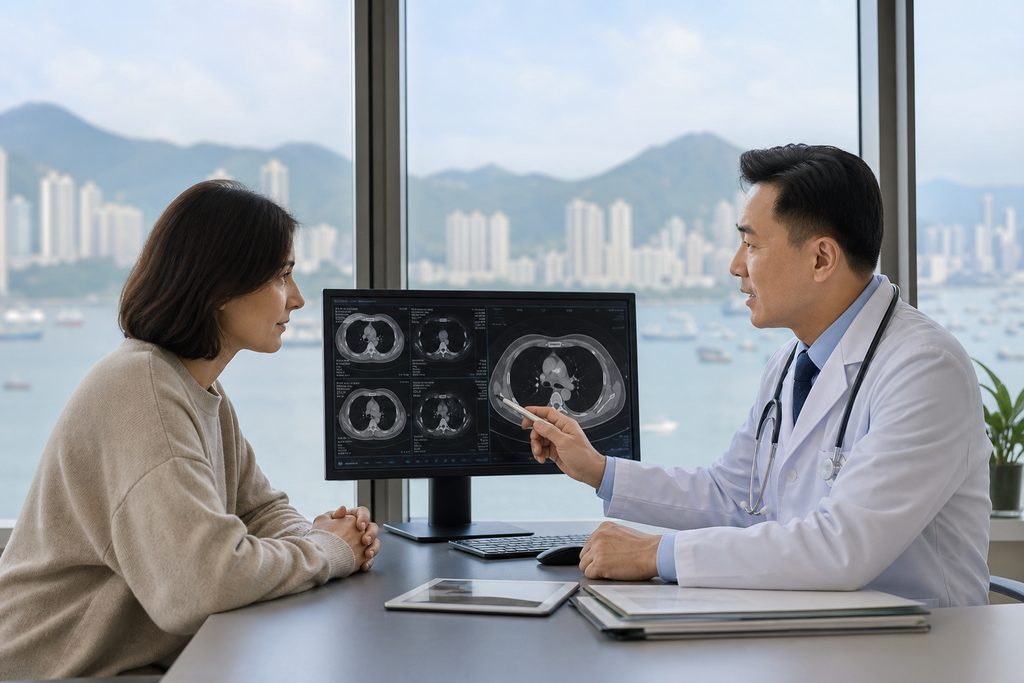
Verify the Doctor Saw Your Real Scans: A Guide for International Patients
When 54-year-old Daniel from Manchester was told he needed spinal fusion, he did what any careful person would. He requested his own imaging. The hospital sent a CD. He booked a second opinion radiology scan China review through our team. But the question that kept him up at night was simple: how could he be certain the specialist in Shanghai actually looked at his MRI, and not just the radiologist’s typed report? This article answers that question directly. You will learn what documentation proves a real review, how the process works step by step, what it costs, and what can go wrong.
Many patients worry about this. They have heard stories of doctors glancing at a report for thirty seconds and calling it a consultation. A genuine imaging second opinion means the specialist has opened the original DICOM files, examined the axial, sagittal, and coronal views, and formed an independent judgment. Our team at China Medical Services has coordinated hundreds of these reviews. We know what verification looks like. And we will tell you exactly what to ask for.
How This Actually Works, Step by Step
The sequence is straightforward. But each step has details that matter for verification.
Step 1: You collect your original imaging. This means the DICOM files, not JPG screenshots or printed films. DICOM files contain the full resolution data. A specialist cannot measure a tumor or assess disc height from a photo of a scan. Most hospitals will provide these on a CD or via a secure download link. Sometimes you need to sign a release form. We can help you request the correct format.
Step 2: You send the files through a secure portal. We do not accept imaging through regular email attachments. Those compress files and strip metadata. We use encrypted transfer links. Your files remain intact.
Step 3: A bilingual case manager reviews your file package. They check that the imaging matches the medical history you provided. A mismatch here is a red flag. If your report mentions a liver lesion but the CD contains only a chest CT, the manager will contact you before any specialist sees anything.
Step 4: The specialist opens the DICOM files on a diagnostic workstation. This is the critical moment. The doctor scrolls through every slice. They compare findings against the written report. They may disagree with the original interpretation. That disagreement is often the entire value of the review.
Step 5: You receive a written second opinion document. This document should reference specific image series and slice numbers. It should describe what the specialist observed, not just repeat the original report. Vague language like “findings are consistent with prior report” is not a real review. Specific language like “on T2-weighted axial sequence, slice 14, there is a 6mm hyperintense lesion at the L4-L5 level” is what you want.
Step 6: You schedule a follow-up video consultation if needed. The written opinion is the foundation. The video call lets you ask questions. You can ask directly: “Doctor, did you look at my actual scans?” The answer should be immediate and detailed. If the doctor hesitates or speaks only in generalities, you have your answer.
What Proof Looks Like: Verification Markers in a Real Second Opinion Radiology Scan China Review
Yes. The entire written second opinion process happens remotely. You upload your DICOM files through a secure portal. The specialist reviews them at their hospital. You receive a written report and can schedule a video consultation. No travel is required for the review itself. Travel only becomes relevant if you decide to pursue treatment in China.
A written second opinion from a top-tier hospital specialist typically costs from $300 to $500. Video consultations with senior specialists range from $500 to $800. Multidisciplinary team reviews cost $1,500 to $2,000. These are reference ranges. Final pricing varies by hospital, specialty, and case complexity. Coordination fees are separate and are credited toward on-the-ground services if you later travel to China.
Yes. Several top-tier hospitals in Shanghai have international departments that accept foreign imaging for second opinion reviews. Zhongshan Hospital, Huashan Hospital, and Ruijin Hospital are among the most commonly used. The practical challenge is reaching the right department, submitting files in the correct format, and arranging payment from abroad. That is the coordination work we handle.
That is not a problem. It is often the reason patients seek a second opinion in the first place. The written report will explain the disagreement in specific terms. You then take both reports to your local doctor and discuss the implications. You are not obligated to follow the Chinese specialist’s recommendation. The opinion is information, not a directive.
Your Next Step
Verifying that a doctor saw your real scans is not about paranoia. It is about protecting yourself from a shallow review that wastes your money and gives you false confidence. A proper second opinion should be specific, measurable, and demonstrable.
We are China Medical Services. We coordinate written second opinions, video consultations, and in-person treatment at 340+ top-ranked hospitals across 37 cities in China. We do not practice medicine. We do not promise outcomes. We handle the logistics so you can get an honest answer from a qualified specialist. If you are considering a second opinion radiology scan China review, start with a conversation. Tell us what imaging you have. We will tell you what is possible, what it costs, and what you should expect. No pressure. Just clear information from people who do this every day.
Your scans contain the truth about your condition. Make sure someone qualified actually looks at them.
Frequently Asked Questions
Yes. The hospitals used for international patients are JCI-accredited and follow the same international safety standards as top hospitals in the US and Europe. Surgical teams perform high volumes of procedures — often more than their Western counterparts — which studies show leads to better outcomes.
Costs vary by procedure and hospital, but international patients typically save 40-80% compared to US prices — even when factoring in travel and accommodation. A consultation with our team will give you an exact, all-inclusive quote with no hidden fees.
Send us your existing medical reports to get started. We handle everything from hospital selection and appointment scheduling to visa assistance and post-operative recovery planning. Your medical records are reviewed by the specialist before you even book a flight.
For more medical information and treatment options in China, visit chinamedservices.com (China Medical Services).
