How to Check a Visa Agent’s Reviews Are Real: Spotting Fake Feedback
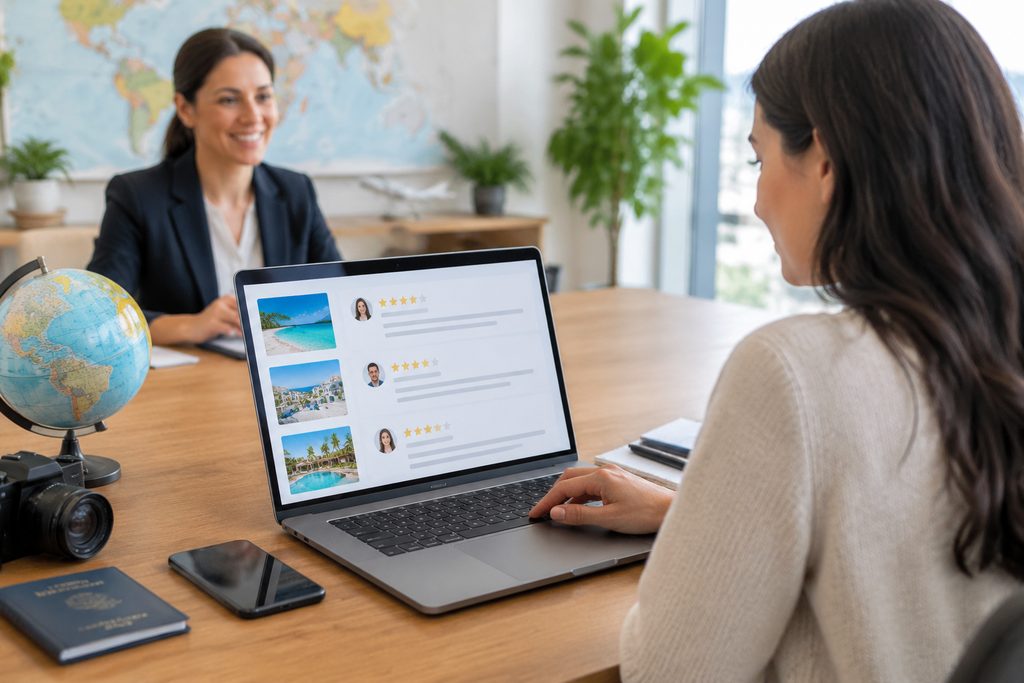
Have you ever stared at a glowing five-star review and felt a nagging doubt you couldn’t shake? That instinct exists for a reason. When a medical trip to China hangs on the honesty of a visa agent, learning how to verify a medical tourism agent’s reviews isn’t paranoia—it’s basic self-defense. Our team at China Medical Services has watched too many patients arrive in Beijing or Shanghai with promises that dissolved at the airport. The reviews looked real. The agent wasn’t.
How This Actually Works, Step by Step
You’re sitting at home in London or Dubai or Houston, holding a folder of MRI scans and a quote from a Chinese hospital. The next step is the S2 visa, and you’ve been told a local agent can smooth the path. So you Google. You find a company with a 4.9 rating and 200 reviews. Feels solid. But here’s what actually needs to happen before you wire a deposit.
First, you collect the agent’s full name, business registration number, and physical address. A legitimate visa coordination service in China will have all three. No exceptions. Then you pull every review you can find—not just the ones on their website. Google Maps, Trustpilot, Facebook groups for expats in Shanghai, Reddit threads about medical travel. You’re looking for patterns across platforms, not a single wall of praise.
Next, you check the reviewer profiles. Are they real people? Do they have posting histories that predate the review by months or years? Do they review other businesses, or did they create an account, leave one perfect review, and vanish? A cluster of accounts created in the same week, all leaving five stars for the same visa agent, is a red flag the size of a billboard.
Then you contact the agent and ask a specific question: “Can you send me the exact document checklist for an S2 visa application for medical treatment, including the hospital invitation letter requirements?” A real agent answers within a day, with specifics. A fake one sends you a generic PDF and a payment link.
Finally, you verify the hospital connection. Call the hospital’s international department directly—not the number the agent gave you, the number on the hospital’s official website. Ask if they recognize the agency. If the hospital has never heard of them, walk away.
Why Review Verification Matters More for Medical Visa Agents
The stakes here are not a lost hotel booking. A botched S2 visa application means a missed surgery date, a forfeited hospital deposit, and a patient sitting at home while their condition worsens. Are China visa agent reviews trustworthy when the cost of being wrong is measured in health outcomes? Sometimes. But the incentives to fake them are enormous.
Medical tourism is a high-ticket transaction. A single patient might pay $3,000 to $10,000 in coordination fees before ever setting foot in a Chinese hospital. That kind of money attracts people who are very good at manufacturing credibility. We’ve seen agents who rent office space in a Shanghai business park for a week, take photos, and then run their entire operation from a laptop in another province.
So you need to understand the mechanics of fake reviews. There are review farms in Southeast Asia and Eastern Europe that sell batches of 50 positive reviews for as little as $100. The reviews are written by real people, which makes them harder to detect. But they follow patterns. They’re vague about specifics. They say “great service” and “very professional” but never mention the actual visa category, the hospital name, or the timeline. Real patients remember the details because the details were hard.
How to spot fake reviews for medical tourism agents China requires looking for what’s missing, not just what’s present. A real review of a visa agent might say: “They helped us get the S2 visa in 11 days. The hospital invitation letter took 4 days because the oncology department needed to review the pathology report again. We paid $450 for the coordination.” A fake one says: “Amazing service! Highly recommend! Very trustworthy!” That’s the difference.
A Realistic Timeline
Here’s what the verification process actually looks like in calendar days, not the optimistic version agents post on their websites. This assumes you’re starting from zero, with no prior contacts in China.
| Stage | What Happens | Realistic Duration |
|---|---|---|
| Days 1–3 | Collect agent’s business registration, address, and reviewer profiles across 3+ platforms | 2–3 days |
| Days 3–7 | Contact the hospital’s international department directly to verify the agent’s claimed relationship | 3–5 days (hospitals are slow to reply to cold emails) |
| Days 5–10 | Request a written service agreement with itemized fees and refund terms | 3–5 days (if the agent stalls, that’s your answer) |
| Days 7–14 | Ask for references: two past patients who will speak to you by phone or video | 1–7 days (real agents can produce these; fake ones go silent) |
| Days 10–21 | Cross-check the agent’s claims about visa processing times against the Chinese embassy website | 1–2 days (but do it before you pay anything) |
| Days 14–30 | Make a decision and, if proceeding, sign the agreement and pay a deposit only | Varies |
Notice what’s not on this timeline: a quick Google search and an impulsive payment. The verification process takes two to four weeks if you do it properly. That’s longer than most people expect. But the S2 visa itself takes 4 to 10 business days once the application is submitted, and the hospital appointment lead time for a top-tier specialist can be 3 to 8 weeks. So the verification time fits inside the overall planning window—if you start early.
One thing people forget: document translation. Your medical records need to be translated into Chinese before the hospital will issue an invitation letter. That’s 3 to 7 days with a professional medical translation service. Add it to your calendar. It’s the step that quietly eats a week.
What Can Go Wrong — and What Happens Then
Let’s be blunt about the failure modes, because this is where trust is actually earned. The first failure: the agent takes your money and disappears. You wired $2,000 for “visa processing” and the email goes silent. What happens then? In most cases, nothing. Chinese police will take a report, but cross-border fraud recovery is rare and slow. Your bank may reverse the wire if you act within 72 hours and the transfer was flagged as suspicious. After that, the money is gone.
The second failure: the agent submits a fraudulent or incomplete application. The Chinese embassy rejects the S2 visa because the hospital invitation letter was forged. Now you’re flagged in the system, and your next application faces extra scrutiny. You can reapply with correct documents, but the delay might cost you the surgery slot. The hospital keeps its deposit. You start over.
The third failure is quieter and more common: the agent is real but incompetent. They submit your application late, or they misunderstand the difference between an S2 visa for tourism and an S2 visa annotated for medical treatment. The visa comes through, but it lacks the medical annotation, and the hospital refuses to admit you. You’re in Shanghai with a valid visa that doesn’t cover what you came for. Recourse: apply for a visa correction at the exit-entry administration bureau, which takes 5 to 10 business days, or return home and start again.
None of these are softened by marketing language. They’re the real risks. A legitimate agent reduces them. A fake agent multiplies them.
How to Evaluate a Visa Agent Before You Commit
Beyond reviews, there are structural signals that separate real coordination services from storefronts. First, check the agent’s business license. In China, legitimate businesses register with the State Administration for Market Regulation. The license number should be visible on their website and verifiable through the National Enterprise Credit Information Publicity System. If the agent won’t share the number, that’s not a red flag—it’s a closed door.
Second, look at how they describe their service. A real agent says: “We coordinate with the hospital’s international department to obtain the invitation letter, prepare your S2 visa application documents, and provide bilingual support during your stay.” A fake one says: “We guarantee visa approval” or “We have special relationships with the embassy.” No one has special relationships with the Chinese embassy. Anyone who claims that is lying. Guarantees of visa approval are impossible—the embassy decides, not the agent.
Third, ask about medical visa agent cost China. What should you actually pay? A legitimate coordination service for an S2 visa application, including document preparation and hospital liaison, typically runs from $300 to $1,500 depending on complexity. A video consultation with a top specialist might add $500 to $800. If an agent quotes you $5,000 just for “visa handling,” you’re paying for something other than paperwork. The phrase “access fee” is a warning sign. Legitimate services charge for case management: translation, appointment coordination, bilingual accompaniment. They don’t charge for access to a doctor or a visa officer. No one can sell that.
Fourth, evaluate the best rated medical tourism agency Shanghai against the same criteria you’d use anywhere else. Shanghai has more JCI-accredited international hospitals than any other Chinese city, and it attracts a dense cluster of medical tourism agencies. Some are excellent. Some are empty offices. The best ones will connect you directly with the hospital’s international patient department for a video call before you pay anything. They want you to hear the hospital confirm the plan. The worst ones will keep you isolated, insisting that all communication go through them. Isolation is how fraud works.
Fifth, verify doctor credentials through agent China. This is a step most patients skip because it feels awkward. Don’t skip it. Ask the agent for the doctor’s full name in English and Chinese, their hospital affiliation, and their professional registration number. Then search the hospital’s official website for that doctor’s profile. Top-tier Chinese hospitals list their senior specialists with photos, titles, and publication histories. If the doctor isn’t listed, or the name doesn’t match any profile, the agent is either inventing a specialist or selling you access to someone who doesn’t exist. Both are disqualifying.
And here’s a question worth asking yourself: would a legitimate agent resist any of these checks? No. A real service provider wants you to verify them. They’re proud of their hospital relationships. They’ll give you the hospital’s phone number and tell you to call. The agents who resist verification are the ones who can’t survive it.
Practical Considerations: Records, Visa Timing, and Payment
Before you even start the agent search, get your own documents in order. The S2 visa application for medical treatment requires: a valid passport with at least six months remaining, a completed visa application form, a recent passport photo, proof of the medical appointment (the hospital invitation letter), and evidence of sufficient funds. The invitation letter must come from the hospital, not the agent. If an agent offers to “provide” the invitation letter themselves, that’s forgery territory.
Payment is another practical point. Never pay a visa agent in full upfront. A legitimate service will take a deposit—typically 20% to 30%—with the balance due when the visa is approved or the hospital appointment is confirmed. Pay by credit card or a traceable method. Avoid wire transfers to personal accounts. If the agent asks for payment to an individual’s name rather than a company account, stop.
Insurance is the piece most people skip. Your home health insurance probably doesn’t cover treatment in China. Some international insurers do, but you need to confirm before you book. The hospital will ask for payment upfront regardless of your insurance status. Public hospitals in China operate on a prepayment model. Private international hospitals may bill your insurer directly if they have an agreement. Check with the hospital’s billing department, not the agent.
Language is the silent practical burden. Even with an agent, you’ll need to communicate with nurses, pharmacists, and administrative staff who may not speak English. A bilingual medical companion—someone who physically accompanies you through registration, consultation, and payment—costs from $300 per day. That’s separate from the visa agent’s fee. Some agencies bundle these services. Some don’t. Ask for a written breakdown.
Follow-up at home is the last practical piece. Chinese hospitals provide discharge summaries, but they’re often in Chinese. You’ll need them translated for your home physician. Budget $50 to $150 for professional medical translation. And schedule a follow-up appointment with your local doctor within two weeks of returning. The Chinese hospital won’t manage your long-term recovery from 8,000 miles away.
Frequently Asked Questions
Look for reviewer profiles with no history, reviews that are vague about specifics, clusters of reviews posted in the same week, and identical phrasing across multiple reviews. Real reviews mention concrete details: visa category, hospital name, timeline, cost. Fake ones rely on generic praise.
Some are. But you should treat them as one data point among several. Cross-reference reviews with the agent’s business license, the hospital’s confirmation, and direct conversations with past clients. A review is a claim. Verification is a process.
Contact your bank immediately and request a wire recall if the transfer was recent. File a report with your local police and with the Chinese embassy in your country. Then contact the hospital directly to explain the situation and ask if they can work with you without the agent. Some hospitals will, especially if you have a confirmed medical need.
No. Visa approval is decided by the Chinese embassy or consulate, not by any agent. Anyone who guarantees approval is either lying or planning to submit a fraudulent application. Both outcomes end badly for you.
For S2 visa coordination, including document preparation and hospital liaison, expect to pay from $300 to $1,500. Higher fees should correspond to additional services like video consultations or bilingual accompaniment, not “access” to anyone. If the price seems disconnected from the work described, ask for an itemized breakdown.
Your Next Step
The core message is simple: reviews are a starting point, not a verdict. You verify a medical tourism agent’s reviews by checking the reviewer, the business license, the hospital connection, and the doctor’s credentials—independently, not through the agent. That’s the standard we hold ourselves to at China Medical Services. We maintain a database of 340+ top-ranked hospitals across 37 cities, and we connect patients with hospital international departments directly. We don’t sell access. We coordinate logistics: document translation, appointment scheduling, bilingual accompaniment, and S2 visa document preparation. If you’re considering medical treatment in China, start with a conversation. Ask us the hard questions. We’ll answer them.
For more medical information and treatment options in China, visit chinamedservices.com (China Medical Services).
