How to Spot a Fake Telemedicine App: A Guide to Safe Online Care in China
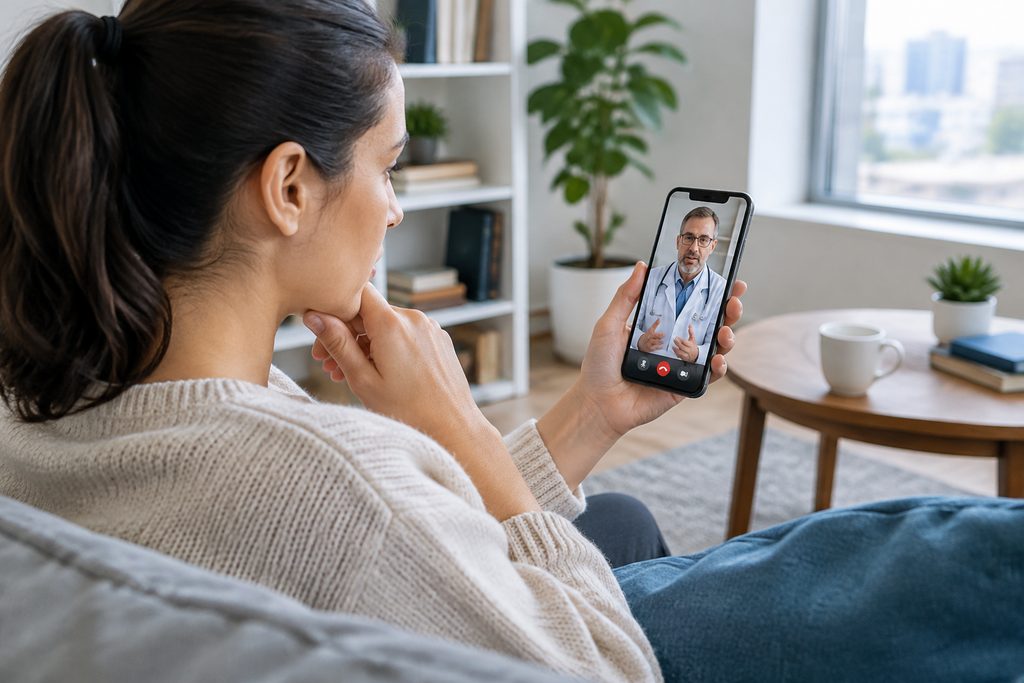
How to Spot a Fake Telemedicine App: Is It Safe to Use Telemedicine Apps in China?
Is it safe to use telemedicine apps in China? The short answer is yes—if you know exactly what to look for. China’s telehealth sector has exploded since 2020, with over 1,700 internet hospitals now licensed by the National Health Commission. But that growth has also created space for counterfeit platforms, unlicensed operators, and apps that harvest data without ever connecting you to a real doctor. For foreign patients considering remote consultation with Chinese specialists, the difference between a legitimate platform and a fake one can mean the difference between a useful second opinion and a stolen credit card number.
Our team at China Medical Services has spent years helping international patients navigate Chinese healthcare—from hospital matching to bilingual accompaniment. We have seen the full spectrum of telemedicine platforms, from excellent hospital-run apps to outright scams. This guide walks through exactly how to verify a Chinese telemedicine app, what red flags to watch for, and how to book a legitimate video consultation with confidence.
Key Takeaways
- China has over 1,700 government-licensed internet hospitals, but unlicensed apps and lookalike platforms also operate in the market; verification is essential.
- A legitimate app will always display its Internet Hospital License number, issued by a provincial Health Commission—not a generic business registration.
- Ping An Good Doctor is a real, publicly traded platform, but fake clones using similar names have been reported; always check the developer name and download count.
- Expect to pay $100–300 for a standard video consultation with a Chinese hospital international department; prices far below that range are a warning sign.
- Never send payment through WeChat personal transfers, Western Union, or cryptocurrency for any medical service in China.
The Problem: Fake Apps Exploit a Booming but Confusing Market
Telemedicine in China is not a niche service—it is a national infrastructure priority. In 2023 alone, Chinese internet hospitals conducted an estimated 260 million online consultations, according to the National Health Commission. For foreign patients, this is genuinely useful: you can consult a cardiologist at Fuwai Hospital or an oncologist at Peking Union Medical College Hospital without leaving your home country. But the scale of demand has attracted counterfeiters.
In 2021, Chinese regulators shut down over 400 unlicensed health apps in a single enforcement campaign. Many of these apps mimicked the branding of legitimate hospital platforms, using similar names, logos, and color schemes. The victims were often patients who searched for a specific hospital, clicked on a paid ad, and downloaded a fake app that charged consultation fees and then disappeared. For an international patient unfamiliar with Chinese app ecosystems, the risk is even higher—you may not recognize the warning signs that a local would spot immediately.
The cost of getting this wrong is not just financial. A fake platform can expose your medical records, passport details, and payment information. It can also delay real treatment by giving you advice from an unqualified person. In the worst cases, patients have received fabricated diagnoses designed to push them toward expensive “treatment packages” that do not exist.
How to Verify a Chinese Hospital App: The Core Checklist
Verification is not complicated, but it requires discipline. Here is the process we use internally when evaluating any telehealth platform for our clients.
Check the Internet Hospital License Number
Every legitimate online hospital in China must hold an Internet Hospital License issued by a provincial Health Commission. This license number is public and must be displayed on the app’s registration page, usually in the “About” or “Legal” section. The number format typically includes the province abbreviation, the year, and a sequence—for example, “京互医执字2020第0012号” (Beijing Internet Hospital License). If an app does not display this number, or if the number cannot be verified through the provincial Health Commission’s public database, stop using it immediately.
Some apps display a business license instead, which is not the same thing. A business registration from the State Administration for Market Regulation only proves that a company exists—it does not authorize that company to provide medical services. This is the single most common trick used by fake platforms.
Verify the Hospital Affiliation
A legitimate telemedicine app should clearly state which physical hospital or hospital network it is affiliated with. For example, the official app of Peking Union Medical College Hospital is operated by the hospital itself, not by a third-party marketing company. If the app claims to represent a major hospital but the hospital’s own website does not link to it, that is a red flag. Cross-check by visiting the hospital’s official website and looking for their digital service portal. Major hospitals like Fuwai Hospital and Zhongshan Hospital Fudan University list their official apps and WeChat mini-programs directly on their sites.
Look at the Developer Information in the App Store
In the Apple App Store or Google Play, scroll down to the “Developer” section. A legitimate hospital app will show the hospital’s legal name as the developer. A fake app will often show an unrelated company name, or a developer with a generic name like “Health Tech Solutions Ltd.” Also check the download count and review history. A real hospital app from a major institution will typically have tens of thousands of downloads and a review history going back years. A fake app often has a few hundred downloads and a cluster of suspiciously positive reviews posted within a short time window.
Is Ping An Good Doctor App Legit? Yes—But Watch for Clones
Is Ping An Good Doctor app legit? The original platform, operated by Ping An Healthcare and Technology Company, is one of the largest telehealth providers in China, with over 400 million registered users and a listing on the Hong Kong Stock Exchange. It is legitimate. But its popularity has spawned dozens of copycat apps with names like “Ping An Doctor Pro” or “Ping An Health Online” that have no connection to the real company. Always check the developer name. The real app is developed by “Ping An Healthcare and Technology Company Limited,” not by any other entity. Also be aware that while Ping An Good Doctor is legitimate, it primarily serves the domestic Chinese market in Mandarin. For English-language consultation with top Chinese specialists, a hospital international department or a dedicated coordination service is usually a better fit.
Best Telehealth Platform for Foreigners in China: What Actually Works
The best telehealth platform for foreigners in China is usually not a standalone app at all. It is the international department of a major hospital, which offers video consultation through its own official channels. Here is why: hospital international departments are staffed by the same senior specialists who see in-person patients, they provide English-language support, and they operate under direct hospital supervision. The trade-off is that you often need someone to coordinate the appointment, translate your records, and handle the payment—which is exactly what our team does.
For patients who prefer a self-service approach, several legitimate options exist. The official apps of major hospitals like Peking Union Medical College Hospital, Ruijin Hospital, and West China Hospital all offer online consultation functions, though most are primarily in Chinese. Private international hospitals like United Family Healthcare and Jiahui Health operate their own telemedicine platforms with English-speaking staff and direct insurance billing. These are real, verifiable, and safe—but they tend to be more expensive than public hospital options.
Online Doctor Consultation China Price: What Legitimate Services Cost
Online doctor consultation China price varies significantly depending on the hospital tier and the specialist’s seniority. Here is what you should expect to pay for legitimate video consultations:
| Service Type | Typical Price Range (USD) | What You Get |
|---|---|---|
| Standard video consultation, public hospital international department | $100–300 | 30–45 minutes with a specialist, English interpretation, written summary |
| Written second opinion, top-tier specialist | $300–500 | Review of your records, written analysis and treatment direction |
| Top-specialist video consultation | $500–800 | Consultation with a nationally recognized expert, 45–60 minutes |
| Multidisciplinary team (MDT) video consultation | $1,500–2,000 | Multiple specialists review your case together, coordinated plan |
These figures are for reference only and vary by hospital and case complexity. If you see a platform advertising specialist consultations for $20 or $30, that is not a bargain—it is a warning sign. Legitimate Chinese specialists do not work for those rates, even in the domestic market. What you are likely getting is a junior doctor, a non-specialist, or no doctor at all.
Red Flags That Identify a Fake Telemedicine App
You do not need to be a cybersecurity expert to spot most fake platforms. Here are the warning signs we tell every client to look for.
Payment Requests Outside Official Channels
A legitimate Chinese hospital or platform will accept payment through official hospital accounts, bank transfer to a verified institutional account, or recognized payment processors. If anyone asks you to pay through a personal WeChat account, a personal Alipay account, Western Union, or cryptocurrency, stop immediately. No legitimate medical institution in China accepts payment this way.
Pressure Tactics and Guaranteed Outcomes
Real doctors do not guarantee outcomes. If a platform promises that a specific treatment will cure your condition, or pressures you to pay immediately because “the specialist’s schedule is filling up,” that is a sales operation, not a medical service. Legitimate telemedicine platforms provide medical opinions—they do not sell certainty.
No Verifiable Physical Address
Every licensed internet hospital in China is affiliated with a physical hospital. If the app does not list a physical address, or if the address cannot be verified through Google Maps or the hospital’s own website, walk away. A real medical institution has nothing to hide about where it is located.
Requests for Unnecessary Personal Information
A legitimate consultation requires your medical records and basic identification. It does not require your bank account password, your social media logins, or your mother’s maiden name. If an app asks for information that has no medical or identity-verification purpose, that is a data harvesting operation.
How to Book a Video Appointment at a Shanghai Hospital Safely
If you want to book a video appointment at a Shanghai hospital, the process is straightforward once you know the legitimate channels. Shanghai is home to some of China’s best hospitals, including Zhongshan Hospital Fudan University, Ruijin Hospital, and Huashan Hospital. Each operates an international medical center that handles foreign patients.
The official process looks like this: you submit your medical records and a brief description of your condition. The international department reviews your case and assigns an appropriate specialist. You schedule a time, pay the consultation fee through the hospital’s official account, and join the video call at the appointed time. An interpreter is usually provided if you do not speak Chinese. After the consultation, you receive a written summary in English.
What you should not do is search for “Shanghai hospital video appointment” and click on the first ad you see. Paid search ads are a common vector for fake platforms. Instead, go directly to the hospital’s official website, or work with a coordination service like ours that has verified relationships with the international departments. We handle the scheduling, record translation, and payment logistics so you never have to wonder whether you are dealing with the real hospital or a convincing imitation.
Practical Considerations: Protecting Yourself Before and After the Consultation
Before you book any telemedicine consultation in China, gather your medical records in digital form. This includes imaging reports, lab results, pathology reports, and a summary of your current medications. The more complete your records, the more useful the consultation will be. If your records are not in English or Chinese, arrange for translation—many hospital international departments will require this before accepting your case.
Payment methods matter. Most Chinese hospital international departments accept international bank transfer or major credit cards. Some also accept UnionPay. Be prepared for the fact that public hospitals in China generally require prepayment—you pay the consultation fee before the appointment, not after. This is standard practice and not a red flag in itself. What is a red flag is being asked to pay to an individual rather than to the hospital’s institutional account.
After the consultation, you should receive a written summary. Keep this document—it is your record of what was discussed and recommended. If the specialist recommends further testing or treatment in China, you now have a documented basis for planning that next step. And remember: a telemedicine consultation is for medical opinion and treatment direction. It is not a prescription and not a substitute for in-person evaluation when your condition requires it.
Quick tip: Before downloading any Chinese medical app, search for the hospital’s official website and look for a link to their digital services. If the hospital’s own site does not reference the app, do not trust it.
Frequently Asked Questions
Yes, if you use a licensed platform affiliated with a verified hospital. The key is verification: check the Internet Hospital License number, confirm the hospital affiliation, and verify the developer information in the app store. A second opinion from a Chinese specialist can be genuinely valuable, especially for conditions where Chinese hospitals have high case volumes, such as cardiac surgery or certain cancers.
Contact your bank or credit card issuer immediately and dispute the charge. If you paid through a platform like PayPal, file a dispute there as well. Document everything—screenshots, transaction records, and any communication with the platform. You can also report the app to the app store where you downloaded it. In most cases, recovering funds from a fake platform is difficult, which is why prevention through verification is so important.
No. Chinese telemedicine regulations do not allow prescriptions to be issued through a first-time online consultation with a foreign patient. A legitimate platform will provide a medical opinion, treatment recommendations, and a written summary. Any actual prescription would require an in-person visit and evaluation at a licensed hospital. Any platform that promises to send you prescription medication after an online consultation is operating illegally.
Call the hospital directly using the phone number listed on their official website—not a number from the app or a search ad. Ask to be connected to the international medical center or international department. If the hospital confirms that the platform or service you are using is affiliated with them, you are dealing with a legitimate operation. If they have never heard of it, you have your answer.
A hospital app is operated directly by the hospital and connects you to that hospital’s own doctors. A third-party platform aggregates doctors from multiple hospitals and acts as an intermediary. Both can be legitimate, but third-party platforms require more careful verification because they are more commonly counterfeited. For foreign patients, hospital international departments are generally the safest starting point because the affiliation is direct and verifiable.
Your Next Step
Telemedicine in China is a powerful tool when used correctly—it gives you access to specialists at hospitals like China’s top-ranked medical institutions without the cost and complexity of immediate travel. But the tool only works if the platform is real. The verification steps in this guide take ten minutes and can save you from financial loss and medical misinformation. Our team at China Medical Services helps international patients verify platforms, coordinate consultations with hospital international departments, and plan in-person treatment when needed. We are not a hospital and we do not provide diagnoses—we are the bridge between you and verified medical expertise. If you are considering a telemedicine consultation in China, start with a free consultation to discuss your case and the safest path forward.
For more medical information and treatment options in China, visit chinamedservices.com (China Medical Services).
