How to Be Sure You Aren’t Overcharged in China: A Patient’s Guide to Fair Medical Pricing
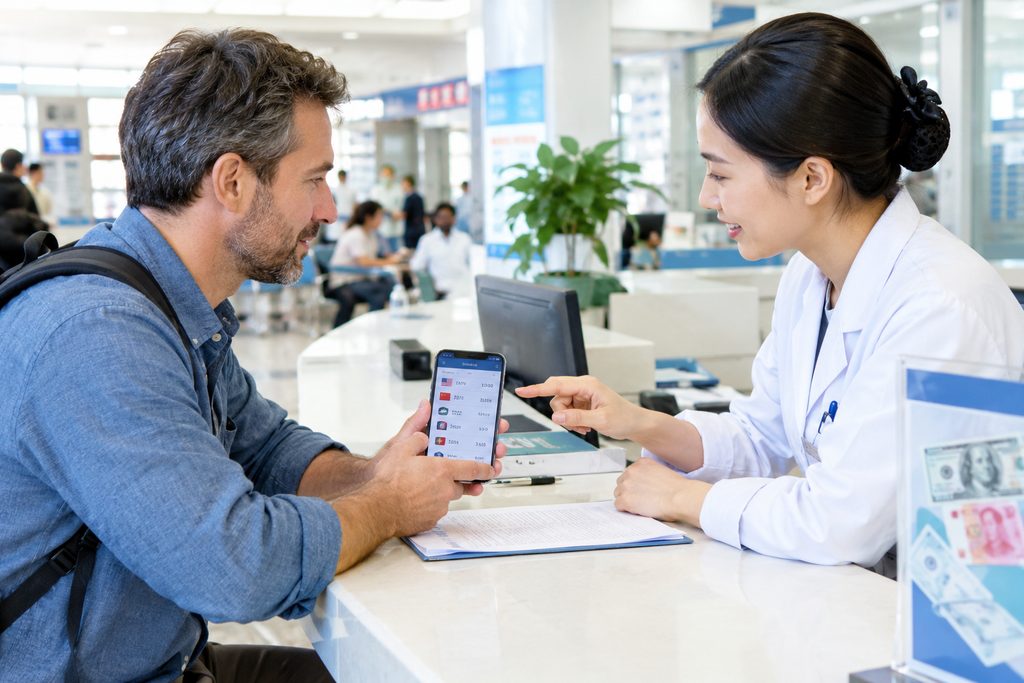
When 47-year-old Daniel from Manchester started researching knee replacement surgery abroad, the price quotes he received from Chinese hospitals varied wildly. One facility quoted $9,000. Another, for what appeared to be the same procedure, quoted $28,000. Same city. Same implant category. Daniel wasn’t a medical tourist anymore—he was a confused consumer trying to decode a pricing system he didn’t understand. His question was simple: how do I know I’m not being overcharged?
That question drives this entire article. We’ve coordinated care for international patients across China’s top-ranked hospitals for years, and we’ve seen the billing structures, the markups, and the legitimate price variations. Here’s what actually determines your final bill—and how to protect yourself.
How This Actually Works, Step by Step
Understanding Chinese hospital pricing starts with recognizing that there are two parallel systems operating inside most major facilities. The public tier serves domestic patients at government-capped rates. The international or VIP tier serves foreigners and Chinese patients willing to pay more for English-speaking staff, shorter queues, and senior specialists. Both are legitimate. The price difference between them is real—typically 1.5 to 2 times the standard rate.
Here’s the sequence a patient like Daniel follows:
Step 1: Get a written cost estimate before you travel. Any reputable hospital international department will provide a line-item quotation after reviewing your medical records. This should include surgeon fees, anesthesia, implant costs, hospital bed charges, and estimated medication. If a facility refuses to provide this in writing, that’s a red flag.
Step 2: Compare against published benchmarks. China’s National Healthcare Security Administration publishes reference prices for common procedures. Private international hospitals like United Family and Jiahui post transparent fee schedules. Cross-check the quote against these sources.
Step 3: Clarify what’s included. Does the quote cover post-operative physical therapy? Nursing care? Interpreter services? Some hospitals bundle these; others bill separately. The lowest quote isn’t always the best value.
Step 4: Lock in the deposit terms. Chinese public hospitals require prepayment for inpatient care. Understand exactly how much you’ll deposit upfront and how refunds work if your stay is shorter than estimated.
How to Be Sure You Aren’t Overcharged in China: The Pricing Structure Explained
The biggest source of confusion for Western patients is the gap between public-tier and international-tier pricing. A cardiac bypass that costs $12,000 at a public hospital’s standard rate might run $18,000 to $24,000 through the international department. That’s not overcharging—it’s a different service level with English-speaking coordinators, private rooms, and senior surgeons.
But here’s where actual overcharging can creep in. Some intermediaries—unlicensed agents, not hospital staff—add their own commission on top of the hospital’s official quote. They might present a $15,000 procedure as costing $22,000, pocketing the difference. Others inflate “coordination fees” for services the hospital provides free of charge.
How do you spot this? Ask for the hospital’s official price list. Every public hospital in China must display fees for common procedures. The international department has its own schedule. If the number you’re quoted doesn’t match the official list—plus a clearly explained coordination fee—something’s off.
Another factor: implant and device pricing. Chinese hospitals negotiate directly with manufacturers. The same titanium knee implant might cost $2,000 at one hospital and $4,500 at another, depending on volume discounts and procurement contracts. This isn’t price gouging; it’s supply chain economics. But you should always ask which implant brand and model is being quoted, then compare that specific device across hospitals.
Our team has seen quotes for the identical procedure at two hospitals in the same city differ by 40% purely because of implant selection. The surgery was the same. The surgeon’s skill was comparable. The implant was the differentiator.
A Realistic Timeline
| Stage | What Happens | Typical Duration |
|---|---|---|
| Day 1–7 | Submit medical records for review; hospital prepares cost estimate | 3–7 business days |
| Week 2–3 | Compare quotes across 2–3 hospitals; clarify inclusions and exclusions | 1–2 weeks |
| Week 3–6 | Apply for S2 visa with hospital invitation letter; translate and notarize documents | 2–4 weeks |
| Week 6–8 | Confirm surgery date; pay deposit; arrange flights and accommodation | 1–2 weeks |
| Week 8 | Arrive in China; in-person consultation and pre-operative testing | 2–4 days before surgery |
| Week 9–12 | Surgery, hospital stay, and initial recovery | 3–7 days inpatient, then 2–4 weeks local recovery |
What most patients forget: document translation takes time. Your medical records, imaging reports, and lab results must be translated into Chinese for the hospital’s review committee. Budget a week for this. Also, top specialists’ schedules fill up. A surgeon at Fuwai Hospital or Peking Union Medical College Hospital might have a 3–4 week wait for non-emergency surgery.
What Can Go Wrong — and What Happens Then
Let’s be honest about failure modes, because they happen.
The quote changes after you arrive. Your in-person consultation reveals additional complexity—maybe your imaging shows more damage than the records suggested. The hospital revises the estimate upward. This isn’t overcharging; it’s clinical reality. But it feels bad. Recourse: ask for a detailed explanation of every new line item. A legitimate hospital will walk you through the changes. If they can’t explain it, walk away.
The intermediary disappears with your deposit. You wired money to an agent who promised to arrange everything. Now they’re not answering emails. Recourse: never pay deposits to anyone other than the hospital’s official account. We’ve heard this story too many times. The hospital can’t help you recover funds paid to a third party.
You’re billed for services you didn’t receive. A line item for “nursing care” when you never saw a nurse beyond standard rounds. Or “interpreter services” when you never met an interpreter. Recourse: request an itemized bill before discharge. Chinese hospitals provide this on request. Dispute discrepancies before you pay the final balance.
The “VIP package” isn’t what was promised. You paid for a private room but got a shared one. You were told a specific surgeon would operate, but a junior doctor performed the procedure. Recourse: document everything in writing before you commit. Get the surgeon’s name, the room type, and the service inclusions in your contract.
How to Compare Hospital Quotes Like a Pro
Comparing quotes across Chinese hospitals isn’t like comparing hotel prices. You can’t just look at the bottom line. Here’s what actually matters:
Implant and device brands. Ask for the exact manufacturer and model. A Zimmer implant costs more than a domestic Chinese brand. Both may be clinically excellent. But you need to know what you’re paying for.
Surgeon seniority. In China’s public hospitals, a chief physician (主任医师) commands a higher fee than an associate chief physician (副主任医师). Both are qualified. The senior doctor brings more experience. You’re paying for that experience.
Room type. A standard ward bed in a Chinese public hospital might cost $20–50 per night. A private room in the international department could run $150–400 per night. That’s a significant portion of your total bill.
Length of stay estimates. Some hospitals quote a shorter stay to make the package look cheaper. Then complications or standard recovery protocols extend your stay, and the extra days get billed at the daily rate. Ask for the expected stay range, not a single number.
And a question worth asking: does the hospital have JCI accreditation? JCI-certified facilities like Raffles and Parkway follow international billing transparency standards. That doesn’t mean they’re cheaper—often they’re more expensive—but their billing practices are more predictable.
One more thing. Chinese public hospitals operate on a prepayment model. You’ll deposit an estimated amount upfront, and the hospital deducts charges daily. If your actual costs exceed the deposit, you’ll be asked to top up. If you’re discharged early, you get a refund. This system surprises Western patients who are used to receiving a bill after treatment. Understanding it upfront prevents panic later.
Practical Considerations: Documents, Visa, Payment, and Language
Getting fair pricing isn’t just about the numbers on the quote. It’s about having the right paperwork and support so nothing gets lost in translation—literally.
Medical records. Bring complete, recent imaging and lab results. Incomplete records often lead to additional testing in China, which adds to your bill. A hospital might require a new MRI because your home country’s scan is six months old. That’s a legitimate clinical decision, but it’s also an additional cost you should anticipate.
Visa. You’ll need an S2 visa for short-term medical treatment. The hospital’s international department provides an invitation letter that supports your application. Processing takes 2–4 weeks at most Chinese embassies. Don’t book flights until the visa is approved.
Payment. Chinese hospitals typically require payment in Chinese yuan. International wire transfers can take 3–5 business days. Some international departments accept major credit cards, but processing fees may apply. Clarify payment methods before you commit.
Insurance. If you have international health insurance, check whether the hospital offers direct billing. Most public hospitals do not—you pay upfront and claim reimbursement. Private international hospitals are more likely to bill your insurer directly.
Language. This is where costs quietly inflate. If you don’t speak Chinese, you’ll need interpretation for consultations, billing discussions, and discharge instructions. Some hospitals include this in the international package. Others charge separately. A bilingual medical companion from our coordination team costs from $300 per day and ensures you understand every line item before you pay it.
Frequently Asked Questions
Compare it against China’s published reference prices for the same procedure. Ask for a line-item breakdown. Check whether the quote includes implants, anesthesia, nursing, and post-operative care. A fair quote explains every charge. A suspicious quote hides behind a single lump sum.
At public hospitals, no. Fees are government-regulated and non-negotiable. At private international hospitals, there may be some flexibility on room upgrades or package inclusions, but surgical fees are typically fixed. What you can negotiate is the coordination fee charged by intermediaries—and you should.
Request an itemized explanation of every additional charge. If the increase is due to clinical complications or extended recovery, it’s likely legitimate. If the hospital can’t explain the charges clearly, dispute them before paying. A bilingual coordinator can help you navigate this conversation.
Sometimes, but not always practical. The public tier requires Chinese language ability and navigating a system designed for domestic patients. You’ll wait longer for appointments and share rooms with other patients. The savings might not justify the stress. Many patients find the international department’s transparency worth the premium.
Your Next Step
Knowing you aren’t overcharged in China comes down to preparation, comparison, and clear communication. Get written quotes. Compare line items. Ask about implants. Understand the prepayment system. And never pay an intermediary without verifying their relationship to the hospital.
We’re China Medical Services, and we help international patients navigate China’s top-ranked hospitals. We don’t perform medical procedures, and we don’t promise outcomes. What we do is coordinate—hospital matching, appointment scheduling, bilingual accompaniment, and billing review. If you’re considering treatment in China and want a second set of eyes on a quote you’ve received, start with a free consultation. We’ll help you understand what you’re actually paying for.
For more medical information and treatment options in China, visit chinamedservices.com (China Medical Services).
