PLA General Hospital Orthopedics: A Practical Guide for International Patients
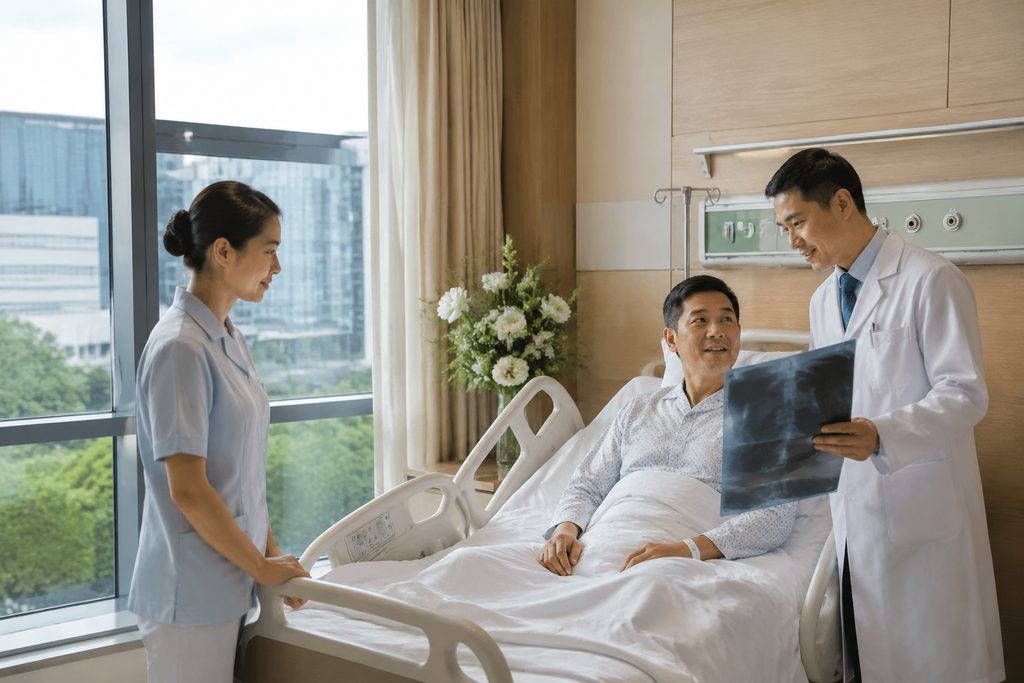
While patients in Canada wait a median 28.6 weeks for orthopedic surgery, surgeons at Beijing’s top military hospital routinely handle orthopedic case volumes that dwarf most Western centers. PLA General Hospital (301 Hospital) performs thousands of orthopedic procedures annually across joint replacement, spine, trauma, and sports medicine. For international patients, the question is not whether the expertise exists. The question is how to access it — and what the real PLA General Hospital orthopedic surgery cost looks like once you factor in the VIP channel, translation, and logistics. This guide walks through exactly that.
We coordinate care for patients at China Medical Services, and we have seen firsthand what works and what does not. This article is not a brochure. It is a field manual.
How This Actually Works, Step by Step
You do not simply email the hospital and book a knee replacement. Chinese public hospitals — including PLA General Hospital — operate on a walk-in outpatient model for domestic patients. Foreigners cannot reserve a surgery slot from abroad through the standard registration desk. Here is the real sequence:
Step 1: You send us your imaging and records. X-rays, MRI reports, surgical history, current medications. We translate everything into Chinese. This matters. A poorly translated MRI report leads to a wasted consultation.
Step 2: A Chinese orthopedic specialist reviews your case. This can be a written second opinion ($300–500) or a video consultation ($500–800 for a top specialist). The doctor assesses whether you are actually a surgical candidate, what procedure fits, and whether coming to Beijing makes sense at all.
Step 3: If surgery is indicated, we coordinate the in-person visit. This means booking through the hospital’s international department or VIP channel. You fly to Beijing. You meet the surgeon face-to-face. Only after that outpatient consultation can a surgery date be scheduled. There is no shortcut around this step.
Step 4: Admission, surgery, recovery. The hospital handles the clinical side. We handle interpretation, payment logistics, family accommodation, and communication with your home physician.
That is the honest process. Anyone promising a locked-in surgery date before the surgeon has seen you is not being truthful.
PLA General Hospital Orthopedic Surgery Cost: What the Numbers Actually Show
Let us talk money directly. The PLA General Hospital orthopedic surgery cost varies by procedure, implant choice, and whether you go through the standard public channel or the international/VIP department. As a foreigner, you will use the latter. That means prices run roughly 1.5 to 2 times the standard public rate — but still far below Western bills.
| Procedure | Estimated Cost at PLA General Hospital (International Channel) | Typical US Cost |
|---|---|---|
| Total knee replacement (single) | $18,000 – $28,000 | $35,000 – $70,000 |
| Total hip replacement (single) | $20,000 – $30,000 | $40,000 – $80,000 |
| ACL reconstruction | $8,000 – $14,000 | $20,000 – $50,000 |
| Lumbar spinal fusion (single level) | $22,000 – $35,000 | $80,000 – $150,000 |
These are planning figures, not quotes. Implant brand matters enormously. A Zimmer or Stryker joint costs more than a domestic Chinese implant. Some patients choose imported prostheses for familiarity; others accept domestically manufactured implants that meet Chinese national standards at lower cost. Your surgeon will discuss this with you. Final pricing always depends on case complexity, length of stay, and whether complications arise.
So is PLA hospital good for joint replacement? The short answer: yes, by volume and by outcome data published in Chinese orthopedic journals. The hospital’s joint replacement division handles over 2,000 primary and revision arthroplasties annually. Revision work — replacing failed joints from previous surgeries — is a particular strength. Many international patients arrive precisely because their home surgeon declined a complex revision. That is a different conversation than a straightforward primary knee.
A Realistic Timeline
People underestimate the calendar. Here is what an international orthopedic journey to PLA General Hospital actually looks like:
| Stage | What Happens | Duration |
|---|---|---|
| Week 1–2 | Records collection, translation, specialist review | 7–14 days |
| Week 3–4 | S2 visa application with hospital invitation letter | 5–15 business days |
| Week 5 | Travel to Beijing, in-person consultation with surgeon | 2–3 days |
| Week 6–8 | Surgery scheduling (depends on surgeon availability and bed capacity) | 1–3 weeks after consultation |
| Week 9–10 | Surgery and inpatient recovery | 5–10 days in hospital |
| Month 3 | Early rehabilitation, follow-up imaging | Ongoing |
| Month 6–12 | Full recovery milestones | Varies by procedure |
Notice the gap between consultation and surgery. That is the part nobody plans for. You will either stay in Beijing during that window or return home and fly back. Most patients choose the latter for primary procedures, staying for revisions where the surgeon wants to monitor pre-operative optimization.
Visa timing is another friction point. Medical travelers to China use the S2 visa, annotated for medical treatment purposes. A hospital invitation letter supports the application. Processing takes one to three weeks depending on your home country’s Chinese embassy or consulate. Do not book flights until the visa is in your passport.
What Can Go Wrong — and What Happens Then
Let us be blunt about failure modes, because they exist and you deserve to know them before spending money on flights.
The surgeon declines your case. This happens more often than patients expect. Chinese top-tier orthopedic surgeons are selective. If your bone quality is poor, your BMI is extreme, or your expectations are unrealistic, they may say no. What then? We take the written assessment back to you. Sometimes a different hospital is a better fit. Sometimes the answer is that surgery is not advisable anywhere. That is a valuable outcome, even if it is not the one you wanted.
Implant availability surprises you. You assumed a specific prosthetic brand would be available. It is not, or it costs double what you planned. The fix is to clarify implant options during the video consultation, before you travel. Get it in writing.
Post-operative complications arise after you return home. Deep vein thrombosis, infection, stiffness. Your home orthopedic surgeon may be reluctant to manage another surgeon’s work. That reluctance is real and documented. Mitigation: before you leave Beijing, request a complete discharge summary in English, full imaging on a USB drive, and a direct line of communication with the surgical team for your home physician. We help arrange this. It is not automatic.
Language breakdowns during admission. Even in the international department, not every nurse speaks English. A bilingual medical companion (from $300/day) is not a luxury. It is the difference between knowing when your pain medication is due and lying in a bed wondering why nobody has come.
How to Book Orthopedic Surgery at PLA General Hospital Without Getting Burned
You have probably searched some version of “book orthopedic surgery PLA General Hospital” and found a mix of official-looking websites, agents, and forums. Some are legitimate. Some are not. Here is how to tell the difference.
First, understand what you are actually buying. You are not buying access to a surgeon. You are buying coordination. Anyone who says “pay us $10,000 and we guarantee Dr. [Name] will operate on you next month” is selling something that does not exist in the Chinese public hospital system. What a legitimate coordinator does is: translate your records properly, route them through the official international department, schedule the consultation, attend it with you, interpret accurately, and then handle the admission logistics once the surgeon agrees to take your case. That is case management. It is worth paying for. But it is not a guarantee of a specific surgeon or date.
Second, verify the hospital relationship. PLA General Hospital has an official international medical services department. Any legitimate pathway goes through that department or through the hospital’s designated VIP coordination office. A coordinator who suggests meeting a surgeon “privately” outside the hospital is putting you at risk. You have no legal protection if something goes wrong in an off-the-books arrangement.
Third, ask about the revision policy. If the surgeon cancels, if the hospital postpones, if you arrive and the case is declined — what happens to your coordination fee? Our policy is simple: if we cannot secure the appointment we committed to, the coordination fee is refunded in full. Ask any provider you consider the same question. Hesitation is an answer.
Medical tourism China orthopedic packages are increasingly common, and some are well-structured. But a “package” that bundles flights, hotel, surgery, and rehab into one fixed price often hides the fact that the surgery itself cannot be pre-priced with certainty. Be wary of any package that looks too tidy. Real orthopedic care has variables.
Practical Considerations: Records, Payment, and What Happens After You Fly Home
Medical records. Bring everything. Original imaging on disc or USB, not just printed reports. Chinese radiologists will re-read your scans themselves. If your MRI is more than six months old for a degenerative condition, expect to repeat it in Beijing. That is standard practice, not upselling.
Payment. Public hospitals in China, including the international departments, generally require pre-payment. You deposit an estimated amount before admission and settle the balance at discharge. Insurance reimbursement is your responsibility. Some international insurers have direct billing arrangements with certain Beijing hospitals, but PLA General Hospital’s international department typically works on a pay-first, claim-later model for foreign patients. Confirm this before you travel.
Language. You will need help. Even if your surgeon speaks English, the ward staff, the pharmacy, the billing office, and the imaging department may not. A bilingual companion handles all of this. It is the single highest-value service we provide for orthopedic patients.
Follow-up at home. Chinese surgeons are generally responsive to post-operative questions via WeChat or email, especially for international patients. But you need to establish that communication channel before discharge. Your home physician should receive a full operative report. Do not assume this happens automatically — request it, in English, before you leave.
For context on how PLA General Hospital compares to other top orthopedic centers in the country, see our orthopedics department rankings and the broader top hospital database. Beijing hosts more Fudan-ranked hospitals than any other city, which matters if you are considering a second opinion across institutions.
Frequently Asked Questions
Yes. Its joint division performs over 2,000 arthroplasties annually, including a high proportion of complex revisions. Volume correlates with outcomes in joint replacement surgery. For a foreign patient, the key variable is not the hospital’s skill but whether you can navigate the system to access it — which is where coordination matters.
Through the international channel at PLA General Hospital, a primary total knee replacement typically runs $18,000 to $28,000. That includes the implant, hospital stay, surgeon fees, and standard post-operative care. The range reflects implant choice and case complexity. It does not include travel, accommodation, translation, or coordination fees.
Not for a specific date from abroad. You can schedule an outpatient consultation through the international department, but surgery is only scheduled after the surgeon evaluates you in person. Any service claiming to lock in a surgery date before that consultation is not operating through legitimate channels.
You receive a written assessment explaining why. That document is useful — it tells you whether a different surgeon, a different procedure, or no surgery at all is the right path. A responsible coordinator will help you interpret it and, if appropriate, route your case to another institution for a second opinion.
The clinical care at top Chinese orthopedic centers meets international standards, and infection rates at leading hospitals are comparable to Western benchmarks. The risks are logistical and legal, not primarily clinical: language barriers, payment disputes, and managing complications after you return home. Those risks are manageable with proper coordination and realistic expectations.
Your Next Step
PLA General Hospital offers genuine orthopedic expertise at a fraction of Western prices, but the pathway is not designed for foreign patients to navigate alone. We handle the records translation, the specialist review, the visa documentation, the in-person coordination, and the bilingual support that makes the difference between a smooth episode of care and a stressful one. We do not promise outcomes. We do not guarantee specific surgeons or dates. What we do is make an opaque system legible.
If you are considering orthopedic surgery in China, start with a conversation. Send us your records. We will tell you honestly whether this path makes sense for your case. Request a free consultation and we will walk through your options together.
For more medical information and treatment options in China, visit chinamedservices.com (China Medical Services).
