How to Tell a Clinic From a Hospital in China: A Guide for Foreign Patients
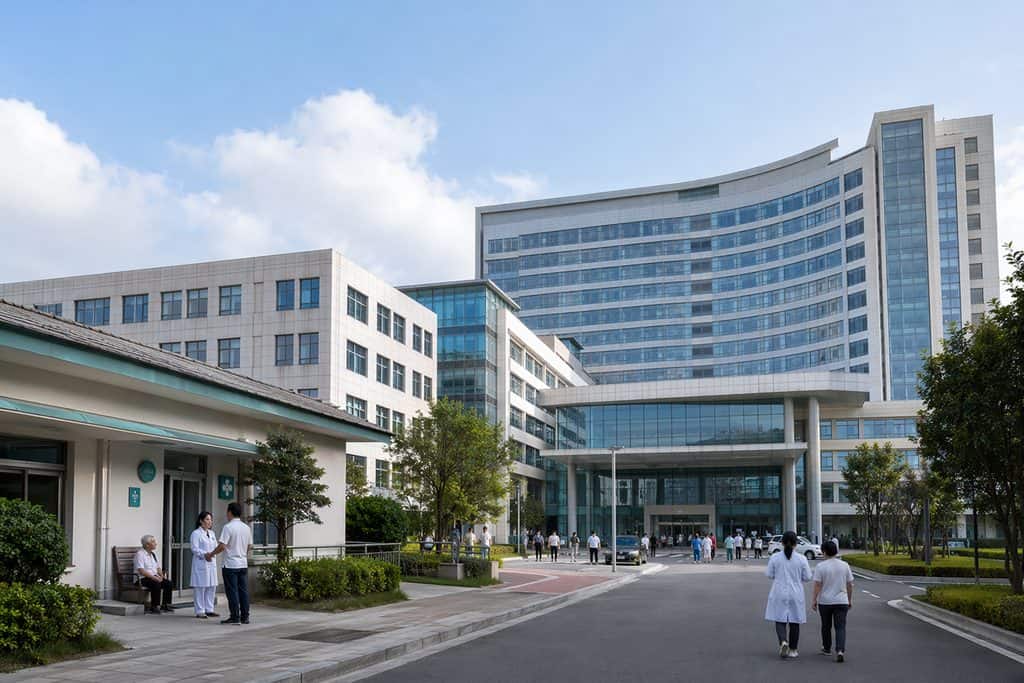
According to China’s National Health Commission, the country has over 35,000 medical institutions. Only about 3,000 of those are hospitals. The rest are clinics, community health centers, and outpatient departments. If you are a foreign patient planning surgery or complex treatment, knowing how to tell a clinic from a hospital in China is not a semantic exercise. It determines whether you can get an MRI at 9 p.m., whether an anesthesiologist is on site, and whether your insurance will even recognize the facility.
We have coordinated care for international patients at more than 340 top-ranked hospitals across 37 Chinese cities. The confusion between clinics and hospitals is one of the most common issues we untangle in the first consultation. A clinic might look modern. It might have English-speaking staff. But it cannot do what a tertiary hospital can. Here is how to see the difference clearly.
How This Actually Works, Step by Step
You are sitting at home, researching a procedure. A website shows a beautiful facility in Shanghai. The name says “International Medical Center.” Is it a hospital or a clinic? The answer changes everything about your planning. Here is the sequence we walk every patient through.
First, you identify the facility’s official Chinese designation. Every licensed medical institution in China falls into specific legal categories. A hospital is called a yiyuan. A clinic is a menzhenbu or zhensuo. This distinction is written into the facility’s license, and it dictates what the facility is legally allowed to do.
Second, you check the facility’s grade. Public hospitals in China are ranked on a three-tier system. Level 3 is the highest. Within Level 3, there are sub-grades: 3A is the top. So when someone asks what is a level 3 hospital in China, the answer is: a hospital with the highest government rating for comprehensive capability, staffing, equipment, and clinical volume. A clinic has no such grade. Clinics are not hospitals, period.
Third, you verify whether the facility has an inpatient department. This is the single clearest signal. Hospitals admit patients overnight. Clinics generally do not. If you need surgery requiring general anesthesia, you need a facility with inpatient beds, a blood bank, an ICU, and a 24-hour laboratory. Clinics do not have these.
Fourth, you check accreditation. Some private facilities in China carry JCI accreditation. That is meaningful. But JCI accreditation does not turn a clinic into a hospital. A JCI-accredited clinic is still a clinic. It may be excellent for outpatient care. It is not the place for a spinal fusion.
What a Hospital Actually Is in China — and Why the Grade Matters
A hospital in China is a licensed institution with inpatient beds, operating rooms, diagnostic imaging, laboratory services, and emergency capacity. The government grades public hospitals on a scale from Level 1 to Level 3, with Level 3 subdivided into 3A, 3B, and 3C. Level 3A is the highest designation. These are the hospitals that appear on the Fudan University hospital rankings, which cover the top 100 comprehensive hospitals and top 10 specialty hospitals across 45 departments.
The numbers tell the story. A Level 3A hospital like Fuwai Hospital in Beijing performs over 14,000 cardiac surgeries per year. That is more than any cardiac center in the world. A typical outpatient clinic sees perhaps 50 to 100 patients a day. The scale difference is not just about volume. It is about what happens when something goes wrong at 2 a.m. during your recovery. A hospital has a code team. A clinic calls an ambulance.
But here is the nuance. Not every hospital is equal. A Level 2 hospital in a smaller city may have fewer specialists and older equipment than a top private clinic in Shanghai. The grade tells you about government classification. It does not tell you everything about clinical quality. That is why we always recommend checking the Fudan specialty rankings for your specific condition. Our department rankings by specialty can help you see which hospitals lead in oncology, orthopedics, cardiac surgery, and more.
A Realistic Timeline
Planning around the clinic-versus-hospital question takes time. Here is what a realistic sequence looks like for a foreign patient considering surgery in China.
| Stage | What Happens | Realistic Duration |
|---|---|---|
| Week 1 | You gather existing medical records, imaging, and pathology reports. | 3–7 days |
| Week 2 | Documents are translated into Chinese. This step is often forgotten. It takes longer than people expect. | 5–10 days |
| Week 3–4 | A Chinese specialist reviews your case. A written second opinion costs $300–500. A top-specialist video consultation runs $500–800. | 7–14 days for scheduling |
| Week 5–6 | You apply for an S2 visa with the hospital’s invitation letter and medical documentation. | 10–20 business days, varies by consulate |
| Week 7–8 | You arrive in China. First outpatient consultation at the hospital. Additional tests may be ordered. | 2–5 days for tests and results |
| Week 9–10 | Surgery is scheduled. In public hospitals, surgery cannot be booked before the in-person consultation. International departments can sometimes coordinate faster. | 1–4 weeks lead time, varies by surgeon and department |
People underestimate the document translation step. They also underestimate how long it takes to get a slot with a top surgeon. A famous specialist in oncology or cardiac surgery may have a waiting list of several weeks even through the international department. Planning for 8 to 12 weeks from first contact to surgery is reasonable. Planning for 4 weeks is not.
What Can Go Wrong — and What Happens Then
The most common failure we see is a patient choosing a clinic because the website looked polished and the staff answered emails quickly. Then they arrive and discover the facility cannot perform the procedure they need. Or they discover the clinic is not recognized by their insurance. Or they discover the clinic has no inpatient beds, so they must transfer to a hospital anyway — paying twice and losing time.
Another failure mode: assuming that because a facility has “International” in its name, it is a hospital. Some private clinics use this branding. Some are excellent. But branding is not a license category. Always verify the facility’s government registration. If a facility cannot show you its hospital license, it is not a hospital.
What happens if you realize you are at the wrong type of facility? You can transfer. We have helped patients move from private clinics to Level 3A hospitals mid-planning. The key is recognizing the problem before you pay for surgery. If you are already in China and a clinic tells you they can do a complex procedure, ask one question: “Where is your ICU?” If the answer is anything other than “on the same floor as the operating room,” leave.
How to Choose a Safe Hospital for Surgery in China
The question of how to choose a safe hospital for surgery in China comes down to four checks. First, verify the Level 3A designation. Second, check the Fudan specialty ranking for your specific procedure. A hospital may be famous for cardiology but average for orthopedics. Third, confirm the hospital has an international department or a VIP ward. This matters more than most foreigners realize. Public hospital standard wards operate in Chinese. Nurses may not speak English. The international department provides bilingual coordination, but it costs 1.5 to 2 times the standard rate.
Fourth, ask about surgical volume for your specific procedure. A hospital that does 3,000 knee replacements a year is different from one that does 300. Volume correlates with outcomes in surgery. This is not marketing language. It is the same logic used by the Leapfrog Group in the United States for hospital safety grades.
For patients comparing JCI accredited hospitals in Shanghai vs private clinics, the distinction is straightforward. JCI accreditation means the facility meets international standards for patient safety and quality management. Several private hospitals in Shanghai carry JCI accreditation. They offer English-speaking staff, direct insurance billing, and Western-style care. But they are still hospitals — with inpatient beds, operating rooms, and 24-hour emergency capacity. A private clinic, even a good one, does not have that infrastructure. If you need a colonoscopy, a clinic is fine. If you need a liver resection, it is not.
Practical Considerations: Records, Visas, Payment, and Language
Bring every medical record you have. Imaging on CD or USB, pathology slides if relevant, lab reports, and a summary of your current medications. Translation into Chinese is essential. Some hospitals require it before the first consultation. Our team handles this as part of case management.
Visa category matters. For medical treatment in China, the S2 visa is the applicable short-stay category, used for private affairs including medical treatment. Family members accompanying you also apply for S2. The M visa is for commercial and trade activities only — it is not a medical visa, and using it for treatment can create problems. Processing times vary by consulate. We provide guidance on the supporting documents hospitals need to issue.
Payment is another practical point. Public hospitals in China require prepayment. International insurance is usually reimbursed after the fact, not billed directly. Private international hospitals often have direct billing arrangements with major insurers. If you are comparing best international hospital Beijing cost comparison, factor this in. A private hospital may cost more upfront but simplify insurance. A public hospital costs less but requires you to pay first and claim later.
Language is the quiet obstacle. A Level 3A hospital may see 10,000 outpatient visits a day. Signage is in Chinese. Queues are managed by ticket numbers shouted in Mandarin. A bilingual medical companion changes this experience. It is not a luxury. It is the difference between getting your CT scan at 10 a.m. and wandering the wrong building until 3 p.m.
Frequently Asked Questions
Check the facility’s government license. In China, hospitals are registered as yiyuan and clinics as zhensuo or menzhenbu. The license also shows the facility’s grade — Level 3A is the highest. If the facility cannot produce this documentation, treat it as a clinic regardless of its branding.
The difference is legal and structural. Hospitals have inpatient beds, operating rooms, blood banks, and 24-hour emergency departments. Clinics provide outpatient services only. For foreigners, the practical difference is that complex surgery and overnight recovery require a hospital. A clinic cannot legally provide them.
Minor procedures under local anesthesia are sometimes performed in clinics. But any surgery requiring general anesthesia, inpatient recovery, or blood transfusion must be done in a hospital. If a clinic offers you major surgery, that is a red flag. Walk away.
Not necessarily. JCI accreditation measures process and safety standards. Level 3A measures government classification and clinical volume. Some private JCI hospitals are excellent for routine surgery. But for complex cases, top public Level 3A hospitals often have more experienced specialists and higher surgical volumes. The Fudan rankings are a better guide for specific specialties.
For medical treatment, the S2 visa is the appropriate short-stay category. It requires supporting documents from the hospital, including an invitation letter and treatment plan. Approval is not guaranteed and requirements vary by consulate. We help patients prepare the documentation, but the final decision rests with the visa officer.
Your Next Step
Knowing how to tell a clinic from a hospital in China protects you from wasted time, unnecessary cost, and clinical risk. The distinction is legal, structural, and practical. A clinic is for outpatient care. A hospital is for surgery, inpatient recovery, and complex diagnosis.
Our team at China Medical Services helps international patients identify the right facility, coordinate appointments, and navigate the system. We do not perform medical procedures and we do not guarantee clinical outcomes. What we do is case management: translating records, connecting you with the right specialty team, and supporting you on the ground. If you are unsure whether the facility you are considering is a hospital or a clinic, start with a free consultation. We will help you verify it before you book a flight.
For more medical information and treatment options in China, visit chinamedservices.com (China Medical Services).
