How to Verify an X-Ray Report’s Source: A Patient’s Practical Guide
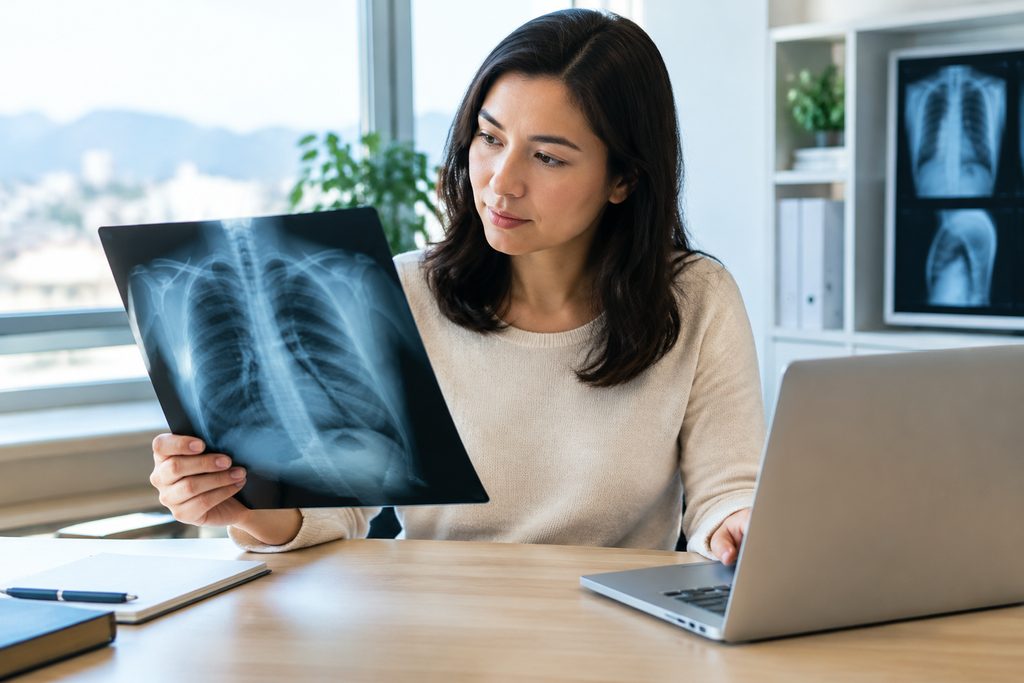
How to Verify an X-Ray Report’s Source: A Practical Guide for Patients
You have a CD, a film, or a PDF. The report says “moderate degenerative changes” or “no acute abnormality.” But who actually read that scan? How to verify an X-ray report’s source is a question that matters more than most patients realize. A 2023 study in the Journal of the American College of Radiology found that up to 30% of imaging interpretations contain discrepancies when re-read by a subspecialist radiologist. That is not a trivial number. If you are considering treatment in another country — including China — the credibility of that first report shapes everything that follows.
This guide walks through the practical steps. We will cover what a legitimate report contains, how to confirm the radiologist’s credentials, how to spot red flags, and what to do when the source is unclear. No medical advice here — just the verification process, explained clearly.
Key Takeaways
- A legitimate X-ray report must identify the reading radiologist by name, license number, and facility — missing any of these is a red flag.
- China’s top-tier hospitals perform enormous imaging volumes; a radiologist at a Fudan-ranked hospital may read 50-100 studies per day, building pattern recognition that smaller facilities cannot match.
- Verifying the source of a foreign report is harder than domestic ones — language barriers, different licensing systems, and inconsistent documentation standards create real friction.
- Before you pay for any second opinion or travel for treatment, confirm that the report’s source can be independently verified — otherwise you are building on sand.
The Problem: A Report Is Only as Good as Its Reader
Radiology errors are not rare. A widely cited 2015 meta-analysis by Bruno et al. in Radiology estimated the daily error rate for radiologists at 3-5%. That sounds small until you do the math: a busy hospital reading 500 studies per day produces 15 to 25 interpretive errors every single day. Some are minor. Some change treatment entirely.
But here is the deeper issue: patients rarely know who read their scan. The report arrives through a portal or on paper. A signature may be present. Or not. The hospital name might be there. Or just a logo. When you then carry that report to another doctor — in your home country or in China — that doctor must decide whether to trust it or order a re-read. If the source cannot be verified, the report’s clinical value collapses.
This problem compounds for international patients. A report from a facility you have never heard of, written in a language you do not read, with a licensing system you do not understand — how do you even begin to verify it?
Why Source Verification Matters Before Any Second Opinion
Before we get to the how, let us establish the why. A second opinion is only as valuable as the information it is based on. If you send an unverified X-ray report to a specialist in Beijing or Shanghai, you are asking them to interpret an interpretation. That is not a second opinion. That is a game of telephone.
Clinical Volume Builds Diagnostic Accuracy
Radiologists in China’s top hospitals read at a scale that is difficult to comprehend from a Western perspective. A single tertiary hospital in Shanghai may perform over 10,000 imaging studies per day across CT, MRI, X-ray, and ultrasound. A subspecialist radiologist there might read exclusively chest imaging — nothing else — for years. That focused repetition builds pattern recognition that general radiologists simply cannot accumulate.
Compare that to a community hospital in the United States where a general radiologist might read everything from mammograms to brain MRIs in a single shift. The difference in subspecialty depth is structural, not individual. It is about how the system is organized.
Documentation Standards Reveal Institutional Quality
High-quality radiology departments follow strict documentation protocols. The report includes the patient’s full name and medical record number, the date and time of the study, the modality and body part, the clinical indication, the technique used, a detailed findings section, and an impression. The reading radiologist signs with their full name and license number. The facility name and accreditation status appear clearly.
When any of these elements is missing, the report’s source becomes harder to verify. And when the source is hard to verify, the report’s value drops — regardless of what the images actually show.
Cost of Getting It Wrong
A misread X-ray leads to one of two outcomes. Either a real problem is missed, delaying treatment that should have started months earlier. Or a non-problem is flagged, triggering unnecessary biopsies, surgeries, or anxiety. Both are expensive. Both are avoidable with proper verification.
For patients considering treatment in China — where the cost advantage is real but the distance is significant — verifying the source before you travel is not optional. It is the foundation of a sound decision.
How to Verify an X-Ray Report’s Source: Step-by-Step
This is the section you came for. Here is the process, in order, with the specific details that matter.
Step 1: Identify the Reading Radiologist
Open the report. Find the signature block. A legitimate report always names the radiologist who interpreted the study. Not just the facility — the individual. If the report says “Reviewed by: Dr. Chen” with no last name, no license number, no contact information, that is a problem. If there is no name at all — only a hospital stamp — that is a bigger problem.
What you need: full name, professional license number, and ideally the radiologist’s subspecialty (e.g., musculoskeletal radiology, neuroradiology). In the United States, you can verify a physician’s license through the state medical board. In China, radiologists are licensed through the National Medical Products Administration (NMPA) and registered with provincial health commissions. The license number format varies by province, but it always exists.
Step 2: Confirm the Facility’s Accreditation
The facility name should appear on the report. But a name is not verification. You need to confirm that the facility is what it claims to be. In China, the most credible verification comes from the Fudan University Hospital Rankings, which evaluate hospitals on clinical reputation, research output, and academic standing. The top 100 comprehensive hospitals are grouped into five tiers (A++++ through A), with no individual numerical ranking. You can browse these hospitals by city on our top-ranked hospitals directory.
For international patients, JCI (Joint Commission International) accreditation is another signal. JCI audits hospitals against international patient safety and quality standards. A report from a JCI-accredited facility carries more weight than one from an unaccredited facility — not because the radiologist is necessarily better, but because the documentation and verification processes are more rigorous.
Step 3: Check the Report’s Internal Consistency
Read the report carefully. Does the patient name match yours? Does the date match when you had the scan? Does the body part match what you actually had imaged? Does the clinical indication match the reason your doctor ordered the study? You would be surprised how often reports get attached to the wrong patient file.
Also look at the technique section. A chest X-ray report should mention the view (PA, lateral, or both). A spine X-ray should mention the levels imaged. If the technique section is missing or generic, that tells you something about the department’s documentation standards.
Step 4: Request the DICOM Files, Not Just the Report
This is the step most patients skip. The report is an interpretation. The DICOM files are the raw data. Any qualified radiologist can re-read the images and form an independent opinion — but only if they have the actual image files, not just a PDF of the report or a printed film.
When you request your images, ask for the DICOM format specifically. Not JPEGs. Not screenshots. DICOM files contain the full image data plus metadata including the facility name, equipment model, and acquisition parameters. That metadata is itself a verification tool — it confirms where and how the image was acquired.
Red flags that should make you pause: a report with no radiologist name, no facility address, no license number, or no technique section. A report that arrived without images. A facility that cannot or will not provide DICOM files. Any of these suggests the source cannot be independently verified — and you should treat the report accordingly.
When the Report Comes from Another Country
Verifying a domestic report is straightforward by comparison. You know the licensing system. You can call the facility. You can look up the doctor. But when the report comes from China — or any foreign country — the process changes.
Chinese hospital reports are written in Chinese. The radiologist’s name appears in Chinese characters. The license number follows a format you have never seen. The facility name may be translated inconsistently. None of this means the report is unreliable. It means the verification process requires different tools.
This is where a bilingual coordinator earns their value. A medical coordinator who reads Chinese can confirm the radiologist’s name and license number, check the facility’s Fudan ranking tier, and request the DICOM files in the correct format. They can also confirm whether the report’s findings section matches the impression — something that requires fluency in medical Chinese, not just conversational Chinese.
But you do not need a coordinator for every step. Here is what you can do yourself:
- Check the facility against the Fudan ranking. If the hospital is in the Top 100, that is a strong signal. If it is not, that does not mean it is bad — but it means you should dig deeper.
- Ask for the report in both Chinese and English. A legitimate international department will provide both. If they refuse, ask why.
- Request the DICOM files. This is universal. Every modern hospital can export DICOM. If they cannot, that is a problem.
- Confirm the radiologist’s subspecialty. A neuroradiologist reading a knee X-ray is not ideal. Ask who read the study and what their subspecialty is.
What a Verified Report Enables: Second Opinions That Actually Work
Once you have verified the source — radiologist identified, facility accredited, DICOM files in hand — you can do something powerful. You can get a genuine second opinion from a different institution, in a different country, without traveling.
China’s top hospitals offer written second opinion services for international patients. The process works like this: you submit your verified report and DICOM files. The relevant subspecialty department reviews them. You receive a written analysis with treatment suggestions and direction. The cost for a written second opinion from a top-tier hospital specialist ranges from $300 to $500 — a fraction of what you would pay for a repeat scan and consultation in the United States.
For more complex cases, a video consultation lets you speak directly with the Chinese specialty team. You can explain your symptoms, your goals, and your concerns. They can ask questions and hear your answers in real time. Video consultations with top specialists range from $500 to $800.
What these services do not do: they do not replace an in-person examination. They do not guarantee treatment. They do not prescribe medication. They provide expert analysis of verified imaging data — nothing more, nothing less.
You can explore the full range of departments and their Fudan-ranked hospitals on our specialty departments directory.
Practical Considerations: Documentation, Timing, and Cost
A written second opinion from a top-tier hospital specialist costs $300-$500. A video consultation with a top specialist runs $500-$800. These fees are for the analysis of your existing images and reports — not for new imaging, not for treatment, not for a prescription. The final price varies by hospital and case complexity.
That happens. Discrepancy rates between radiologists are well documented. If the second opinion identifies a discrepancy, you have options: request a third read from a different institution, discuss the discrepancy with your original doctor, or proceed with the second opinion’s recommendation. The key point: you now have two independent interpretations of verified data, and that is a stronger foundation for decisions than any single report.
Your Next Step
Verifying an X-ray report’s source is not glamorous work. It is administrative. It is tedious. But it is the difference between building a treatment plan on bedrock and building it on sand. We are China Medical Services, and our team helps international patients navigate Chinese healthcare — from verifying reports to coordinating second opinions to arranging on-the-ground support. We are not a hospital, and we do not provide diagnoses. What we do is help you confirm that the information you are acting on is real, verified, and worthy of your trust. If you have a report you cannot verify, or if you want a second opinion from a Fudan-ranked specialist, start with a free consultation. We will help you figure out the next step — no pressure, no obligation.
Frequently Asked Questions
Yes. The hospitals used for international patients are JCI-accredited and follow the same international safety standards as top hospitals in the US and Europe. Surgical teams perform high volumes of procedures — often more than their Western counterparts — which studies show leads to better outcomes.
Costs vary by procedure and hospital, but international patients typically save 40-80% compared to US prices — even when factoring in travel and accommodation. A consultation with our team will give you an exact, all-inclusive quote with no hidden fees.
Send us your existing medical reports to get started. We handle everything from hospital selection and appointment scheduling to visa assistance and post-operative recovery planning. Your medical records are reviewed by the specialist before you even book a flight.
For more medical information and treatment options in China, visit chinamedservices.com (China Medical Services).
