Reverse Image Search a Hospital Photo: Identify Chinese Hospitals Before You Travel
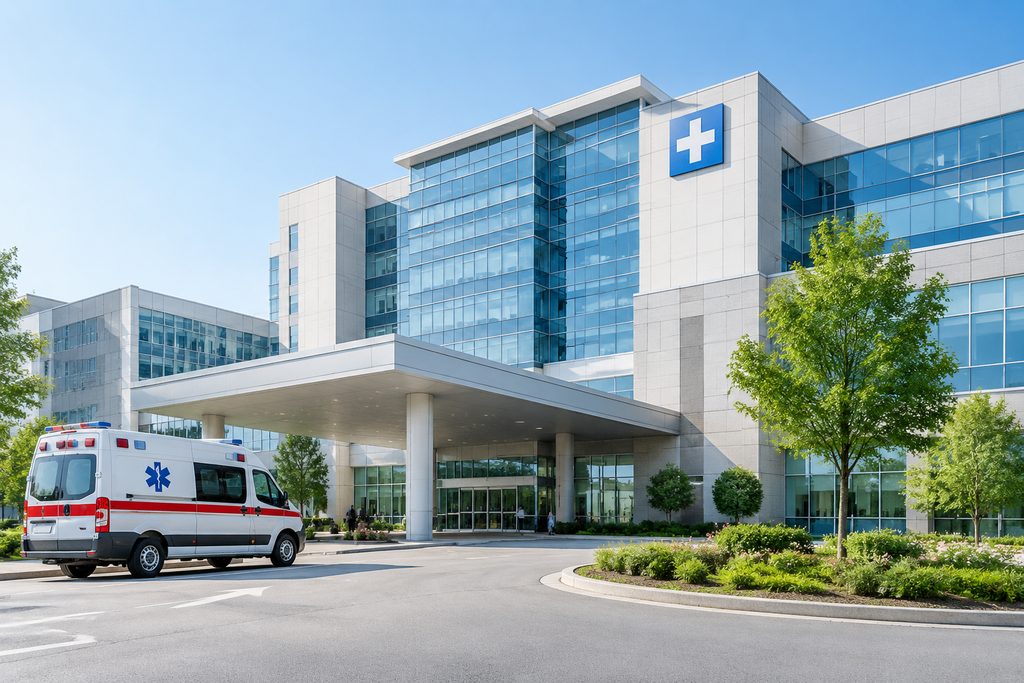
Reverse Image Search a Hospital Photo: The Short Answer
You have a photo of a hospital — perhaps a friend sent it, you found it in a brochure, or you saw it on a forum. You want to know which hospital it is. The honest answer: reverse image search tools like Google Lens, Bing Visual Search, and Yandex Images can sometimes identify a Chinese hospital. But they fail more often than they succeed. China’s internet ecosystem is largely walled off from Western search engines. Many hospital photos simply do not exist in Google’s index.
That means the real question isn’t “can I reverse image search this photo?” It’s “what will I actually do with the answer once I have it?” Identifying the building is step one. Verifying that it is the right hospital for your condition — and that the photo isn’t misleading — is the part that matters.
Who This Is Right For — and Who It Isn’t
Running a reverse image search on a hospital photo makes sense for a specific kind of person. You are probably comparing options for medical travel. Maybe a clinic sent you a photo of their facility. Maybe a medical tourism agency showed you a glossy building shot. Maybe you found a picture in a patient forum and want to know where it was taken.
This process is right for you if:
- You are evaluating a hospital or clinic that you have never visited in person
- You received promotional materials from a medical tourism facilitator and want independent verification
- You saw a hospital photo in a patient review and want to confirm the location before contacting them
- You are planning surgery or major treatment in China and want to verify the facility is real
It is probably not worth your time if:
- The photo is low-resolution, cropped, or heavily edited
- You already have the hospital’s official name and website — in that case, skip the image search and go straight to verification through official channels
- You are trying to identify a small private clinic in a residential area — these rarely appear in Western search indexes
- You are in a medical emergency — image searching is a research tool, not a clinical decision tool
The Options, Compared
Not all reverse image search tools are equal when it comes to Chinese hospitals. Here is what actually works, and what doesn’t.
| Tool | Success Rate for Chinese Hospitals | Best Use Case | Key Limitation |
|---|---|---|---|
| Google Lens | Low to moderate (10–30%) | Identifying landmark-adjacent or internationally known hospitals like Peking Union Medical College Hospital | Limited index of Chinese-language web pages; many Chinese hospital images are not crawled |
| Bing Visual Search | Low (5–20%) | Cross-checking results when Google fails | Similar indexing gaps; often returns visually similar buildings rather than exact matches |
| Yandex Images | Moderate (20–40%) | Identifying distinctive architecture, especially older or Soviet-influenced buildings | Better for Eastern European content; Chinese hospital coverage is inconsistent |
| Baidu Image Search (百度识图) | High (50–70%) | The definitive tool for Chinese hospital photos; indexes Chinese websites, forums, and hospital pages | Requires Chinese-language interface navigation; may require a Chinese phone number for full functionality |
| Manual verification via official hospital websites | Very high (80–90%) | Confirming identity once you have a candidate name | Requires knowing the hospital name or city first; many official sites are Chinese-only |
Here is the practical takeaway. If you are serious about identifying a Chinese hospital from a photo, Baidu Image Search is the tool that actually works. Google and Bing are worth a quick try because they are familiar. But if they come up empty, that is not evidence the hospital doesn’t exist. It just means the photo isn’t in their index.
Yandex occasionally surprises with matches on distinctive architecture. But for the Chinese medical landscape specifically, Baidu is the only search engine with deep enough coverage of Chinese hospital imagery to give you a real answer.
How to Actually Do a Hospital Photo Lookup China Medical Tourism Patients Can Trust
Here is the step-by-step process we recommend when someone asks us how to search a hospital photo online. This works whether you are trying to identify hospital from picture Shanghai, Beijing, Guangzhou, or any other Chinese city.
First, prepare the image. Crop out any text, logos, or signage if possible. Search engines match visual patterns, and text can confuse the algorithm. If the photo shows a hospital sign in Chinese characters, that is actually gold — but you will need to handle it separately. Use a tool like Google Translate’s camera function to read the characters, then search for that text string directly in Baidu or Google.
Second, run the image through Baidu Image Search. Go to image.baidu.com and click the camera icon. Upload the photo. The results page will show visually similar images and, often, the source pages where those images appear. Chinese hospital websites, patient forums, and news articles frequently show up here.
Third, cross-reference any candidate hospital names. If Baidu suggests a name like “Fuwai Hospital” or “Zhongshan Hospital Fudan University”, search that name directly. Look at the official hospital website and compare building photos. Many Chinese hospitals have distinctive architectural features — Fuwai’s campus in Beijing looks nothing like Ruijin Hospital in Shanghai, for example.
Fourth, verify the photo’s context. Was it taken from a promotional brochure? A patient review? A news article? The source matters. A hospital’s own marketing photos will always show the best angle. Patient-taken photos may show the emergency entrance or a specific department building. Neither is inherently misleading, but you need to know which you are looking at.
And here is the thing most people miss: identifying the building is not the same as verifying the hospital’s quality. A photo tells you the building exists. It does not tell you whether the cardiac surgery department has performed 14,000 procedures a year or whether the oncology team appears in the Fudan specialty rankings. For that, you need a different set of tools entirely.
What It Costs — and What You’re Actually Paying For
Reverse image searching a hospital photo costs nothing. Baidu Image Search, Google Lens, Yandex — all free. The cost comes later, when you act on what you find.
If the hospital you identify is a top-tier public hospital in China, expect to pay for medical care through the international department or VIP channel. Ordinary outpatient clinics at public hospitals generally cannot be pre-booked from overseas. You show up, queue, and see whoever is on duty that day. For international patients who want a specific senior specialist and English-language support, the international department is the realistic option. Prices there typically run 1.5 to 2 times the standard rate.
What does that look like in concrete numbers? A cardiac bypass at a top Chinese public hospital costs roughly $12,000 to $20,000. The same procedure in the United States often exceeds $120,000. Even at international-department rates, the gap is substantial.
But here is the part patients don’t anticipate: the coordination costs. If you want someone to verify the hospital, arrange the appointment, translate your records, and accompany you on the day, that is a separate service. At China Medical Services, bilingual medical companion support starts from $300 per day. Written second opinions from top specialists run $300 to $500. A video consultation with a senior expert costs $500 to $800. These are coordination fees, not treatment fees — and they are credited in full toward on-the-ground coordination if you proceed to treatment within 90 days.
Practical Considerations: Verifying a Hospital Photo Before Surgery Abroad
Let’s be direct about what a photo can and cannot tell you. A photo proves a building exists. It does not prove the building is a licensed hospital. It does not prove the hospital has the department you need. It does not prove the surgeon you were promised actually works there.
If you are trying to verify hospital photo before surgery abroad, here is what actually matters:
Licensing. Every legitimate hospital in China has a medical institution license. The hospital’s official website should display its license number, usually in the footer. If a facility cannot show you a license number, walk away.
Rankings and accreditations. China’s most authoritative hospital ranking is the Fudan University Hospital Rankings, published annually. The comprehensive list covers the top 100 hospitals across China. The specialty reputation list ranks the top 10 hospitals in each of 45 specialties. If a hospital claims to be “top-ranked”, check whether it appears in the Fudan list. Our database covers 340+ top-ranked hospitals across 37 cities, all drawn from the Fudan rankings and JCI accreditation lists.
Department reputation. A hospital can be excellent overall but mediocre in your specific specialty. Fuwai Hospital in Beijing is world-class for cardiac surgery — it performs more heart surgeries annually than any hospital on earth. But you would not go there for orthopedic surgery. Check the specialty-specific rankings for your condition before making any decision.
Visa category. If you proceed to treatment in China, you will need an S2 visa with a notation indicating medical treatment as the purpose. Family members accompanying you also apply for S2. The M visa is for commercial and trade activities and is not appropriate for medical treatment. Visa requirements change, so confirm current rules with the Chinese embassy or consulate in your country.
Payment. Chinese public hospitals require prepayment. You deposit funds, treatment is deducted from the balance, and you settle at discharge. International insurance is typically reimbursement-based — you pay first, claim later. Private international hospitals like United Family or Jiahui often offer direct insurance billing, which simplifies things considerably. See our guide to private international hospitals in China for details.
A photo of a hospital building tells you nothing about the surgeon who will operate on you, the infection rate in the operating theater, or the hospital’s track record with your specific condition. Use image search as a starting point, not a decision tool.
Frequently Asked Questions
Sometimes. Baidu Image Search is the most reliable tool for Chinese content, and it succeeds in perhaps half to two-thirds of cases where the photo is clear and the hospital is a major institution. Google and Bing are much less reliable for Chinese hospitals. If the photo includes Chinese signage, translating the text and searching for it directly is often faster than any image search.
That does not mean the hospital is fake. It usually means the photo is not indexed in the search engine you used. Many legitimate Chinese hospitals — especially smaller public hospitals and private clinics — have almost no presence in Western search indexes. Try Baidu. If Baidu also fails, the photo may be cropped from a larger image, heavily edited, or simply not posted anywhere public.
No. A photo can be of any building. Verifying legitimacy requires checking the hospital’s medical institution license, its appearance in authoritative rankings like the Fudan list, and its official website. A medical tourism agency’s brochure photo is not verification. Neither is a reverse image search result.
Not necessarily. Many patients start with a written second opinion or a video consultation. You send your existing examination reports, a Chinese specialist reviews them, and you receive written analysis or speak with the medical team online. This costs far less than a trip and helps you decide whether traveling is worthwhile. Written second opinions from top specialists run $300 to $500. Video consultations run $100 to $800 depending on the specialist’s seniority.
That is common. Many excellent Chinese hospitals have Chinese-only websites or English sites with limited content. The international department usually has some English capability, but it varies. This is where a bilingual coordinator earns their fee — translating records, communicating with the hospital, and managing the logistics. You can attempt it yourself, but the language barrier in Chinese hospitals is real and significant.
Your Next Step
Reverse image searching a hospital photo is a useful first step, but it is only the beginning of the verification process. The building matters less than the department, the surgeon, and the hospital’s track record with your specific condition.
We are China Medical Services, a team that connects international patients with top-ranked Chinese hospitals. We are not a hospital, and we do not diagnose or treat any condition. What we do is help you identify the right hospital for your needs, coordinate appointments, translate records, and navigate the logistics of treatment in China. If you have a hospital photo you cannot identify — or if you have identified it and want to know whether it is the right choice for your condition — request a free consultation and we will help you sort out the next step.
Identifying the building is easy. Choosing the right hospital is harder. Start with the photo, but don’t stop there.
For more medical information and treatment options in China, visit chinamedservices.com (China Medical Services).
