Postpartum Recovery in China: Coordinated Care with Newborn Support
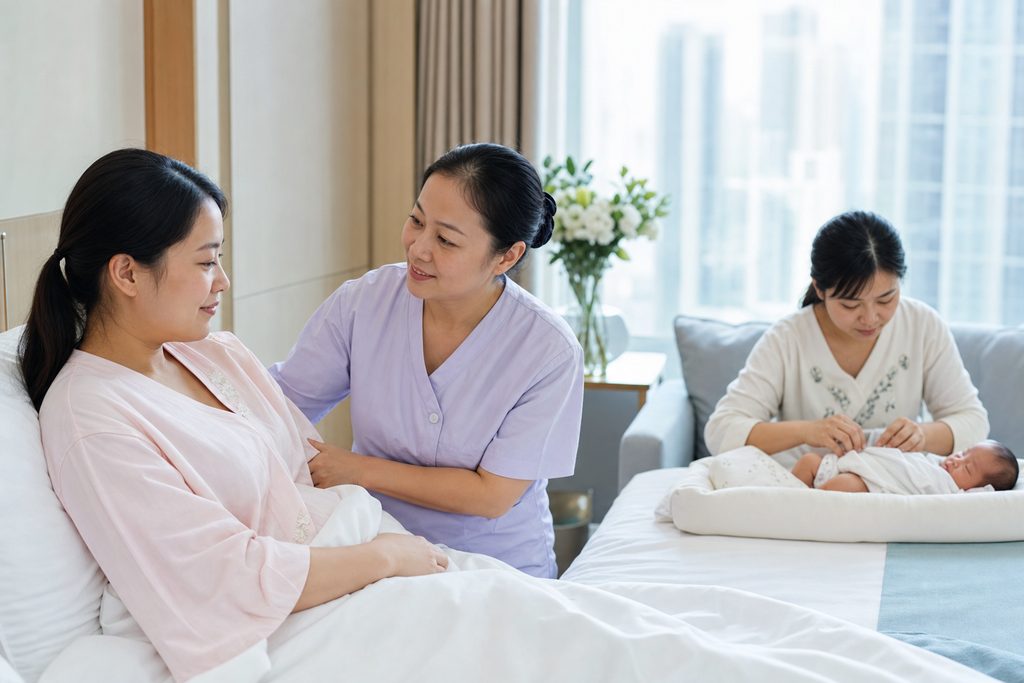
What if the most exhausting weeks of your life came with a team of specialists dedicated entirely to your recovery and your baby’s health? That question sits at the heart of what many new mothers ask when they first encounter the Chinese approach to postpartum care. The system is structured, intensive, and unlike anything most Western parents have experienced. Our team connects international families with exactly this kind of support — coordinating hospital-grade recovery care alongside dedicated newborn specialists, all within China’s top-tier medical facilities.
Key Takeaways
- Dedicated postpartum recovery packages in China bundle maternal healing, newborn care, and lodging — with prices starting from approximately $8,000 for a 28-day stay at a quality confinement center.
- The Chinese “zuo yue zi” tradition has evolved into a structured, medically-informed service model that pairs round-the-clock nanny support with clinical oversight — a model rarely found in Western countries.
- Language barriers and cultural differences are real. Without a bilingual coordinator, navigating hospital discharge, nanny contracts, and newborn screening schedules can overwhelm even the most prepared parents.
- Coordination is everything. Booking a recovery package and newborn care simultaneously — rather than as separate services — reduces administrative friction and ensures continuity of care from delivery through the first month postpartum.
The Problem: Recovering Alone While Caring for a Newborn
Roughly 1 in 7 new mothers in the United States experiences postpartum depression, according to CDC data. Sleep deprivation, physical recovery from childbirth, and the relentless demands of a newborn collide at precisely the moment a mother’s body needs rest. In most Western countries, the support structure is thin. A partner may take a week or two of leave. A family member might visit. Then the mother is largely on her own — managing stitches or a C-section incision, figuring out breastfeeding, and running on fragmented sleep measured in 90-minute increments.
The numbers tell a hard story. A 2018 study published in the Journal of Perinatal Education found that 60% of new mothers reported insufficient postpartum support, with the most acute gap occurring in weeks two through four after birth. That is when family help typically tapers off, but maternal physical recovery is far from complete. The uterine lining takes approximately four to six weeks to heal. Perineal tears need consistent care. And for C-section mothers, the abdominal incision requires weeks of monitored healing — all while lifting and feeding a newborn every two to three hours.
Something has to give. Often, it is the mother’s recovery.
Who We Are
We are not a hospital. Our team does not provide medical treatment, prescribe medications, or make clinical diagnoses. We function as logistical architects — bridging the gap between you and China’s top-tier maternal care infrastructure. When an international patient wants to access China’s postpartum recovery system, we handle the coordination layer: identifying suitable confinement centers or hospital-affiliated recovery wards, arranging bilingual nanny services, managing visa guidance, and ensuring that your newborn’s early screenings and vaccinations happen on schedule. We work across 340+ top-ranked hospitals and their affiliated postpartum facilities in 37 cities. Our role is to make a complex system navigable for families who do not speak Mandarin and have never set foot in a Chinese medical institution.
What Is Postpartum Care Like in China: A Structured Recovery Model
The Chinese approach to postpartum recovery is built around a concept called “zuo yue zi” — literally “sitting the month.” For centuries, this meant a new mother stayed indoors for 30 days, followed strict dietary rules, and was cared for by female relatives. That traditional model has evolved into a sophisticated service industry. Today, postpartum recovery packages China price points reflect a spectrum of options: from in-home confinement nannies to luxury postpartum retreats that rival five-star hotels in amenities while delivering hospital-grade clinical oversight.
What distinguishes the Chinese model from Western postpartum care is the bundling of services. You are not piecing together a lactation consultant here, a night nurse there, and hoping the schedules align. A comprehensive package typically includes a private room, three to six meals per day designed for postpartum healing, 24-hour newborn care by dedicated nannies, daily maternal vital sign checks, and on-call obstetric consultation. The best facilities integrate directly with a parent hospital, meaning a pediatrician or obstetrician can be at your bedside within minutes if a concern arises.
Clinical Volume and Specialized Expertise
China’s largest maternity hospitals deliver staggering patient volumes. A top-tier obstetrics department in Shanghai or Beijing may handle over 15,000 deliveries annually. That volume translates into deep, pattern-level expertise in postpartum complications — the kind of knowledge that comes only from seeing thousands of recoveries. When a confinement nanny has supported 200 postpartum mothers, she recognizes early warning signs that a less experienced caregiver might miss. A postpartum nurse who has monitored 500 C-section incisions develops an intuitive eye for when healing is veering off track.
This is not theoretical. A 2022 review in BMC Pregnancy and Childbirth examined postpartum care models across 12 countries and found that structured, facility-based recovery programs — the kind common in China and parts of East Asia — were associated with a 34% reduction in readmission rates for postpartum complications compared to standard home-based recovery with periodic checkups. The difference was most pronounced for C-section wound infections and breastfeeding-related mastitis.
How Do Chinese Confinement Nannies Help with Newborn Care Differently
The role of a Chinese confinement nanny — called a “yue sao” — goes far beyond what a Western postpartum doula or night nurse typically provides. A yue sao lives with the family or stays in the recovery facility for the full 28 to 42-day confinement period. She handles all newborn care tasks: feeding, burping, diapering, bathing, and umbilical cord stump care. But her scope extends into maternal care as well. She prepares specialized meals, manages the mother’s hygiene routine, and often provides basic lactation support.
The key difference is continuity. A Western night nurse might work eight-hour shifts and rotate with other caregivers. A yue sao is embedded with the family for the entire confinement period. She learns the baby’s cues. She notices subtle changes. By week two, she can often anticipate what the newborn needs before the parents fully register the hunger cue or discomfort signal. This continuity reduces parental anxiety — both parents can sleep through the night, knowing a skilled professional is attending to their baby, while the mother’s body does the repair work that only rest can enable.
Postpartum Recovery Packages China Price: What to Expect
The cost question is usually the first one families ask. And the answer spans a wide range because the market itself is diverse. A standard confinement center stay in a tier-two city like Chengdu or Hangzhou runs from approximately $8,000 to $12,000 for the full 28-day program. In Shanghai or Beijing, mid-range facilities typically charge $15,000 to $25,000. At the upper end, luxury postpartum retreat China with baby care services — think private suites with panoramic city views, dedicated neonatal nursing teams, and gourmet postpartum menus designed by clinical nutritionists — can reach $40,000 to $60,000 for a 28-day stay.
These numbers need context. In the United States, a postpartum night doula costs roughly $35 to $65 per hour. For eight hours of overnight support, five nights per week, across four weeks, that alone reaches $5,600 to $10,400 — and that covers only nighttime newborn care, not maternal recovery support, meals, or lodging. A comprehensive Chinese confinement package bundles all of those elements into one price. The bundled model often delivers better value than assembling equivalent services à la carte in a Western city.
| Service Component | China Confinement Center (28 days) | US Equivalent (28 days, à la carte) |
|---|---|---|
| Private room & full board | Included in package | $3,000–$6,000 (extended-stay hotel or rental) |
| 24/7 newborn care (night nanny) | Included in package | $7,800–$14,600 (night doula, 5 nights/week) |
| Postpartum meals (3–6/day) | Included in package | $1,500–$2,500 (meal delivery service) |
| Daily maternal health checks | Included in package | $1,200–$2,400 (visiting nurse, 3x/week) |
| Lactation support | Included in package | $800–$1,600 (4–6 private consultations) |
| On-call obstetric/pediatric access | Included in package | Not typically available outside hospital |
| Estimated total | $8,000–$25,000 | $14,300–$27,100 |
Price varies by city, facility tier, and the specific inclusions of each package. Some centers charge separately for certain newborn screenings or maternal therapies. Others bundle everything. Our team helps families compare packages line by line so there are no surprises when the invoice arrives.
How to Book Postpartum and Newborn Care Package China: The Coordination Challenge
Booking a recovery package from outside China is not like reserving a hotel room. The best confinement centers — particularly those affiliated with top maternity hospitals — fill their slots months in advance. A family that waits until the third trimester to start looking may find that their preferred facility has no availability for the expected delivery window.
Then there is the sequencing problem. The recovery package and the delivery itself must be coordinated. You need a hospital for the birth, a smooth discharge process, and immediate transfer into the postpartum facility — ideally within the same hospital system or through a pre-arranged medical transport. If the delivery hospital and the confinement center operate independently, the handoff can become chaotic. Medical records get lost. Newborn screening schedules get disrupted. A mother recovering from a C-section should not be managing logistics from a wheelchair in a hospital lobby.
This is where coordination becomes the critical variable. Book postpartum and newborn care package China searches often lead families to individual facility websites. But those websites rarely address the full journey: visa requirements, hospital admission protocols for foreign patients, language support, and the integration between obstetric care and postpartum recovery. Booking a room is the easy part. Booking a seamless experience requires a different approach.
What You Need to Know Before Going Alone
Some families consider arranging everything independently — contacting confinement centers directly, negotiating contracts via translation apps, and managing the hospital-to-recovery-facility transition on their own. That path is possible. It is also fraught with friction points that can turn an already vulnerable period into a logistical nightmare.
- Visa Requirements: Foreign nationals coming to China for medical purposes, including postpartum recovery, need an S2 visa with the appropriate annotation. The application requires an invitation letter from the receiving medical institution — a document that many confinement centers are unfamiliar with or slow to produce. Processing times vary by consulate, and an incomplete application can mean weeks of delay. A pregnant woman in her third trimester does not have weeks to spare.
- Language and Medical Records: Chinese confinement centers operate in Mandarin. Admission forms, meal preference questionnaires, newborn care logs, and informed consent documents are all in Chinese. Medical records from your home-country obstetrician need certified translation. A mistranslated allergy notation or medication list can have serious consequences during postpartum recovery.
- Payment Systems: Most Chinese medical facilities and confinement centers do not accept foreign credit cards directly. Payment typically requires a Chinese bank account or UnionPay card. International wire transfers can take days to clear. Some centers require full payment before admission. Navigating this payment infrastructure from abroad, without local banking relationships, is genuinely difficult.
How We Help You Navigate This
These barriers exist for structural reasons, not because anyone intends to make the process difficult. China’s postpartum care system was built primarily for domestic patients. Adapting it for international families requires a coordination layer that most individual facilities are not staffed to provide.
Our team starts with a detailed consultation to understand your delivery timeline, your recovery priorities, and your budget range. We then identify confinement centers — including best maternity confinement center Shanghai options and facilities in Beijing, Guangzhou, Chengdu, and other cities — that match your criteria and have confirmed availability for your expected dates. We handle the invitation letter for your S2 visa application, coordinate with your chosen delivery hospital to ensure a clean handoff to the postpartum facility, and arrange a bilingual medical companion who stays with you through the transition. That companion manages admission paperwork, translates care instructions, and serves as your voice during the first critical days of recovery.
For families who want the highest level of support, we coordinate what amounts to a fully integrated maternity journey: hospital delivery, immediate postpartum recovery in a hospital-affiliated ward, transfer to a luxury confinement center, and ongoing newborn care coordination through the first month. The goal is simple: you focus on recovering and bonding with your baby. We handle everything that happens around that.
Our coordination services are case-managed and priced based on the complexity of the arrangements. Bilingual medical companion support starts from $200 per day. Hospital appointment coordination — including confinement center booking and discharge handoff management — starts from $300. For families seeking a comprehensive, white-glove experience, our VIP end-to-end coordination ranges from $5,000 to $8,000, depending on the number of facilities involved and the duration of support required. Any remote consultation fees are credited in full toward on-the-ground coordination if you proceed with travel within 90 days.
You can learn more about how we structure these services on our patient coordination page. If you are still comparing facility options, our top hospitals directory includes maternal care centers across major Chinese cities, with detailed profiles of their postpartum programs.
Frequently Asked Questions
Foreign families can and do access China’s postpartum recovery facilities. The barrier is not eligibility — it is logistics. Confinement centers are private-pay facilities, so there is no citizenship or residency requirement. The challenge is navigating the booking process, visa documentation, and language gap from abroad. With a coordinator handling those pieces, international families access the same facilities and care standards as local patients.
This is one of the most important questions to ask before booking. If a newborn requires NICU admission, the recovery package typically shifts focus to maternal care while the baby remains in the hospital. The best confinement centers are affiliated with hospitals that have Level III NICUs, meaning the mother can recover in the postpartum facility and visit her baby within the same medical campus. Package adjustments — such as deferring the newborn care component until the baby is discharged — should be negotiated and documented before signing any contract. Our team ensures these contingency terms are clear from the start.
Look for three indicators. First, check whether the facility is directly affiliated with a reputable hospital — hospital-affiliated centers have clinical oversight that standalone facilities lack. Second, ask about staffing ratios and qualifications: a credible center employs registered nurses with postpartum training, not just nannies. Third, verify emergency protocols — what happens at 2 a.m. if a mother shows signs of postpartum hemorrhage or a newborn spikes a fever? A medically credible facility has a defined escalation pathway to a parent hospital’s emergency department, with transfer times measured in minutes, not hours.
Most mid-range and luxury confinement centers offer rooms with an accompanying bed or sofa for a partner. Some high-end facilities provide separate family suites. However, the core value of a confinement center is that the nanny handles nighttime newborn care, allowing both parents to sleep. A partner who stays should understand that the model is built around professional caregiving, not family co-sleeping or round-the-clock parental involvement. Clarifying these expectations before booking prevents friction during the stay.
Extensions are common and most centers accommodate them — provided the room is not already booked for another incoming mother. The daily rate for an extension is typically 10–20% higher than the prorated package rate, since packages are priced as bundled commitments. If you anticipate wanting a longer stay — 42 days is the traditional maximum — it is better to book that upfront rather than hoping for an extension later. Availability tightens during peak birth months, which in China often correlate with auspicious zodiac years.
Your Next Step
Postpartum recovery should not be an afterthought squeezed between delivery and the relentless demands of newborn care. The Chinese model — structured, professionally staffed, and built around the mother’s healing as much as the baby’s wellbeing — offers a fundamentally different approach. It
For more medical information and treatment options in China, visit chinamedservices.com (China Medical Services).
