Cardiac Rehab After Bypass Surgery China: Your Structured Recovery Roadmap
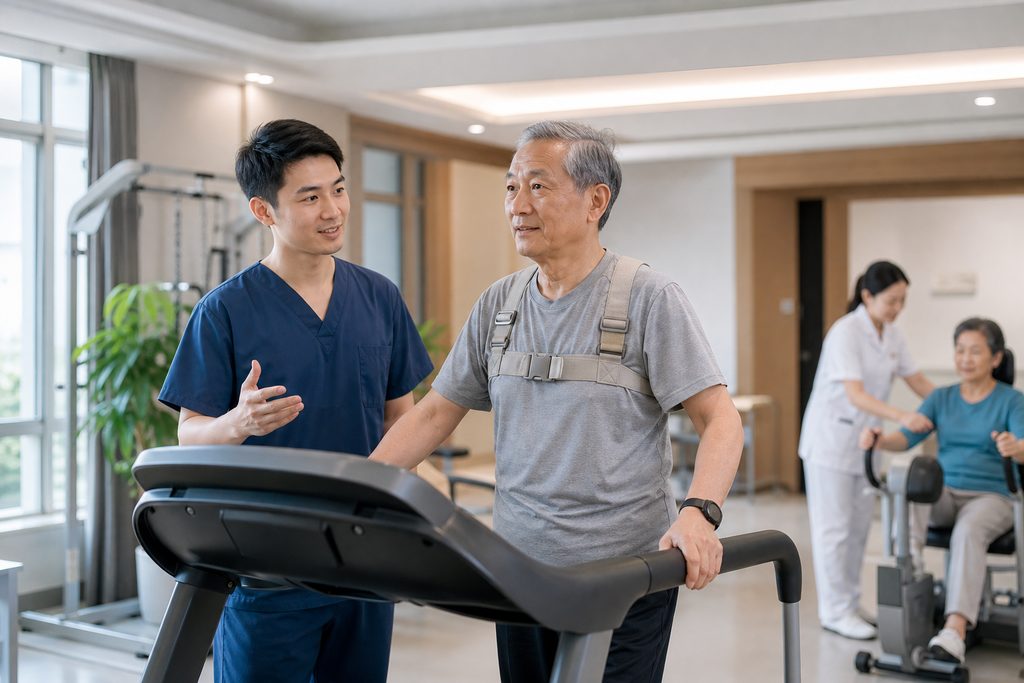
What if the hardest part of heart surgery isn’t the operation itself, but the months of uncertainty that follow? You have made it through bypass surgery. The grafts are in place. Now comes the part nobody prepares you for: rebuilding a life when every heartbeat feels like a question mark.
Key Takeaways
- Structured cardiac rehabilitation cuts mortality risk by approximately 25-30% in the years following bypass surgery, yet fewer than one-third of eligible patients globally ever enroll in a program.
- China’s top cardiac centers run rehab programs that match or exceed Western protocols, with the added advantage of integrated Traditional Chinese Medicine modalities for pain and stress management.
- Language barriers and unfamiliar hospital workflows are the biggest obstacles for international patients — not clinical quality. Walking into a Chinese cardiac rehab center without a bilingual coordinator means missing half the protocol instructions.
- Budgeting realistically matters: a full 12-week outpatient rehab program in China typically runs between $2,000 and $5,000, a fraction of US costs, but the final figure shifts depending on whether you need in-hospital Phase I or only outpatient Phase II.
The Problem: Most Bypass Patients Never Get the Rehab That Could Save Their Lives
Roughly 400,000 coronary artery bypass grafting procedures are performed in the United States each year. Europe adds another 200,000. Every one of those patients gets a discharge summary recommending cardiac rehabilitation. But here is the number that should make you angry: only 20% to 30% of them ever attend a single session. The reasons are painfully predictable. Insurance caps visits. The nearest rehab center is a 45-minute drive. Nobody explains what rehab actually does, so patients assume it is just supervised treadmill walking and skip it.
That decision carries a measurable cost. A 2016 meta-analysis published in the Journal of the American Heart Association tracked over 14,000 post-bypass patients and found that those who completed a structured rehab program had a 31% lower risk of all-cause mortality compared to those who did not. Another study out of the Mayo Clinic pinned the five-year survival benefit at roughly 35%. Cardiac rehab is not a wellness luxury. It is a mortality-reducing intervention on par with statins and beta-blockers.
And yet the gap persists. In the UK, NHS waiting lists for Phase III community rehab can stretch to eight weeks — precisely the window when patients are most vulnerable to deconditioning and depression. In Canada, rural patients often get handed a pamphlet and a phone number. The global default is under-delivery of a proven therapy. That is the problem you are walking into if you are researching cardiac rehab after bypass surgery cost china right now. You are already ahead of the curve because you are looking for a structured program instead of accepting the pamphlet.
Who We Are
We are not a hospital. We do not provide medical treatment, prescribe medications, or make clinical decisions. Our team functions as the logistical architects between you and China’s top-tier cardiac centers — the hospitals that perform over 14,000 bypass surgeries annually and run rehabilitation protocols refined across decades of high-volume practice. We handle hospital matching, appointment coordination, bilingual medical escort services, visa guidance, and recovery logistics. Think of us as the people who make sure you walk into the right rehab gym on the right day with someone who can translate every instruction your physiotherapist gives you. Nothing more, nothing less.
Why China’s Cardiac Rehab Model Delivers Results
Volume Creates Protocol Discipline
Fuwai Hospital in Beijing performs more cardiac surgeries annually than any other center on the planet — over 14,000 cases a year. When you run that many sternotomies, rehab is not an afterthought. It is baked into the surgical pathway. Phase I rehab starts in the ICU, usually within 24 hours of extubation. Patients sit on the edge of the bed. They stand. They take five steps. It sounds trivial. It is not. Early mobilization slashes the risk of postoperative pneumonia and deep vein thrombosis, two complications that can turn a successful bypass into a prolonged hospital stay.
Western hospitals know this too. The difference is execution speed. A cardiac surgeon at a high-volume Chinese center might have four bypass patients recovering on the same ward on any given Tuesday. The physiotherapy team moves through a standardized protocol dozens of times per week. That repetition breeds consistency. You are not relying on one exceptionally motivated nurse to remember the mobilization checklist. The system remembers it for her.
Integrated TCM Modalities for Pain and Autonomic Regulation
This is where the model diverges from anything you will find in Cleveland or Hamburg. Alongside the standard monitored exercise sessions, many best cardiac rehabilitation hospitals china incorporate acupuncture and tuina medical massage into the recovery protocol. The clinical rationale is not mystical. Post-sternotomy pain is a major barrier to deep breathing and early movement. Uncontrolled pain leads to shallow respiration, which leads to atelectasis, which leads to pneumonia. Acupuncture has a growing evidence base for postoperative pain modulation. A 2017 systematic review in the Journal of Cardiothoracic and Vascular Anesthesia found that acupuncture reduced opioid consumption by approximately 30% in post-cardiac surgery patients.
Also, heart rate variability — a marker of autonomic nervous system recovery — tends to improve faster in patients receiving adjunctive acupuncture during rehab. This is not a replacement for beta-blockers or exercise training. It is a complementary tool. And in China’s top rehab centers, it is a standard tool, not an experimental add-on.
The Cost Equation: Structural Reasons, Not Compromised Quality
Let us address the elephant in the room. When you first see heart bypass recovery program china price figures, your skepticism is warranted. A full 12-week outpatient cardiac rehab program in the United States bills between $10,000 and $25,000 depending on the facility and insurance negotiated rates. In China, that same 12-week program — three monitored exercise sessions per week, dietary counseling, psychological support, and TCM adjuncts — typically lands between $2,000 and $5,000. That is a 70-80% reduction.
The gap is not explained by lower quality. It is explained by structural economics. Labor costs for physiotherapists and rehab nurses in China are a fraction of US salaries. Hospital real estate overhead is lower. Liability insurance premiums are a rounding error compared to American levels. And high patient volume spreads fixed costs thin. You are buying the same monitored ECG telemetry, the same graded exercise testing, and — in jci accredited cardiac rehab centers china — the same international safety standards. You are just paying a price that reflects local economic reality rather than the distorted US healthcare market.
| Cost Component | US Typical Range (USD) | China Typical Range (USD) |
|---|---|---|
| Phase I (In-Hospital Rehab, per day) | $1,500–3,000 (bundled in surgical stay) | $200–500 (bundled in surgical stay) |
| Phase II Outpatient (12 weeks, 36 sessions) | $10,000–25,000 | $2,000–5,000 |
| Initial Graded Exercise Test (CPET) | $800–1,500 | $150–300 |
| Dietary Counseling (per session) | $150–300 | $30–60 |
| Acupuncture Adjunct (per session) | $75–150 (rarely covered) | $20–40 (often bundled) |
All figures are estimates and vary by hospital, case complexity, and length of stay. These are provided for general reference, not as a binding quotation.
How Long Is Cardiac Rehab After Bypass Surgery? The Three Phases
A common question we hear from patients researching how long is cardiac rehab after bypass surgery is whether they can compress the timeline. The short answer: no. The protocol is phased for physiological reasons, not administrative convenience.
Phase I begins in the hospital, often within 24 hours of extubation. It lasts until discharge — typically 5 to 7 days for an uncomplicated bypass. The goals are brutally simple: sit, stand, walk to the bathroom, climb four stairs. Patients who breeze through Phase I have shorter ICU stays and lower readmission rates.
Phase II is the core outpatient program. It starts within one to two weeks of discharge and runs for 12 weeks, three sessions per week. Each session includes 30 to 60 minutes of ECG-monitored aerobic exercise (treadmill, stationary bike, or arm ergometer), resistance training, and education modules covering medication adherence, nutrition, and stress management. This is the phase with the strongest mortality benefit data. Skipping Phase II is like filling a prescription and never taking the pills.
Phase III is long-term maintenance. It is less structured, often community-based, and continues indefinitely. Some patients transition to a regular gym with occasional check-ins. Others join hospital-affiliated maintenance programs that meet twice weekly. The goal shifts from supervised recovery to lifelong habit formation.
If you are traveling to China specifically for rehab, you are looking at a minimum 12-week stay for Phase II. That has visa implications, housing implications, and family logistics implications. We cover those in the next section.
What You Need to Know Before Going Alone
- Visa Requirements: Medical treatment in China requires an S2 visa with a specific annotation for therapeutic purposes. This is not the same as a tourist L visa or a business M visa. You will need an invitation letter from the admitting hospital and documentation of your medical condition. The S2 allows a stay of up to 180 days, which covers a full Phase II rehab program. Family members accompanying you also apply for S2 visas. Processing times vary by consulate, but plan for three to four weeks minimum.
- Language and Navigation: China’s top cardiac centers are enormous. Fuwai Hospital’s outpatient volume exceeds 10,000 visits per day. Signage in English is inconsistent. Rehab protocols involve detailed instructions — target heart rate zones, Borg scale ratings, symptom reporting thresholds — that must be understood precisely. Misunderstanding “stop if your RPE exceeds 15” because of a language gap is not a minor inconvenience. It is a safety risk. A bilingual medical companion who knows the rehab workflow eliminates this variable entirely.
- Payment Systems: Chinese public hospitals operate on a prepaid deposit system. You load funds onto a hospital account, and services are deducted as you go. International credit cards are not universally accepted at hospital cashiers. WeChat Pay and Alipay dominate. Setting up a local payment method without a Chinese bank account is genuinely difficult. Most international patients route payments through their coordination service or carry sufficient cash for the initial deposit.
How We Help You Navigate This
These barriers are not anyone’s fault. They exist because China’s hospital system evolved to serve a domestic population of 1.4 billion people, not international rehab patients. The system works beautifully once you are inside it. Getting inside it is the hard part.
Our process starts with a free consultation. You tell us when your bypass was performed, what your current functional status is, and what your rehab goals look like. We match you with a hospital from our network of 340+ top-ranked institutions — selecting specifically for cardiac rehab program quality, JCI accreditation status where relevant, and availability of English-speaking rehab staff. We coordinate the invitation letter for your S2 visa application. We arrange your initial cardiopulmonary exercise testing appointment so you are not waiting weeks for a slot. On the day you arrive, a bilingual medical companion meets you at the hospital entrance, guides you through registration and deposit payment, and stays with you through every rehab session until you are confident navigating independently.
After you complete Phase II and return home, we help coordinate the transfer of your rehab records and exercise prescription to your local cardiologist. Continuity matters. The gains you make in 12 weeks of structured rehab should not evaporate because your hometown doctor never saw the discharge summary.
For patients who want to book cardiac rehabilitation package china before traveling, we can lock in a full Phase II program schedule — including all exercise sessions, dietary consultations, and TCM adjuncts — with a deposit. The final price depends on the hospital and the specific package components, but having a confirmed schedule eliminates the uncertainty that keeps patients up at night.
Frequently Asked Questions
Yes. This is the most common scenario we handle. You will need to bring your full surgical records — operative note, discharge summary, medication list, and any postoperative imaging. The rehab cardiologist in China will review these, perform a baseline assessment including a graded exercise test or six-minute walk test, and then stratify you into the appropriate risk category before starting the exercise protocol. There is no requirement that the surgery itself was done in China.
All Phase II rehab sessions in accredited Chinese cardiac centers are conducted under continuous ECG telemetry monitoring. A cardiologist or trained cardiac rehab nurse is present in the gym at all times. If an arrhythmia or ischemic change is detected, the session is stopped immediately, a 12-lead ECG is performed, and the on-call cardiology team is activated. Defibrillators and emergency medications are kept in the rehab gym. This is standard protocol in jci accredited cardiac rehab centers china and in all major Chinese cardiac hospitals. The safety infrastructure is not meaningfully different from what you would find at a top US or European rehab center.
No. TCM modalities like acupuncture and tuina massage are offered as adjuncts, not requirements. You can decline them entirely and still receive the full standard cardiac rehab protocol. Some patients find acupuncture helpful for post-sternotomy pain and sleep disruption. Others prefer to stick exclusively with Western exercise and education components. The choice is yours, and no Chinese cardiac rehab program will pressure you into accepting TCM treatments you are not comfortable with.
You will receive a comprehensive discharge summary from the rehab team, including your final exercise prescription, risk factor targets, and any medication adjustments made during your program. We coordinate the translation and transmission of these records to your primary cardiologist at home. The goal is a seamless handoff. Your home cardiologist should receive a document that looks familiar — exercise intensity zones, lipid targets, blood pressure goals — not something that requires decoding.
Your Next Step
Cardiac rehabilitation after bypass surgery is not optional if you want the full survival benefit of the operation you have already undergone. The data is unambiguous. A structured 12-week program reduces your five-year mortality risk by roughly a third. China offers that same evidence-based protocol — monitored exercise, risk factor education, psychological support — at a cost that makes completing the full program financially realistic for patients who would otherwise skip it due to insurance gaps or geographic barriers.
If you want to understand what a tailored rehab program would look like for your specific situation — which hospital, what timeline, what total cost — our team is ready to walk you through it. No pressure. No pitch. Just a clear picture of your options so you can make an informed decision about the next 12 weeks of your recovery. Start with a free consultation here.
Medical Disclaimer: This article is for informational purposes only and does not constitute medical advice. Cardiac rehabilitation should only be undertaken under the supervision of a qualified cardiologist or cardiac rehab specialist. Always consult your treating physician before beginning any exercise program following heart surgery.
For more medical information and treatment options in China, visit chinamedservices.com (China Medical Services).
