Emergency Protocol for International Patients: What Happens When Something Goes Wrong
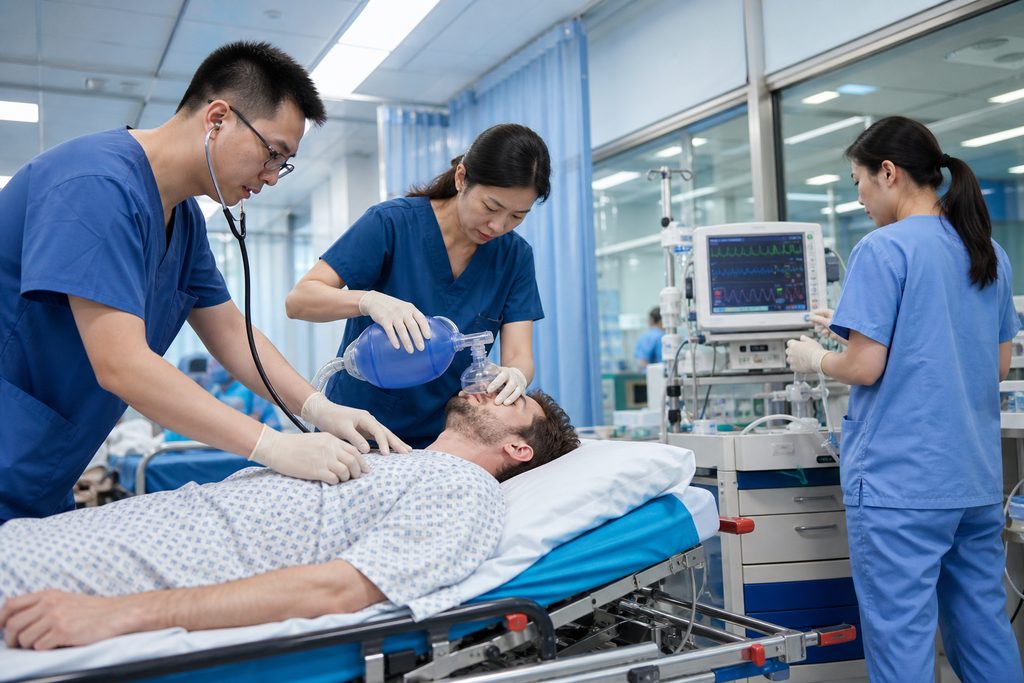
You land in Shanghai for a long-awaited hip replacement. The surgeon is world-class. The savings are substantial. But on day three post-op, something feels off. A sharp pain. A fever. Your mind races to the darkest place: what happens if something goes wrong during surgery abroad? The fear of a complication in a foreign country, thousands of miles from your primary care physician, is the single biggest reason patients hesitate to seek care overseas. And it is a completely rational fear. The reality, however, is that structured emergency protocols in China’s top-tier hospitals are not an afterthought. They are a precisely engineered safety net, designed for exactly this scenario. Understanding how that net works—and who deploys it—is the difference between manageable stress and genuine crisis.
Key Takeaways
- China’s top-ranked hospitals operate dedicated international emergency pathways, with complication rates for common procedures like joint replacements tracking below 1% in high-volume centers.
- Transparent, upfront pricing means the cost of emergency medical treatment for foreigners in China is often 70-80% lower than equivalent complication management in US hospitals.
- You cannot navigate a post-operative emergency in China without a bilingual advocate on the ground; language barriers in triage can delay critical care by hours.
- Your financial liability after a complication depends entirely on the pre-negotiated package with the hospital’s international department—never assume coverage.
The Problem: A Complication in a System You Don’t Understand
A post-operative complication is terrifying anywhere. In a foreign country, the terror multiplies. Approximately 7-15% of surgical patients globally experience some form of complication, according to data published by the World Health Organization. Most are minor and manageable. But the patient’s experience is rarely about the clinical severity. It is about the loss of control. You don’t know the triage system. You can’t read the signage. You can’t call an ambulance and explain your surgical history in Mandarin. The fear of the unknown system often outweighs the fear of the medical event itself.
This is not a theoretical problem. We see it frequently. A patient undergoes a successful cardiac ablation at Fuwai Hospital, the highest-volume heart center on the planet. Post-discharge, they feel dizzy. In their home country, they would drive to their cardiologist’s office. In Beijing, they are immobilized by uncertainty. The gap between needing care and accessing it is filled with friction. That friction has a cost. It can lead to delayed treatment, miscommunication with the original surgical team, and a cascade of unnecessary interventions simply because the left hand does not know what the right hand is doing.
Who We Are
Our team at China Medical Services is not a medical provider. We do not diagnose, treat, or prescribe. We are your logistical command center. When a complication arises, we are the ones who activate the pre-established emergency protocol, bridge the communication gap between you and your Chinese surgical team, and ensure that the international patient emergency hospital Beijing price you face is transparent and justified, not inflated by confusion. We exist to make sure that a medical complication does not become a bureaucratic catastrophe.
Why China’s Emergency Infrastructure Delivers Results for Medical Tourists
There is a persistent myth that seeking care in a developing medical market means accepting higher risk. The data tells a different story. The infrastructure for handling adverse events in China’s top 5% of hospitals—the 340+ institutions we work with across 37 cities—is built on a foundation of extreme clinical volume. A hospital that performs 14,000 cardiac surgeries a year has seen every complication. They have a protocol for it. They are not improvising.
Clinical Volume Drives Complication Management
Volume is not just a metric for surgical skill. It is the primary driver of emergency readiness. A joint replacement surgeon at Peking Union Medical College Hospital manages a caseload that dwarfs their Western counterparts. A study published in The Lancet in 2019 tracked outcomes at high-volume Chinese centers and found that hospitals performing over 500 total hip replacements annually had a dislocation rate of 0.6% and a deep infection rate below 0.5%. When a complication does occur, the in-house rapid response team has likely managed the exact same scenario a dozen times that month. This is not about heroic individual doctors. It is about institutional muscle memory.
Cost Transparency in Crisis: The Price of Emergency Medical Treatment for Foreigners in China
Here is where the financial anxiety meets reality. A patient undergoing a complication after surgery in Shanghai who pays out-of-pocket faces a system that prices emergency care with surprising rationality. An unplanned ICU admission for post-operative monitoring in a top Shanghai hospital’s international wing often runs between $800 and $1,500 per day. The same admission in a US facility averages $4,000 to $6,000 per day, often much more. A revision surgery for a wound dehiscence might cost $5,000 to $8,000 in Shanghai. In the US, it is a $30,000 event. These are not abstract numbers. They are the actual financial boundary between a stressful event and a financially ruinous one.
But let us be blunt about a hard truth. The cost of emergency medical treatment for foreigners in China is transparent only if you access it through the right channel. Walking into a public ER without an advocate, without a direct line to the international department, exposes you to a chaotic billing system where deposits are demanded upfront and communication breaks down. The structural price advantage exists. Accessing it requires navigation.
What You Need to Know Before Going Alone
The barriers to handling an emergency independently in China are not minor inconveniences. They are structural walls. Acknowledging them honestly is the only way to prepare for them.
- Language Barrier in Triage: Emergency rooms in Chinese public hospitals are high-throughput environments. Triage nurses make split-second decisions based on verbal reports. If you cannot describe your post-operative symptoms in Mandarin, you risk being miscategorized. A potential pulmonary embolism might be triaged as general discomfort. The delay can be fatal. This is not a criticism of the staff; it is a reality of a system processing thousands of patients daily.
- Payment Systems and Upfront Deposits: Chinese hospitals operate on a prepayment model. Before a CT scan is performed, before a bed is assigned, the system requires a deposit. International credit cards are often not accepted at in-hospital terminals. WeChat Pay and Alipay dominate. A foreign patient in distress, trying to link a foreign card to a Chinese digital wallet while in pain, faces an impossible task. The financial friction can literally delay care.
- Medical Coding and Insurance Coordination: Your international insurance provider needs specific diagnostic codes and procedure descriptions in a format they recognize. Chinese hospital discharge summaries and emergency reports are generated in Chinese. Translating “术后并发症” to a billable ICD-10 code that Aetna or Bupa will accept is not a job for Google Translate. Without precise coding, your claim is denied. You are left holding the full bill, even if the underlying cost was reasonable.
How We Help You Navigate This
These barriers exist for structural reasons. They are not anyone’s malicious intent. They are simply the friction points between a domestic healthcare system and an international patient. Our role is to eliminate that friction. When a patient calls us from their recovery apartment with a concern, we do not offer reassurance and hang up. We activate a protocol.
Before you ever travel, we establish a direct line of communication with your surgeon’s team. This is not a generic hospital hotline. It is the mobile number of the international department coordinator assigned to your case. If a complication arises post-discharge, we triage immediately. Is this an expected post-operative symptom? We connect you via video consultation with your surgeon within hours, often for a fee in the $100-300 range, which is credited toward any subsequent on-the-ground coordination. If it is a genuine emergency, our bilingual medical companion escorts you directly to the emergency department of the hospital where your surgery was performed. Not a random ER. The right hospital. The one with your records. The one where your surgeon is on call.
We handle the deposit. We stand at the triage desk and translate your surgical history in precise clinical Mandarin. We ensure the emergency physician calls your original surgeon before making any intervention that could conflict with your post-operative protocol. This is not a luxury concierge service. It is a patient safety mechanism. And it is the only way to reliably enforce a medical tourism emergency protocol China scenario without catastrophic miscommunication.
Frequently Asked Questions
The original surgical team is your primary safety net. In high-volume centers like Fuwai Hospital or Zhongshan Hospital, the surgeon who operated on you is typically on-site or reachable within hours. A revision surgery, if required, is scheduled urgently through the international department, not through the general waiting list. The cost of a revision is negotiated case-by-case, but it is almost always a fraction of the original procedure fee, reflecting the hospital’s responsibility for the initial outcome.
Costs are highly variable, but they follow a rational structure. An emergency room visit with imaging and specialist consultation in a top-tier Beijing international department typically runs from $300 to $800. An unplanned hospital admission ranges from $800 to $1,500 per day. A full revision surgery for a major joint can range from $8,000 to $15,000. Compare this to the US, where a revision hip replacement averages $35,000 to $50,000. The cost advantage holds, but you must be prepared to pay deposits upfront and seek reimbursement from your insurer later.
This is the most critical question to answer before you travel. In China’s private international hospitals like United Family or Jiahui, direct insurance billing is standard. In public hospital international departments, you pay upfront and claim reimbursement. The hospital’s financial liability for a complication is not automatic. It depends on the specific consent forms you signed. Some top-tier centers include a limited complication warranty in their international patient packages—covering the surgeon’s fee for a revision, but not the hospital bed charges. Our team clarifies this financial architecture before you ever sign a consent form. We ensure your informed consent is genuinely informed.
You can. But you should not. The language barrier in a Chinese emergency room is not a minor hurdle; it is a wall. Triage systems are verbal. Treatment decisions are made quickly. If you cannot communicate your surgical history, allergies, and current medications in Mandarin, you are relying on chance. A bilingual medical companion is not a luxury for the anxious. It is a safety essential. The cost of a companion—from $200 a day—is negligible compared to the cost of a medical error caused by miscommunication.
Your Next Step
A medical complication abroad is a manageable clinical event when the logistical framework is in place. It is a crisis when you are alone. The difference is not the quality of the Chinese surgeon. It is the quality of the communication and financial clarity surrounding the event. Understanding the emergency medical treatment for foreigners in China cost and the protocol to access it transforms a terrifying unknown into a known pathway. If you are considering a procedure in China, the time to plan for an emergency is not after it happens. It is now. Speak with our coordination team about building your safety net before you travel. The consultation is free. The peace of mind is invaluable.
For more medical information and treatment options in China, visit chinamedservices.com (China Medical Services).
