Microdiscectomy Service China: Minimally Invasive Disc Surgery Without the Wait
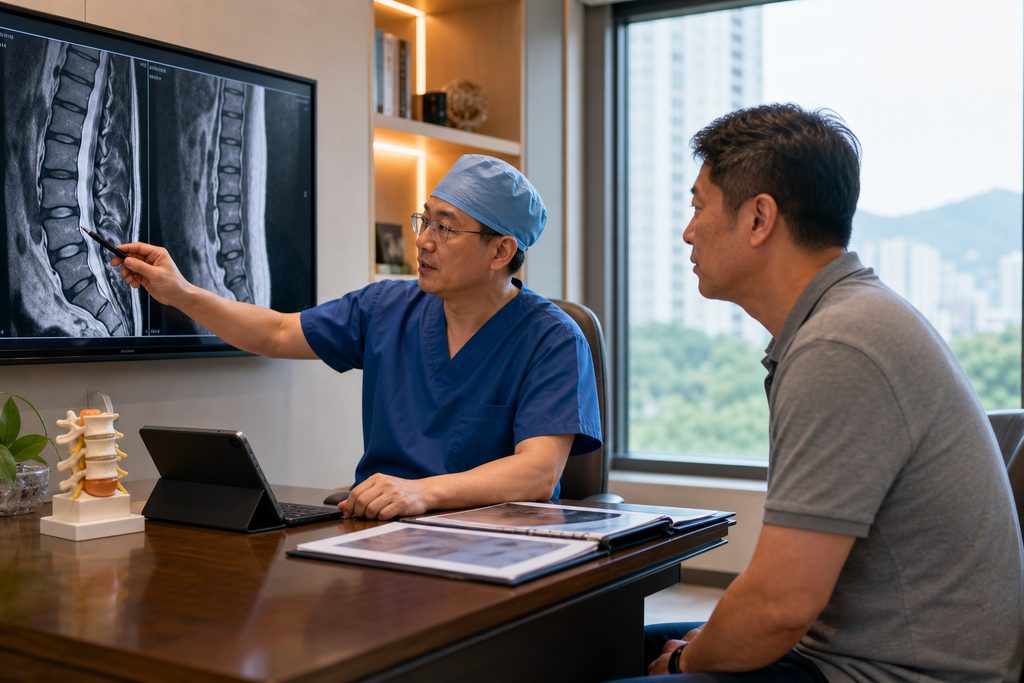
You have probably heard the old warning: cheap surgery abroad is a gamble. And sometimes, it is. But the global healthcare map has been redrawn. For a specific set of procedures—high-volume, technology-dependent surgeries—the volume-to-outcome equation in China has quietly inverted the risk. A lumbar microdiscectomy is exactly that kind of procedure. The microdiscectomy cost China averages between $8,000 and $15,000 for international patients using hospital VIP channels. That is roughly one-fifth to one-third of the $35,000 to $50,000 cash price common in the United States. The real question is not whether you can save money. It is whether the system behind that number can deliver a result you can trust.
Key Takeaways
- The microdiscectomy cost China ranges from $8,000 to $15,000 through hospital international departments—a fraction of Western prices—with top orthopedic hospitals performing several thousand spine surgeries annually.
- China’s tier-one orthopedic centers now use the same tubular retractor systems and surgical microscopes found in leading US and European hospitals, with some departments operating 6 days a week.
- You cannot independently book surgery from abroad. Public hospital outpatient clinics require in-person registration, and no deposit secures a surgical slot without a face-to-face specialist consultation first.
- Your surgical outcome depends less on the hospital brand and more on how your case is prepared, translated, and routed to the right subspecialist before you ever board a plane.
The Problem: A Disc Herniation That Will Not Heal
Approximately 1 in 3 adults will experience a symptomatic lumbar disc herniation at some point. Most resolve with physical therapy, time, and anti-inflammatory medication. But for the subset whose radicular pain persists beyond six to twelve weeks—or whose neurological deficits progress—microdiscectomy becomes the evidence-backed surgical answer. The procedure is minimally invasive. A small incision. A tubular retractor to gently part the muscle rather than cut it. The herniated fragment is removed under a surgical microscope, decompressing the nerve root. Done correctly, the relief is immediate for most patients.
The barrier, for many, is not the diagnosis. It is access. In Canada and the UK, wait times for elective spine surgery can stretch past six months. In the United States, a patient with a high-deductible health plan or no insurance faces a bill that can exceed $40,000. Pain does not wait for authorization letters. That is the moment some patients start searching for alternatives—and discover that the math has changed.
Who We Are
We are not a hospital. We do not perform surgery, make clinical diagnoses, or offer medical advice. China Medical Services functions as a logistical bridge. Our team connects international patients with the specific departments and surgical teams within China’s top-tier hospital system—340+ hospitals across 37 cities—that are best equipped for their condition. We handle case preparation, imaging translation, appointment coordination through official hospital international channels, visa guidance, and on-the-ground bilingual support. We do not promise shortcuts. We solve the structural problems that make navigating a foreign medical system alone so difficult.
Why Microdiscectomy Cost China and Quality Can Coexist
The assumption is that lower cost signals lower quality. In Chinese tier-one public hospitals, the cost structure is fundamentally different. It is not about cutting corners. It is about volume, labor economics, and a system designed for throughput.
Surgical Volume Drives Precision
A spine surgeon at a major US academic center might perform 80 to 120 microdiscectomies per year. At a top Chinese orthopedic hospital like Peking University Third Hospital or Shanghai‘s Changzheng Hospital, a dedicated spine surgeon may complete 300 to 500 lumbar decompression procedures annually. The department itself processes several thousand spine surgeries each year. This is not a vague claim. It is a function of population scale and referral concentration. The best spine surgery hospital China can offer is often one where the surgical team has seen every anatomical variation of disc herniation—sequestered fragments, far-lateral herniations, recurrent discs—hundreds of times over. In surgery, repetition is not a substitute for skill. It is the foundation of it.
The Tubular Approach Is Standard, Not Experimental
Some patients worry that minimally invasive disc surgery Shanghai hospitals perform might use outdated techniques. The opposite is true. The tubular microdiscectomy with surgical microscope visualization has been the standard of care in China’s top orthopedic departments for over a decade. The instrumentation—Metrx, Quadrant, or similar tubular retractor systems—is the same equipment used in operating rooms in Boston or Munich. What differs is the pace. A high-volume Chinese spine theater may run 6 days a week, with surgeons moving between cases with an efficiency born of repetition. The implants and tools are sourced from the same global manufacturers.
The Cost Structure Makes Sense Once You See It
Why is the microdiscectomy cost China lower? It is not a mystery. Physician salaries, while rising, remain structurally lower than in the US. Hospital administrative overhead is leaner. Malpractice insurance costs are a fraction of Western equivalents. The hospital does not need to recover revenue from a high rate of uninsured patients. And the international department pricing—which is what foreign patients access—is a premium tier within the Chinese system, yet still dramatically below Western cash prices. You are not getting a discount version of surgery. You are accessing a different economic model. A lumbar microdiscectomy that costs $45,000 in Houston might cost $12,000 in Shanghai through the international medical center of a public hospital. The clinical outcome data for this specific procedure, when performed at high-volume centers, shows no inferiority.
Is Microdiscectomy Safe in China? The Data Behind the Question
This is the question that keeps patients up at night. And it deserves a direct answer. The safety of any surgical procedure depends on three things: the surgeon’s experience with that specific operation, the hospital’s infection control protocols, and the system’s ability to manage complications when they occur. At hospitals ranked in the Fudan University Hospital Rankings—China’s most authoritative hospital evaluation system—all three factors are systematically addressed. The top-tier orthopedic hospitals maintain infection rates comparable to international benchmarks. Their operating theaters meet stringent sterility standards. And their intensive care units are equipped to handle the rare but serious complications of spine surgery, such as dural tears or postoperative hematoma.
But there is a crucial caveat. This safety profile applies to the top 5% of China’s 35,000+ hospitals. It does not apply uniformly across the entire system. A patient who arrives without guidance and walks into an unranked hospital’s general surgery department is taking a different kind of risk. That is why hospital selection—matching your specific disc pathology to a department that specializes in it—is the single most important decision you will make. The question is not simply is microdiscectomy safe in China. The better question is: which hospital, and which surgeon, for your specific MRI findings?
What You Need to Know Before Going Alone
We have seen patients try to arrange this independently. Some succeed. Most hit walls they did not anticipate. Here are the barriers that exist for structural reasons—not because anyone is trying to make it difficult, but because the system was built for a domestic patient population.
- Visa Requirements Are Specific: Medical treatment in China requires an S2 visa, annotated for medical purposes. The accompanying family member needs their own S2. This is not a tourist visa. The application requires an invitation letter from the hospital—something only issued after a formal appointment is confirmed. Applying for the wrong visa category means rejection at the consulate or denial at the border.
- You Cannot Book Surgery Remotely: This is non-negotiable in the public system. No hospital will schedule a microdiscectomy based on emailed MRIs alone. You must have an in-person outpatient consultation with the surgeon who will operate. The international department can arrange that consultation for a specific date, but the surgical booking happens only after the surgeon examines you. Anyone promising a locked-in surgery date before you arrive is either working outside the system or not being honest.
- Imaging and Records Must Be Properly Prepared: A CD of your MRI that works on a Western PACS system may not open on a Chinese hospital workstation. Reports in English need clinical translation—not just linguistic, but formatted in the style Chinese surgeons expect. Missing sequences, incompatible file formats, or poorly translated referral notes can delay your consultation by days or force repeat imaging.
How We Help You Navigate This
These barriers are real but solvable. Our process exists to remove each one before it becomes your problem. Before you travel, we collect your lumbar MRI (DICOM files), your clinical history, and any prior surgical reports. Our team translates these into medical Chinese formatted for the receiving department. We identify the hospitals with the strongest spine subspecialty for your specific disc level and herniation type—a far-lateral L5-S1 herniation may be better served at one center, while a recurrent L4-L5 disc at another. We then coordinate your outpatient consultation appointment through the hospital’s official international department.
When you land, a bilingual medical companion meets you. They handle registration, navigate the hospital campus, queue for your consultation, and sit beside you during the surgeon’s evaluation to ensure nothing is lost in translation. After surgery, they coordinate discharge instructions, medication pickup, and follow-up appointments. If you choose to book microdiscectomy surgery China package coordination through us, the entire timeline—from airport pickup to hospital admission to post-operative hotel recovery—is mapped before you leave home. We do not perform miracles. We prevent logistical failures.
How Long to Recover from Microdiscectomy Abroad
Recovery from a tubular microdiscectomy is relatively swift, but the timeline matters when you are in a foreign country. Most patients are mobile within hours of surgery. The hospital stay is typically 1 to 3 nights. The surgeon will want to see you walk, confirm no new neurological deficits, and ensure pain is controlled before discharge. You should not fly long-haul immediately. We generally recommend staying in the city for at least 7 to 10 days post-operatively. This allows for wound checks, suture removal if non-dissolvable, and one follow-up consultation to review the surgical findings and recovery plan.
How long to recover from microdiscectomy abroad before flying home? For a single-level lumbar microdiscectomy with no complications, most international patients are cleared for flights of moderate duration after 10 to 14 days. Your surgeon will provide a fit-to-fly letter and specific instructions for in-flight movement and compression stockings. The full recovery—return to normal activities, lifting, and sports—follows the same 6-to-12-week timeline as anywhere else. The location of the surgery does not change biology. It changes who is managing your early recovery and how that handoff to your home physician is handled. We ensure your discharge summary and operative note are translated back into English for your doctor at home.
Frequently Asked Questions
That is correct for public hospitals. The international department can secure you a specific outpatient consultation slot with a named spine specialist. The surgery is scheduled after that face-to-face evaluation. This is standard practice and a patient safety measure, not a bureaucratic obstacle. The surgeon needs to examine you, review your imaging on their own workstation, and confirm the surgical plan with you directly.
Complication rates for primary microdiscectomy are low—dural tears occur in roughly 1-3% of cases, nerve root injury in less than 1%, and postoperative infection in under 1% at high-volume centers. The hospitals we work with have neurosurgery and ICU capabilities on-site to manage these events. Your informed consent process before surgery will cover the specific risks. You are not being treated in a facility that cannot handle its own complications.
That depends entirely on your policy. Chinese public hospitals require upfront payment. You will receive detailed invoices and medical records in English suitable for insurance submission. Some international insurance plans have direct billing arrangements with private international hospitals like United Family or Jiahui. For public hospital international departments, you pay first and seek reimbursement. Check with your insurer before committing.
The tubular microdiscectomy technique is standardized globally. The surgical steps—docking the tubular retractor on the lamina, removing the ligamentum flavum, retracting the nerve root, extracting the herniated fragment—are identical. The equipment brands are the same. The difference is the surgeon’s annual case volume, which at top Chinese centers often exceeds Western norms.
Public hospital wards have limited space and strict visiting hours. Private rooms in the international department are more accommodating but still have rules. A family member can typically stay nearby—we assist with hotel arrangements within walking distance of the hospital. Your bilingual companion remains with you during the day for translation and coordination. Your family member is not expected to navigate the hospital alone.
Your Next Step
A lumbar disc herniation that has not responded to conservative care is a problem with a surgical solution. The decision is not whether microdiscectomy works—the evidence for that is robust. The decision is where to have it done, by whom, and how to manage the logistics so that your energy goes into recovery rather than navigation. The microdiscectomy cost China makes the procedure accessible to patients who have been priced out or waitlisted in their home countries. The clinical infrastructure at top-ranked orthopedic centers makes it a medically sound choice.
If you are considering this path, start with a conversation. We review your MRI and your history. We tell you which hospitals and departments are most appropriate for your specific case. We outline the timeline and the costs transparently. There is no pressure and no commitment. Just clarity. Request a free consultation and we will help you understand your options.
For more medical information and treatment options in China, visit chinamedservices.com (China Medical Services).
