Getting Medical Care in China as a Foreigner: Costs, Hospitals, and How It Works
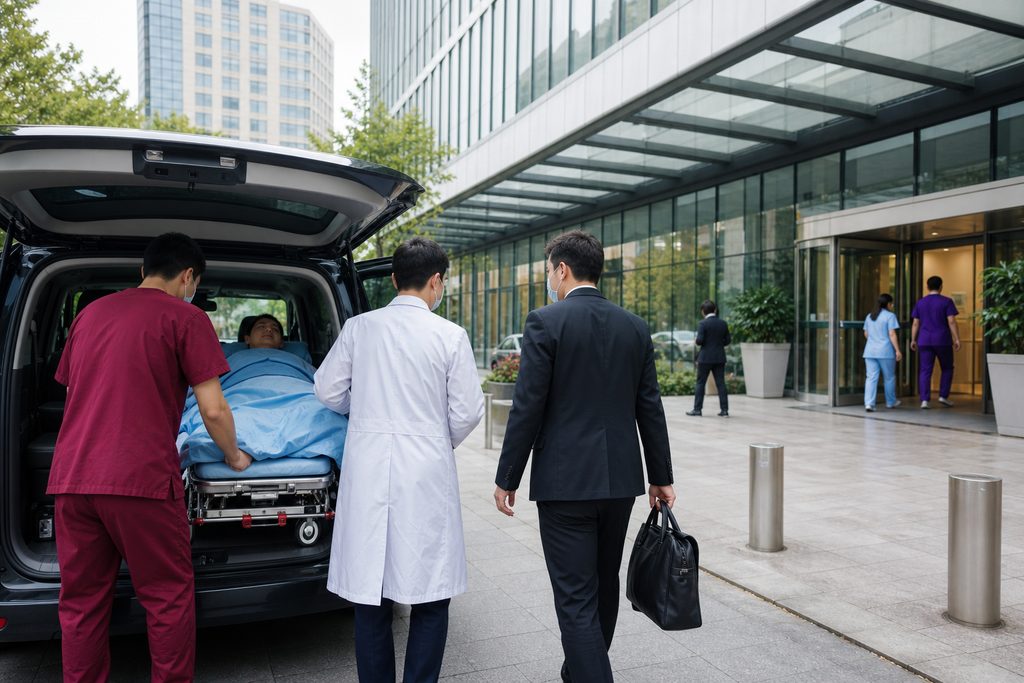
When 54-year-old David from Portland learned he needed a hip replacement, his surgeon in Oregon quoted him $38,000 and a nine-week wait for the operating room. A friend mentioned that the same procedure in China often runs a fraction of that. David did what most people do: he opened a browser, typed “hip replacement cost China,” and immediately hit a wall of contradictory numbers, unclear hospital names, and no obvious way to tell which clinics were legitimate.
That confusion is normal. And it’s fixable.
This guide walks through what medical tourism in China cost actually looks like, which hospitals accept foreign patients, how to book medical treatment in China as a package or piece by piece, and the honest friction points nobody puts on a glossy landing page.
How This Actually Works, Step by Step
The sequence matters more than the destination. Here is the real path, from first email to post-op follow-up.
Step one: you send records. Not a summary — actual imaging files (DICOM on a disc or cloud link), pathology reports, lab results, and a short note in plain English describing your symptoms and what you’ve already tried. Our team translates and organizes these into the format Chinese hospital international departments expect.
Step two: a specialist reviews them. Depending on complexity, this happens as a written second opinion ($300–500), a video consultation with a department team ($100–300), or a top-specialist video call ($500–800). You get a written analysis, treatment suggestions, and a realistic sense of whether traveling to China makes sense for your case.
Step three: you decide. Some patients learn they can be treated at home. Others get a plan that only a handful of hospitals worldwide can execute. Either answer is useful.
Step four: coordination. If you proceed, we handle hospital registration, medical card creation, appointment scheduling through the hospital’s international or VIP channel, and interpreter logistics. Public hospital general clinics in China generally cannot be pre-booked from overseas — you queue the same day. To lock in a specialist and a surgery date ahead of arrival, you go through the international department or VIP channel, which typically costs 1.5 to 2 times the standard rate.
Step five: arrival and treatment. A bilingual medical companion meets you, handles registration, payment queues, wayfinding, and translation throughout. From $300 per day.
Medical Tourism China Cost: What You’ll Actually Pay
Prices vary by hospital and case complexity, but the ranges below reflect what international departments at top-tier Chinese public hospitals quote foreign patients. All figures are USD.
| Procedure | China (top public hospital) | United States |
|---|---|---|
| Coronary artery bypass graft | $12,000–20,000 | $120,000+ |
| Hip replacement | $8,000–15,000 | $30,000–40,000 |
| Knee replacement | $9,000–16,000 | $35,000–50,000 |
| Spinal fusion | $12,000–22,000 | $80,000–150,000 |
| Comprehensive health screening | $500–2,500 | $2,000–5,000 |
These are hospital charges, not package prices. Add flights, lodging, visa costs, and companion services. Even so, the arithmetic is hard to argue with: identical procedures at top Chinese public hospitals commonly run one-fifth to one-tenth of US list prices.
Best Hospitals in China for Foreigners: How to Choose
China has over 35,000 hospitals. Roughly the top 5 percent — ranked by the Fudan Hospital Ranking and JCI accreditation — are where international patients should focus. Our database covers 340+ of them across 37 cities.
Three categories matter:
- Top public tertiary hospitals. These carry the Fudan ranking. The comprehensive Top 100 is grouped into tiers (A++++ down to A) rather than numbered positions. Beijing hosts 21 of them, Shanghai 18, Guangzhou 10. Names you’ll encounter include Fuwai Hospital (the world’s highest-volume cardiac surgery center, 14,000+ operations annually), Peking Union Medical College Hospital, Zhongshan Hospital, West China Hospital, and Ruijin Hospital.
- Private international hospitals. United Family, Jiahui, Parkway, Raffles. English-speaking staff, JCI accreditation, direct insurance billing, Western-style service. Higher cost, smoother experience.
- Traditional Chinese Medicine hospitals. Acupuncture, tuina, herbal therapy — best suited to chronic condition management and rehabilitation rather than acute surgical problems.
For specialty-specific decisions, the Fudan specialty reputation rankings list a Top 10 for each of 45 departments. If you need cardiac surgery, oncology, orthopedics, or reproductive medicine, that’s the right starting filter — not general reputation.
You can browse ranked hospitals by city or department on our Fudan-ranked hospital directory.
A Realistic Timeline
Here’s what the calendar actually looks like for a surgical case. Ranges, not best-case promises.
| Stage | Timeframe | Notes |
|---|---|---|
| Record collection and translation | 3–10 days | Depends on how fast your home hospital releases imaging |
| Specialist review / video consult | 5–14 days | Top specialists book out further |
| Decision and hospital selection | 1–2 weeks | Include time to compare quotes |
| S2 visa application | 2–4 weeks | Requires hospital invitation letter; processing varies by consulate |
| Appointment and surgery scheduling | 2–6 weeks | International department lead time |
| Travel and pre-op workup | 3–7 days on the ground | Repeat labs and imaging are common |
| Surgery and inpatient stay | 3–14 days | Procedure-dependent |
| Recovery before flying home | 1–4 weeks | Surgeon clears you; airline rules apply |
Total from first contact to surgery: typically six to twelve weeks. Rushing it is possible but rarely wise.
What Can Go Wrong — and What Happens Then
Honest failure modes, and the actual recourse.
The specialist says your case isn’t a good fit. This happens. Some conditions are better handled closer to home, or the Chinese team wants more imaging first. You get a written explanation, and the consultation fee is what it is.
The visa takes longer than expected. S2 processing times shift with consulate workload. Never book non-refundable flights before the visa is in hand. If timing slips, surgery dates can usually be moved — but not always without losing a deposit.
You can’t get the exact surgeon you wanted. We coordinate through official hospital international departments. We do not promise a specific doctor or a specific surgical date. If we can’t secure the appointment you ordered, the coordination fee is refunded in full.
Complications after you fly home. This is the one people underestimate. Arrange a clear follow-up plan with your local physician before you leave China, and get your operative notes and imaging on a disc. Chinese hospitals will share records, but you have to ask.
Is Medical Care in China Safe for Foreigners?
The question behind the question is usually: are the hospitals actually good, or just cheap?
Both things can be true at once. China’s top-tier public hospitals perform procedure volumes that most Western centers don’t approach — Fuwai’s 14,000+ annual cardiac surgeries is the clearest example. High volume correlates with experienced surgical teams. JCI-accredited private hospitals meet international safety standards by definition.
What’s different is the system around the medicine. Queueing, payment windows, pharmacy logistics, and wayfinding are built for Chinese-speaking patients. The clinical care can be excellent while the patient experience is genuinely difficult. That’s not a sales pitch — it’s the reason companion services exist.
Do your own diligence too. Ask for the hospital’s complication data if available, confirm the surgeon’s case volume, and read the Fudan specialty ranking for your condition rather than relying on general reputation.
Practical Considerations: Records, Visas, Payment, and Follow-Up
Records. Bring physical copies and digital files. Chinese hospitals will repeat key tests regardless — expect it and budget for it.
Visa. Foreign patients coming for medical treatment use the S2 visa, annotated for medical purposes. Stays beyond 180 days require S1. Accompanying family members also apply for S2. Note clearly: the M visa is for commercial and trade activity only and has nothing to do with medical treatment. Requirements change, so verify current rules with the Chinese embassy or consulate in your country and secure your hospital’s supporting documents first.
Payment. Wire transfer or international card, arranged in advance. Keep every receipt for your insurer.
Language. Assume nothing will be in English outside international departments. A bilingual companion from $300 per day covers registration, queues, payment, and translation.
Follow-up at home. Line up your local doctor before you travel. Hand them the Chinese operative report and imaging on day one back.
Frequently Asked Questions
For major procedures, typically one-fifth to one-tenth of US list prices. A coronary bypass runs $12,000–20,000 at a top Chinese public hospital versus $120,000+ in the US. Final figures vary by hospital and case complexity, so get a written estimate before committing.
You can arrange a structured plan — consultation, hospital coordination, visa guidance, and companion services — before you travel. What you cannot do is pre-book a general public clinic slot from abroad. Surgery scheduling happens through the hospital’s international or VIP department, and admission always remains subject to hospital rules.
At Fudan-ranked public hospitals and JCI-accredited private hospitals, the clinical standards are high and procedure volumes are often exceptional. The friction is logistical, not medical. Language, queueing, and payment systems are designed for local patients, which is why coordination support exists.
The S2 visa, annotated for medical treatment, is the applicable short-stay category. Family accompanying you also apply for S2. The M visa is strictly for commercial and trade activities and does not apply to medical care. Always confirm current requirements with your nearest Chinese embassy or consulate.
We coordinate through official hospital channels and never guarantee a specific doctor or date. If we cannot secure the appointment you ordered, the coordination fee is refunded in full.
Your Next Step
Getting medical care in China as a foreigner is a logistics problem more than a medical one — the hospitals are capable, the prices are favorable, and the hard part is navigating a system built for a different audience. The right first move is almost never booking a flight. It’s getting your records in front of a specialist who can tell you whether the trip is worth making.
China Medical Services connects international patients with 340+ top-ranked hospitals across 37 cities. We are a coordination and case management service, not a medical provider — we don’t diagnose, operate, or sell access to anyone. If you’d like a straight answer about your options, start with a free consultation and we’ll tell you honestly what’s realistic.
This article is for general information only and is not medical advice. Treatment decisions should always be made with a qualified physician who has reviewed your individual case. Prices and visa rules change — confirm current details before making travel or financial commitments.
For more medical information and treatment options in China, visit chinamedservices.com (China Medical Services).
