Rehabilitation Hospitals in Shanghai: A Guide for International Patients
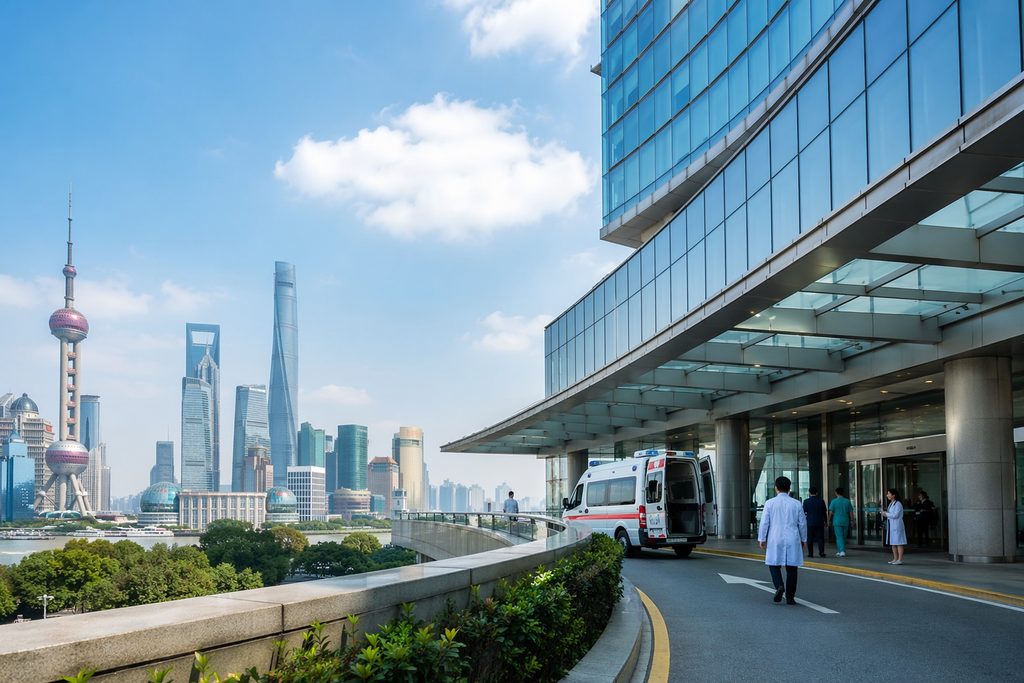
Rehabilitation Hospitals in Shanghai: A Guide for International Patients
When 58-year-old David from Melbourne suffered a stroke during a business trip to Shanghai, his wife faced a question thousands of international families confront each year: where does he go next? Acute care saved his life. But the weeks of therapy that would determine whether he walked again — that was a different problem entirely. Finding reliable information on rehabilitation hospital Shanghai cost, quality, and admission rules is harder than it should be. This guide walks through what our team has learned coordinating recovery care for foreign patients across the city.
How This Actually Works, Step by Step
Rehabilitation in Shanghai doesn’t start with a Google search. It starts with records.
Here’s the real sequence. You (or a family member) gather the patient’s discharge summary, imaging reports, surgical notes, and current medication list. These get translated into Chinese — a step most people underestimate, since hospital rehabilitation departments review materials in Chinese even when their international offices speak English. From there, three paths open up.
The first is a written second opinion: you send the records, the relevant rehabilitation medicine department reviews them, and you receive written analysis and treatment direction. The second is a video consultation, where you speak directly with the Chinese rehab team about functional goals — walking, speech, swallowing, fine motor control. The third is a proxy consultation, where you designate a specific hospital or specialist and our team handles registration and an in-person visit using your materials.
Only after remote evaluation clarifies a feasible plan does travel make sense. That order matters. Flying to Shanghai before a rehab department has seen your records often means repeating assessments you already paid for.
What Rehabilitation Care in Shanghai Actually Looks Like
Shanghai’s rehabilitation landscape splits into three tiers, and understanding the difference prevents expensive mistakes.
Public tertiary hospitals with dedicated rehabilitation medicine departments handle the most complex cases — post-stroke hemiplegia, spinal cord injury, traumatic brain injury. These are large institutions. A single hospital may see over 10,000 outpatient visits daily. The clinical depth is extraordinary. The logistical friction is real.
Private international hospitals — United Family, Jiahui, Parkway, Raffles among them — offer English-speaking staff, JCI accreditation, and direct insurance billing. They’re easier to navigate. They also cost more, and their rehab programs tend to focus on less acute cases.
Traditional Chinese Medicine hospitals play a genuine role in recovery, particularly for chronic pain, neurological conditions, and long-term functional improvement. Acupuncture, tuina massage, and herbal formulas are used alongside — not instead of — conventional therapy. Our TCM hospital directory covers this in detail.
A Realistic Timeline
Patients consistently underestimate how long each stage takes. Here’s what our team typically sees.
| Stage | Typical Duration | What’s Happening |
|---|---|---|
| Records collection & translation | 3–7 days | Gathering discharge summaries, imaging, meds; certified Chinese translation |
| Remote evaluation | 3–10 days | Written second opinion or video consultation with rehab department |
| Hospital selection & appointment coordination | 1–3 weeks | Matching case complexity to appropriate facility; securing an intake slot |
| Visa processing (S2) | 1–3 weeks | Application with hospital invitation documents; varies by consulate |
| Arrival & in-person assessment | 2–5 days | Face-to-face evaluation; final admission decision by the hospital |
| Active inpatient rehab | 4–12 weeks | Daily therapy; duration depends on condition and progress |
| Outpatient or home-based continuation | Months | Maintenance therapy, often coordinated with providers back home |
That’s a realistic range, not a promise. Stroke rehabilitation timelines vary enormously — some patients regain substantial function in eight weeks, others need six months or more. No credible provider will quote you a fixed recovery date before assessing you in person.
What Can Go Wrong — and What Happens Then
Honesty matters more here than anywhere else in this guide.
The hospital declines admission. This happens. Rehabilitation departments assess whether a patient can tolerate the therapy intensity and whether they have realistic rehab potential. If a case is deemed too medically unstable, admission is refused. The recourse: our team helps identify alternative facilities, including ones with lower-intensity programs or step-down care.
The visa is delayed. S2 processing times shift with consulate workload and documentation quality. Missing documents are the most common cause. Apply with buffer time — never book flights before the visa is in hand.
Progress stalls. Plateaus are normal in neurological rehab. When they happen, the clinical response is usually program adjustment, not discharge. Families sometimes panic and want to switch hospitals. That’s rarely the right move mid-program.
Costs exceed expectations. Rehab is billed by day, and therapy intensity drives cost. A patient needing three therapy disciplines daily pays more than one needing one. Request a written cost estimate before admission, and ask specifically what triggers additional charges.
How to Evaluate a Rehab Provider
Five questions separate serious programs from marketing.
- Does the department have dedicated rehabilitation physicians (physiatrists), or is rehab a sideline to orthopedics or neurology?
- What’s the daily therapy dosage — how many hours of physical, occupational, and speech therapy per day?
- Are therapy sessions conducted in English, or only administrative intake?
- What’s the discharge planning process, and will they communicate with your physician at home?
- Is the facility JCI-accredited or part of a Fudan-ranked hospital?
That last point deserves context. China has over 35,000 hospitals. Our database covers 340+ top-ranked institutions across 37 cities — the top 5% by Fudan University rankings and JCI accreditation. Shanghai alone hosts 18 hospitals on the Fudan Top 100 list, second only to Beijing. That concentration is why the city works well for complex recovery cases. You can browse the full Fudan-ranked hospital directory by city.
For conditions like stroke, spinal cord injury, or post-surgical orthopedic recovery, the relevant specialty rankings matter more than overall hospital prestige. A hospital ranked nationally for cardiac surgery isn’t automatically strong in neurorehabilitation.
Practical Considerations: Cost, Visas, Payment, and Language
Top-tier facilities maintain standards comparable to major Western hospitals, and many hold JCI accreditation. The genuine risks aren’t clinical — they’re logistical. Language barriers, unfamiliar payment systems, and navigation of very large hospital campuses create real friction. Having bilingual support substantially reduces those risks. Anyone with a medically unstable condition should confirm the facility can manage their specific comorbidities before admission.
Partially. You can complete remote evaluation, secure a conditional intake slot, and prepare all documentation in advance. What you cannot do is bypass the in-person assessment — public hospitals require face-to-face evaluation before final admission, and that’s a standard rule, not a bureaucratic obstacle. Planning around it is far more productive than trying to work around it.
Be cautious with any “all-inclusive” framing. Legitimate coordination covers hospital matching, appointment logistics, interpretation, and arrival support. It does not cover hospital treatment charges, which are billed separately by the facility. Any package claiming to bundle guaranteed treatment outcomes should raise questions.
Your Next Step
The core message is simple: rehabilitation in Shanghai can be excellent and cost-effective, but it rewards preparation over improvisation. Get records translated early, secure remote evaluation before booking flights, and treat the in-person assessment as a required step rather than an obstacle.
Our team at China Medical Services connects international patients with appropriate Chinese hospitals and handles the logistics that make recovery feasible — records coordination, appointment scheduling, bilingual companionship, and visa guidance. We don’t provide medical care, and we don’t promise admissions or outcomes. Hospitals decide those. What we do is make the path navigable. When you’re ready to explore options, start with a free consultation — no pressure, just a conversation about whether China makes sense for your situation.
This article is for informational purposes only and does not constitute medical advice. Treatment decisions should always be made in consultation with qualified healthcare professionals.
Frequently Asked Questions
Yes. The hospitals used for international patients are JCI-accredited and follow the same international safety standards as top hospitals in the US and Europe. Surgical teams perform high volumes of procedures — often more than their Western counterparts — which studies show leads to better outcomes.
Costs vary by procedure and hospital, but international patients typically save 40-80% compared to US prices — even when factoring in travel and accommodation. A consultation with our team will give you an exact, all-inclusive quote with no hidden fees.
Send us your existing medical reports to get started. We handle everything from hospital selection and appointment scheduling to visa assistance and post-operative recovery planning. Your medical records are reviewed by the specialist before you even book a flight.
For more medical information and treatment options in China, visit chinamedservices.com (China Medical Services).
