Traditional Chinese Medicine Hospital: Help for International Patients
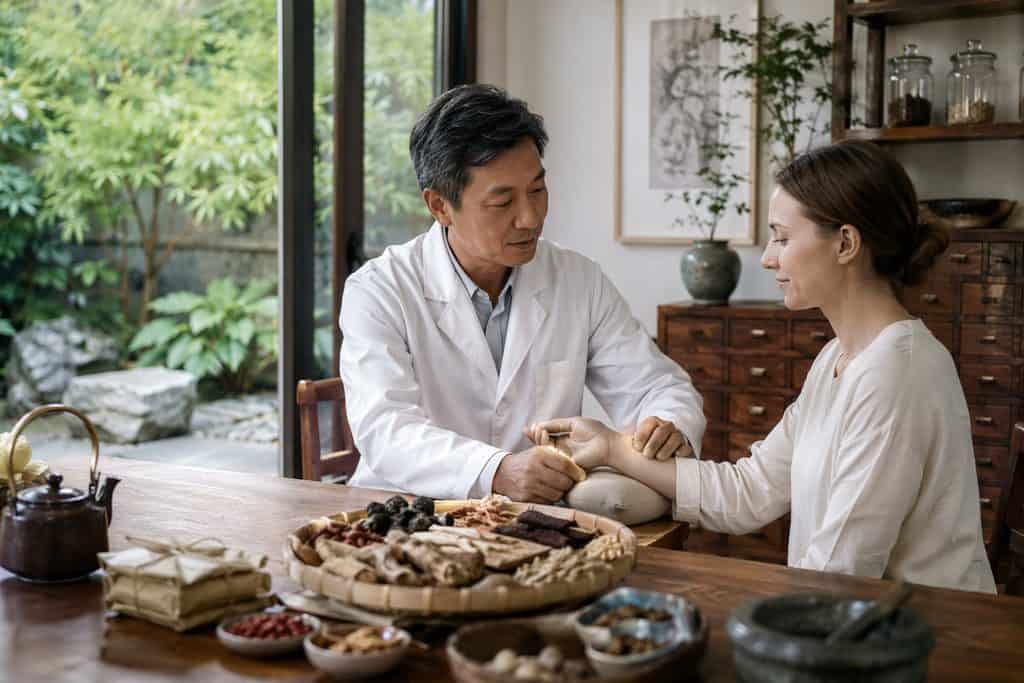
When 54-year-old Sarah from Portland first looked into acupuncture for her chronic lower back pain, she assumed she’d be booking a session at a strip-mall clinic near her home. Her physiotherapist had mentioned TCM as an option, and after two years of injections that gave her maybe six good weeks each, she was ready to try something different. What she didn’t expect was the sheer volume of conflicting information online — some of it promising miracles, some of it warning her away entirely. That confusion is exactly why we wrote this guide. Understanding traditional Chinese medicine hospital cost China, safety standards, and how the system actually works is the first step toward making a decision you won’t regret.
We are not doctors. Our role at China Medical Services is to connect international patients with accredited Chinese hospitals and help them navigate a system that can feel opaque from the outside. This article is educational. It is not medical advice, and nothing here should replace a consultation with a qualified physician who knows your history.
How This Actually Works, Step by Step
Here’s the real sequence, without the marketing gloss.
You start by gathering your existing medical records — imaging reports, blood work, previous treatment notes, and a clear written summary of your symptoms and goals. If you’re dealing with chronic pain, that means documenting where it hurts, what you’ve tried, what worked, and what didn’t. Send those materials to us. Our team translates the relevant documents and routes them to the appropriate TCM department at a partner hospital.
A TCM physician reviews the file. This is where things differ from Western medicine. The practitioner isn’t just looking at your MRI. They’re building a pattern diagnosis based on your full presentation — sleep, digestion, stress, temperature sensitivity, tongue and pulse findings if you’re seen in person. From the records alone, they can offer preliminary impressions and tell you whether TCM is likely to help or whether you’d be better served by a different specialty.
What comes back is a written assessment. Sometimes that’s a video consultation, sometimes just a document. Either way, you get a sense of whether a trip to China makes sense before you book a flight.
If you decide to proceed, we coordinate the appointment, help with your S2 visa documentation, and arrange a bilingual medical companion to accompany you through registration, consultations, and follow-up visits. You are not handed a pamphlet and wished good luck.
What TCM Treatment Costs in China — and Why It’s Complicated
Let’s address the number everyone wants first. Traditional Chinese medicine hospital cost China varies enormously depending on what you’re treating and where you go.
An initial consultation with a senior TCM physician at a top-tier public hospital typically runs between $50 and $150 USD. Acupuncture sessions range from $30 to $80 each. Herbal formulas — usually dispensed as granules or raw herbs — cost $20 to $60 per week of treatment. A structured two-week inpatient rehabilitation program at a major TCM hospital, including daily therapies, room, and meals, can land anywhere from $2,000 to $6,000.
Compare that to the United States, where a single acupuncture session averages $75 to $200, and a comprehensive integrative pain program can easily exceed $10,000 out of pocket. China’s cost advantage in TCM is real, but it’s not the only reason patients come.
| Service | Typical Cost in China (USD) | Typical Cost in the US (USD) |
|---|---|---|
| Initial TCM consultation | $50–$150 | $150–$400 |
| Acupuncture session | $30–$80 | $75–$200 |
| Herbal prescription (weekly) | $20–$60 | $40–$120 |
| Two-week inpatient rehab program | $2,000–$6,000 | $8,000–$20,000+ |
These figures are estimates. Final pricing depends on the hospital, the seniority of the physician, and the complexity of your case. Any provider who quotes you an exact number before reviewing your records is guessing.
A Realistic Timeline
Patients consistently underestimate how long the administrative side takes. Here’s what a typical TCM medical journey looks like, assuming you’re starting from scratch.
| Stage | Timeframe | What Happens |
|---|---|---|
| Record collection and translation | 3–7 days | You gather reports; we translate and format them for the hospital |
| Written assessment or video consult | 5–10 days after records arrive | A TCM physician reviews your file and provides preliminary recommendations |
| Appointment coordination | 1–3 weeks | We secure a slot at the appropriate hospital department; wait times vary by physician demand |
| S2 visa application | 1–3 weeks | You apply at a Chinese consulate with hospital invitation documents we help prepare |
| Travel and first in-person visit | Varies | You arrive, meet your companion, and attend the consultation |
| Treatment course | 2 weeks to 3 months | Depends entirely on your condition and the physician’s plan |
Notice that nothing happens overnight. The fastest realistic path from first inquiry to sitting in a TCM clinic in Beijing is about four to six weeks. Anyone promising faster is cutting corners somewhere.
What Can Go Wrong — and What Happens Then
Honesty matters more than comfort here.
The physician may say TCM isn’t right for you. This happens more often than you’d think. If your condition requires surgery or a medication that TCM can’t replace, a reputable hospital will tell you so. We’d rather you hear that before booking a flight than after.
You may not get the exact physician you requested. Senior TCM doctors at top hospitals have packed schedules. We can request a specific practitioner, but we cannot guarantee it. If the appointment can’t be secured as specified, our coordination fee is refunded in full.
Herbal formulas can interact with your current medications. This is a genuine safety concern. Always disclose every drug you take — including supplements — to both your TCM physician and your doctor at home. Some herbs affect blood clotting, blood pressure, or liver enzymes.
Results take time. Chronic pain doesn’t resolve in three sessions. If you’re expecting a miracle in a week, you’ll be disappointed. TCM for chronic conditions is typically measured over weeks and months, not days.
Is TCM Safe for International Patients — and How Do You Choose a Hospital?
Safety is the question we hear most from Western patients, and it deserves a direct answer.
China’s top TCM hospitals operate under the same regulatory framework as its leading Western medicine institutions. They are accredited, licensed, and subject to national standards for herbal quality and acupuncture practice. The hospitals in our network are part of the top 5% of China’s 35,000+ medical institutions, ranked by Fudan University and JCI criteria.
That said, “TCM hospital” covers a wide range. A small clinic in a second-tier city is not the same as a major teaching hospital with an international department. For foreign patients, we generally recommend hospitals that meet three criteria:
- Established international patient services — English-speaking staff, clear pricing, and experience with foreign documentation
- Integration with Western diagnostics — the ability to order MRIs, blood work, and other tests on-site, so TCM isn’t operating in isolation
- Transparent herbal sourcing — reputable hospitals can tell you where their herbs come from and how they’re tested for heavy metals and contaminants
For patients specifically searching for the best TCM hospital in Beijing for foreigners, the major teaching hospitals affiliated with Beijing University of Chinese Medicine are the usual starting point. In Shanghai, hospitals like Longhua and Shuguang have dedicated international departments. We maintain detailed profiles of TCM hospitals across China to help you compare.
How does traditional Chinese medicine work for chronic pain? The short answer is that TCM approaches pain as a symptom of imbalance rather than an isolated problem. Acupuncture may modulate nerve signaling and release endorphins. Herbal formulas aim to address underlying patterns — inflammation, circulation, organ function — that Western medicine might treat with separate drugs. The evidence base is mixed. Some studies show benefit for conditions like chronic low back pain, migraines, and osteoarthritis. Others are inconclusive. A good TCM physician will be honest about what the research supports.
Practical Considerations: Records, Visas, Payment, and Follow-Up
Records. Bring everything. Imaging on disc, pathology reports, medication lists, allergy history. If it’s in English, we translate it. If it’s in another language, we handle that too.
Visa. Medical travel to China uses the S2 visa, which covers short-term stays for medical treatment and private affairs. Your accompanying family member also applies for S2. The M visa is for commercial and trade activities — it is not a medical visa, and using it for treatment purposes can create problems at immigration. Requirements change, so always check with the nearest Chinese embassy or consulate for current documentation needs.
Payment. Public TCM hospitals generally require prepayment for international patients. Private international hospitals often bill insurance directly. Bring a credit card that works in China and notify your bank before you travel.
Follow-up at home. Before you leave China, ask your TCM physician for a written treatment summary and a recommendation for continuation. Some hospitals can ship herbal granules internationally for a limited period. Your doctor at home should be informed of everything you received.
Frequently Asked Questions
Yes, but not at every hospital. Major TCM hospitals in Beijing, Shanghai, and Guangzhou have international departments with English-speaking staff. For hospitals without that infrastructure, a bilingual medical companion is essential — not just for translation, but for navigating registration, payment, and pharmacy pickup, which are almost entirely in Chinese.
Check whether it’s affiliated with a recognized university, whether it appears in national hospital rankings, and whether it has a dedicated international patient office. If a clinic can’t provide clear information about its physicians’ credentials or herbal sourcing, walk away. Legitimate hospitals are transparent about both.
For most patients, yes — with caveats. Acupuncture is generally low-risk when performed with sterile needles by a trained practitioner. Herbal medicine carries more variables, particularly drug interactions and quality control. Always disclose your full medication list and ask specifically about contraindications. If you have liver disease, bleeding disorders, or are pregnant, additional precautions apply.
That’s a real possibility, and you should plan for it. Set a clear evaluation point — say, four to six weeks — and decide in advance what improvement would look like. If you’re not seeing it, stop. A reputable TCM physician will support that decision rather than encourage you to keep spending.
Your Next Step
TCM is not a miracle cure, and China’s TCM hospitals are not a secret shortcut. They are legitimate medical institutions with real expertise, real limitations, and costs that are often a fraction of what you’d pay elsewhere. The key is approaching them with accurate information and realistic expectations.
China Medical Services helps international patients access accredited hospitals, coordinate appointments, and navigate the logistics of treatment in China. We don’t provide medical care, and we don’t promise outcomes. What we do is remove the friction — language, paperwork, scheduling — so you can focus on your health. When you’re ready, reach out for a free consultation. No pressure, no obligation. Just a conversation about whether this path makes sense for you.
This article is for informational purposes only and does not constitute medical advice. Always consult a qualified healthcare provider before starting any treatment.
For more medical information and treatment options in China, visit chinamedservices.com (China Medical Services).
