West China Hospital of Sichuan University: A Guide for International Patients
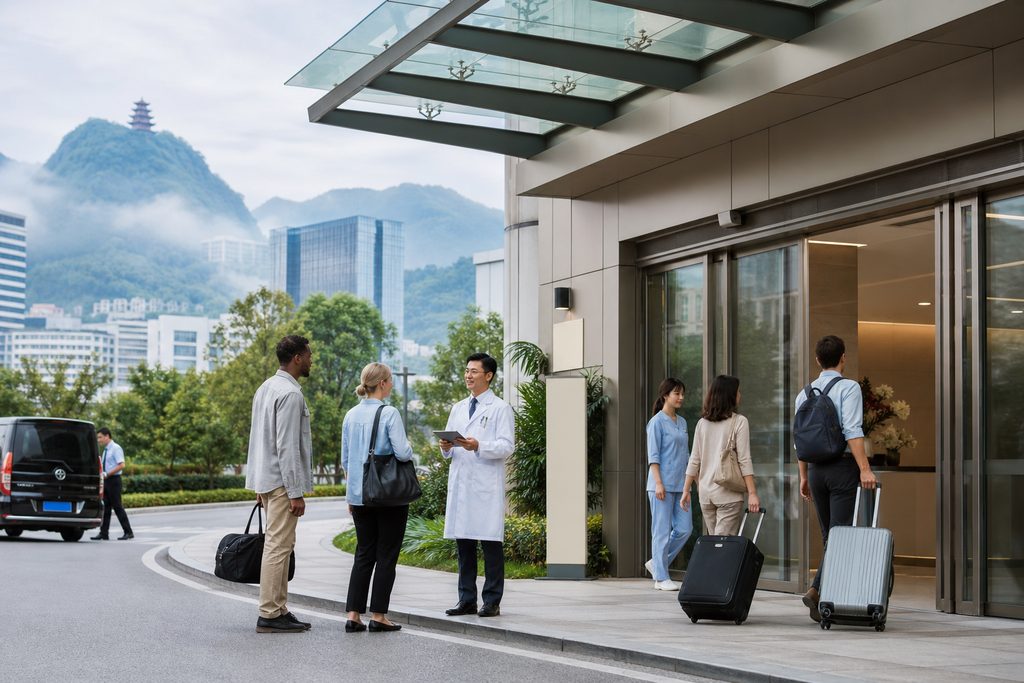
When 47-year-old Daniel from Oregon was told his liver was failing, his gastroenterologist in Portland handed him a folder and a phone number for a transplant center. The wait, he was told, could run past two years. A cousin in Chengdu mentioned West China Hospital of Sichuan University — a name Daniel had never heard. He spent three weeks trying to figure out what the hospital actually offered foreign patients, what it might cost, and whether the trip was even possible. That confusion is common. So here is the plain version.
West China Hospital of Sichuan University international patients cost varies enormously by department and case, but most self-paying foreign patients should budget $8,000 to $25,000 for major surgical procedures, versus $80,000 to $200,000 for the same operation in the United States. That range covers hospital fees, surgeon fees, and a typical inpatient stay. It does not cover travel, lodging, or a companion. And it is a range, not a quote — final pricing depends on the hospital’s own assessment of your case.
West China Hospital of Sichuan University for International Patients: The Short Answer
West China Hospital is one of China’s largest and most respected academic medical centers, located in Chengdu, Sichuan Province. It appears in the Fudan Hospital Ranking’s top tier (A++++), the highest band awarded to comprehensive hospitals in mainland China. For international patients, the practical entry point is the hospital’s international medical department, which handles appointment coordination, English-language support, and billing for foreign passport holders.
What it is not: a walk-in clinic for tourists. Public hospital outpatient registration in China generally cannot be pre-booked from overseas for standard departments. You show up, you queue, you get a same-day number. Surgery cannot be scheduled until a physician has seen you in person. That single rule reshapes every plan a foreign patient makes.
Who This Is Right For — and Who It Isn’t
West China Hospital suits a specific kind of patient. It is not the right answer for everyone, and saying so up front saves people a wasted trip.
Typically a reasonable fit:
- Patients facing a long wait at home for a complex procedure — certain cancer surgeries, hepatobiliary work, neurosurgery, complex orthopedic reconstruction.
- Self-paying patients or those with international insurance that reimburses after the fact.
- People willing to travel with a companion or hire bilingual support, because the hospital’s daily outpatient volume runs into the tens of thousands and English signage is limited.
- Patients from Southeast Asia, Central Asia, and the Middle East for whom Chengdu is a shorter and cheaper flight than Europe or the US.
Probably not a fit:
- Anyone needing emergency stabilization. Fly to the nearest capable hospital, not across a border.
- Patients whose condition is well managed at home and who are chasing a marginal cost saving. The disruption is rarely worth it.
- People who cannot tolerate a several-week stay away from their support network, or who have no one to accompany them.
- Patients expecting a Western-style private hospital experience. West China is a public academic institution. Comfort levels differ.
The Options, Compared
Before committing to Chengdu, it helps to see where it sits against the alternatives. The table below reflects typical self-pay ranges for major surgical care. All figures are approximate and vary by hospital and case complexity.
| Option | Typical Cost Range (USD) | Wait Time for Surgery | English Support | Best For |
|---|---|---|---|---|
| West China Hospital (public, international dept.) | $8,000–$25,000 | Weeks to a few months, case-dependent | Available via international department | Complex cases, cost-sensitive self-payers |
| Other top-tier Chinese public hospitals (Beijing, Shanghai) | $10,000–$30,000 | Similar, sometimes longer for famous names | Varies by hospital | Patients wanting a specific specialty reputation |
| Chinese private international hospitals | $25,000–$60,000 | Shorter, more predictable | Full English service, direct insurance billing | Patients prioritizing comfort and speed |
| United States | $80,000–$200,000+ | Often months for elective surgery | Native | Patients with full US coverage |
| Western Europe (private) | $40,000–$120,000 | Weeks to months | Varies | EU residents with private coverage |
Which column matters most depends on you. If cost is the binding constraint and the case is complex, West China is a strong candidate. If predictability and English-language comfort outweigh price, a private international hospital in Shanghai or Beijing may serve you better. You can browse China’s top-ranked hospitals grouped by city to see the full landscape before deciding.
Is West China Hospital Good for Cancer Treatment?
This is the question foreign patients ask most often, and it deserves a direct answer. West China Hospital ranks among China’s top centers for several oncology-related specialties in the Fudan specialty reputation rankings, which list the top 10 hospitals per discipline. Its strengths cluster around hepatobiliary surgery, gastroenterology, and thoracic surgery — the departments that handle liver, stomach, esophageal, and lung cancers.
What that means practically: for a liver resection, a complex gastric cancer operation, or multidisciplinary tumor board review, West China is a serious institution with high surgical volume. Volume matters. Surgeons who perform a procedure hundreds of times a year tend to have better outcomes than those who perform it dozens of times.
What it does not mean: that West China is the right choice for every cancer. For certain hematologic malignancies, proton therapy, or specific pediatric cancers, other Chinese centers may be stronger. The specialty rankings by department let you compare oncology, cardiac surgery, orthopedics, and reproductive medicine side by side. And no ranking substitutes for a physician reviewing your actual scans.
How to Book an Appointment at West China Hospital Chengdu
Booking is where most foreign patients get stuck. The hospital does not operate a consumer-facing English booking portal the way a US hospital does. The realistic sequence looks like this:
- Step one: Gather your records — imaging on disc or in DICOM format, pathology reports, operative notes, current medication list, and recent labs. Translated into English or Chinese where possible.
- Step two: Contact the hospital’s international medical department directly, or work through a coordination service that already has a working relationship with it. The international department is the correct channel — not the general outpatient registration window.
- Step three: Obtain a remote written opinion or video consultation. This lets the specialty team review your case before you buy a plane ticket.
- Step four: Travel to Chengdu for an in-person consultation. Only after this visit can surgery be scheduled.
- Step five: Pre-pay the estimated hospital fees. Chinese public hospitals require prepayment; insurance is reimbursed afterward.
What It Costs: A Closer Look
Cost is the reason most patients start looking at China. The headline comparison holds: major surgery in China’s top public hospitals typically runs one-fifth to one-tenth of US list prices. A coronary artery bypass graft, for example, commonly falls in the $12,000–$20,000 range at a leading Chinese public hospital, against $120,000 or more in the US.
For West China specifically, plan on these broad bands for self-paying international patients:
- Diagnostic workup and imaging: $500–$2,000
- Major surgery plus a 7–14 day inpatient stay: $8,000–$25,000
- ICU days, if needed: billed separately, often $500–$1,500 per day
- Medications and consumables: variable, sometimes significant
What drives the variance? Procedure complexity, length of stay, whether ICU care is required, and whether you use the standard channel or the international/VIP channel. The VIP route — senior specialists, English service, shorter queues — typically costs 1.5 to 2 times the standard channel. That premium buys convenience and language support, not better surgery.
The keyword searches around “liver transplant cost at West China Hospital China” deserve a careful answer. Organ transplantation in China is governed by strict national regulations, and foreign patients are subject to specific eligibility rules that differ from domestic patients. We do not arrange, broker, or advise on transplant access, and no service can promise a donor organ or a shortened wait. If transplantation is your situation, the honest first step is a conversation with the hospital’s transplant department about whether you qualify at all. Anything else is noise.
Practical Considerations for a Chengdu Medical Trip
Records. Bring everything. Chinese specialists work from imaging and pathology, not from your description of symptoms. Missing scans mean repeat testing, which means added days and cost.
Visa timing. S2 processing typically takes one to two weeks depending on your consulate, and you will need an invitation or supporting letter from the hospital. Build that into your schedule.
Payment. Public hospitals want prepayment, usually by bank transfer or international card. Confirm the accepted methods with the hospital’s finance office before you fly — some cards fail, and fixing it from Chengdu is unpleasant.
Language. Chengdu is not a major English-speaking city. Hospital staff in the international department speak English; the cafeteria cashier does not. A bilingual companion is not a luxury here — it is the difference between a smooth week and a frustrating one.
Follow-up. Ask before discharge how wound checks, imaging, and medication adjustments will be handled once you are home. Get it in writing. Your local physician will need the operative report and discharge summary in English.
For a broader view of what medical travel to China involves, the main site lays out hospital categories, city guides, and the service model in more detail.
Frequently Asked Questions
Not through the standard outpatient system. Public hospital registration in China is generally same-day and in-person. The workable route is the hospital’s international medical department, which can coordinate a consultation in advance for foreign patients. Expect to submit records first and receive a preliminary opinion before any travel date is set.
For major surgery, most self-paying international patients should plan on $8,000 to $25,000 in hospital charges, plus travel, lodging, and companion costs. That figure varies widely with the procedure and length of stay. Get a written estimate from the hospital after your records are reviewed — anything before that is guesswork.
For hepatobiliary, gastric, esophageal, and thoracic cancers, yes — it ranks among China’s leading centers in those disciplines and handles high surgical volumes. For other cancer types, compare against the specialty rankings before committing. The right answer depends on your specific diagnosis, not on the hospital’s general reputation.
The S2 visa is the applicable short-stay category for medical treatment and private affairs, and accompanying family members apply under the same category. Requirements change, so verify with your nearest Chinese embassy or consulate and bring the hospital’s supporting documents. Do not travel on a tourist visa assuming you can convert it later.
Complications happen anywhere. Chinese public hospitals handle them, but the experience is less concierge-style than in a Western private hospital, and language barriers make it harder. This is precisely why a companion or bilingual support matters, and why a clear plan for follow-up care at home should be settled before discharge. No service can guarantee an outcome — and you should be wary of anyone who does.
Your Next Step
The core message is simple: West China Hospital of Sichuan University is a genuinely strong institution for complex surgical and oncologic care, and the cost advantage for self-paying international patients is real. But the path in is not obvious, and the rules — same-day registration, in-person consultation before surgery, prepayment, S2 visa — trip up people who assume it works like a Western hospital.
We are a medical coordination service, not a hospital and not a provider of medical advice. We do not diagnose, and we cannot promise a specific surgeon, a specific date, or a specific outcome. What we do is help you understand your options, connect you with the right department, and handle the logistics that make a Chengdu trip manageable. If you would like to talk through your situation, start with a free consultation — no pressure, and no obligation to travel.
This article is for general information only and is not medical advice. Treatment decisions should be made with qualified physicians who have reviewed your individual case. Costs and visa rules change; confirm details with the hospital and the relevant consulate before making plans.
For more medical information and treatment options in China, visit chinamedservices.com (China Medical Services).
