Allergy Medication in China: Costs, Access & What Tourists Can Buy
Allergy Medication in China: Costs, Access & What Tourists Can Buy
When 38-year-old Daniel from Melbourne landed in Shanghai for a two-week business trip, he expected meetings, traffic, and jet lag. What he didn’t expect was a sneezing fit so violent that his eyes swelled shut by day three. He had packed his usual antihistamines, but the box ran out faster than planned. Standing in a pharmacy near Jing’an Temple, staring at shelves of Chinese-language packaging, he realized he had no idea what he was looking at. That moment — confused, itchy, and far from home — is exactly why this guide exists. Understanding allergy medication cost China visitors actually face, and how to get the right pills quickly, saves both money and misery.
The short answer: common antihistamines are cheap and widely available in China, often for less than $5 a box. But the system works differently than in the US or Europe, and a few rules trip up foreigners every time.
Is Allergy Medication Available in China? The Short Answer
Yes. China has a mature pharmaceutical market, and every major class of allergy drug sold in the West is available here — cetirizine, loratadine, fexofenadine, desloratadine, and older options like chlorpheniramine. Brand names differ, but the active ingredients are identical.
The catch is structural. China splits medicines into two categories: prescription (处方药) and over-the-counter (OTC, or 非处方药). Most second-generation antihistamines sit in the OTC bucket, which means you can walk into a pharmacy and buy them without seeing a doctor. Nasal corticosteroid sprays are usually OTC too. But anything stronger — oral steroids, leukotriene modifiers like montelukast, or biologic injections for severe allergic asthma — requires a prescription from a licensed Chinese physician.
Who This Is Right For — and Who It Isn’t
This information serves travelers, expats, and medical visitors dealing with routine seasonal or environmental allergies. It is not a substitute for a diagnosis, and it does not cover every scenario.
You’re likely fine handling this yourself if:
- You have a known allergy (pollen, dust mites, pet dander) and just need a refill of a drug you already take at home
- Your symptoms are mild — sneezing, itchy eyes, mild congestion
- You can read ingredient names in English or use a translation app confidently
You should not rely on pharmacy self-service if:
- You’re having trouble breathing, wheezing, or throat swelling — that’s a medical emergency, go to a hospital immediately
- You’ve never been formally diagnosed and your symptoms are new or worsening
- You need injectable epinephrine for anaphylaxis risk (carry your own supply; Chinese pharmacies rarely stock Western auto-injector brands)
- You’re pregnant, breastfeeding, or managing a chronic condition that interacts with antihistamines
Being honest about that second list matters. A pharmacy clerk in China is not a pharmacist in the Western sense — they’ll sell you what’s on the shelf, but they won’t screen your history.
The Options, Compared
Here’s how the main paths stack up for a foreigner needing allergy relief in China.
| Option | Typical Cost (USD) | Time to Get It | Language Barrier | Best For |
|---|---|---|---|---|
| Chain pharmacy (OTC antihistamine) | $2–8 per box | 10–20 minutes | Moderate — packaging is Chinese | Known allergy, mild symptoms, urgent need |
| Hospital outpatient clinic (prescription) | $15–40 visit + $5–30 medication | 2–4 hours including queue | High — no English at most public hospitals | Stronger drugs, unclear diagnosis |
| Private international hospital | $150–400 consultation + medication | 1–2 hours, often by appointment | Low — English-speaking staff | Insurance holders, complex cases, expats |
| Telemedicine / online pharmacy | $10–25 | Same day to 3 days delivery | High — platforms are Chinese-only | Expats with a local ID and payment app |
For a short-term tourist, the pharmacy route wins on speed and price. For anyone with insurance or a complicated history, the private hospital column is worth the premium. The clinic route sits awkwardly in the middle — cheap, but slow and linguistically rough.
What Allergy Medicine Can I Buy in China? Brand Names That Matter
This is where most visitors get stuck. You know “Zyrtec” — the shelf says something else. Here’s the mapping that actually helps.
- Cetirizine → sold as 仙特明 (Xianteming) or generic 西替利嗪
- Loratadine → 开瑞坦 (Claritin’s Chinese brand name)
- Fexofenadine → 敏乐 or generic 非索非那定
- Desloratadine → 恩理思
- Mometasone nasal spray → 内舒拿 (Nasonex equivalent)
- Fluticasone nasal spray → 辅舒良 (Flixotide/Flonase family)
Two practical notes. First, Chinese pharmacies often stock both imported originals and domestic generics — the generic is usually 40–60% cheaper and pharmacologically equivalent. Second, eye drops for allergic conjunctivitis (ketotifen, olopatadine) are OTC and sold separately from oral pills, so ask for both if your eyes are involved.
Allergy Medication Cost China: What Drives the Price
Prices vary by city, pharmacy type, and whether you buy imported or domestic. A box of generic cetirizine in a Chengdu neighborhood pharmacy might run 15 RMB (about $2). The same drug in a Beijing hospital pharmacy or an airport shop can hit 60–80 RMB ($8–11). Private international hospitals mark up further — expect $20–40 for a course that costs $4 elsewhere.
What’s included in that price? Just the medication. A hospital visit adds a registration fee (5–50 RMB at public hospitals, $50–150 at private ones), and if you need allergy testing — skin prick tests or specific IgE blood panels — that’s a separate line item, typically $80–300 depending on how many allergens are screened.
For most travelers, the honest math is simple: budget under $20 for a pharmacy run, or $200+ if you need a private hospital workup. The gap is real, and it reflects service and language, not drug quality.
How to Get Allergy Medication in China as a Foreigner
The process differs depending on which route you take, and the friction points aren’t where Westerners expect them.
At a pharmacy: Walk in, show your medication photo or write the ingredient name, pay with cash, WeChat Pay, or Alipay. Foreign credit cards work at some chain pharmacies (Watson’s, Guoda) but not all. Bring cash as backup. No ID needed for OTC purchases.
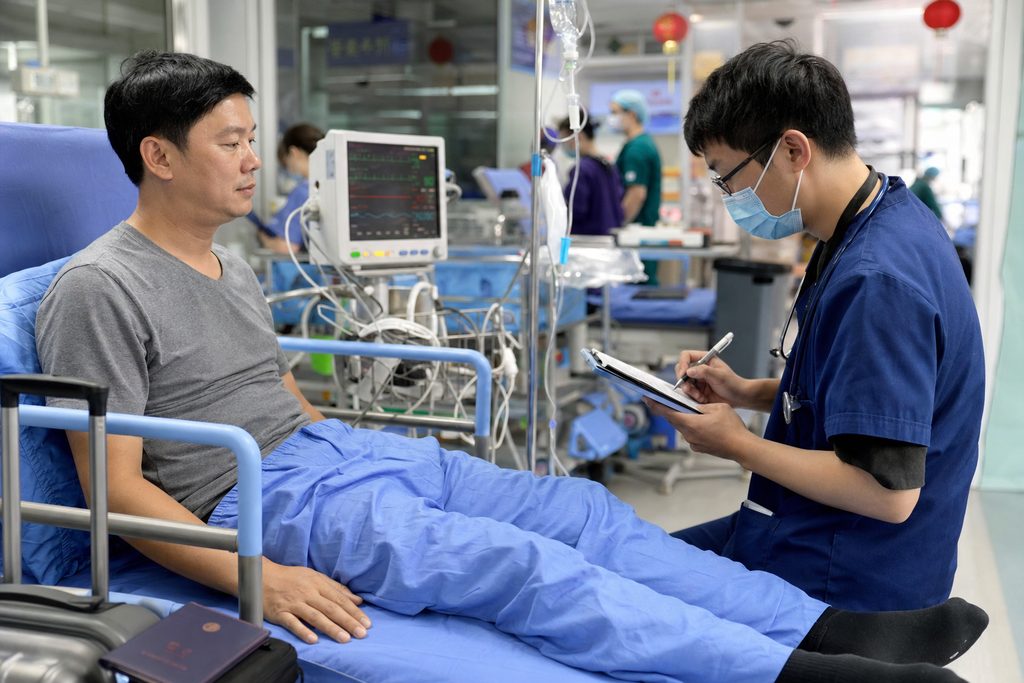
At a public hospital: You must register first — either at a kiosk or a staffed window — then queue for the department. Most public hospitals have no English signage and no interpretation. You’ll need your passport for registration, and payment is upfront. This is where a bilingual medical companion earns their fee, handling registration, queueing, and translation so you’re not guessing at every step.
At a private international hospital: Book ahead by phone or online. Staff speak English, many accept direct insurance billing, and consultations run 30–60 minutes. This is the smoothest path if cost isn’t your primary concern.
One more thing worth knowing: if your allergy is part of a broader respiratory or immune condition and you want a specialist opinion before you travel, a written second opinion from a Chinese hospital’s international department can clarify whether you need in-person care at all. That service typically runs $300–500 and can save a wasted trip.
Practical Considerations for Allergy Sufferers in China
Several China-specific factors affect allergy management that don’t come up in Western guides.
Air quality. Pollution levels in northern cities during winter can aggravate respiratory allergies and asthma. If you’re sensitive, check air quality indexes before booking travel to Beijing or Xi’an in December and January.
Pollen seasons differ. China’s spring tree pollen peak (March–May) and autumn weed pollen peak (August–October) don’t align with North American or European calendars. Your usual “safe month” at home may be peak season here.
Payment friction. WeChat Pay and Alipay dominate, and both require a Chinese bank account or a foreign card linked through specific channels. Cash still works everywhere, so carry some.
Prescription continuity. If you take a maintenance allergy drug, bring enough for your whole trip. Refilling a Chinese prescription after you return home is not possible, and some drugs sold OTC here require a prescription abroad — or vice versa.
Visa logistics. If your allergy care is part of a larger medical visit, foreigners coming for treatment typically use the S2 visa category for short stays, with supporting documents from the treating hospital. The M visa is for commercial and trade activities only — it is not a medical visa, despite what some outdated blog posts claim. Requirements change, so confirm current rules with your nearest Chinese embassy or consulate.
For those planning a fuller medical trip — say, combining allergy workup with a general health screening — our directory of top-ranked Chinese hospitals organized by city is a useful starting point. And if Traditional Chinese Medicine appeals for chronic allergy management, acupuncture and herbal approaches are covered on our TCM hospitals page.
Frequently Asked Questions
Most second-generation antihistamines and nasal corticosteroid sprays are OTC and require no prescription. Stronger drugs — oral steroids, montelukast, biologics — require a Chinese physician’s prescription. Bring your home medication box or a photo so the pharmacy can match the active ingredient.
Domestic generics are regulated by the National Medical Products Administration and are pharmacologically equivalent to imported versions. That said, if you have a specific sensitivity to fillers or binders, buy the imported original. Ask the clerk to show you both options and compare the ingredient list.
Go to the nearest hospital emergency department immediately — do not wait for a pharmacy. If you carry an epinephrine auto-injector, bring it and enough refills for your trip, since Western auto-injector brands are rarely stocked in Chinese pharmacies. Travel insurance with medical evacuation coverage is strongly advised for anyone with anaphylaxis risk.
For routine OTC needs, under $20 covers most trips. A public hospital visit with testing runs $100–350. Private international hospital care starts around $200 and climbs with complexity. Prices vary by hospital and case complexity, so treat these as planning ranges, not quotes.
Your Next Step
Allergy medication in China is affordable and accessible — the real challenge is navigating a system that runs on Chinese-language processes and same-day queues. Knowing which drugs are OTC, what they cost, and where the language barrier bites hardest turns a stressful scramble into a 20-minute errand.
We’re China Medical Services, a coordination team that connects international patients with Chinese hospitals. We are not a hospital and we don’t diagnose or prescribe — we handle the logistics: hospital matching, appointment coordination, bilingual accompaniment, and visa guidance. If you’d like help planning allergy care or a broader medical visit, start with a free consultation at our patient services page. No pressure, no obligation — just a clear conversation about what you need.
This article is for general information only and is not medical advice. Always consult a qualified healthcare provider about your specific condition and medications.
For more medical information and treatment options in China, visit chinamedservices.com (China Medical Services).
