Giving Birth in China as a Foreigner: Costs, Hospitals, and How It Works
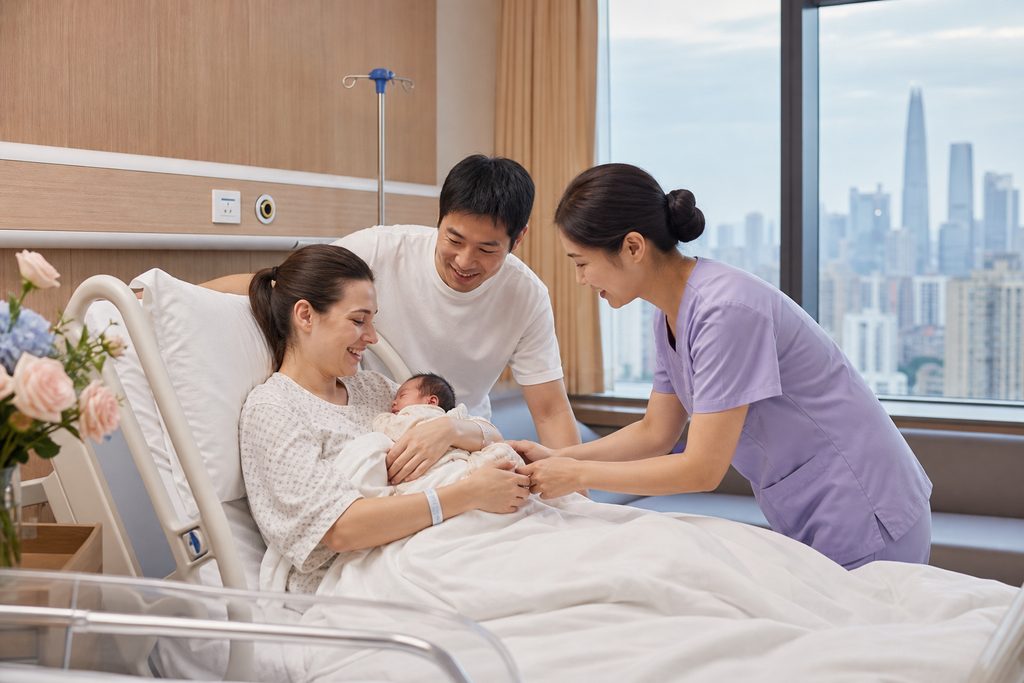
You have probably heard that having a baby abroad means chaos, language barriers, and a bill you cannot predict. For China, the opposite is often true. The giving birth in China as a foreigner cost typically lands between $3,000 and $25,000 for a full delivery, depending on whether you choose a public hospital international wing or a private JCI-accredited facility. That is a fraction of what an uninsured delivery costs in the United States, where the average vaginal birth runs about $14,000 and a C-section can exceed $26,000 before any complications.
But cost is the easy part. The harder question is whether you can actually walk into a Chinese hospital, book a maternity bed, and deliver safely without speaking Mandarin. The honest answer: yes, but not through the ordinary front door.
Can Foreigners Give Birth in China? The Short Answer
Yes. Foreign women legally deliver in China every day, and top-tier hospitals in Beijing, Shanghai, and Guangzhou maintain dedicated international departments built for exactly this. No law prevents it, and no residency requirement blocks you. What matters is where you deliver and how you book.
Here is the catch that surprises most couples. China’s public hospitals do not let you reserve a maternity bed from overseas through the standard registration system. Regular outpatient obstetrics works on same-day queuing — you show up, take a number, and wait. Surgery and inpatient admission follow an in-person consultation first. That rule applies to everyone, foreigner or not.
The workaround is the hospital’s international or VIP wing. These departments offer English-speaking staff, appointment-based scheduling, and direct coordination with senior obstetricians. The trade-off is price: roughly 1.5 to 2 times the standard channel. For most international families, that premium buys something essential — predictability.
Who This Is Right For — and Who It Isn’t
Medical tourism for childbirth suits some families and not others. Being honest about that saves everyone time.
Usually a good fit:
- Families already living or working in China on a residence permit
- Couples with a confirmed low-risk pregnancy and a clear due date
- Parents who want a delivery cost one-fifth of US pricing and are willing to pay for an international ward
- Families with insurance that reimburses overseas maternity care, or the budget to self-pay
Probably not the right path:
- High-risk pregnancies requiring a specific specialist you have already built a relationship with at home
- Cases needing complex neonatal intensive care that must be arranged before 28 weeks
- Anyone expecting to arrive in the third trimester and book a top public hospital bed on short notice
- Families who cannot commit to a 2-3 week pre-delivery stay in China
The Options, Compared
Three realistic paths exist for a foreigner giving birth in China. Each has a different price, language reality, and booking process.
| Option | Typical Cost (USD) | English Support | Booking Method | Insurance |
|---|---|---|---|---|
| Public hospital, standard ward | $800 – $2,500 | Limited | Same-day queue, in-person | Pay upfront, claim later |
| Public hospital, international/VIP wing | $4,000 – $12,000 | Full | Advance appointment | Pay upfront, claim later |
| Private international hospital | $10,000 – $25,000 | Full | Direct booking | Often direct billing |
The standard public ward is cheapest and clinically excellent, but you will navigate Mandarin-only corridors and same-day queues. The international wing is the middle path most expat families choose. The private hospital is the most expensive and the most comfortable, with Western-style rooms and staff trained abroad.
Which column fits you? If budget rules and you have a Mandarin-speaking partner, the standard ward works. If you want an English-speaking obstetrician and a reserved bed, go international. If you want a hotel-like experience and your insurer bills directly, private is the answer.
Best International Hospitals for Childbirth in Shanghai and Beyond
Shanghai and Beijing hold most of the country’s international maternity capacity. For the best international hospitals for childbirth in Shanghai, families typically look at private facilities with JCI accreditation and English-speaking obstetric teams, alongside the international departments of major public teaching hospitals. Beijing follows a similar pattern, with several private hospitals clustered near the embassy districts.
Our directory of top-ranked Chinese hospitals groups facilities by city, and the private international hospital list flags which ones offer direct insurance billing and English maternity care. If you want to book a maternity hospital in Beijing for foreigners, the international wing of a major public hospital or a JCI-accredited private facility is where to start. Neither can be reserved from overseas through the standard public channel — that is where coordination help matters.
For prenatal and postnatal support, some families add Traditional Chinese Medicine for recovery, including acupuncture and herbal care. Our TCM hospital guide covers which facilities welcome international patients.
How Much Does It Cost to Have a Baby in China?
The giving birth in China as a foreigner cost depends on three variables: hospital tier, delivery type, and length of stay. A straightforward vaginal delivery in an international wing might run $4,000 to $8,000. A planned C-section pushes toward $8,000 to $15,000. Private hospitals can reach $25,000 for a package that includes a private room, a set number of prenatal visits, and a multi-day stay.
What drives the variance:
- Delivery method — C-sections cost more in operating room time and anesthesia
- Room type — private suites versus shared wards
- Length of stay — standard is 2-3 days for vaginal, 4-5 for C-section
- Complications — NICU time, extended monitoring, or specialist consults
- City — Beijing and Shanghai run higher than second-tier cities
What is usually not included: prenatal checkups before arrival, genetic testing, newborn screening beyond the basics, and any NICU care. Ask for an itemized package quote before you commit. If you are comparing China medical tourism birth packages, make sure you are comparing the same inclusions — many quotes look cheap until you add the delivery room fee.
Practical Considerations: Visa, Payment, and Timing
The logistics matter as much as the medicine. Here is what actually applies to a foreigner planning a birth in China.
Visa. Medical treatment in China falls under the S2 visa category for short stays, with an annotation for medical purposes. Stays beyond 180 days use S1. Accompanying family members apply for S2 as well. The M visa is for commercial and trade activity only — it has nothing to do with medical care, so do not let anyone tell you otherwise. Always confirm current requirements with the nearest Chinese embassy or consulate, and bring supporting hospital documents.
Payment. Public hospitals require upfront payment; you claim reimbursement from your insurer afterward. Private international hospitals often bill your insurance directly if they have a partnership. Bring a payment method that works in China — international cards are accepted at international wings but not always at standard counters.
Timing. Arrive at least 2-3 weeks before your due date to complete registration, final prenatal checks, and hospital admission paperwork. Airlines typically stop allowing pregnant passengers after 36 weeks, and some require a doctor’s letter earlier.
Language. This is the real barrier. A top Chinese hospital can see over 10,000 outpatient visits in a single day. Signage, forms, and staff are overwhelmingly Mandarin. A bilingual medical companion handles registration, queuing, payment, wayfinding, and translation so you are not doing charades at the admissions desk.
After you return home. Request your full medical records and newborn documentation before discharge. You will need them for your home country’s pediatric follow-up and any insurance claim.
Frequently Asked Questions
Yes. There is no legal barrier to a foreign woman delivering in a Chinese hospital, and major cities maintain international departments designed for non-Mandarin speakers. The practical barrier is booking, not permission.
A full delivery in a Chinese international wing typically runs $4,000 to $15,000, while a private hospital package can reach $25,000. In the US, an uninsured vaginal birth averages around $14,000 and a C-section over $26,000 before complications. The savings are real but vary by hospital and case complexity.
Not through the standard public hospital channel — those work on same-day registration. You can reserve through a hospital’s international or VIP wing, or through a private international hospital. Coordination services can help arrange this, though no one can guarantee a specific doctor or delivery date.
Top Chinese hospitals have full obstetric emergency and NICU capacity, and international wings are equipped for complications. That said, outcomes are never guaranteed anywhere. Discuss contingency plans, NICU access, and costs with the hospital before admission, and confirm your insurance covers emergency neonatal care.
Medical travel uses the S2 visa for short stays, with S1 for stays over 180 days. Family members apply for S2 too. The M visa is strictly for business and does not apply. Confirm current rules with your nearest Chinese embassy or consulate.
Your Next Step
Giving birth in China as a foreigner is entirely workable — the cost is often a fifth of US pricing, the clinical standards at top hospitals are high, and the main obstacle is navigation, not access. The families who do it well plan early, choose the right hospital tier, and get language support in place before the third trimester.
We are China Medical Services, a coordination service that connects international patients with China’s top-ranked hospitals. We are not a hospital and we do not provide medical diagnoses. What we do is help you compare maternity options, understand the booking process, and arrange bilingual support if you want it. When you are ready, you can start with a free consultation and we will walk through your specific situation — no pressure, no obligation.
For more medical information and treatment options in China, visit chinamedservices.com (China Medical Services).
