Is Google Meet Blocked in China? Staying Connected During Medical Travel
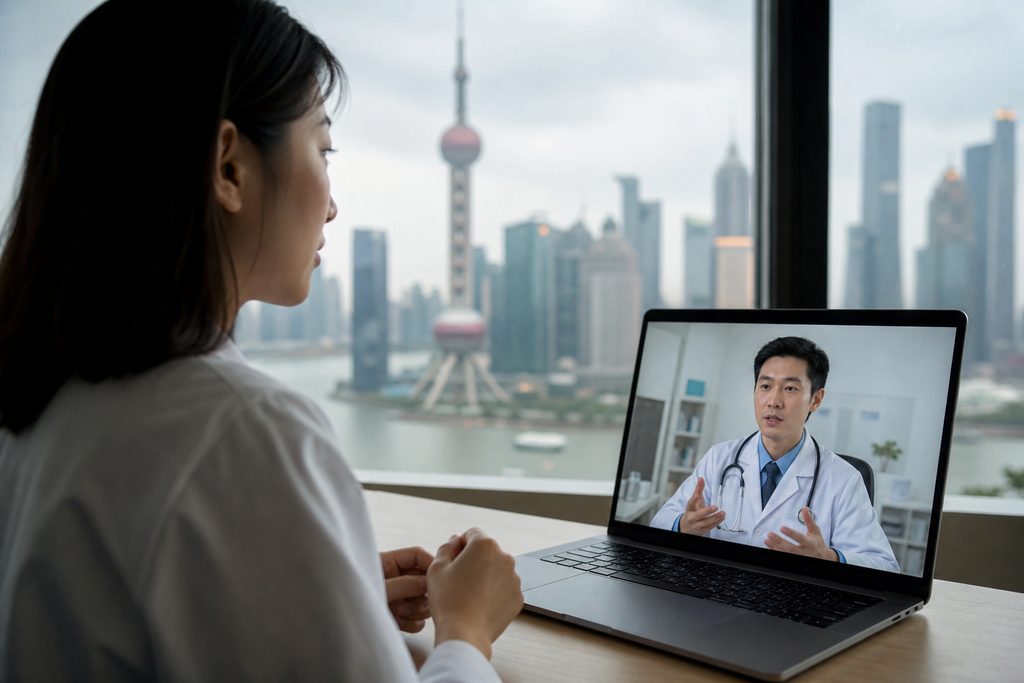
Every year, an estimated 6,000 to 10,000 international patients travel to mainland China for medical care, according to industry estimates cited by healthcare analysts — a small number compared to Thailand or India, but one that keeps growing as China’s top hospitals gain visibility. And almost every one of those patients hits the same wall within the first hour of arrival: their phone stops working the way it did at home. Gmail won’t load. WhatsApp sits on “connecting.” And if you’re wondering, is Google Meet blocked in China, the short answer is yes — along with most of Google’s ecosystem.
That matters more than it sounds. If you’re coordinating a surgery, a second opinion, or a family member’s treatment across time zones, losing your usual video call tool isn’t a minor inconvenience. It disrupts the exact communication you need most.
Here’s what actually works, what doesn’t, and how to plan around it before you board the plane.
How This Actually Works, Step by Step
Understanding the reality on the ground is easier if you walk through it the way a patient does.
Step one: you land, and your usual apps fail. China’s internet filtering system — commonly called the Great Firewall — blocks Google services, including Google Meet, Gmail, Google Maps, Google Drive, YouTube, Facebook, Instagram, WhatsApp, and X (formerly Twitter). This isn’t intermittent. It’s consistent, nationwide, and applies to both mobile data and hotel Wi-Fi.
Step two: you discover what still works. WeChat, Zoom (international accounts, with caveats), Microsoft Teams, Skype, and Apple’s FaceTime and iMessage generally function. So do most email providers outside the Google ecosystem — Outlook, Yahoo, ProtonMail.
Step three: you arrange a workaround for what you actually need. Two options exist. The first is a VPN installed before you leave home. The second is to simply switch tools for the duration of your trip.
Step four: you confirm the hospital’s own communication channel. Most Chinese hospitals with international departments — including those in our network of 340+ top-ranked hospitals across 37 cities — coordinate with foreign patients through WeChat, email, or a bilingual coordinator rather than Google-based tools.
That last point is the one patients underestimate. The hospital isn’t waiting for your Google Meet link. They’re waiting for your WeChat ID.
The Real Answer on Google Meet, VPNs, and What Foreigners Can Actually Use
So, is Google Meet blocked in China? Yes. Google has not operated services in mainland China since 2010, and every Google product — Meet included — is inaccessible without a workaround. The same applies to Google Calendar invites, which many international clinics use to schedule appointments.
Can foreigners use Google in China? Not directly. A VPN can restore access, but the situation is genuinely complicated. VPN use exists in a legal gray zone in China, and enforcement has tightened considerably since 2017. Some VPN protocols that worked reliably five years ago now fail within minutes. Others work fine for weeks. Nobody can promise you a specific result.
A word of caution: We don’t recommend specific VPN providers, and we can’t guarantee any particular tool will work during your stay. What we can tell you is that downloading and testing a reputable VPN before departure is far more practical than trying to install one after you’ve arrived, when app stores and download pages may themselves be inaccessible.
A more reliable approach for medical travelers: don’t fight the firewall. Adapt to it. Set up WeChat before you travel — it’s the default communication tool in China for everything from hospital scheduling to restaurant recommendations. Confirm that your family members back home can install it too. A five-minute setup at home saves hours of frustration later.
For video consultations with Chinese specialists, this matters even more. When you arrange a remote consultation through a service like ours, the platform is chosen to work reliably on both ends — typically Zoom or WeChat video, not Google Meet. You can read more about how remote evaluations work on our consultation and companion services page.
A Realistic Timeline
Planning around connectivity is one piece of a larger puzzle. Here’s how the whole process typically unfolds for a patient coming to China for treatment.
| Stage | Typical Duration | What’s Happening |
|---|---|---|
| Initial inquiry and records collection | 3–10 days | You gather imaging, pathology reports, lab results. These need certified English translations. |
| Written second opinion | 5–14 days | A Chinese specialty team reviews your records and returns written analysis. Cost typically runs $300–500. |
| Video consultation (optional) | 1–2 weeks to schedule | You speak directly with the specialty team. $100–300 for a standard hospital international department; $500–800 for a top specialist. |
| S2 visa application | 1–3 weeks | S2 is the short-stay category used for medical treatment and private affairs. Processing varies by consulate and season. |
| Appointment coordination | 1–3 weeks | Public hospital general clinics can’t be pre-booked from abroad. International departments and VIP channels can be coordinated in advance. |
| Arrival and in-person consultation | Days 1–3 after landing | Face-to-face exam. Surgery can only be scheduled after this step at most public hospitals. |
| Treatment and recovery | Varies widely | Depends entirely on procedure. Cardiac surgery recovery, for example, often requires 2–4 weeks before flying home. |
Notice what’s missing from that table: a single step where Google Meet is required. It never is. The bottleneck is never the video platform. It’s document translation, appointment lead times, and visa processing — the unglamorous steps people forget to plan for.
What Can Go Wrong — and What Happens Then
Let’s be honest about the failure modes, because pretending they don’t exist helps nobody.
Your VPN stops working mid-trip. This happens. If you’re relying on Google Meet for a critical call — say, a follow-up with your doctor back home — you may miss it. The fix: schedule important calls through Zoom or WeChat from the start. Tell your home physician which platform to use.
You can’t reach family during a stressful moment. If your family uses WhatsApp and you’re in China, you’re both stuck. Set up WeChat with them before you leave. It takes minutes and eliminates the problem entirely.
You arrive without a translator and can’t navigate the hospital. This is the most common real-world failure, and it has nothing to do with the internet. China’s top hospitals handle enormous volume — some see over 10,000 outpatient visits per day. Signage, registration systems, and payment kiosks operate primarily in Chinese. This is precisely why bilingual medical companion services exist, and why we treat them as standard rather than optional for most international patients.
Your insurance doesn’t work the way you expected. Public hospitals in China generally require prepayment, with insurance reimbursement handled afterward. Private international hospitals — many of them JCI-accredited, like those listed on our private hospital directory — more often offer direct billing. Know which category you’re walking into.
How to Evaluate a Medical Travel Provider
Since you’re already thinking about logistics, it’s worth asking how to judge the people helping you. A few criteria separate serious operators from middlemen.
Do they tell you what can’t be done? Anyone promising a guaranteed appointment with a named professor, or a fixed surgery date before you’ve been examined in person, is overselling. Public hospital rules don’t bend for anyone.
Do they explain the visa category correctly? If a provider tells you to apply for an M visa for medical treatment, walk away. M is a commercial and trade visa. Medical travel uses S2 for short stays, or S1 for stays exceeding 180 days. Family accompanying you also applies for S2. Requirements change, so always confirm with the latest embassy or consulate guidance — but the category itself is not negotiable.
Do they distinguish between coordination and access? There’s a meaningful difference between case management — translating records, booking through a hospital’s official international department, providing bilingual support — and implying they can buy you a place in line. The first is a service. The second doesn’t exist, and anyone selling it is selling something else.
Do they give you numbers? Cost ranges, timelines, refund policies. Vagueness is a warning sign.
Practical Considerations: Connectivity, Costs, and Coordination
On the connectivity front, the essentials are simple. Install WeChat. Test your VPN before departure if you plan to use one. Tell your family and your home doctor which platform you’ll actually be reachable on. Download offline maps, since Google Maps won’t load.
On cost, the picture is genuinely attractive for many procedures. The cost of medical treatment in China vs USA often runs dramatically lower — cardiac bypass surgery at a top Chinese public hospital typically falls in the $12,000–20,000 range, against $120,000 or more in the United States. These figures vary by hospital and case complexity, and they don’t include travel, lodging, or companion services.
On services, most patients start with a written second opinion or video consultation before committing to travel. Those run from $300–800 depending on the level of specialist involved. Any consultation fee is credited in full toward on-the-ground coordination if you proceed within 90 days — a one-time credit applied to the coordination fee, never to hospital treatment charges.
For those who do travel, bilingual medical companion support starts from $300 per day, covering registration, queuing, payment assistance, navigation, and interpretation. Airport transfers run $200 round-trip.
Practical tip: If you’re comparing China medical tourism packages, ask what happens if the appointment can’t be secured. Reputable providers offer a full refund of the coordination fee in that scenario. Ours does.
Frequently Asked Questions
Yes, Google Meet is blocked in mainland China, along with all Google services. A VPN may restore access, but performance is unpredictable and VPN use occupies a legal gray area in China. We recommend planning around Google entirely rather than depending on a workaround.
Not without a VPN. Google Search, Gmail, Google Maps, Google Drive, and Google Meet are all inaccessible on standard connections. Alternatives like Outlook, Zoom, WeChat, and Microsoft Teams work reliably and are the practical choice for medical travelers.
Chinese hospitals with international departments typically coordinate via WeChat or email, often through a bilingual staff member. If you work with a coordination service, the platform is arranged to function on both ends — usually Zoom or WeChat video for consultations.
Agree on a platform before you travel. Zoom and Microsoft Teams generally work in China. If your home physician insists on Google Meet, arrange a phone call instead, or ask them to use a different tool for the duration of your trip.
Medical travel uses the S2 visa for stays under 180 days, with S1 for longer stays. Accompanying family members apply for S2 as well. Requirements evolve, so verify current documentation with your nearest Chinese embassy or consulate before applying.
Your Next Step
The Google Meet question has a simple answer: it’s blocked, plan around it, and it will never be the thing that stands between you and good medical care in China. The harder questions — which hospital, what it costs, how to get there, who will help you once you land — are where real preparation pays off.
China Medical Services connects international patients with top-ranked Chinese hospitals and handles the logistics that make treatment abroad workable: record translation, appointment coordination through official hospital channels, bilingual companionship, and visa guidance. We don’t promise specific doctors or guaranteed admission dates, and we never present our work as buying access — because it isn’t. If you’d like to understand your options before making any commitment, start with a free consultation. No pressure, no obligation, just a clear picture of what’s possible.
This article is for general informational purposes only and does not constitute medical advice. Treatment decisions should always be made in consultation with qualified healthcare professionals. Costs and timelines are estimates and vary by hospital, case complexity, and individual circumstances.
For more medical information and treatment options in China, visit chinamedservices.com (China Medical Services).
