Robotic Surgery in China: How We Help International Patients
Robotic Surgery in China: How We Help
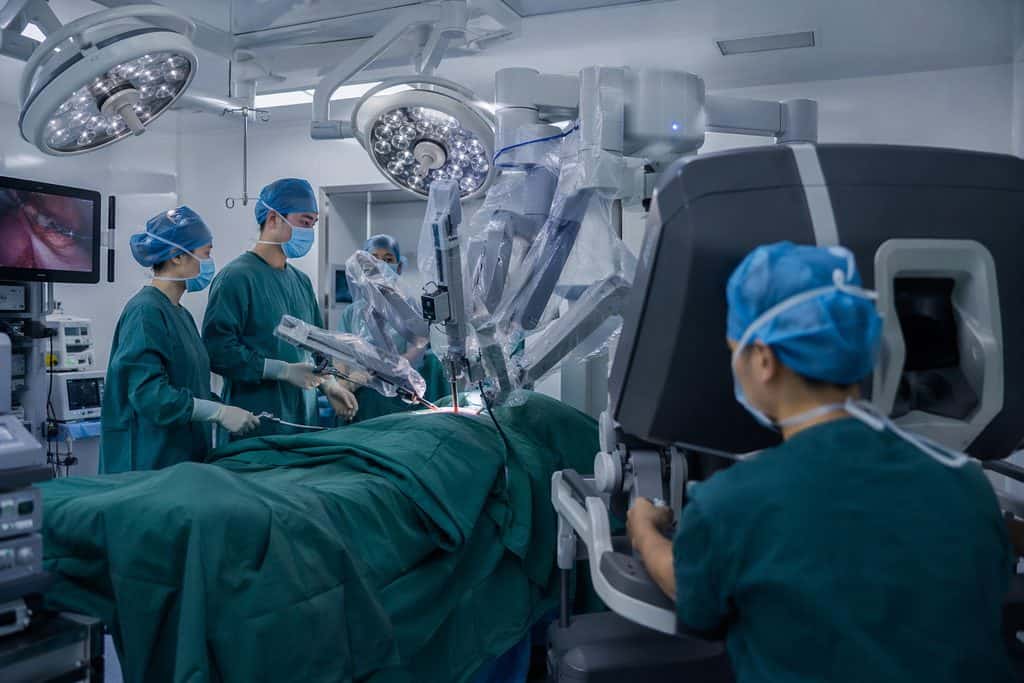
Robotic surgery sounds like something from a science fiction film. In plain terms, it means a surgeon sits at a console and guides four thin mechanical arms that perform the operation through incisions often smaller than a centimeter. The surgeon’s hands never touch you directly, but every movement is theirs — scaled, filtered, and steadied by software. The robot does not operate. It translates. And when patients abroad start researching robotic surgery cost China, what they usually find is a gap between very low numbers and very little explanation of what those numbers actually include. That gap is where our team works.
We are China Medical Services (chinamedservices.com), a medical coordination organization, not a hospital and not a clinic. We do not perform surgery. We connect international patients with 340+ top-ranked hospitals across 37 cities, and we handle the parts that make the difference between a plan on paper and a plan that actually happens.
How This Actually Works, Step by Step
The sequence matters more than most people expect. Here is the real order of operations, based on how Chinese hospitals actually admit international patients.
Step 1 — You send what you already have. Existing imaging (CT, MRI, PET), pathology reports, lab work, discharge summaries, and a short note about your diagnosis and what you have been told so far. Nothing needs translating yet. We handle that.
Step 2 — A Chinese specialty team reviews your file. Not a call center. The relevant department — urology, thoracic surgery, hepatobiliary, gynecology — reads your records and produces a written second opinion. This typically costs $300–500 and takes three to seven business days, depending on how complete your file is.
Step 3 — You speak with the team directly. A video consultation ($100–300 at a standard international department, $500–800 with a top specialist) lets you ask the questions that matter: Is robotic approach appropriate here? What are the alternatives? What does recovery realistically look like?
Step 4 — A plan and a quote. You receive a treatment direction and a cost estimate. Only now does travel make sense.
Step 5 — Logistics. Visa documentation, appointment coordination, airport pickup, bilingual accompaniment on the ground. You arrive with a schedule, not a hope.
What Robotic Surgery Cost China Actually Looks Like
Generally yes, often by a factor of three to eight. A robotic prostatectomy that bills at $60,000 or more in the US commonly falls in the $12,000 to $25,000 range at a top Chinese public hospital. Exact figures vary by hospital and case complexity, and you should always request an itemized estimate rather than relying on a headline number.
Yes — the S2 visa, with documentation indicating medical treatment. Family accompanying you applies under S2 as well. The M visa is strictly for business and trade and is not applicable to medical care. Always verify current requirements with your local Chinese embassy or consulate, since documentation standards change.
It happens, and it is handled. If the in-person assessment reveals that robotic surgery is not appropriate, the team will explain alternatives — laparoscopic, open, or non-surgical management. You are never obligated to proceed. Coordination fees cover logistics already delivered; hospital charges for consultations and tests performed are separate and payable to the hospital.
Send your existing reports for a written second opinion. That single step, costing a few hundred dollars, tells you whether traveling to China is worth considering at all. Many patients learn that their case is better handled locally, and that is a useful answer too.
Your Next Step
Robotic surgery in China is not exotic, and it is not a shortcut. It is a well-established option at a set of hospitals with the volume, the equipment, and the surgical experience to do it properly — at a fraction of Western pricing. What determines your outcome is not the country. It is whether the right procedure is matched to the right team, with the logistics handled so nothing falls through the cracks.
Our team coordinates written second opinions, video consultations, appointment scheduling, and bilingual accompaniment. We do not diagnose, we do not operate, and we do not promise clinical results. What we do is make a complicated system navigable. If you would like to know whether your case is a fit, start with a free consultation — no obligation, and no pressure to travel.
This article is for general information only and does not constitute medical advice. Treatment decisions should always be made with a qualified physician who has reviewed your individual case.
Frequently Asked Questions
Yes. The hospitals used for international patients are JCI-accredited and follow the same international safety standards as top hospitals in the US and Europe. Surgical teams perform high volumes of procedures — often more than their Western counterparts — which studies show leads to better outcomes.
Costs vary by procedure and hospital, but international patients typically save 40-80% compared to US prices — even when factoring in travel and accommodation. A consultation with our team will give you an exact, all-inclusive quote with no hidden fees.
Send us your existing medical reports to get started. We handle everything from hospital selection and appointment scheduling to visa assistance and post-operative recovery planning. Your medical records are reviewed by the specialist before you even book a flight.
For more medical information and treatment options in China, visit chinamedservices.com (China Medical Services).
