Pituitary Adenoma: When Is Surgery Needed and What It Costs
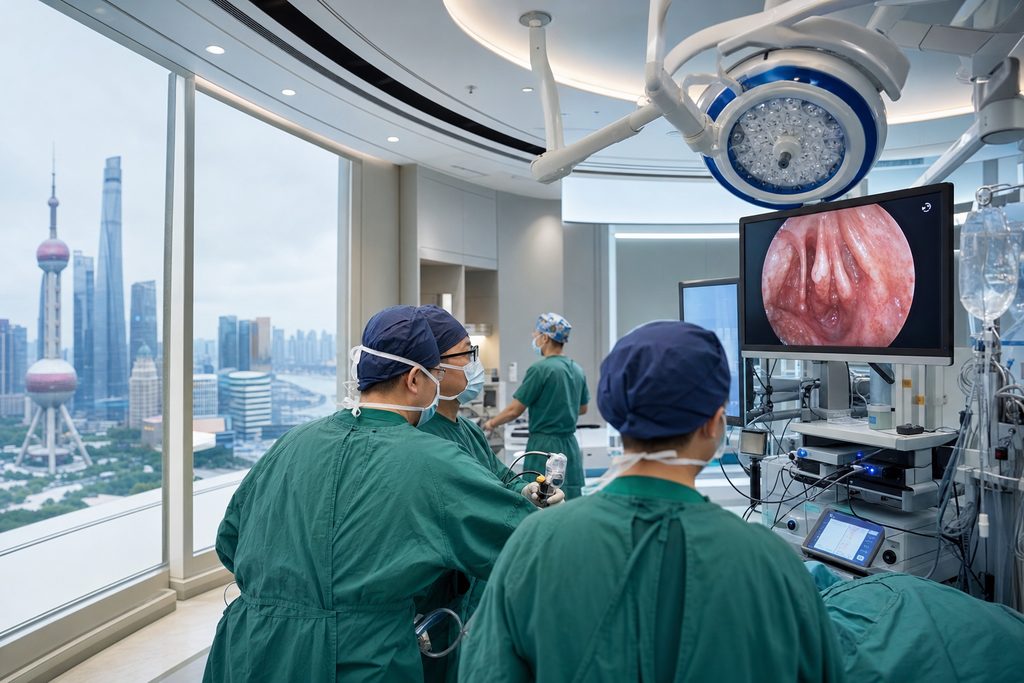
Pituitary Adenoma: When Is Surgery Needed and What It Costs in China
A pituitary adenoma is a growth on the pituitary gland — a pea-sized organ at the base of your brain that runs your hormones. Most of these tumors are benign, and most never need surgery. When surgery is needed, the trigger is usually one of three things: the tumor is pressing on your optic nerves, it is overproducing a hormone that medication cannot control, or it is growing fast enough to threaten nearby structures. In China, the pituitary adenoma surgery cost typically runs between $8,000 and $25,000 at a top public hospital — roughly one-fifth of U.S. pricing — which is one reason international patients increasingly ask about operating there.
That is the short version. The longer version involves tumor type, hormone levels, your age, and whether a skilled surgeon can reach the tumor through your nose. This guide walks through all of it.
Pituitary Adenoma Surgery: The Short Answer
Surgery is recommended when a pituitary adenoma causes vision loss, when it secretes excess hormones that drugs fail to suppress, or when it grows despite medical therapy. Small, silent tumors found by accident often need nothing but an annual MRI.
Here is the part that surprises people: the size of the tumor matters less than what it is doing. A 6 mm prolactinoma can cause more trouble than a 2 cm non-functioning mass. Endocrine guidelines from the Endocrine Society and the European Society of Endocrinology both stress that treatment decisions follow hormone activity and symptoms, not just dimensions.
The single most important question is not “how big is it” but “what is it doing to your hormones and your vision.” That answer determines whether you need a surgeon, an endocrinologist, or simply a monitoring schedule.
Who This Is Right For — and Who It Isn’t
Not everyone with an adenoma is a surgical candidate. And not everyone who wants surgery should have it.
Typically good candidates for surgery:
- Non-functioning macroadenomas compressing the optic chiasm, with documented visual field loss
- Prolactinomas that do not respond to or cannot tolerate dopamine agonists such as cabergoline
- Cushing’s disease (ACTH-secreting tumors) where transsphenoidal resection offers the best chance of remission
- Acromegaly (GH-secreting tumors) where somatostatin analogs have not normalized IGF-1
- Pituitary apoplexy — a sudden bleed into the tumor, which is a medical emergency
Who should generally not pursue surgery first:
- Most prolactinomas, which respond well to medication in the large majority of cases
- Incidental microadenomas under 1 cm with no hormone excess and no visual symptoms
- Patients whose cardiac or pulmonary status makes general anesthesia genuinely hazardous
- Anyone whose workup is incomplete — operating without a full hormone panel and formal visual fields is poor practice anywhere
Being told “you don’t need surgery yet” is not a brush-off. It is often the correct answer.
The Options, Compared
Three real paths exist: medication, surgery, and radiation. Each has a different role, and they are frequently combined.
| Approach | Best suited to | Typical cost in China | Typical cost in the U.S. | Key limitation |
|---|---|---|---|---|
| Dopamine agonist therapy | Prolactinomas | $300–$1,200/year | $2,000–$6,000/year | Lifelong in many cases; side effects |
| Endoscopic transsphenoidal surgery | Most operable adenomas | $8,000–$25,000 | $50,000–$120,000+ | Requires experienced surgeon; 5–15% recurrence |
| Gamma Knife / stereotactic radiosurgery | Residual or recurrent tumor | $6,000–$15,000 | $40,000–$90,000 | Delayed effect; hormone control may take years |
The table tells you which column suits which reader. If you have a prolactinoma, medication usually wins and surgery is a fallback. If you have Cushing’s or acromegaly, surgery is often first-line. If you have a residual tumor after an incomplete resection, radiation is the conversation.
Why China Is a Serious Option for Pituitary Surgery
China performs an enormous volume of neurosurgery. High-volume centers in Beijing and Shanghai handle hundreds of transsphenoidal resections annually, and surgical outcomes at the top tier track closely with Western academic centers. That volume matters — for pituitary surgery, surgeon experience is one of the strongest predictors of remission and complication rates.
If you are searching for the best neurosurgeon for pituitary tumor in Beijing, the practical answer is that the strongest programs sit inside the large teaching hospitals listed on our ranked guide to China’s top hospitals. These are institutions that appear in the Fudan Hospital Rankings, which grade the top 100 hospitals in tiers rather than numerical order. Several sit in the highest tier, A++++.
Endoscopic pituitary surgery price in Shanghai and Beijing tends to fall in the $8,000–$25,000 band depending on hospital tier, whether you use the standard or international patient channel, and how complex the case is. That is a real number, not a marketing figure — but it is a range, and your final quote depends on your scans and your case.
How Long Is Recovery After Pituitary Adenoma Surgery?
This is the question patients ask second, right after cost. The honest timeline:
- Days 1–2: Most patients are out of bed and eating. Nasal packing comes out. Expect some headache and congestion.
- Days 3–5: Typical discharge from hospital if there are no complications. Some centers discharge on day 2.
- Weeks 1–2: Light activity. No bending, straining, or heavy lifting. No nose-blowing.
- Weeks 3–6: Most people return to desk work. Fatigue is common and normal.
- Months 2–3: Full activity for uncomplicated cases. Hormone panels are rechecked.
Complications extend this. Cerebrospinal fluid leak occurs in a minority of cases and may require a longer stay or a second procedure. Diabetes insipidus — a temporary hormone problem affecting fluid balance — is not rare and usually resolves. Permanent hormone deficiency happens in a small percentage of patients and means lifelong replacement therapy.
So when someone asks how long recovery takes, the fair answer is: six weeks for the typical case, and longer if your case is not typical.
What It Costs — and What the Number Includes
Pituitary adenoma surgery cost in China breaks down roughly like this at a top-tier public hospital:
| Component | Typical range (USD) |
|---|---|
| Pre-operative imaging and hormone panel | $500–$1,500 |
| Surgeon and anesthesia fees | $3,000–$9,000 |
| Hospital stay (5–7 days) | $2,000–$6,000 |
| ICU, if required | $1,000–$4,000 |
| Post-operative medications and follow-up labs | $500–$2,000 |
| Total, uncomplicated case | $8,000–$25,000 |
What drives the variance: hospital tier, whether you use the standard or international patient channel, ICU needs, and whether a second procedure is required. International departments and VIP channels typically run 1.5 to 2 times the standard-channel price but provide English-speaking staff and faster scheduling.
What is usually not included: international airfare, hotel, meals, visa fees, and any treatment after you return home. Those are real costs and you should budget for them separately.
Public hospitals in China generally require prepayment, with insurance reimbursement handled afterward in your home country. Private international hospitals often bill insurers directly. Ask which model applies before you commit.
Practical Considerations: Records, Visas, and What Happens Next
Before any surgeon will give you a real opinion, you need a complete packet. That means your most recent MRI with contrast (DICOM files, not just the report), a full pituitary hormone panel, formal visual field testing, and a medication history. Without these, any quote you receive is a guess.
On the visa side, the correct category for medical travel to China is the S2 visa, which covers short-stay private affairs including medical treatment. Accompanying family members apply under S2 as well. If your stay will exceed 180 days, S1 applies instead. Note that the M visa is for commercial and trade activity and is not the right category for treatment. Requirements change, so confirm current rules with your nearest Chinese embassy or consulate and bring your hospital’s supporting documents.
Language is the other practical hurdle. China’s top hospitals are vast — some see more than 10,000 outpatient visits a day — and English signage is limited outside international departments. That is not a reason to avoid treatment there. It is a reason to plan the logistics properly.
And a word on the question of whether pituitary adenoma surgery is safe in China: the honest answer is that safety depends far more on the specific hospital and surgeon than on the country. High-volume centers with dedicated pituitary teams report complication rates comparable to Western academic institutions. Low-volume centers do not. Choosing well matters more than choosing a flag.
Frequently Asked Questions
Not realistically. Standard outpatient registration at public hospitals cannot be reserved from abroad in advance, and surgery is scheduled only after an in-person consultation. The workable route is through a hospital’s international department or a coordination service that handles registration, medical card creation, and scheduling. Even then, admission and the surgical date remain subject to the hospital’s own rules.
At high-volume pituitary centers, outcomes are broadly comparable to Western academic hospitals. But complications happen everywhere — CSF leak, infection, hormone deficiency. Ask any hospital directly about its revision and complication rates. Also confirm in advance how post-operative problems would be handled after you fly home, because follow-up care in your own country is not automatic.
Plan for airfare, 3–4 weeks of accommodation, a companion’s expenses, visa fees, and post-operative imaging and labs back home. A realistic all-in budget for a self-paying patient is often 40–60% above the surgical quote itself. Get the quote in writing and ask explicitly what it excludes.
It is the cheapest step you can take. A written review of your MRI and hormone panel by a Chinese pituitary specialist typically costs $300–$500 and tells you whether surgery is even indicated. If it is not, you have saved a great deal of money and stress. If it is, you arrive with a plan rather than a hope.
Your Next Step
Most pituitary adenomas do not need surgery. The ones that do are usually identified by vision loss, uncontrolled hormone excess, or documented growth — not by tumor size alone. If you are weighing treatment in China, the sensible sequence is a written second opinion first, a decision second, and travel only if the answer justifies it.
We are China Medical Services, a coordination service — not a hospital and not a provider of medical advice. We connect international patients with the right departments at China’s top-ranked hospitals, arrange written second opinions and video consultations with pituitary specialists, and handle the bilingual logistics once you arrive. Any consultation fee is credited in full toward on-the-ground coordination if you proceed within 90 days.
If you would like an honest read on your case before booking a flight, start with a free consultation. No pressure, no obligation — just a clear next step.
This article is for general information only and is not medical advice. Treatment decisions should always be made with a qualified physician who has reviewed your individual records.
For more medical information and treatment options in China, visit chinamedservices.com (China Medical Services).
