Gout Doctors in Fuzhou: How to Choose the Right Specialist
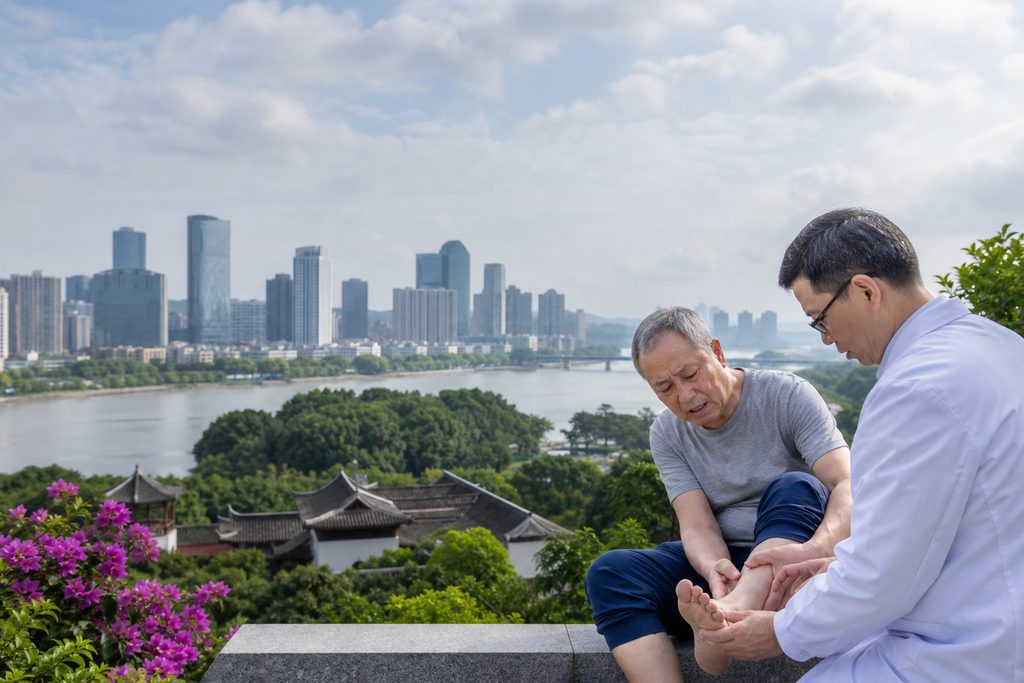
While a gout flare in the United States can send a patient to an emergency room with a bill north of $3,000, a rheumatology consultation at a top-tier Chinese hospital typically runs $50–150 out of pocket. Fuzhou, the capital of Fujian province, sits at the center of that contrast — a city of 8.4 million with two major medical universities and a growing English-speaking private sector. For international patients weighing gout treatment cost China versus care at home, the numbers are only half the story.
Key Takeaways
- China’s 35,000+ hospitals include roughly 340 top-ranked institutions; Fuzhou’s public tertiary hospitals and private international clinics both treat gout, but they operate on very different booking systems.
- Gout treatment cost China is genuinely low — urate-lowering therapy, lab monitoring and specialist visits often total a few hundred dollars per year, versus thousands in the US or Europe.
- The hard part is not the medicine. It is access: public hospital outpatient slots in Fuzhou generally cannot be reserved from overseas in advance, and most physicians work in Mandarin.
- Anyone searching for the best gout doctor Fuzhou has to offer should understand that “best” depends on whether you need acute flare control, long-term urate management, or evaluation of tophi and joint damage.
The Problem: Gout Is Manageable, Yet Patients Still Suffer
Gout affects roughly 9.2 million adults in the United States alone, according to CDC survey data, and prevalence has climbed steadily for two decades. In the UK, the Clinical Practice Research Datalink has tracked a similar rise — roughly 1 in 40 adults now carries a diagnosis. The disease itself is one of the most treatable in rheumatology. Serum urate can be lowered. Flares can be prevented. Tophi can shrink.
So why do so many patients still live with recurrent attacks?
Three reasons show up again and again. First, primary care physicians often under-dose allopurinol or febuxostat, or fail to titrate to a target serum urate below 6 mg/dL (360 µmol/L) — the threshold the American College of Rheumatology has recommended since its 2020 guideline. Second, patients stop therapy during a flare because of the outdated belief that urate-lowering drugs worsen acute attacks. Third, specialist access is slow. A Canadian or British patient referred to rheumatology may wait months for a first appointment, and gout does not pause while they wait.
For international patients, there is a fourth problem. If you are living or working in China, or considering medical travel, the question is not just “who is the best doctor” — it is “how do I actually get in front of one, in a language I understand, without wasting a week in queues?”
Why China’s Rheumatology System Delivers Results
China has built one of the largest rheumatology workforces in the world, and gout sits squarely inside it. Here is what that means in practice.
Volume and Familiarity With Complex Gout
A rheumatologist at a major Chinese tertiary hospital may see 60 to 100 outpatients in a single clinic day. That volume sounds exhausting — and it is — but it produces something Western training often lacks: pattern recognition for advanced disease. Tophaceous gout, gout with chronic kidney disease, gout in transplant recipients on immunosuppressants — these are routine, not exotic. Chinese rheumatology departments also manage a high burden of hyperuricemia, since the country’s prevalence of elevated serum urate has risen sharply with dietary and metabolic shifts over the past 30 years.
Diagnostics and Drug Access
Chinese tertiary hospitals run the full diagnostic panel: serum urate, 24-hour urinary uric acid, dual-energy CT for urate crystal deposits, musculoskeletal ultrasound for the double-contour sign, and joint aspiration with polarized microscopy when the diagnosis is unclear. All the standard urate-lowering drugs are available — allopurinol, febuxostat, benzbromarone, pegloticase in selected centers — plus colchicine, NSAIDs and corticosteroids for flare control. Biologic options and IL-1 inhibitors exist at major centers, though availability varies.
What China adds is speed. Labs that take a week to return in some systems come back in 24 to 48 hours. Imaging is scheduled within days, not months.
Cost Structure: Why gout treatment cost China Stays Low
Lower prices do not mean lower-quality care, and it is worth understanding why. Chinese public hospitals operate at enormous scale — a single tertiary hospital may see 10,000+ outpatient visits per day — which spreads fixed costs across far more patients. Physician salaries, while rising, remain well below US or Western European levels. Drug procurement is centralized through a national bulk-buying program that has cut prices on many chronic-disease medications by 50% or more.
The result is a cost profile that looks almost implausible to a patient from Ohio or Manchester.
| Service | Typical Cost in China (USD) | Typical Cost in the US (USD) |
|---|---|---|
| Rheumatology consultation (public tertiary) | $50–150 | $250–500 |
| Rheumatology consultation (private international clinic) | $150–400 | $300–600 |
| Serum urate test | $5–15 | $30–80 |
| Dual-energy CT (one joint) | $150–350 | $800–2,000 |
| Musculoskeletal ultrasound | $40–100 | $200–500 |
| Allopurinol, 100 mg, 100 tablets | $3–12 | $20–60 |
| Febuxostat, 40 mg, 30 tablets | $15–45 | $150–400 |
| Annual monitoring (4 visits + labs) | $250–600 | $1,500–4,000 |
These are ranges, not quotes. Final figures vary by hospital and case complexity, and private international clinics sit at the higher end of every row. But the direction is unmistakable. A patient managing gout over a full year in China may spend less than the cost of one emergency room visit in the United States.
How Gout Is Treated in China: What the Protocol Actually Looks Like
If you want to know how is gout treated in China, the short answer is: largely the same as in Western guidelines, with a few practical differences.
Acute flares are managed with colchicine, NSAIDs, or short-course corticosteroids — the same triad used everywhere. Chinese clinicians tend to start colchicine at lower doses than older Western protocols, reflecting the low-dose regimen that the ACR endorsed in 2020 after the AGREE trial showed comparable efficacy with fewer gastrointestinal side effects. Intra-articular steroid injection is common and inexpensive.
Long-term management follows a treat-to-target approach. Urate-lowering therapy begins once the flare resolves, typically 2 to 4 weeks later, with allopurinol as first-line. Dosing is titrated every 2 to 4 weeks until serum urate falls below 6 mg/dL — or below 5 mg/dL for patients with tophi or severe disease. Prophylaxis with low-dose colchicine or an NSAID continues for at least 3 to 6 months after starting urate-lowering therapy.
Where Chinese practice sometimes diverges is in the use of Traditional Chinese Medicine. Some hospitals combine standard pharmacotherapy with herbal formulas or acupuncture for symptom relief. The evidence base for TCM in gout is mixed, and reputable Chinese rheumatologists will tell you it is adjunctive at best — never a replacement for urate-lowering drugs. Patients curious about this route can explore the TCM hospital directory to see which institutions offer integrated care.
Can Foreigners See a Gout Specialist in Fuzhou? The Honest Answer
Yes — but the pathway matters enormously, and this is where most international patients get tripped up.
Fuzhou’s public tertiary hospitals, including the affiliated hospitals of Fujian Medical University and Fujian University of Traditional Chinese Medicine, treat foreign patients. The catch is operational. Public hospital outpatient registration in China typically opens on the day of the visit, sometimes only hours in advance, and appointments cannot be reserved from overseas in the normal channel. Physicians mostly consult in Mandarin. Payment is upfront, with insurance reimbursement handled afterward by the patient.
The alternative is the international or VIP department of a major hospital, or a private international clinic. These offer English-speaking staff, appointment booking ahead of time, and in many cases direct insurance billing. The trade-off is price: expect roughly 1.5 to 2 times the public-channel cost, which still lands well below Western rates.
A third option, and the one most international patients now start with, is a written second opinion or video consultation before any travel. You send your existing lab results, imaging and medication history. A Chinese rheumatologist reviews them and returns a written assessment with treatment direction. If surgery or an in-person workup is needed, that becomes the next stage. This staged approach avoids booking flights for a consultation that could have happened remotely.
For patients who do travel, a bilingual medical companion can handle registration, queueing, payment, pharmacy pickup and interpretation — the practical friction that makes a Chinese tertiary hospital feel unnavigable on day one. Details on how that works are on our patient consultation page.
Choosing a Gout Doctor in Fuzhou: Criteria That Actually Matter
Anyone trying to identify the best gout doctor Fuzhou has available should stop searching for a name and start filtering on these five criteria instead.
Rheumatology board certification. Gout is a rheumatologic disease. A nephrologist or an orthopedic surgeon may be involved in specific complications, but the physician managing your urate-lowering therapy should be a rheumatologist. Ask directly.
Treat-to-target practice. A good gout physician will state a target serum urate number, check it at defined intervals, and adjust the dose until you reach it. If a doctor says “take this and come back in a year,” that is a red flag regardless of the hospital’s reputation.
Experience with your specific complications. Gout with stage 3 kidney disease is a different problem from uncomplicated gout. So is gout with tophi, or gout in a patient on a heart transplant regimen. Match the doctor’s subspecialty experience to your case, not to a hospital ranking.
Language and communication logistics. If your Mandarin is limited, the practical choice narrows quickly to international departments, private clinics, or a consultation arranged with interpretation. This is not a compromise — it is the difference between understanding your treatment plan and guessing at it.
Continuity. Gout is a lifelong condition. The physician who starts your therapy should ideally be reachable for follow-up, whether in person or through remote review of lab results. Ask how follow-up works before you commit.
For a broader view of how Chinese hospitals are ranked by specialty — rheumatology included — the specialty rankings directory lists top institutions by department, and the top hospitals guide groups them by city so you can see what Fuzhou and nearby cities like Hangzhou and Guangzhou offer.
Practical Considerations for Booking a Gout Consultation in Fuzhou
The logistics are manageable, but they reward planning.
Documents. Bring your full medication history, recent serum urate and kidney function results, any joint imaging, and a written summary of flare frequency and severity. Chinese specialists work efficiently; a well-organized file saves an entire visit.
Visa timing. S2 visa processing typically takes 4 to 7 business days at most Chinese consulates, though this varies by country and season. You will generally need an invitation or supporting document from the receiving hospital. Build in a buffer.
Payment. Public hospitals require prepayment for most services. International credit cards are accepted at larger hospitals and private clinics; smaller public facilities may be cash or domestic-card only. Carry a backup payment method.
Insurance. Most international insurers reimburse rather than pay directly at Chinese public hospitals. Private international clinics more often offer direct billing. Confirm with your insurer before you travel.
Follow-up after returning home. Arrange for lab results to be shared with your home physician. Urate monitoring is a simple blood test that any laboratory can run, so continuity is straightforward if you plan for it.
Frequently Asked Questions
No. Chinese hospitals generally allow direct registration to a rheumatology department without a referral from a primary care physician. That said, arriving with organized records — lab results, imaging, medication list — makes the consultation far more productive, since the specialist will want that information immediately.
A full year of gout management in China — four specialist visits, routine lab monitoring and standard urate-lowering medication — commonly falls between $250 and $600 at public hospitals. Comparable care in the United States often runs $1,500 to $4,000 or more. Prices vary by hospital and case complexity, and private international clinics sit at the upper end of the range.
Yes, through international departments, private international clinics, or a consultation arranged with a bilingual medical companion. Public hospital general outpatient clinics operate almost entirely in Mandarin and cannot typically be booked from overseas in advance, so plan around that limitation rather than assuming you can walk in.
That happens occasionally, and it is worth taking seriously rather than dismissing either opinion. Chinese rheumatology largely follows international guidelines, but dosing conventions and TCM adjuncts can differ. Ask for the reasoning behind any recommendation, request your records in English where possible, and review them with your home physician before making changes to long-term therapy.
Starting allopurinol or febuxostat can trigger a flare in the first few months, which is why prophylaxis with colchicine or an NSAID is standard. Many physicians prefer to begin therapy when the patient has stable access to follow-up care. Discuss timing with a qualified physician before starting any new regimen away from home.
Your Next Step
Gout is one of the few chronic diseases where the right specialist, the right target and the right monitoring can genuinely change the trajectory — and Fuzhou offers capable rheumatology care at a fraction of Western costs. The barrier is rarely the medicine. It is knowing which door to knock on and how to walk through it. China Medical Services is not a hospital and does not provide diagnoses; we are a coordination service that connects international patients with Chinese hospitals, arranges written second opinions and video consultations, and supports the practical logistics of care on the ground. If you would like help identifying the right rheumatology department for your case, a free consultation is the place to start.
This article is for general information only and does not constitute medical advice. Gout diagnosis and treatment decisions should be made with a qualified physician who can review your individual history, laboratory results and medications.
For more medical information and treatment options in China, visit chinamedservices.com (China Medical Services).
