First Hospital of Guangxi Medical University: A Guide for International Patients
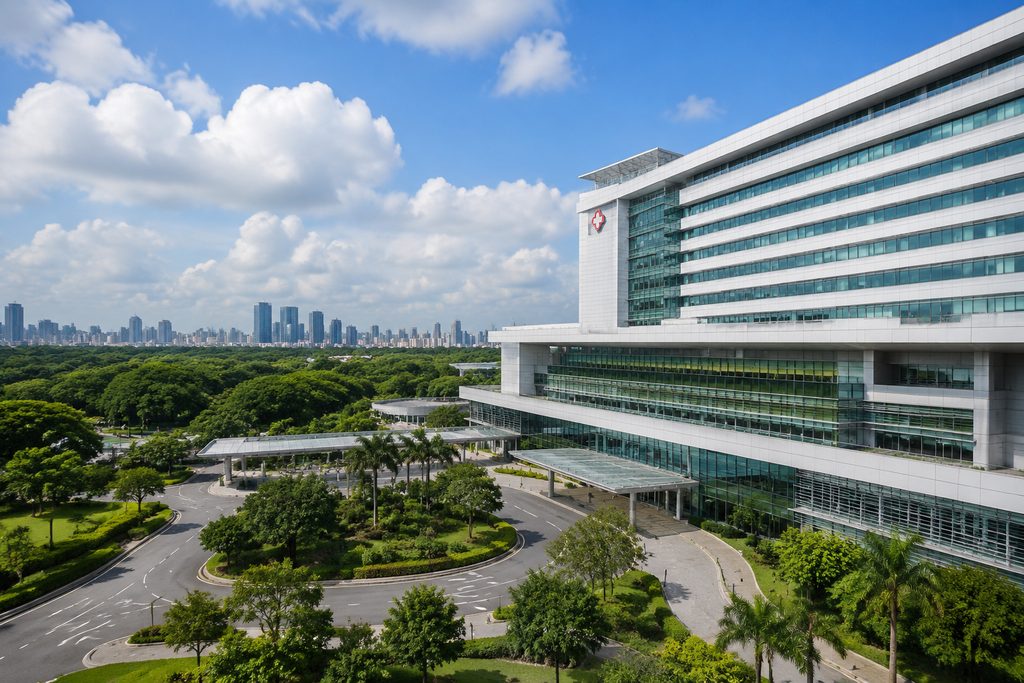
The First Hospital of Guangxi Medical University is a large public tertiary hospital in Nanning, the capital of Guangxi province in southern China. For international patients, it can be a realistic option for specialist care, diagnostics, and certain surgical procedures — but it is not a Western-style international hospital, and access works differently. You cannot simply email a department and book a surgery date from overseas.
That gap between expectation and reality is where most foreign patients get stuck. This guide explains what the hospital actually offers, how to book an appointment, what treatment in China typically costs, and where a bilingual coordinator genuinely helps.
First Hospital of Guangxi Medical University international patients: The Short Answer
Yes, the hospital accepts international patients, and treatment costs are often a fraction of U.S. or Western European prices. A cardiac bypass, for example, typically runs $12,000–20,000 at a top Chinese public hospital versus $120,000 or more in the United States. But the honest caveat: Guangxi’s flagship hospital is not ranked in the Fudan Top 100’s highest tiers for most specialties, and its English-language infrastructure is thinner than Beijing or Shanghai. If your case is complex, a higher-ranked center may serve you better.
So the real question isn’t “is it good?” It’s “good for what?”
Who This Is Right For — and Who It Isn’t
Guangxi sits next to Vietnam and borders Southeast Asia, which shapes who tends to use this hospital. The hospital’s own catchment is regional, and much of its international patient flow comes from neighboring countries rather than from North America or Europe.
Often a reasonable fit:
- Patients from Southeast Asia, Vietnam, or southern China seeking affordable specialist care close to home
- Routine diagnostics, health screening, and second opinions where cost matters more than prestige
- Chronic disease management, including integrated Traditional Chinese Medicine approaches
- Cases where a specific department’s expertise matches your diagnosis
Probably not the right choice:
- Rare cancers or complex cardiac surgery — China’s highest-volume centers for these are elsewhere
- Patients who need an English-speaking care team throughout the entire stay
- Anyone expecting to book a specific surgeon and surgery date before flying in
- Emergency cases where travel time itself is a risk
Being clear about the last list is what makes the first list trustworthy.
The Options, Compared
Here’s how a provincial flagship like this one stacks up against the alternatives a foreign patient typically weighs.
| Option | Typical Cost Level | English Support | Best For |
|---|---|---|---|
| First Hospital of Guangxi Medical University (public tertiary) | Low — often 1/5 to 1/10 of U.S. prices | Limited; interpreter usually needed | Regional patients, cost-sensitive routine and specialist care |
| Top-tier Fudan-ranked public hospitals (Beijing, Shanghai, Guangzhou) | Low to moderate | International departments available | Complex cases needing top-10 specialty expertise |
| Private international hospitals (United Family, Jiahui, etc.) | High — closer to Western pricing | Full English, direct insurance billing | Patients prioritizing comfort and language |
| Staying home | Highest in the U.S.; varies in Europe | Native language | Cases where continuity of follow-up outweighs cost |
Which column fits you depends almost entirely on case complexity. Straightforward care in Nanning can save real money. A rare diagnosis usually justifies the trip to a higher-ranked center.
What the Hospital Is Actually Known For
Guangxi Medical University’s affiliated hospital is a comprehensive tertiary institution — the Chinese classification “san jia,” equivalent to the top tier of the domestic hospital grading system. It handles a broad range of departments rather than dominating one narrow field.
What does that mean in practice? You get breadth. General surgery, internal medicine, oncology services, orthopedics, and Traditional Chinese Medicine are all available under one roof. For a patient who needs coordinated care across several departments, that breadth has value.
For ranking context: China has more than 35,000 hospitals, and the Fudan rankings place only the top 100 in tiered bands. Guangxi’s flagship is a strong regional center, not a national top-tier one. If your condition matches a specialty where China has genuine global depth — cardiac surgery at Fuwai, for instance, which performs over 14,000 heart operations a year — the smarter move may be a different city entirely.
To see how specialties compare nationally, browse the 45 specialty rankings by department before committing to any single hospital.
Guangxi Medical University hospital cost for treatment China
Cost is the reason most international patients look at China at all. Public tertiary hospitals like this one charge local rates, and foreign patients typically pay the same published fees as Chinese citizens, plus any international-department surcharge if they use that channel.
Rough reference ranges, understanding that final pricing varies by hospital and case complexity:
- Outpatient specialist consultation: modest, often under $50 equivalent
- Advanced imaging (MRI, CT): a fraction of Western prices
- Major surgery: frequently 1/5 to 1/10 of U.S. charges
- Inpatient stay: billed daily, plus procedures and medications separately
Public hospitals in China generally require prepayment, and insurance is typically reimbursed after the fact rather than billed directly. That’s a real cash-flow consideration. Private international hospitals offer direct billing, but at much higher prices.
One more thing worth knowing: if you want to lock in a senior specialist and English-language service before arrival, that usually means going through the hospital’s international or VIP channel — which runs roughly 1.5 to 2 times the standard rate. It’s not a scam. It’s simply a different service tier.
How to get treatment at First Hospital of Guangxi Medical University
This is the part that surprises foreign patients most. Standard outpatient appointments at Chinese public hospitals generally cannot be reserved from overseas in advance. You register on the day, queue, and see the doctor. Surgery is scheduled only after an in-person consultation.
The practical sequence looks like this:
- Records first. Send your existing imaging, pathology, and reports for review.
- Remote evaluation. A written second opinion or video consultation clarifies whether the hospital can help and what the plan would be.
- Visa. Medical travel to China uses the S2 visa category, with supporting hospital documents. Stays over 180 days fall under S1. Accompanying family members apply for S2 as well.
- Arrival and registration. On-the-ground support with hospital card creation, registration, and payment.
- In-person consultation, then admission. Admission and scheduling remain subject to hospital rules — no service can promise a specific date or surgeon.
If you want to understand the broader landscape before narrowing down, our China Medical Services team maintains a database of 340+ top-ranked hospitals across 37 cities, which helps put a single hospital’s standing in context.
Book appointment First Hospital of Guangxi Medical University: What Coordination Actually Involves
Booking isn’t the hard part. The hard part is everything around it.
China’s top public hospitals handle enormous daily patient volumes — some see over 10,000 outpatient visits a day. Signage, registration systems, and payment kiosks are overwhelmingly in Chinese. Without language support, even a simple follow-up visit becomes a full-day ordeal.
That’s where a bilingual medical companion earns its place. The role is narrow and practical: queueing, registration, payment, wayfinding, and interpretation. It is not a promise to secure a specific professor or a specific surgical slot. No legitimate service can guarantee that.
For patients who want to test the waters before traveling, a written second opinion or video consultation is the lower-risk first step. It costs far less than a flight, and it tells you whether the trip is worth making.
Practical Considerations for Nanning
Records. Bring certified translations of your medical documents. Chinese clinicians read English reasonably well in academic settings, but translated summaries speed everything up.
Visa timing. S2 applications require hospital-issued documentation. Build in several weeks for processing and confirm current requirements with your nearest Chinese embassy or consulate — rules change.
Payment. Expect to prepay at public hospitals. International credit cards work in some settings but not all. Have a backup plan.
Language. Nanning is not an English-speaking city. Arrange interpretation before you arrive, not after.
Follow-up. Plan how you’ll continue care once you’re home. Ask for copies of all imaging and operative notes before discharge.
Location. Nanning is well connected regionally but requires a connecting flight from most long-haul international routes. Factor that into recovery planning.
Frequently Asked Questions
It accepts foreign patients and provides competent tertiary care, but it is not built around international patients the way Beijing or Shanghai’s top hospitals are. English support is limited, and you should expect to arrange interpretation yourself. For routine and regional care, it works. For highly complex cases, compare it against higher-ranked centers first.
Standard outpatient slots generally cannot be reserved in advance from abroad — you register on arrival day. What you can do remotely is have your records reviewed, obtain a written opinion or video consultation, and prepare documentation. Surgery dates are set only after an in-person consultation.
Public hospital pricing is often 1/5 to 1/10 of U.S. charges for equivalent procedures, though exact figures vary by hospital and case complexity. International or VIP channels run roughly 1.5 to 2 times standard rates. Prepayment is usually required, with insurance reimbursed afterward.
No hospital or coordinator can guarantee an outcome, and any service implying otherwise should be treated with caution. Ask upfront about revision policies, complication management, and how follow-up would work from your home country. Get everything in writing before committing to travel.
Your Next Step
Guangxi’s flagship hospital is a solid regional option with genuinely low costs — and a poor fit for patients who need top-tier specialty depth or full English-language care. Knowing which category you fall into is the whole decision.
We are a medical concierge service, not a hospital. We don’t diagnose or treat. What we do is help you compare hospitals, obtain written second opinions, coordinate appointments, and navigate the practical side of treatment in China. If you’d like a clearer picture of your options, start with a free consultation — no pressure, no commitment.
This article is for general information only and is not medical advice. Treatment decisions should always be made with a qualified physician who has reviewed your individual case.
For more medical information and treatment options in China, visit chinamedservices.com (China Medical Services).
