Glaucoma Treatment at Shanghai Fudan ENT: Rank 3 Ophthalmology Department Overview
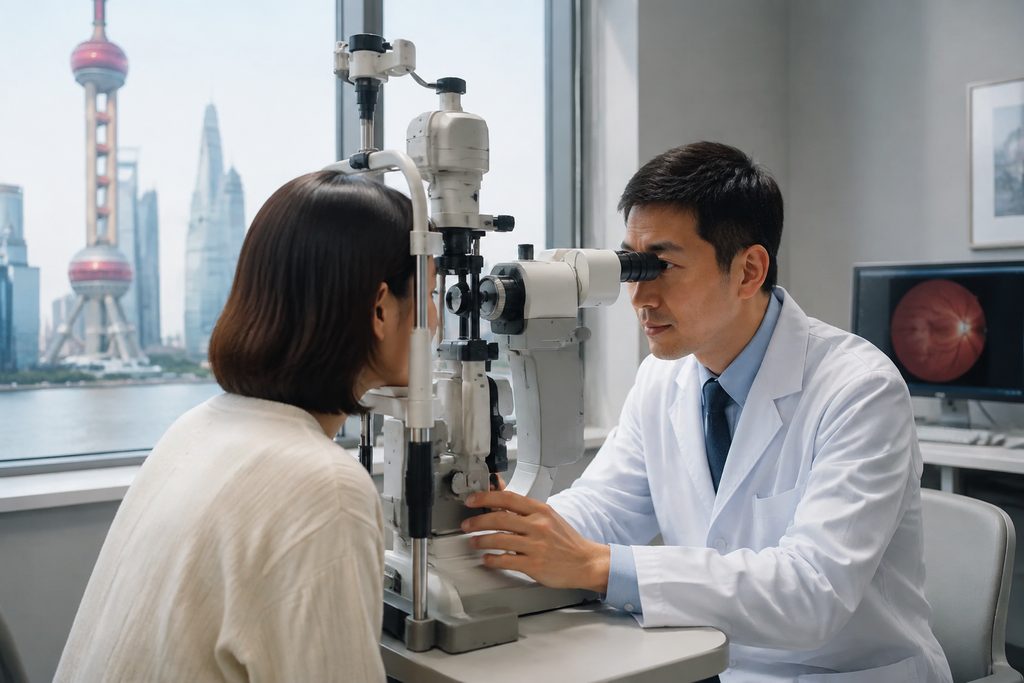
Key Takeaways
- Shanghai Fudan ENT Hospital’s ophthalmology department is consistently ranked among China’s top 3, handling a surgical volume that dwarfs most Western centers.
- The structural cost advantage is significant: complex glaucoma procedures here often range from $2,000 to $5,000, a fraction of the $15,000+ price tag common in the US.
- Navigating a high-volume Chinese public hospital without Mandarin fluency is the single biggest barrier to a smooth experience—language gaps can stall the process at registration, consultation, and billing.
- A written second opinion or video consultation before traveling is the most reliable way to confirm your candidacy for specific procedures and get a realistic cost estimate tied to your actual condition.
The Problem: The High Cost of Saving Sight at Home
Glaucoma affects approximately 1 in 8 people over the age of 80, and it remains a leading cause of irreversible blindness worldwide. For patients in the United States, the financial burden of managing the disease can be paralyzing. A single trabeculectomy, the gold-standard surgical intervention, frequently costs between $15,000 and $25,000 when billed through a hospital system. Even minimally invasive glaucoma surgeries (MIGS) rarely come in under $6,000. For the underinsured or those facing high deductibles, these numbers force an impossible choice: drain retirement savings or risk progressive vision loss.
The situation isn’t much better in the United Kingdom or Canada, where public system wait times for non-emergency ophthalmic surgery can stretch past six months. During that waiting period, intraocular pressure continues its silent assault on the optic nerve. Every month of delay risks irreversible damage to the visual field. That reality pushes many patients to look beyond their borders. They search for clinical excellence that doesn’t come with a ruinous price tag or a calendar that works against their prognosis.
Why Shanghai Fudan ENT’s Ophthalmology Department Delivers Results
The Eye and ENT Hospital of Fudan University in Shanghai operates at a scale that fundamentally changes the economics of care without sacrificing precision. The department is not just a clinical unit; it is one of the key laboratories of the Chinese Ministry of Education and a hub for ophthalmic innovation. For a patient researching the best eye hospital for glaucoma in China, the data points converge here with unusual force.
Clinical Volume That Refines Surgical Instinct
A senior glaucoma surgeon at a top-tier Chinese center performs several hundred filtration surgeries and tube shunt procedures each year. Compare that to a busy glaucoma specialist in the US, who might perform 50 to 80 trabeculectomies annually. Volume is not just a vanity metric. Studies in ophthalmology literature, including data reviewed in journals like Ophthalmology, have repeatedly linked high surgeon and center volume to lower complication rates in complex anterior segment surgery. When a team manages postoperative hypotony or a failing bleb several times a week rather than several times a month, pattern recognition sharpens. The subtle signs of early failure are caught faster. The revision strategy is second nature. For a condition like glaucoma, where surgical success is measured in years and decades, that depth of experience matters.
Technology Integration Across the Patient Journey
The hospital has integrated diagnostic and therapeutic technologies that rival any major Western eye center. Optical coherence tomography angiography (OCTA) is a standard part of the glaucoma workup here, not a premium add-on. The facility routinely employs micropulse transscleral laser therapy and a full range of tube shunt devices, including the Ahmed and Baerveldt implants. What distinguishes the workflow is the proximity of diagnostics to the surgical suite. A patient can undergo a comprehensive Humphrey visual field test, have their anterior chamber angle imaged with a Pentacam, and be reviewed by a surgical team within the same physical footprint. This compression of the diagnostic timeline is a structural advantage of a dedicated specialty hospital, not a general university medical center where ophthalmology competes for scanner time with every other department.
Cost Advantage Without Quality Compromise
The glaucoma surgery cost Shanghai Fudan ENT hospital reflects the structural economics of Chinese healthcare, not a discount on safety. A trabeculectomy with mitomycin C, inclusive of hospital stay, operating theater fees, and surgeon charges, typically falls between $2,500 and $4,500 for international patients routed through the hospital’s international wing. A complex glaucoma drainage device implantation may range from $4,000 to $6,000. These are the all-in figures, not the surgeon’s fee alone. The cost differential exists because the underlying cost of hospital labor, facility operations, and pharmaceutical supplies is lower in China than in the US or Western Europe—not because corners are cut. The sterilization protocols, the quality of the surgical microscopes, and the pharmacological agents used are equivalent to international standards. The hospital maintains certifications and participates in international clinical trials, publishing results in peer-reviewed journals that hold up to global scrutiny.
Understanding the Rank 3 Ophthalmology Designation
When patients encounter the term “Rank 3” in a Fudan ophthalmology rank 3 review international patients search, it refers to the Chinese hospital grading system. A Class A, Grade 3 hospital—often called 3A—represents the highest tier of accreditation in China. It signals a hospital with the broadest clinical capabilities, the most advanced equipment, and a mandate to handle the most complex referral cases. Within that 3A universe, the Fudan ranking system, published annually by the Hospital Management Institute of Fudan University, provides a further stratification based on peer reputation and clinical research output. The Eye and ENT Hospital of Fudan University has held a top-three position in ophthalmology on this ranking for years. It is not simply a large eye hospital; it is the eye hospital where other Chinese ophthalmologists send their most difficult cases.
For an international patient, this ranking translates into something concrete: the surgeon you consult has likely managed a presentation similar to yours—whether it is pigmentary glaucoma in a young myope or pseudoexfoliation glaucoma in an elderly patient—hundreds of times. The department is also a major training center, which means the attending surgeons are accustomed to teaching and explaining complex pathology. This academic culture often makes the consultation experience more thorough, not less, because every case is also a teaching moment for the fellows in the room.
Comparing Glaucoma Treatment Costs: Shanghai vs. Western Hospitals
The question how much does glaucoma treatment cost abroad has no single answer, but the range is revealing. The table below provides a realistic comparison of self-pay rates for common glaucoma procedures. These figures represent the total charges a patient without local insurance would face, converted to US dollars.
| Procedure | Shanghai Fudan ENT (USD) | US Hospital Average (USD) | UK Private Hospital (USD) |
|---|---|---|---|
| Selective Laser Trabeculoplasty (SLT) | $600 – $1,200 | $2,500 – $4,500 | $1,800 – $3,200 |
| Trabeculectomy with Mitomycin C | $2,500 – $4,500 | $15,000 – $25,000 | $10,000 – $16,000 |
| Ahmed Valve Implantation | $4,000 – $6,000 | $18,000 – $30,000 | $14,000 – $22,000 |
| Micropulse Transscleral Laser | $1,500 – $2,800 | $5,000 – $8,000 | $4,500 – $7,000 |
| Comprehensive Glaucoma Workup (OCTA, Visual Field, Pentacam, Consultation) | $300 – $500 | $1,200 – $2,500 | $900 – $1,800 |
These Shanghai figures are estimates for international patients accessing care through the hospital’s official international department. Prices vary by case complexity and the specific implant or laser platform used. A patient with a heavily scarred conjunctiva from prior surgeries will face a higher fee than a surgical virgin. The important takeaway is the magnitude of the gap. It is not marginal. It is transformational for someone liquidating assets to pay for eye surgery.
Is Glaucoma Laser Treatment Safe in China? Addressing the Core Concern
The question is glaucoma laser treatment safe in China? is fair and necessary. The answer depends on the institution, not the country. At a center like Shanghai Fudan ENT, selective laser trabeculoplasty (SLT) is performed on the same Lumenis or Ellex laser platforms used in top US and European glaucoma clinics. The laser energy parameters, the pre-treatment gonioscopic assessment, and the post-laser IOP check protocol mirror international guidelines published by the American Academy of Ophthalmology and the European Glaucoma Society. The safety profile is equivalent because the technology and the clinical protocols are equivalent.
Where risk diverges is in lower-tier facilities without robust quality control. A patient who chooses a hospital based on a cheap package price rather than verified ranking and peer reputation is taking a gamble. That gamble exists in every country. The key is to match the procedure to a center where thousands of those same laser procedures are done annually. Complications from SLT—transient IOP spikes, iritis, peripheral anterior synechiae—are rare but real. A team that manages a high volume of these rare events knows how to respond without hesitation. That is the safety argument for a high-volume academic center, not a small private clinic with a single laser and a part-time glaucoma specialist.
Practical Considerations: Planning Your Visit to Shanghai Fudan ENT
Traveling for eye surgery requires more logistical precision than many other medical journeys. You cannot simply arrive and expect to be operated on the next day. The hospital requires a complete ophthalmic workup before scheduling any procedure. That means you should plan for at least 7 to 10 days in Shanghai for a surgical visit: day one for registration and initial testing, day two or three for the surgeon consultation, and a surgical slot later that week. Postoperative follow-up on days one, three, and seven after surgery is standard for filtration procedures. You will need to remain in Shanghai for at least a week after a trabeculectomy to monitor intraocular pressure and bleb morphology.
Documentation is critical. Bring every visual field test you have ever taken. Bring serial optic nerve OCT scans spanning years if you have them. Bring a detailed list of every glaucoma medication you have tried, with dates and reasons for discontinuation. These records allow the surgical team to understand the trajectory of your disease. Without them, you are asking a surgeon to make a decision based on a single frozen moment in time, which is not how glaucoma care works.
For visa purposes, medical treatment in China falls under the S2 short-stay visa category, which covers private affairs including medical treatment. Your family member accompanying you will also need an S2 visa. The hospital’s international department will provide an invitation letter and a treatment confirmation document to support your application. Processing times vary by embassy, so apply at least six to eight weeks before your intended travel date. Payment at Chinese public hospitals is almost universally required upfront, even through the international wing. Major credit cards are accepted, but transaction limits on foreign cards can be a problem. Confirm your card’s daily limit with your bank and consider arranging a wire transfer for the estimated surgical fee before departure.
Frequently Asked Questions
You cannot book a surgery slot remotely through the standard public registration system. The surgeon must examine you in person first. However, you can arrange a preliminary remote evaluation. A written second opinion based on your existing records allows the glaucoma team to review your case and confirm that you are a likely surgical candidate. That step reduces the risk of traveling only to discover that a different approach is needed. If you proceed, our coordination team works with the hospital’s international department to streamline the in-person consultation and surgical scheduling once you arrive. We do not promise a specific surgery date, but we ensure your records are reviewed by the right subspecialty team before you set foot in Shanghai.
This is the hardest question for any patient traveling for surgery. The reality is that your local ophthalmologist will need to manage late complications. The surgical team at Fudan ENT will provide a detailed operative note and a postoperative care plan in English. They will specify the target IOP range, the medications to use, and the warning signs that require urgent intervention. We strongly recommend establishing a relationship with a local glaucoma specialist before you travel. Share the plan with them. Get their agreement to provide follow-up care. No surgeon in China can manage a bleb leak or a late infection from 7,000 miles away. The model works best when the Chinese team does the surgery and your home team does the long-term surveillance. Both parties must know about each other.
The Eye and ENT Hospital of Fudan University assigns surgeons based on case complexity, not patient preference. You cannot pick a specific named surgeon through the standard international pathway. What you can verify is the department’s aggregate track record. Ask for the department’s surgical volume data for the specific procedure you need. Ask about their complication rates for trabeculectomy or tube shunt surgery. A top academic department tracks these metrics and will share them. The attending surgeon assigned to an international case is almost always a senior consultant, not a trainee, because the department understands the reputational stakes of a cross-border patient. Fellows may observe or assist, but the primary surgeon will be an attending with years of post-fellowship experience.
Inside the international department, some staff speak functional English. Registration forms and consent documents are often available in English. The surgeon’s English proficiency varies, however. Some senior ophthalmologists have trained or presented internationally and speak English comfortably. Others rely on a translator. For a nuanced discussion about surgical risk, target pressure, and postoperative expectations, you want a professional medical interpreter in the room—not a family member and not a general hospital staffer pulled from another department. A bilingual medical companion who understands ophthalmic terminology ensures that nothing is lost between the surgeon’s explanation and your understanding. That is the layer of safety that makes the difference between informed consent and hopeful guessing.
Your Next Step
The decision to travel for glaucoma surgery is never just about money. It is about trusting a team with something irreplaceable. The Eye and ENT Hospital of Fudan University has earned its place among the world’s high-volume, high-quality ophthalmic centers. The challenge for an international patient is not the clinical skill inside the operating room—it is everything outside it: the records, the language, the scheduling, the follow-up plan. Our team at China Medical Services handles that coordination layer. We are not a hospital and we do not provide medical advice or diagnoses. We connect you with the right department, ensure your records are reviewed before you travel, and provide the on-the-ground support that turns a complicated international medical trip into a structured, manageable process. If you are considering glaucoma surgery at Shanghai Fudan ENT, start with a free consultation to discuss your case and get an honest assessment of whether this path fits your clinical and practical needs.
For more medical information and treatment options in China, visit chinamedservices.com (China Medical Services).
