Cardiac Markers in China: What to Test and What It Costs
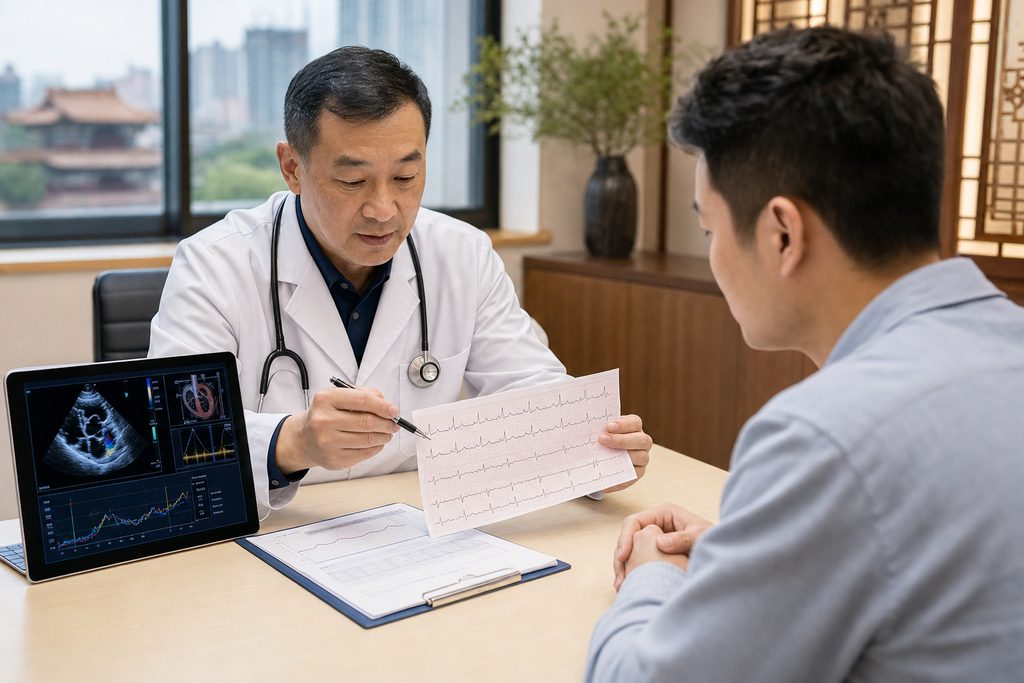
Cardiac Markers in China: What to Test
Emergency departments in the United States bill roughly $50 to $200 for a single high-sensitivity troponin assay, and a full cardiac marker panel can run past $1,000 before a physician’s fee is added. In China, the same panel at a top-tier public hospital typically lands between $30 and $120 — and results come back in one to three hours. That gap is why so many international patients now ask us about the cardiac marker test cost China hospitals charge, and whether the numbers behind those tests can be trusted.
They can. But the details matter, and the process is not as simple as walking into a lab.
How This Actually Works, Step by Step
Here is the real sequence, from the moment you decide to get tested to the moment you hold results in your hand.
Step one: you send us your existing records. Prior ECGs, lipid panels, echocardiogram reports, medication lists, and any chest pain history. If you have a family history of early heart attack, say so — it changes which markers a cardiologist will prioritize.
Step two: a Chinese cardiology team reviews the file. Not a general practitioner. At hospitals like Fuwai Hospital in Beijing, which performs more than 14,000 cardiac surgeries a year, the reviewing physicians work with cardiac biomarkers daily. They tell you which markers are clinically justified for your case — and which are not.
Step three: you receive a written opinion or a video consultation. A written second opinion runs $300–500. A video consultation with a standard international department runs $100–300; with a top specialist, $500–800. You get a clear list: test these markers, at this hospital, for this estimated price.
Step four: appointment coordination. We handle registration, hospital medical card creation, and the outpatient slot. Coordination starts from $300, and if we cannot secure the appointment shown in your order, that fee is refunded in full.
Step five: you arrive, test, and leave with results. A bilingual companion can accompany you for the draw, the queue, the payment window, and the results pickup — from $300 per day.
What a Cardiac Marker Panel Actually Contains
Cardiac markers are proteins released into the bloodstream when heart muscle is stressed, damaged, or failing. Different markers answer different questions, and ordering all of them “just in case” is neither cheap nor useful.
Troponin I and T (high-sensitivity). The gold standard for detecting myocardial injury. If you are having chest pain right now, this is the test that matters. Serial measurements over three to six hours show whether damage is ongoing.
CK-MB. Older than troponin, still used in some settings to detect reinfarction after a heart attack. Its role has narrowed considerably.
BNP and NT-proBNP. These measure heart failure, not heart attack. Elevated values suggest the heart is struggling to pump. If you have shortness of breath with swelling in the legs, this is your marker.
Myoglobin. Rises early but is not specific to the heart — skeletal muscle injury raises it too. Rarely ordered alone.
hs-CRP and homocysteine. Not cardiac markers in the classic sense, but inflammatory and metabolic indicators frequently bundled into cardiovascular risk panels in China. A growing number of Chinese hospitals offer these alongside standard lipid profiles.
| Marker | What It Detects | Typical Turnaround | Indicative Price (USD) |
|---|---|---|---|
| High-sensitivity troponin | Acute myocardial injury | 1–2 hours | $25–60 |
| CK-MB | Reinfarction monitoring | 2–4 hours | $15–40 |
| BNP / NT-proBNP | Heart failure | 2–4 hours | $30–70 |
| Myoglobin | Early muscle damage | 2–4 hours | $12–30 |
| hs-CRP | Vascular inflammation | Same day | $8–25 |
| Homocysteine | Metabolic risk factor | Same day | $15–35 |
| Full bundled panel | Combined assessment | Same day | $80–200 |
Prices vary by hospital tier and city. A cardiac marker panel price Beijing hospitals quote at a top public facility may sit 20–40% below what a private international hospital in Shanghai charges — but the private hospital will hand you an English report and bill your insurer directly.
A Realistic Timeline
At top-tier public hospitals and JCI-accredited private facilities, yes. The analyzers and quality controls match Western standards. Safety concerns arise mainly at unaccredited clinics offering suspiciously cheap packages. Verify the institution before you commit.
It depends entirely on your policy. Some international plans reimburse overseas diagnostics; many do not. Public hospitals require upfront payment and provide itemized receipts for later claims. Private international hospitals frequently bill insurers directly. Check with your provider before traveling.
At accredited hospitals, accuracy is comparable. High-sensitivity troponin assays from major manufacturers are used across China’s top facilities. The variable is not the test — it is whether a qualified cardiologist interprets the result alongside your full clinical picture.
Most top hospitals will issue an English-language summary on request, though it may take an extra day. Private international hospitals provide English reports as standard. Always ask at registration rather than after your visit.
Your Next Step
Cardiac markers are simple tests wrapped in a complicated system. The test itself costs $30 to $200 in China. The value is in knowing which markers your case needs, getting them at a hospital whose lab you can trust, and understanding what the numbers mean afterward. We are a medical concierge service — we do not diagnose, treat, or promise clinical outcomes. We connect you with the right Chinese hospital, coordinate the appointment through official channels, and put a bilingual professional beside you on the day. If you would like a straightforward conversation about whether this makes sense for your situation, start with a free consultation — no pressure, no obligation.
Frequently Asked Questions
Yes. The hospitals used for international patients are JCI-accredited and follow the same international safety standards as top hospitals in the US and Europe. Surgical teams perform high volumes of procedures — often more than their Western counterparts — which studies show leads to better outcomes.
Costs vary by procedure and hospital, but international patients typically save 40-80% compared to US prices — even when factoring in travel and accommodation. A consultation with our team will give you an exact, all-inclusive quote with no hidden fees.
Send us your existing medical reports to get started. We handle everything from hospital selection and appointment scheduling to visa assistance and post-operative recovery planning. Your medical records are reviewed by the specialist before you even book a flight.
For more medical information and treatment options in China, visit chinamedservices.com (China Medical Services).
