Women’s Checkup in Beijing: What to Expect, Step by Step
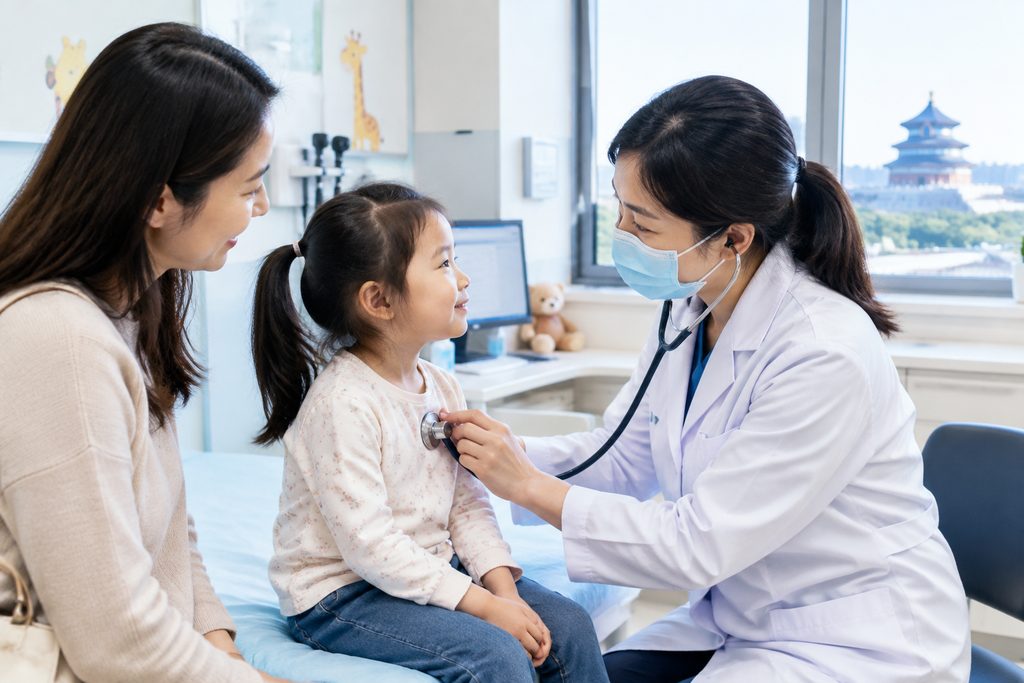
In the United States, a routine mammogram plus a full annual physical can run past $1,000 before insurance, and a pelvic ultrasound adds several hundred more. In Beijing, a comprehensive women’s health screening package at a top-tier public hospital often lands between $300 and $800 — the same imaging, the same bloodwork, a fraction of the price. That gap is why women’s health checkup cost Beijing searches have climbed steadily among travelers, expats, and medical tourism patients who want answers without a six-week wait.
But cost is the easy part. The hard part is knowing what actually happens inside a Chinese hospital, what you can book in advance, what you can’t, and where the process will trip you up if nobody explains it first.
How This Actually Works, Step by Step
Here is the real sequence, from your first email to the day you walk out with a printed report in hand.
Step 1 — You send your records. Existing lab results, imaging, prior diagnoses, family history, and the specific concerns driving the checkup. A woman with a BRCA family history needs a different panel than a 34-year-old with irregular cycles. The records determine the package.
Step 2 — A Chinese specialty team reviews them. For a written second opinion, the relevant department reads your file and returns a written analysis: what to screen for, what to skip, and which hospital fits. Turnaround is typically 3–7 business days.
Step 3 — You choose the format. Some women want only the written review. Others want a video consultation, where you speak directly with the specialty team, describe symptoms, and hear their recommendations. A third option is a proxy consultation: you name a city, hospital, or department, and a representative visits in person with your materials, handles registration, and creates your hospital medical card.
Step 4 — Appointment coordination. Once the plan is set, we coordinate registration and scheduling through the hospital’s official international or VIP channel. This is the part most foreign patients underestimate. Standard public outpatient queues in Beijing’s top hospitals cannot be reserved from overseas in advance — you take a number the same day. The international department is the route that allows pre-booked appointments, English-speaking staff, and a sane waiting room.
Step 5 — The visit itself. A bilingual medical companion meets you, handles registration, queueing, payment, and navigation between departments, and translates every conversation. A large Beijing tertiary hospital can see more than 10,000 outpatients in a single day. Without language support, that building is a maze.
Step 6 — Results and next steps. Screening reports are typically ready within 3–10 days depending on the tests. If something needs follow-up, the same channel arranges it.
What a Beijing Women’s Checkup Actually Includes
Packages vary by hospital, but a standard comprehensive screening for women usually covers blood count, liver and kidney function, lipid panel, fasting glucose, thyroid function, urinalysis, chest imaging, abdominal and pelvic ultrasound, ECG, and a gynecological exam with cervical cytology and HPV testing. Breast ultrasound is standard; mammography is added based on age and risk. Many hospitals offer low-dose CT as an optional upgrade.
Two things surprise foreign patients. First, the efficiency: most of this happens in a single morning, often within three to four hours, because hospitals run dedicated checkup centers rather than scattering you across departments. Second, the report format — Chinese hospitals hand you a bound booklet with reference ranges printed alongside your values. Ask for an English translation if you need one for your doctor at home.
For a broader look at how Chinese hospitals are tiered — and why the Fudan rankings matter when choosing one — see our overview of China’s top-ranked hospitals by city.
A Realistic Timeline
Optimistic timelines sold by agencies are the number one source of frustration. Here is what actually happens, with the waiting steps included.
| Stage | Realistic Duration | What Slows It Down |
|---|---|---|
| Records collection and translation | 3–10 days | Missing prior imaging; reports not in English |
| Written second opinion or video consult | 3–7 business days | Department scheduling; complex histories |
| S2 visa application | 1–3 weeks | Consulate backlog; incomplete hospital invitation documents |
| Appointment lead time (international channel) | 1–3 weeks | Popular specialists; holiday periods |
| The checkup itself | Half to one full day | Additional imaging added on site |
| Full report in hand | 3–10 days after visit | Pathology or specialized tests take longer |
Total from first contact to completed checkup: roughly four to eight weeks. If you are already in Beijing, the appointment and visit portions compress to about one to two weeks.
What Can Go Wrong — and What Happens Then
Honest failure modes, and the actual recourse for each.
You arrive without a pre-booked appointment. You will queue with everyone else, and the wait can consume your entire day. Fix: use the international or VIP channel, which is priced at roughly 1.5–2 times the standard route but allows advance scheduling.
Your records are incomplete. The specialty team cannot give a useful opinion on partial data. You get a generic package instead of a targeted one. Fix: send everything, including old scans, even if they feel irrelevant.
The visa is filed in the wrong category. Medical travel to China uses the S2 visa with a notation for medical treatment; stays beyond 180 days use S1. Accompanying family members also apply for S2. The M visa is for commercial and trade activity and has nothing to do with medical treatment — filing under M creates problems at the border. Requirements shift, so always confirm current rules with the nearest Chinese embassy or consulate.
A screening finding needs follow-up. This is not a failure; it is the point of screening. But follow-up may require an in-person consultation, and surgery in a Chinese public hospital cannot be scheduled without an in-person examination first. Budget flexibility for a longer stay if you are traveling specifically for a diagnostic workup.
Choosing the Right Clinic: Public, Private, or TCM
Three genuinely different experiences, and the right answer depends on your priorities.
Top public hospitals carry the deepest diagnostic capability and the lowest prices. Beijing has more Fudan Top 100 hospitals than any other Chinese city — 21 of them. The trade-off is scale, crowding, and a system built around Chinese-language flow.
Private international hospitals offer English-speaking staff, JCI accreditation, direct insurance billing, and a Western-style experience. You pay for it. For a straightforward annual screening, many foreign residents in Beijing choose this route purely for convenience.
Traditional Chinese Medicine hospitals suit a different purpose: constitutional assessment, acupuncture, and herbal management of chronic issues like menstrual irregularity, sleep problems, or post-treatment recovery. TCM is not a substitute for imaging-based cancer screening. It complements it. Our guide to TCM hospitals in China covers which conditions it genuinely helps with.
If you are weighing whether a women’s health checkup in China is safe, the honest answer is that the diagnostic equipment and laboratory standards at top-tier hospitals are equivalent to Western academic centers. The variable is communication, not quality. That is precisely what bilingual support addresses.
Practical Considerations: Records, Visa, Payment, Language
Records. Bring printed copies and digital files. Chinese hospitals may not accept foreign imaging CDs without conversion, and re-scanning is sometimes faster than arguing.
Visa timing. Apply for S2 once you have hospital documentation in hand. Processing typically runs one to three weeks, longer in peak seasons.
Payment. Public hospitals require prepayment; insurance reimbursement happens afterward, in your home country. Private international hospitals frequently bill insurers directly. Confirm before you arrive, not after.
Language. This is the single biggest practical barrier. Translation apps fail in medical contexts. A bilingual companion costs from $300 per day and covers registration, queueing, payment, navigation, and interpretation.
Follow-up at home. Ask for your reports in English before you leave Beijing. Chasing documents remotely is slow and expensive.
Frequently Asked Questions
Comprehensive screening packages at top public hospitals generally run $300–800, with private international hospitals higher. Final pricing varies by hospital and the specific tests included. Added imaging such as low-dose CT or mammography increases the total.
Through the hospital’s international or VIP channel, yes — appointments can be scheduled in advance. Standard public outpatient registration cannot be reserved from overseas; you take a same-day number. This distinction matters more than almost anything else in the planning process.
At top-tier hospitals, diagnostic equipment and lab standards match Western academic centers. Reports use standardized reference ranges. The realistic risk is miscommunication, not clinical quality — which is why interpretation support is worth arranging in advance.
Yes. Medical travel uses the S2 visa with a medical-treatment notation; S1 applies for stays over 180 days. Accompanying family members apply for S2 as well. Requirements change, so verify current documentation with your nearest Chinese embassy or consulate before filing.
Follow-up is arranged through the same hospital channel. Note that surgery in a Chinese public hospital requires an in-person consultation first — it cannot be scheduled remotely. Plan for possible additional time in the country if you are traveling specifically for a diagnostic workup.
Your Next Step
A women’s checkup in Beijing is faster, cheaper, and more thorough than most foreign patients expect — provided you understand the booking rules, the visa category, and where language becomes a real obstacle. The information above is educational; it is not medical advice, and any screening decision should be discussed with a qualified physician.
Our team coordinates written second opinions, video consultations, appointment scheduling through official hospital channels, and bilingual accompaniment on the ground. We do not provide medical care, and we never promise admission or a specific clinical result. If you would like to talk through your situation with no obligation, you can start a free consultation here — and take the next step only when it feels right for you.
For more medical information and treatment options in China, visit chinamedservices.com (China Medical Services).
