Discreet Medical Care for Celebrities in China: Private VIP Treatment Without Compromise
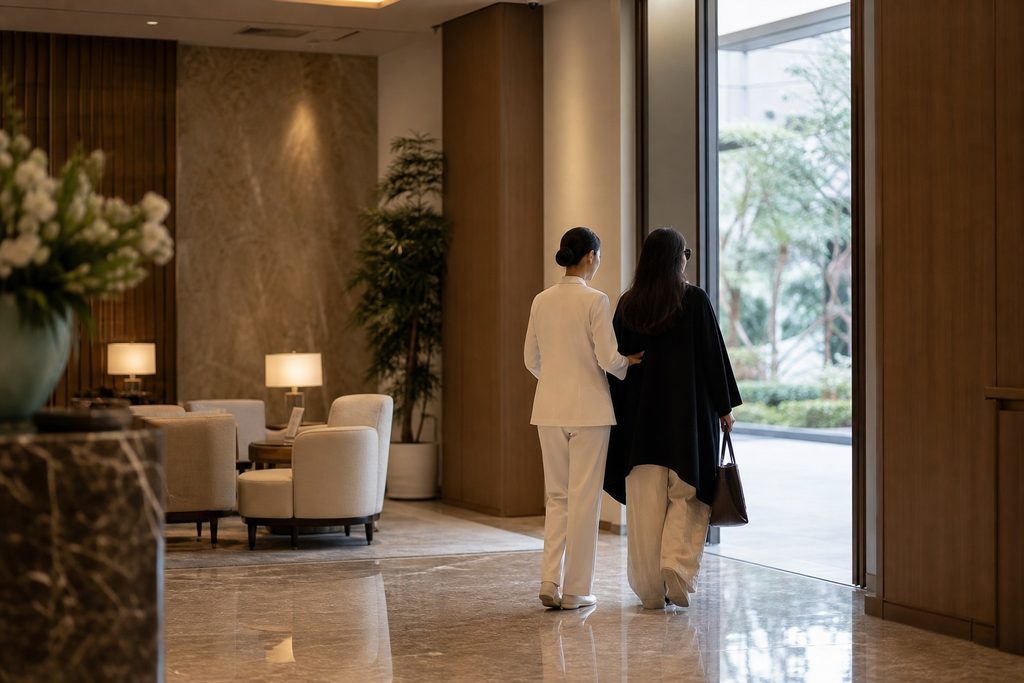
You have probably heard that seeking medical treatment abroad means sacrificing privacy. The assumption is that a foreigner in a busy hospital will inevitably draw attention. That logic breaks down when you understand how China’s top-tier hospitals actually structure their international and VIP wings. These are not makeshift arrangements. They are purpose-built environments where discretion is the operational baseline, not an afterthought. The real question is not whether confidential care exists here. It is whether you know the correct entry points to access it.
Key Takeaways
- China’s elite hospitals operate dedicated VIP and international wings where approximately 340+ top-ranked institutions offer private suites completely separated from public patient flows.
- True discretion requires bypassing standard registration — a process that is structurally impossible for overseas patients to navigate without local coordination due to mandatory in-person ID verification and payment systems that reject foreign cards.
- The largest barrier is not cost or quality. It is the assumption that a famous face can simply call a hospital and book a private room. Chinese public hospitals do not work that way. Access runs through official international departments, not personal connections.
- Before contacting any hospital, understand that your privacy depends entirely on which channel you enter through. The wrong channel means crowded waiting rooms and curious stares. The right channel means a separate entrance, a private suite, and a dedicated care team bound by contractual confidentiality.
The Problem: When Public Exposure Is Not an Option
Consider the reality for a recognizable public figure facing a necessary surgery. Walking through a general hospital lobby means dozens of phone cameras. A standard registration counter requires handing over a passport to a clerk who may recognize the name. Recovery in a shared ward means zero control over who sees you post-operation. For celebrities, executives, and high-net-worth individuals, this is not a hypothetical anxiety. It is a legitimate security and reputational risk.
A 2023 survey by International SOS found that 68% of high-net-worth travelers ranked medical privacy as their primary concern when seeking care abroad, outpacing even cost considerations. The fear is well-founded. One viral photo from a hospital corridor can trigger a news cycle. For public figures whose careers depend on image control, that risk is unacceptable. Yet the alternative — delaying necessary treatment indefinitely — carries its own obvious dangers. The tension is real. You need world-class care. You need absolute confidentiality. And you need to know whether both can coexist in a single facility.
Who We Are
We are not a hospital. We do not provide medical treatment, clinical diagnoses, or surgical procedures. Our team functions as your logistical architects — we bridge the gap between you and China’s top-tier medical expertise. We know which hospitals have dedicated VIP wings with separate entrances. We know which international departments can guarantee a private recovery suite. And we know the precise documentation, visa requirements, and payment protocols that would otherwise take weeks to untangle alone. Our role is to make sure you never find yourself standing in a public registration line, passport in hand, hoping for discretion that the system was never designed to provide.
How High-Profile Patients Actually Access Discreet Medical Care for Celebrities in China
The mechanism is straightforward once you see it. But it is invisible from the outside. China’s top-ranked public hospitals — the ones appearing on the Fudan University Hospital Rankings — operate what are called International Medical Centers or VIP Wings. These are physically separate from the main hospital buildings. They have their own entrances, their own registration desks, their own nursing staff, and their own inpatient suites. The doctors who treat you are the same senior specialists who work in the public wing. The difference is the environment surrounding them.
This is not a backdoor arrangement. It is an official hospital service, priced transparently and operated within the same regulatory framework as the rest of the institution. The cost runs approximately 1.5 to 2 times higher than the standard public rate. For that premium, you get something that no amount of money can buy in the general wing: control over who sees you, who enters your room, and how your medical information is handled.
Private VIP Hospital Packages in Beijing: What They Actually Include
Beijing houses 21 of the Fudan-ranked top 100 hospitals — the highest concentration of elite medical institutions in the country. Within these hospitals, private VIP hospital packages Beijing typically include a suite of services that go far beyond a nicer room. Expect a dedicated care coordinator assigned to your case. A private suite with a separate sleeping area for a family member or security personnel. Direct scheduling with department heads rather than junior residents. And perhaps most critically, a confidentiality agreement signed by every staff member who enters your care perimeter.
Peking Union Medical College Hospital, for instance, operates its International Medical Service on a separate floor with its own pharmacy, laboratory, and imaging facilities. You do not queue with general patients for a CT scan. You are escorted at a scheduled time. The operational word is separation. The hospital designs the patient journey so that your path never intersects with the public flow. That is the structural guarantee of privacy — not a promise, but an architectural fact.
But here is what the package descriptions do not tell you. You cannot book these suites directly from overseas. The hospital’s international department requires a confirmed diagnosis, translated medical records, and an in-person consultation before approving inpatient admission. We handle that entire pre-arrival sequence — document translation, specialist matching, and appointment coordination — so that when you land, you go straight to the international wing, not the general registration hall.
Luxury Medical Suites for Executives in Shanghai
Shanghai’s approach differs slightly. The city’s 18 Fudan-ranked hospitals include institutions like Zhongshan Hospital and Ruijin Hospital, both of which have invested heavily in their international divisions. Luxury medical suites for executives Shanghai are designed with a corporate client in mind. These suites resemble high-end hotel rooms more than hospital wards. Hardwood floors. Dedicated high-speed internet for continuing business operations during recovery. Meeting areas for private consultations with family or advisors. Some even include kitchenettes for dietary control.
The patient profile here skews toward C-suite executives and entrepreneurs who cannot fully disconnect during treatment. A 2022 report by the Shanghai Municipal Health Commission noted that international patient volumes at the city’s top-tier hospitals had grown 40% year-over-year pre-pandemic, driven largely by demand from executive health screening and elective surgery. The infrastructure has scaled accordingly. But the privacy protocols remain the critical differentiator. These suites are accessed through dedicated elevators. Visitor logs are maintained. Staff are trained in non-disclosure. The system assumes that every patient in this wing requires elevated confidentiality, so no individual stands out.
Confidential Cosmetic Surgery for Public Figures in China
Cosmetic surgery presents a unique privacy challenge. The results are visible. The recovery period requires seclusion. And the stigma — fair or not — means that many public figures prefer to undergo procedures where they are entirely unknown. Confidential cosmetic surgery for public figures China has become a specialized niche within the broader VIP medical ecosystem.
Shanghai Ninth People’s Hospital, affiliated with Shanghai Jiao Tong University, runs one of the largest plastic surgery departments in the world. Its international wing handles a steady stream of overseas patients seeking procedures ranging from rhinoplasty to facial reconstruction. The hospital’s protocol for high-profile patients includes private pre-operative consultation rooms, scheduled surgery slots that minimize hallway traffic, and post-operative suites with controlled access. The surgeons are the same ones publishing in international journals. The difference is the wrapper: total anonymity from arrival to discharge.
One practical note that surprises many Western patients: Chinese hospitals require a mandatory in-person consultation before any elective surgery. You cannot send photos and book a date. The surgeon must examine you directly. This is a regulatory requirement, not a preference. It means at least two trips — one for consultation, one for the procedure — unless you coordinate a compressed timeline through the international department. We manage that compression. We schedule the consultation, the pre-operative tests, and the surgery in a single, efficient block so you minimize time in-country.
Can Celebrities Get Private Care in China Hospitals? The Structural Answer
The short answer is yes. But the word “private” requires unpacking. Can celebrities get private care in China hospitals in the sense of a completely isolated, confidential treatment experience? Absolutely — if they enter through the correct channel. The international wings of Fudan-ranked hospitals are designed precisely for this purpose. They exist to serve patients who cannot, for whatever reason, use the general admission system.
The longer answer is that privacy is not a perk you request. It is a service line you select. If you contact a hospital’s general department and ask for a private room, you will likely be told that private rooms are subject to availability and cannot be guaranteed. That is true for the public wing. The international wing operates on an entirely different booking system with different availability, different pricing, and different rules. You are not asking for special treatment within a public system. You are choosing a parallel system built for international and VIP patients from the ground up.
This distinction matters because it addresses the core fear: being recognized, photographed, or discussed. In the international wing, your fellow patients are also international or VIP. The staff are contractually bound to confidentiality. The physical space is separate. The risk of exposure drops to near zero — not because anyone promised discretion, but because the system was architected to deliver it.
How Do High-Profile Patients Get Treatment in China? The Step-by-Step Reality
The process is methodical. It is not difficult, but it is precise. How do high-profile patients get treatment in China without losing control of their privacy? The sequence looks like this:
First, medical records are translated into Chinese by certified medical translators. This is non-negotiable. A senior specialist will not review a case file in English. We handle this translation in-house, ensuring that terminology is clinically accurate — a mistranslated pathology report can derail an entire consultation.
Second, we match the case to the appropriate specialist and hospital. This is not about picking the most famous name. It is about matching the specific condition to the department that has the deepest experience with that exact presentation. For oncology, that might mean the Cancer Hospital Chinese Academy of Medical Sciences. For cardiac surgery, Fuwai Hospital — which performs over 14,000 cardiac surgeries annually, the highest volume of any cardiac center globally. The match is evidence-based, not reputation-based.
Third, we coordinate the visa. Medical treatment in China requires an S2 visa, annotated for medical purposes. The accompanying family member or security detail also applies for an S2. This is a specific visa category — an M business visa is not valid for medical treatment, and using the wrong visa category can result in entry denial. We provide the invitation letter and hospital confirmation documents that the visa application requires.
Fourth, we schedule the in-person consultation. You arrive. We meet you at the airport. We take you directly to the international wing entrance — not the main lobby. The consultation happens in a private room. If surgery is indicated, we coordinate the pre-operative tests and the procedure date. You are never left to navigate a Chinese-language hospital system alone. Our bilingual medical companion handles every interaction: registration, payment, pharmacy pickup, test scheduling, discharge paperwork.
Finally, post-operative recovery happens in your private suite. Follow-up consultations are scheduled before you leave. Your medical records are translated back into English for your home physician. The entire arc — from initial inquiry to discharge — is designed to be invisible to anyone outside your care team.
What You Need to Know Before Going Alone
Attempting to arrange this independently is where privacy breaks down. The obstacles are not insurmountable, but they are real:
- Visa Complexity: The S2 medical visa requires a formal invitation letter from the treating hospital. Most hospitals will not issue this letter until a doctor has reviewed your case — creating a chicken-and-egg problem for overseas patients. We resolve this by facilitating the preliminary case review that unlocks the invitation letter.
- Payment Systems: Chinese public hospitals, including their international wings, operate on a pre-payment deposit system. You deposit a lump sum at admission, and costs are deducted as services are rendered. The problem: hospital payment counters frequently reject foreign credit cards. UnionPay is dominant. We handle the deposit process and provide transparent accounting so you are never stuck at a payment terminal that will not accept your card.
- Language Barrier in Medical Contexts: Even in international wings, not all nursing staff speak fluent English. Informed consent forms, surgical agreements, and discharge instructions are often in Chinese. Signing a document you cannot read is a legal and medical risk. Our bilingual companion translates in real time and ensures you understand every document before you sign.
How We Help You Navigate This
These barriers exist for structural reasons, not because the system is hostile. Chinese hospitals serve a domestic population of 1.4 billion people. Their default workflows are built for Chinese-speaking citizens paying with UnionPay cards. The international wing is the adaptation. But it still requires a guide who speaks both languages, understands both medical systems, and knows the precise sequence of steps.
We begin with a free consultation. You describe your medical need. We identify the appropriate hospital and specialist from our network of 340+ top-ranked institutions across 37 cities. We provide a clear cost estimate — surgery fees, hospital stay, companion services — so you can make an informed decision. If you proceed, we handle the entire logistical chain: document translation, visa invitation, appointment scheduling, airport transfer, bilingual accompaniment, and discharge coordination. You focus on your health. We handle everything else.
For patients considering a preliminary remote consultation before committing to travel, we facilitate video consultations and written second opinions from senior specialists. The cost for a written second opinion from a top-tier hospital expert ranges from $300 to $500. A video consultation with a senior specialist runs $500 to $800. And here is what matters for those still deciding: any consultation fee is credited in full toward our on-the-ground coordination service if you proceed with treatment within 90 days. The consultation becomes a deposit, not an expense.
Frequently Asked Questions
International wing staff are contractually bound by confidentiality agreements that carry real professional consequences. These are not informal understandings. They are written into employment contracts. Additionally, the patient cohort in these wings consists almost entirely of international and VIP patients — staff are accustomed to treating recognizable individuals and have no incentive to breach protocol. The physical separation from the public hospital further reduces casual exposure.
Our team provides 24/7 bilingual support during your stay. If an emergency arises, we direct you to the emergency department of your pre-arranged hospital — but critically, we meet you there and coordinate admission through the international wing rather than the general ER. This preserves continuity of care and confidentiality. Emergency situations are inherently less controlled, but having a local coordinator who can communicate instantly with the hospital dramatically reduces chaos.
Yes. Private suites in VIP wings include separate sleeping areas specifically designed for family members or security personnel. Your security team stays with you. The hospital will register them as authorized visitors, and they will have 24-hour access to your suite. We coordinate this during the pre-arrival planning so there are no access disputes at the nurse’s station.
VIP wing consultations are conducted by attending physicians — typically department heads or senior specialists — not residents or fellows. This is a structural feature of the international wing model, not a special request. The higher fees pay for senior physician time. We also confirm the specific surgeon’s identity and credentials before you travel. You know exactly who will operate on you before you board the plane.
This happens. A consultation may reveal that a different hospital has more relevant expertise for your specific condition. We facilitate the switch. Your medical records are already translated. We contact the alternative hospital, schedule a new consultation, and adjust the logistical plan. You are not locked into a single institution. Our commitment is to the right medical outcome, not to a particular hospital.
Your Next Step
Privacy in medical care is not a luxury. It is a prerequisite for many public figures, executives, and private individuals who simply cannot afford exposure. China’s top hospitals have built the infrastructure to deliver it — separate wings, dedicated teams, contractual confidentiality. But that infrastructure is only accessible if you know which door to enter. The wrong door leads to a crowded lobby. The right door leads to a private suite and a care team that understands exactly what is at stake.
If you are considering treatment in China and discretion is non-negotiable, start with a conversation. Tell us what you need. We will tell you honestly whether we can deliver it, which hospital is best suited, and what the process will cost. No pressure. No sales pitch. Just a clear-eyed assessment of your options. Request a free consultation today and let us show you what private care actually looks like.
Medical Disclaimer: This article is for informational purposes only and does not constitute medical advice. Always consult a qualified healthcare provider for personal medical decisions. China Medical Services facilitates logistical coordination and does not provide clinical treatment or guarantee specific medical outcomes.
For more medical information and treatment options in China, visit chinamedservices.com (China Medical Services).
