Bone Density for Implants in China: Costs, Clinics & Candidacy
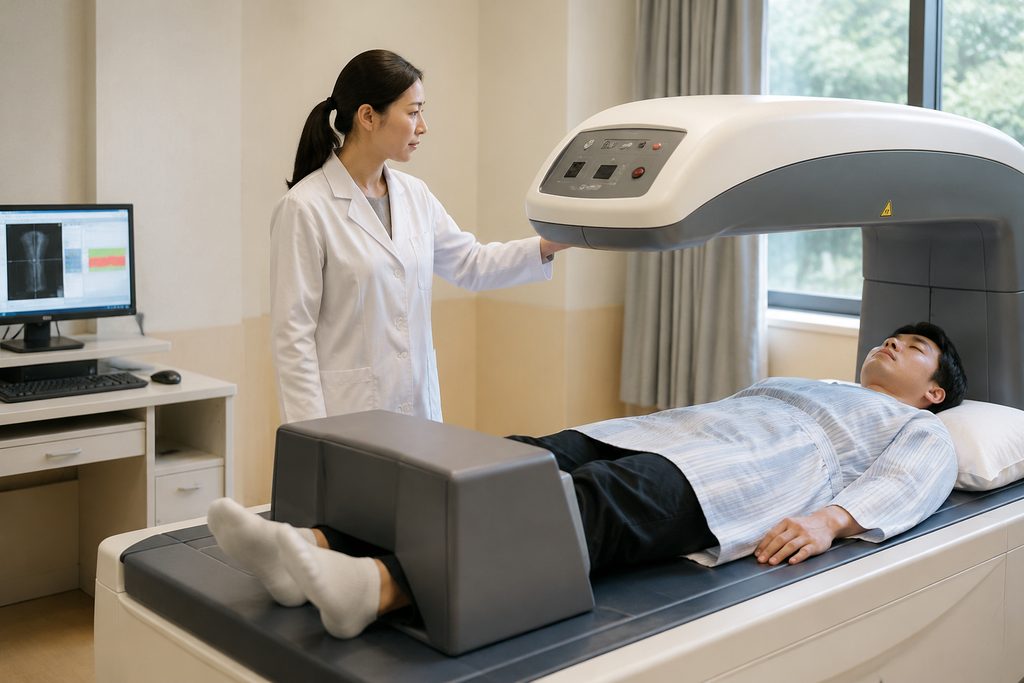
Bone Density for Implants in China: The Short Answer
The bone density for dental implants cost China varies widely, but international patients typically pay $400 to $1,200 for a cone-beam CT (CBCT) scan and bone grafting, while a single implant ranges from $1,500 to $4,500 depending on the clinic and complexity. That is roughly one-third to one-fifth of Western prices. The catch is that not every jaw qualifies for immediate placement — and that is exactly why density testing comes first.
A CBCT scan measures bone volume in three dimensions. If your jaw is too thin or too soft, a graft is needed before the implant can be placed. That extra step adds time — usually three to six months of healing — and cost. So the real question isn’t just “how much,” but “do I have enough bone to begin with?”
Key takeaway: Bone density testing is not optional. A CBCT scan in China costs $80–$250 at most private international clinics and is the single most important step before any implant surgery.
Who This Is Right For — and Who It Isn’t
Dental implants in China suit patients who want high-quality care at a fraction of Western prices, are willing to travel, and can commit to a treatment timeline that may span two visits. It is not for everyone.
Good candidates typically include:
- Adults with one or more missing teeth and adequate bone volume or willingness to undergo grafting
- Patients quoted $4,000+ per implant at home who are open to medical travel
- People who can stay in China for 7–14 days for the surgical phase, or return for a second trip
- Those with controlled diabetes or well-managed chronic conditions, cleared by their physician
Who should think twice:
- Patients with uncontrolled diabetes, active gum disease, or heavy smoking habits — these significantly raise failure risk
- Anyone on bisphosphonates or blood thinners without cardiology or oncology clearance
- People who cannot travel due to frailty or who need complex full-mouth reconstruction that requires multiple staged surgeries
- Those expecting a single-visit fix. Grafting takes months to integrate.
Being honest about who should not pursue this is not a sales tactic. It is basic clinical triage. If your case is borderline, a remote second opinion can clarify whether travel makes sense.
The Options, Compared
Here is how dental implant care with bone grafting compares across common destinations. Prices are ranges and vary by hospital and case complexity.
| Destination | CBCT / Density Test | Bone Graft | Single Implant (all-in) | Typical Timeline |
|---|---|---|---|---|
| China (top private/international clinic) | $80–$250 | $400–$1,200 | $1,500–$4,500 | 7–14 days surgery; 3–6 months healing |
| United States | $150–$500 | $600–$3,000 | $3,000–$6,000 | Similar healing; higher lab costs |
| United Kingdom | £100–£300 | £400–£2,500 | £2,000–£4,500 | Similar |
| Germany | €120–€350 | €500–€2,000 | €1,800–€4,000 | Similar |
Which column suits you? If you have adequate bone, China’s private international clinics offer the biggest savings with English-speaking staff and JCI accreditation. If you need extensive grafting, the cost gap narrows but remains substantial. And if you have a complex medical history, staying home may be safer — no price difference justifies added risk.
How Much Bone Density Is Needed for Dental Implants?
This is the question every implant candidate asks, and the honest answer is: it depends on the implant system and the surgeon’s technique. But there are general benchmarks.
Dentists typically assess bone using the Misch classification, which divides jawbone quality into four types:
- D1: Dense cortical bone — rare, mostly in the front lower jaw. Excellent for implants.
- D2: Thick cortical with coarse trabecular bone — ideal. Most common in the lower jaw.
- D3: Thin cortical with fine trabecular bone — acceptable but may need wider implants or grafting.
- D4: Fine trabecular bone — the softest. Often requires grafting or specialized implants.
In practical terms, you need at least 1.5 mm of bone around the implant and roughly 6–8 mm of height and 5–6 mm of width for a standard implant. If you fall short, a graft — autogenous, allograft, or synthetic — can rebuild the site. The question of how much bone density is needed for dental implants is best answered by a CBCT scan, not a guess.
Tip: Ask for your CBCT DICOM files. Any Chinese implant clinic can review them remotely before you book flights.
What It Costs — and What Drives the Variance
Cost in China depends on four factors: the clinic tier, the implant brand, whether grafting is needed, and the restoration (crown) material.
At a private international clinic in Shanghai or Beijing, expect:
- Consultation and CBCT: $80–$250
- Bone graft (if needed): $400–$1,200
- Implant fixture (Swiss, German, or Korean brand): $800–$2,500
- Abutment and crown: $400–$1,200
- Total per implant: $1,500–$4,500
Public top-tier hospitals may be cheaper — sometimes 30–50% less — but usually require in-person registration, have longer queues, and offer limited English support. That is where a bilingual medical companion becomes valuable.
What is not included: flights, hotels, meals, and follow-up visits after you return home. Some clinics offer a warranty on the implant fixture itself, but that warranty rarely covers travel costs if a revision is needed.
Practical Considerations: Records, Visas, and Payment
Before you book anything, gather your dental records: panoramic X-rays, CBCT scans if you have them, and a list of medications. If you are on blood thinners or have uncontrolled diabetes, get clearance from your primary care doctor first.
For entry, most medical travelers use the S2 visa, which covers short-term medical treatment and private affairs. The M visa is for commercial and trade activities and is not the correct category for treatment. Rules change, so confirm current requirements with the nearest Chinese embassy or consulate. Bring your hospital appointment letter and financial documents.
Payment at private international clinics is usually upfront. Some accept international credit cards; others prefer bank transfer. Public hospitals require prepayment and you file for insurance reimbursement later. Direct billing exists at a handful of JCI-accredited private hospitals, but dental implants are rarely covered by travel insurance.
Language is the biggest practical hurdle. Most public hospital dentists speak limited English. A bilingual medical companion can handle registration, queueing, payment, and translation — from $300 per day. That is often less than the cost of a single miscommunication.
If you are comparing cities, Shanghai has the deepest concentration of English-speaking dental clinics. Beijing offers top-tier public options. Guangzhou and Shenzhen are strong for patients from Southeast Asia. You can browse top-ranked hospitals by city to see what is available.
Is Bone Grafting for Dental Implants Safe in China?
Bone grafting is a routine procedure worldwide, and China’s leading clinics follow international protocols. The safety question is less about the country and more about the specific clinic, the surgeon’s experience, and your own health status.
Complications exist everywhere: infection, graft failure, nerve injury, and implant rejection. Rates at reputable Chinese clinics are comparable to Western benchmarks — roughly 2–5% for minor complications. The key is choosing a clinic with proper sterilization, CBCT planning, and a track record you can verify.
Ask for the clinic’s implant success rate, the surgeon’s case volume, and whether they use guided surgery. If a clinic cannot answer these questions clearly, walk away.
Frequently Asked Questions
A CBCT scan in Beijing typically costs $80–$250 at private international clinics and $50–$150 at public hospitals. The price includes the scan and a basic interpretation. Some clinics waive the fee if you proceed with treatment.
Yes, but with limits. Public hospitals generally require in-person registration for first visits. Private international clinics often offer video consultations for $100–$300, and some accept CBCT files remotely for a written assessment. A video consult lets you confirm whether grafting is needed before committing to flights.
Implant failure within the first year is uncommon but possible. Most Chinese clinics offer a fixture warranty, but it covers the replacement part only — not travel, accommodation, or your time. Some patients choose to have follow-up care with a local dentist. Discuss this scenario with your clinic before surgery, and get the warranty terms in writing.
At accredited clinics, yes — complication rates mirror international standards. The bigger risk is choosing a low-cost provider without proper imaging or sterilization. Verify credentials, ask about guided surgery, and do not skip the CBCT.
Your Next Step
Bone density is the gatekeeper of implant success. Get a CBCT scan, understand your Misch classification, and only then compare prices. China offers genuine savings — often 50–70% less than U.S. prices — but only if your case is suitable and you choose the right clinic.
We are China Medical Services, a patient coordination team, not a hospital. We do not diagnose or treat. We help international patients connect with top Chinese hospitals, arrange video consultations, and provide bilingual support on the ground. If you want a clear picture of your options, start with a free consultation at our patient services page. No pressure, no obligation — just a conversation about whether China makes sense for your dental care.
This article is for informational purposes only and does not constitute medical advice. Always consult a qualified dentist or physician before making treatment decisions.
For more medical information and treatment options in China, visit chinamedservices.com (China Medical Services).
