Root Canal Treatment Cost for Molars in China: 2026 Price Guide
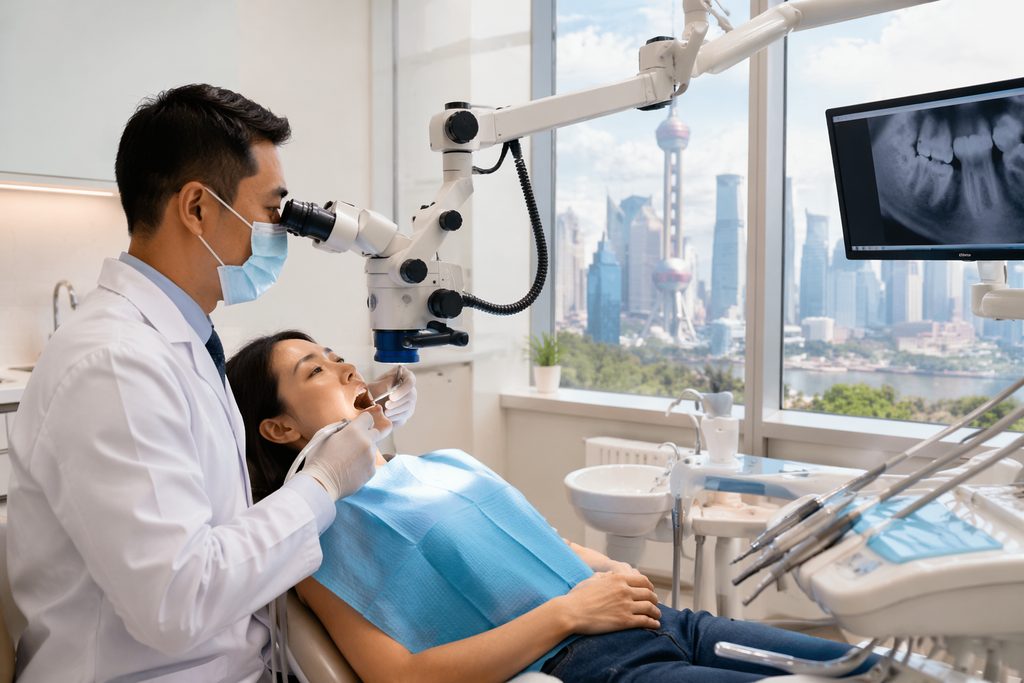
Root Canal Treatment Cost for Molars in China: A Complete 2026 Guide
A molar root canal in the United States averages $1,100 to $1,500 before the crown, and a specialist in a major metro can quote $2,000 or more. In China, the same procedure — performed at a top-ranked dental hospital or an international clinic — typically runs $150 to $600 including the crown. That gap is real, and it is the reason searches for root canal treatment cost China have climbed steadily among uninsured Americans, expats, and medical travelers from Canada, Australia, and the UK.
But price is only half the story. The other half involves safety standards, language barriers, appointment logistics, and knowing which clinics actually meet Western expectations. This guide covers all of it.
How This Actually Works, Step by Step
Here is the real sequence, from first inquiry to walking out of the chair with a finished tooth.
Step one: you send records. A recent dental X-ray (periapical or panoramic) plus any notes from your dentist at home. If you do not have a current X-ray, most Chinese dental hospitals will take one on arrival for $15 to $40.
Step two: a Chinese dentist reviews the file. This is where a written assessment comes back — typically within 24 to 72 hours. It confirms whether the tooth needs a single-visit root canal, a multi-visit procedure, or possibly extraction. Cost estimates come with it.
Step three: you decide on a video consultation or an in-person visit. Video consults with a dental specialist run $100 to $300 through our coordination service. For straightforward molar cases, many patients skip this and go straight to booking.
Step four: appointment coordination. Standard dental clinics in China generally do not accept overseas bookings directly. Our team handles registration, medical card creation, and scheduling through the hospital’s international department or a private clinic’s English-language desk.
Step five: treatment. A routine molar root canal takes one to two visits, each 60 to 90 minutes. The crown is fitted afterward, usually one to two weeks later.
Step six: follow-up. You receive a treatment summary and X-rays to bring home. Any dentist can handle routine follow-up.
Molar Root Canal Price China: What You Actually Pay
Dental pricing in China splits into three tiers, and the molar root canal price China patients pay depends heavily on which tier they choose.
| Setting | Root Canal (Molar) | Crown | Total |
|---|---|---|---|
| Public dental hospital, standard queue | $80–$180 | $70–$200 | $150–$380 |
| Public hospital international/VIP department | $180–$350 | $150–$400 | $330–$750 |
| Private international clinic (Beijing/Shanghai) | $300–$600 | $300–$800 | $600–$1,400 |
For comparison: the same molar procedure at a US general dentist runs $1,100 to $1,500 for the canal alone, and a specialist (endodontist) charges $1,600 to $2,200. A crown adds $1,000 to $2,500. UK private patients pay £600 to £1,000 for the canal and £500 to £1,200 for the crown.
The spread inside China is wide, and it maps to something specific: who is doing the work, how much English support surrounds it, and how long you wait. A public dental hospital in Chengdu can do excellent work for under $200 total. But you will queue, you will need a translator, and you may wait several days for an appointment slot.
A Realistic Timeline
Dental travel moves faster than most surgical travel, but the logistics still take planning. Here is a realistic schedule.
| Stage | Timeframe | Notes |
|---|---|---|
| Send X-rays and dental history | Day 1 | Digital files are fine |
| Written assessment returned | Day 2–3 | Confirms treatment plan and estimate |
| Appointment coordination | 3–10 days | Longer for top-tier specialists |
| Visa processing (S2, if needed) | 4–10 business days | Depends on consulate; not required for visa-free transit |
| First treatment visit | Day of arrival or next day | Exam and X-ray included |
| Root canal completed | 1–2 visits, 1–2 weeks apart | Multi-rooted molars may need two sessions |
| Crown fitting | 7–14 days after canal | Some clinics offer same-week crowns |
Total realistic window: two to three weeks on the ground, or two shorter trips if you prefer. Some clinics offer temporary crowns so you can fly home between visits — worth asking about upfront.
What Can Go Wrong — and What Happens Then
Root canals are routine, but they are not risk-free, and pretending otherwise would be dishonest.
The tooth may need extraction instead. If the infection has destroyed too much structure, a root canal is not viable. This happens in roughly 5 to 10 percent of cases where patients waited months with pain. In that situation, the plan shifts to extraction plus implant or bridge — a bigger cost and a longer timeline.
A second visit may be required. Molars have two to three roots, sometimes four. If a canal is calcified or curved, the dentist may place medication and schedule a follow-up. This is normal, not a failure, but it extends your stay.
Crown fit issues. If a crown feels high or loose after you return home, a local dentist can adjust it. Keep your X-rays and treatment notes.
Post-treatment pain. Mild discomfort for three to five days is expected. Pain that worsens after a week suggests a missed canal or reinfection. Contact the treating clinic immediately — most will offer a free revision within a defined window.
Is Root Canal in China Safe for Tourists?
This is the question that stops most people from booking. The honest answer: it depends entirely on where you go.
China’s top dental hospitals — including the stomatology departments at Peking University, Sichuan University’s West China School of Stomatology, and Shanghai Jiao Tong University — use the same rotary endodontic systems, apex locators, and dental operating microscopes found in US and European clinics. Many of these institutions train international dentists and publish in English-language journals.
Where the risk lies is in small, unregulated clinics that advertise cheap prices on street corners. Sterilization shortcuts, reused files, and unqualified practitioners do exist in that segment. The fix is simple: book through a ranked hospital’s international department or a JCI-accredited private clinic. Both maintain documented sterilization protocols and use disposable or autoclaved instruments.
For tourists specifically, the practical concern is less about safety and more about follow-up. If a complication appears after you fly home, you will need a local dentist to take over. That is manageable — but get your treatment records before you leave.
How Much Does a Root Canal Cost in Shanghai?
Shanghai sits at the higher end of China’s dental pricing, but still far below Western rates. A molar root canal at a top-tier public hospital runs $120 to $280. At a private international clinic in Jing’an or Pudong, expect $350 to $700 for the canal and $400 to $900 for a zirconia crown.
Beijing follows a similar curve. Searching for the best dental clinic Beijing root canal options usually surfaces the stomatology departments at Peking University and a handful of international clinics in Chaoyang and Sanlitun. Prices there run 10 to 20 percent above Shanghai in the private tier.
For a full comparison of hospital options by city, see our ranked hospital directory, which groups facilities by city and specialty ranking.
Practical Considerations: Records, Visa, Payment, and Follow-Up
Records. Bring or send digital X-rays, a list of current medications, and any history of prior dental work. If you have a bleeding disorder or take blood thinners, disclose it before booking.
Visa. For medical treatment in China, the applicable short-stay category is the S2 visa, which covers medical treatment and private affairs. Accompanying family members apply for S2 as well. Note that the M visa is for commercial and trade activities only — it is not a medical visa. Visa-free transit policies may cover short dental trips for some nationalities, but confirm with your nearest Chinese consulate before booking flights.
Payment. Public hospitals require prepayment; you then file with your insurer for reimbursement. Private international clinics often bill insurance directly. Bring a card that works internationally, and confirm payment methods before your visit.
Insurance. Most US and European dental plans reimburse out-of-network care at a reduced rate. Ask your insurer what documentation they need — itemized invoices and English-language treatment summaries are standard.
Language. This is where most dental travelers underestimate the difficulty. A public dental hospital in Beijing handles thousands of patients daily, and signage, forms, and staff communication are in Mandarin. A bilingual medical companion — from $300 per day — handles registration, queueing, payment, and chairside translation.
If you are weighing a broader treatment trip, our guide to how our coordination service works explains the full support model, from hospital matching to arrival logistics.
And if you want to explore dental care alongside other specialties, our specialty department directory lists top-ranked hospitals across 45 medical fields.
Frequently Asked Questions
A molar root canal in China costs $150 to $600 including the crown at public hospitals, or $600 to $1,400 at private international clinics. The same procedure in the US runs $2,100 to $4,700 total. That is roughly a 70 to 85 percent saving, though the exact figure varies by hospital and case complexity.
Yes, but standard public clinics do not accept overseas bookings directly. You either book through a hospital’s international department or use a coordination service that handles registration, medical card creation, and scheduling. A dental treatment package can be arranged in advance, typically with three to ten days of lead time.
At ranked public dental hospitals and JCI-accredited private clinics, yes. These facilities use the same equipment and sterilization standards as Western clinics. The risk sits in unregulated small clinics, so book through a verified institution and confirm instrument sterilization practices before treatment.
Plan for one to two weeks minimum. The canal itself takes one or two visits, and the crown needs seven to fourteen days to be fabricated and fitted. Some clinics offer temporary crowns so you can split the trip, but a single two-week stay is the simplest option.
Most US and European dental plans reimburse out-of-network international care at a reduced rate, though coverage varies widely. Request an itemized English-language invoice and a treatment summary from the clinic, then submit those to your insurer. Confirm your plan’s international policy before you travel.
Your Next Step
The core message is simple: a molar root canal in China costs a fraction of Western prices, and the quality gap — at ranked hospitals and accredited clinics — is far smaller than most people assume. The real work is logistics: choosing the right facility, coordinating the appointment, and having someone beside you who speaks both languages.
We are China Medical Services. Our team connects international patients with 340+ top-ranked hospitals across 37 cities, and we handle appointment coordination, bilingual medical companions, and visa guidance. We do not practice medicine, and we never promise a specific clinical outcome. What we do is remove the friction between you and a qualified dentist.
If you have an X-ray and a question, send it over. A written assessment costs nothing to request, and it will tell you whether traveling to China for dental care makes sense for your case.
For more medical information and treatment options in China, visit chinamedservices.com (China Medical Services).
