Blood Tests in China: At Home or Abroad — What Foreigners Should Know
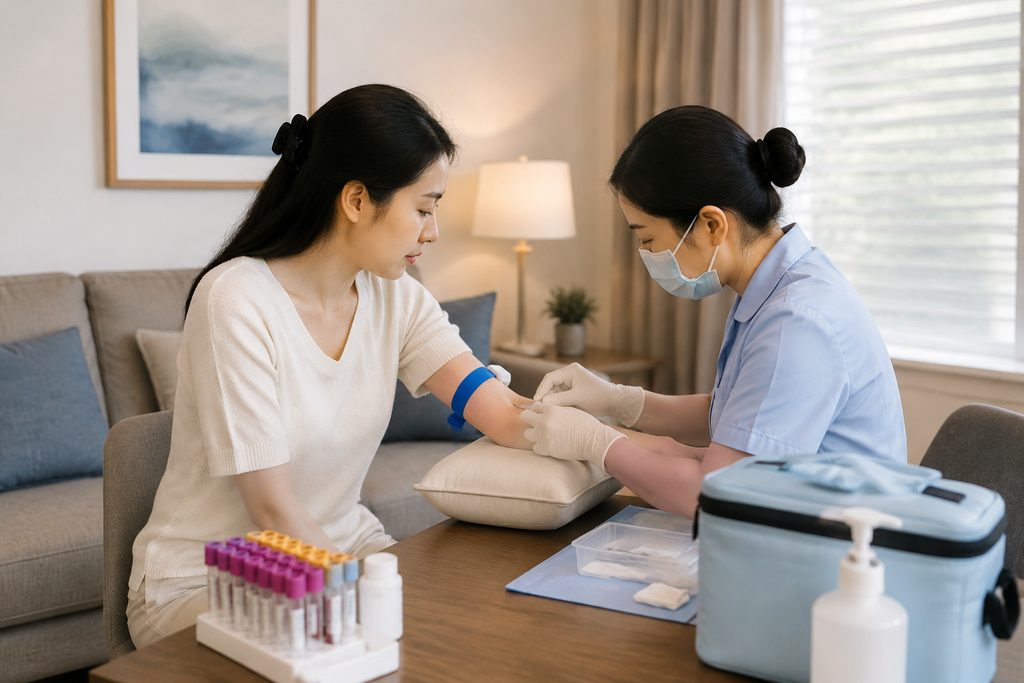
A blood test is a blood test, right? Not quite. If you are a foreigner planning treatment in China, the question of where to run your labs — at home before you fly, or after you land — shapes your timeline, your budget, and sometimes your treatment plan. The short answer: the blood test cost in China is usually far lower than in the US or Europe, often 60–80% less for the same panel. But cost is only one variable, and the cheapest option is not always the smartest one.
Here is the honest picture. China’s top-tier hospitals run some of the highest-volume clinical laboratories in the world. A full blood count that costs $200–$400 in a US hospital might run $15–$40 in a Chinese public hospital. That gap is real. What is less obvious is that getting those tests done as a foreigner involves logistics — registration, language, and knowing which hospital accepts walk-ins versus which requires an appointment through an international department.
Blood Test Cost in China: The Short Answer
For a standard complete blood count (CBC), you are looking at roughly $10–$30 at a public hospital and $50–$150 at a private international clinic. A comprehensive metabolic panel or full blood panel typically runs $30–$80 in the public system, compared with $150–$400 privately. Specialty tests — tumor markers, hormone panels, genetic screening — scale up from there, but the same 5x to 10x gap versus Western pricing generally holds.
That is the number most people come for. The caveat: those prices assume you can navigate the system. Public hospitals in China do not offer online booking for standard outpatient labs to overseas patients. You show up, register on-site, pay, and wait. Without Mandarin, that process is difficult. It is not impossible — thousands of foreigners do it every year — but it is the part that catches people off guard.
Who This Is Right For — and Who It Isn’t
Running your blood work in China makes sense if you are already planning to travel for treatment or a health checkup, if your doctor at home has ordered labs that will feed into a Chinese specialist’s evaluation, or if you need repeat monitoring over weeks or months and the cost difference matters. It also works well for expats living in China who want affordable, high-quality labs without flying home.
It is probably not the right call if your results are needed urgently — within days — for a diagnosis that cannot wait. It is also a poor fit if you have a rare or highly specialized test that only a handful of labs worldwide can run; in that case, doing it at home and sending the report ahead is faster and safer. And if you are not traveling to China at all, there is no reason to route your labs through a Chinese hospital just to save money. The savings do not survive the trip.
The Options, Compared
| Option | Typical Cost (Full Panel) | Turnaround | Language Support | Best For |
|---|---|---|---|---|
| Public hospital lab (China) | $30–$80 | Same day to 48 hours | Limited; Chinese required | Patients already in China, budget-focused |
| Private international clinic (China) | $150–$400 | 24–72 hours | English-speaking staff | Expats, insurance holders, first-timers |
| Hospital at home (US/EU) | $200–$600+ | 1–5 days | Native language | Urgent results, rare tests |
| Home lab kit (mail-in) | $50–$200 | 3–7 days | Native language | Routine screening, no travel planned |
Which column fits you? If you are already in China or arriving soon, the public hospital route delivers the best value — provided you have language support. If you are flying in specifically for a workup and want zero friction, the private international clinic is worth the premium. If your results are needed before you book a flight, stay home and send the report ahead.
Is Blood Testing in China Reliable for Foreigners?
This is the question that stops people from committing. The answer is yes — with context. China’s top-ranked hospitals, the ones in the Fudan Top 100 and JCI-accredited facilities, operate laboratories that meet international quality standards. Many participate in external quality assessment programs. The equipment is current, and the volume is enormous, which in lab medicine usually correlates with consistency.
What varies is not the science. It is the paperwork. Reports are typically issued in Chinese, though international departments can often provide English translations. Reference ranges follow Chinese population norms, which occasionally differ slightly from Western lab ranges — a detail worth flagging to your home doctor. And if you are using results for a second opinion back home, make sure the report includes units and methodology, not just numbers.
For a deeper look at which hospitals international patients use most, our directory of top-ranked Chinese hospitals by city breaks down the Fudan-tier facilities that routinely serve overseas patients. If you prefer an English-first environment, the private international hospital list covers JCI-accredited options with direct insurance billing.
How Much Is a Full Blood Panel in China — and What Drives the Price
The range is wide because “full panel” means different things. A basic CBC plus metabolic panel sits at the low end. Add thyroid function, lipid profile, liver and kidney markers, vitamin levels, and you move into the $60–$120 range at a public hospital. Tumor markers, autoimmune panels, and genetic testing push higher — sometimes $200–$500 — but still well below Western equivalents.
Three factors move the number:
- Hospital tier. A top-tier public hospital in Beijing or Shanghai charges more than a provincial facility, but the quality gap justifies it.
- Public vs. private. Private international clinics charge 3–5x public prices for convenience and English service.
- Test complexity. Routine chemistry is cheap. Molecular and genetic assays are not.
One practical note: public hospitals require prepayment, and insurance reimbursement happens afterward, if at all. Private international clinics often bill your insurer directly. That difference matters more than the sticker price for many patients.
Practical Considerations: Booking, Records, and Timing
Booking a blood test appointment at a Chinese hospital is not like booking one at home. Public hospitals generally do not accept advance online appointments from overseas patients for standard labs. You register on arrival. For anything beyond routine testing — or if you want a specific specialist to review results — the international department or VIP channel is the practical route, typically at 1.5–2x the standard fee.
Bring your records. Prior lab reports, imaging, medication lists, and a summary from your home physician all help the Chinese team interpret new results in context. If you are coming for a second opinion, our guide to specialty departments ranked among China’s top 10 can help you identify which hospital’s lab and specialists align with your condition.
On visas: medical travel to China uses the S2 visa for short stays, with S1 for stays over 180 days. Accompanying family members apply under the same category. The M visa is for commercial and trade activities only — it is not a medical visa. Requirements shift, so confirm current rules with your nearest Chinese embassy or consulate before applying.
And plan for follow-up. If you will need repeat monitoring after returning home, ask the Chinese lab to release your results in a format your home doctor can read. Units, reference ranges, and methodology matter. A number without context is not useful to anyone.
Frequently Asked Questions
For standard outpatient labs at public hospitals, generally no — registration happens on-site the day of your visit. International departments and private clinics are more flexible and can sometimes schedule in advance. If advance booking matters to you, the private route or a hospital’s international department is the realistic option.
At top-ranked and JCI-accredited hospitals, yes. Laboratories meet international standards and equipment is current. The main friction points are language and report format, not accuracy. Ask for English translations and confirm that units and reference ranges are included if you plan to share results with a doctor at home.
A comprehensive panel typically runs $30–$80 at a Chinese public hospital versus $150–$400 at a private international clinic in China, and $200–$600 or more in the US. Exact pricing varies by hospital, city, and which markers are included, so treat these as ranges, not quotes.
This is where coordination matters. A lab report alone rarely answers a clinical question. Having a Chinese specialist review your results alongside your history — through a written second opinion or video consultation — turns raw numbers into a treatment direction. That step is optional, but for anyone considering treatment in China, it is usually the more valuable one.
Your Next Step
The core message is simple: blood testing in China is affordable and reliable at the right hospitals, but the logistics — registration, language, report format — are where foreign patients need support. Knowing the price range is step one. Knowing which hospital, which department, and how to get your results into the right hands is step two.
We are China Medical Services, a coordination service, not a hospital. We do not diagnose or treat. What we do is connect international patients with the right Chinese hospitals, arrange appointments, provide bilingual medical companions, and help you understand your options before you commit to travel. If you would like to talk through your situation — labs, second opinions, or a full treatment plan — you can start with a free consultation. No pressure, no obligation. Just a clear next step.
This article is for general information only and does not constitute medical advice. Always consult a qualified physician regarding your individual health situation. Prices are estimates and vary by hospital and case complexity.
For more medical information and treatment options in China, visit chinamedservices.com (China Medical Services).
