Caring for Aging Parents During Medical Travel in China: A Complete Coordination Guide
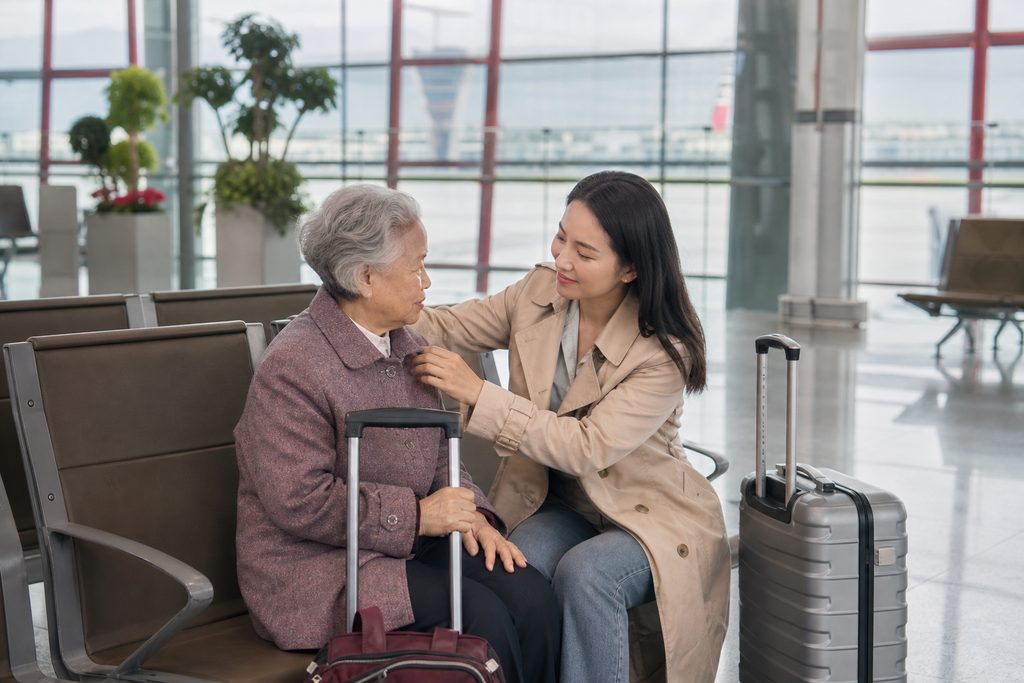
When 57-year-old Sarah booked her hip replacement at a Shanghai hospital, the surgery itself was not her biggest worry. Her 81-year-old mother, Margaret, would need to travel with her. Margaret has mild dementia, takes six daily medications, and cannot navigate an airport alone, let alone a foreign hospital campus. Sarah lay awake at night running the same question: who watches Mom while I am under anesthesia?
She is not alone in asking it.
Approximately 1 in 5 international patients who contact our team at China Medical Services brings an elderly dependent along for their medical trip. The math is simple. Adult children are often the primary caregivers for aging parents. When that adult child needs surgery abroad, the caregiving relationship does not pause — it reverses, doubles, or demands an entirely new plan.
This article maps out exactly how to coordinate care for an aging parent during a medical trip to China. We cover costs, hospital selection, visa logistics, on-the-ground companion support, and the hard questions most guides skip.
Key Takeaways
- Professional elderly companion care in China starts from approximately $200 per day — a fraction of equivalent Western private nursing costs — and can be arranged alongside your own hospital admission.
- China’s top-tier hospitals in cities like Shanghai and Beijing now offer integrated international patient centers that can coordinate dual admissions or companion accommodations, but advance planning is non-negotiable.
- Visa rules for elderly accompanying family members are strict. An S2 visa is required, and failing to document the caregiving relationship properly can result in entry denial at the border.
- You should never assume a hospital will provide bedside care for your parent while you are sedated. Private companion coordination must be locked in before you board the plane.
The Problem: Two Patients, One Trip, No Blueprint
Medical travel is rarely a solo endeavor. The typical international patient arriving in China for a major procedure — joint replacement, cardiac surgery, oncology treatment — is between 50 and 70 years old. That demographic sits squarely in the sandwich generation. Their own health is declining just as their parents’ needs intensify. When surgery abroad becomes the best option for the adult child, the elderly parent often has no safe alternative but to come along.
The logistics get complicated fast. Your hospital admission might take five days. Your mother needs meals, medication reminders, and someone to walk her from the hotel to your ward. She does not speak Mandarin. She cannot use WeChat to pay for a taxi. If she wanders off in a confused moment, she has no way to explain where she is staying. These are not hypotheticals. Our team has fielded calls from panicked patients whose elderly father got lost inside a 5,000-bed hospital complex in Guangzhou.
Western hospitals sometimes offer social work support or family accommodation wings. China’s public hospitals, even the elite ones on the Fudan ranking, operate differently. They deliver world-class clinical care at extraordinary scale — Fuwai Hospital in Beijing performs over 14,000 cardiac surgeries annually — but the system assumes patients bring their own support network. The hospital treats the patient. Everything else is your responsibility. That gap is where coordination services become essential, not optional.
Who We Are
We are not a hospital. We do not provide medical treatment, prescribe medication, or make clinical decisions. China Medical Services is a medical concierge organization that connects international patients with China’s top-tier hospitals. Our team handles the entire non-clinical journey: hospital matching based on your actual diagnosis, visa guidance, appointment coordination, bilingual medical companions, and — critically for this conversation — caregiver support for elderly family members traveling with you. We bridge the gap between you and China’s medical expertise so you can focus on recovery while we manage the logistics.
Why China Delivers Results for Families Traveling Together
Clinical Volume at a Scale No Western Hospital Matches
A top Chinese orthopedic surgeon performs between 200 and 500 joint replacements annually. The average US orthopedic surgeon does approximately 65. This volume gap is not marginal — it is structural. China’s tier-one hospitals serve massive domestic populations, which means the surgical teams you access through international patient channels have seen more complex cases, more complications, and more variations than most Western surgeons encounter in a decade. For an elderly parent who may need incidental medical attention during the trip — a blood pressure spike, a medication adjustment — having access to this depth of clinical experience matters.
Also relevant: many of China’s best hospitals now house geriatric departments that Western facilities have cut or consolidated. A parent experiencing confusion or a fall during your trip can be seen by a geriatric specialist within hours, not weeks. That speed changes outcomes.
How to Coordinate Care for Aging Parent During Medical Trip to China: The Structural Advantage
China’s international hospital sector has evolved rapidly over the past decade. Private international hospitals like United Family Healthcare and Jiahui International Hospital now operate in major cities with English-speaking staff, JCI accreditation, and direct insurance billing. These facilities understand Western expectations around family-centered care. They offer private rooms with space for a family member to stay. Some have attached serviced apartments designed for exactly this scenario: one family member recovering from surgery, another receiving supervised daily care.
Public hospital international departments have also adapted. Peking Union Medical College Hospital‘s International Medical Service, for example, can coordinate concurrent appointments — your post-surgical follow-up at 10 AM, your mother’s blood pressure check at 10:30, same floor, same bilingual coordinator. This would be nearly impossible to arrange independently from overseas. But it is routine for a coordinated service that understands both the clinical and logistical sides.
The cost structure makes dual care financially viable. A private geriatric companion in the US or UK can run $30 to $50 per hour. In China, professional bilingual companion services start from approximately $200 per day. That is not a downgrade in quality. It reflects different labor economics, not different standards. The companion is typically a medically trained bilingual professional who handles medication schedules, meal coordination, transportation, and translation — the same functions a Western private nurse would perform, at roughly one-quarter the daily cost.
Medical Tourism Packages China with Caregiver Support: What Is Actually Included
The term “package” gets thrown around loosely in medical tourism marketing. Let us be precise about what a well-structured arrangement includes. A legitimate coordination package for a patient traveling with an elderly parent should cover at minimum: airport pickup for both travelers, hotel or serviced apartment booking within walking distance of the hospital, the patient’s hospital admission and discharge coordination, and a dedicated bilingual companion assigned to the elderly parent during the hours the patient is in surgery or sedated.
More comprehensive arrangements layer in video pre-consultations so both generations can speak with the treating physician before travel, medication reconciliation to ensure the parent’s prescriptions have Chinese equivalents, and emergency protocols if the parent requires unexpected medical attention while the patient is incapacitated. These are not luxury add-ons. They are the baseline for a safe trip.
Can My Elderly Parent Travel with Me for Surgery in Shanghai?
The short answer is yes. Thousands of families do this every year. But the difference between a smooth experience and a crisis comes down to preparation. Shanghai’s top hospitals — Zhongshan Hospital, Ruijin Hospital, Huashan Hospital — all treat international patients. They are accustomed to family members being present. The challenge is not the hospital’s willingness. It is the parent’s vulnerability during the hours the hospital staff is focused on you, the patient.
Shanghai is an excellent city for this arrangement for practical reasons. Its international airport is well-connected. The expatriate community is large, meaning English-speaking support services are more available than in smaller Chinese cities. Serviced apartments near major hospitals are plentiful and affordable by Western standards — expect $80 to $150 per night for a clean, safe one-bedroom unit within a 10-minute walk of the hospital. Pharmacies stock many Western medications or close equivalents, though you must verify this in advance for each specific drug.
But Shanghai’s hospital campuses are enormous. Zhongshan Hospital covers over 400,000 square meters. An elderly person with mild cognitive impairment can become disoriented quickly. The bilingual companion is not a nice-to-have in this environment. It is the safeguard that prevents a manageable trip from becoming a missing-persons emergency.
What You Need to Know Before Going Alone
- Visa Requirements Are Inflexible: Your parent needs an S2 visa with a clear explanation of the caregiving relationship. The visa officer needs to see documentation proving you are the patient, your parent is the accompanying family member, and you have a confirmed hospital appointment. A tourist L visa is not appropriate for this purpose and can result in entry refusal. The S2 application requires an invitation letter from the Chinese hospital or coordination service. Without it, the visa process stalls.
- Payment Systems Exclude Foreigners by Default: Chinese hospitals require upfront payment, typically via UnionPay, WeChat Pay, or Alipay. International credit cards are often rejected. Your parent cannot pay for a taxi, a meal, or an unexpected pharmacy run without a local payment setup. A coordination service can pre-load a payment card or provide a companion who handles all transactions.
- Medical Records Must Be Bilingual and Complete: Your parent’s medication list, allergies, and chronic condition summary need professional translation into Chinese before travel. If your parent ends up in a Chinese emergency room while you are in surgery, the attending physician must understand their history immediately. A hand-written English list in your pocket is not enough.
How We Help You Navigate This
Our process begins with a single consultation call where we map out both travelers’ needs. We ask the questions most families do not think to ask: Does your parent have a hearing aid that requires specific batteries? Are any of their medications controlled substances under Chinese law? What is the backup plan if your surgery is extended by three hours and the companion’s shift ends? These details matter.
Before travel, we secure the hospital invitation letter required for your parent’s S2 visa. We book accommodations that are physically close to the hospital, not just geographically close — a 500-meter walk matters when an 80-year-old is making it twice daily. We reconcile medications, arrange professional translation of both travelers’ medical records, and set up a local payment mechanism so your parent is never stranded without funds.
During your treatment, a bilingual medical companion stays with your parent during your surgery and the immediate recovery hours. This companion handles navigation, translation, meal coordination, and medication reminders. If your parent needs to see a doctor — for anything from a cold to a fall — the companion facilitates that visit at the same hospital where you are admitted, often on the same day.
After discharge, we coordinate follow-up appointments for you and any needed check-ins for your parent. We arrange airport transfer for both travelers and ensure discharge instructions are translated and understood. The goal is simple: two people fly home safely, not one person scrambling to care for the other.
Best Hospitals in China for International Patients with Companion Care
Because your parent is already on a major hospital campus, emergency care is physically close. The companion can escort them to the emergency department or international clinic immediately. If the emergency occurs at the hotel, the companion arranges transport back to the hospital. The parent’s translated medical records — medication list, allergies, chronic conditions — are on hand. This is precisely why advance preparation matters. An emergency without translated records is dangerous. An emergency with them is manageable.
Does my parent need their own visa, or can they travel on mine?
Your parent needs their own S2 visa, separate from yours. The application must document the family relationship and the purpose of the visit — accompanying a family member receiving medical treatment. Our team provides the hospital invitation letter that supports both visa applications. Attempting to bring an elderly parent on a tourist L visa while
Frequently Asked Questions
Yes. We work with JCI-accredited and major Grade 3A tertiary hospitals that follow international safety standards comparable to top hospitals in the US and Europe. Surgical teams perform high volumes of procedures — often more than their Western counterparts — which studies show leads to better outcomes.
Costs vary by procedure and hospital, but international patients typically save 40-80% compared to US prices — even when factoring in travel and accommodation. A consultation with our team will give you an exact, all-inclusive quote with no hidden fees.
Send us your existing medical reports. The relevant specialty reviews them and gives you a written opinion, including treatment direction and options, before you commit to any travel. From there you can add a video consultation with the doctor, or have us attend an appointment on your behalf.
For more medical information and treatment options in China, visit chinamedservices.com (China Medical Services).
