Multi-Cancer Screening in China: What It Is and What It Costs
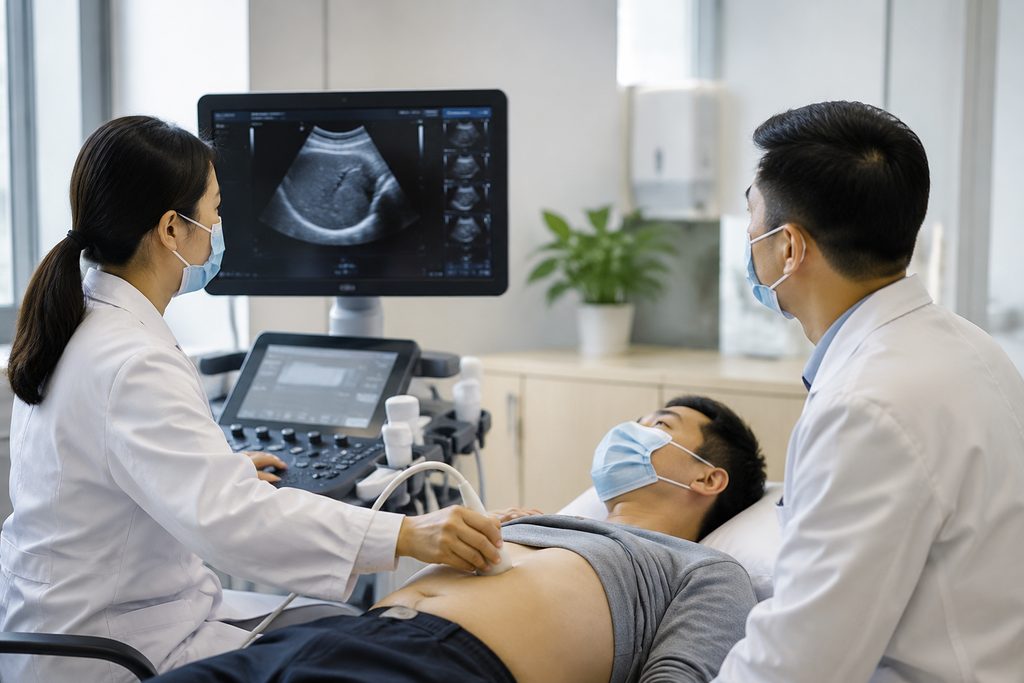
Multi-Cancer Screening in China: What It Is, Who It’s For, and What It Costs
You’ve probably heard that chasing a cancer diagnosis abroad means months of waiting, uncertain quality, and a bill you can’t predict. For early-detection testing, the reality in China runs the other way. The multi-cancer screening cost China hospitals charge is often a fraction of U.S. pricing, and the tests themselves are the same platforms used in Western clinics. What most people get wrong is assuming they can simply book one online and fly over. That part is where the confusion starts.
This guide explains what multi-cancer screening actually is, how foreigners access it, and what a realistic budget looks like. We’re China Medical Services — a medical concierge team that helps international patients navigate Chinese hospitals. We don’t perform tests. We connect you with the institutions that do.
What Multi-Cancer Screening Actually Is
Start with the term itself, because it gets used loosely. Multi-cancer early detection (MCED) is a category of blood tests designed to look for signals that several cancer types may be present — often circulating tumor DNA, fragments of genetic material shed by tumors into the bloodstream. A single draw can screen for signals associated with a dozen or more cancer types, including some with no reliable routine screening method at all, such as pancreatic or ovarian cancer.
That’s the promise. Here’s the honest caveat: what is multi-cancer early detection blood test accuracy in the real world? It varies substantially by cancer stage. Sensitivity for early-stage disease is meaningfully lower than for late-stage disease, and a positive result requires confirmatory imaging or biopsy. These are screening tools, not diagnoses. Any provider who tells you otherwise is overselling.
China’s major testing ecosystem includes domestically developed MCED platforms alongside licensed international assays, offered through large tertiary hospitals and dedicated health examination centers. Availability differs by institution.
Is Multi-Cancer Screening Available in China for Foreigners?
Yes — with conditions worth understanding before you book a flight.
Foreign nationals can access comprehensive cancer screening at Chinese hospitals. The practical constraint isn’t permission; it’s the appointment system. Standard outpatient registration at most public hospitals cannot be reserved from overseas in advance. You show up, you queue, you take a number. For a healthy traveler planning a screening package, that’s an unpleasant surprise after a 12-hour flight.
The workaround is the hospital’s international department or VIP channel. These units handle English-speaking coordination, pre-scheduled appointments, and consolidated reporting. Expect to pay roughly 1.5 to 2 times the standard-channel price for that convenience. For most international patients, it’s worth it.
Private international hospitals — United Family, Jiahui, Parkway, Raffles among them — offer a different model entirely: English-speaking staff, JCI accreditation, and direct insurance billing for many plans. Their screening packages tend to be more standardized and more expensive than public-hospital equivalents.
How This Actually Works, Step by Step
Here’s the real sequence, from your couch to your results.
Step one: you send us your existing records. Prior imaging, bloodwork, family history, any previous abnormal findings. If you have a specific concern — a family pattern of colorectal cancer, say — say so. That shapes which panel makes sense.
Step two: a Chinese specialty team reviews the file. Not a salesperson. A clinician or clinical team at the relevant department looks at what you’ve sent and recommends a screening scope. This can happen as a written second opinion or a video consultation, typically $100–300 for a standard international department, $500–800 for a top-specialist video session.
Step three: appointment coordination. Once the plan is clear, we assist with registration, medical card creation, and scheduling through the hospital’s official international channel. Coordination runs from $300, with a full refund if the appointment shown in your order can’t be secured.
Step four: you arrive, and a bilingual companion meets you. From $300 per day, covering registration, queuing, payment, wayfinding, and interpretation. At a hospital seeing 10,000+ outpatients daily, this is not a luxury.
Step five: results come back, usually within one to three weeks depending on the panel. Abnormal findings trigger a referral pathway — imaging, biopsy, specialist review. Normal findings still warrant routine follow-up at home.
Multi-Cancer Screening Cost China: Real Numbers
Pricing depends on the panel, the institution, and whether you’re using a public hospital’s international channel or a private facility. Here’s a realistic range for 2026.
| Screening Approach | Typical China Price (USD) | Typical U.S. Price (USD) |
|---|---|---|
| Basic health checkup with tumor markers | $300 – $800 | $1,500 – $4,000 |
| Enhanced package (imaging + endoscopy + markers) | $1,000 – $2,500 | $5,000 – $12,000 |
| MCED blood panel (multi-cancer early detection) | $800 – $3,000 | $3,000 – $10,000+ |
| Premium executive screening, private hospital | $3,000 – $6,000 | $8,000 – $20,000 |
These figures are ranges, not quotes. Final pricing varies by hospital and case complexity. The gap between Chinese and American pricing on equivalent procedures is well documented — cardiac bypass, for instance, runs roughly $12,000–20,000 at a top Chinese public hospital against $120,000+ in the U.S. Screening follows the same pattern, though the absolute numbers are smaller.
So how much does a full body cancer screening cost in China? A thorough package at a reputable tertiary hospital, with international-channel coordination, generally lands between $1,500 and $4,000. Add companion services, flights, and accommodation on top.
A Realistic Timeline
People underestimate the front end. Here’s how the calendar actually looks.
| Stage | Typical Duration | Notes |
|---|---|---|
| Record collection and translation | 3 – 7 days | Medical documents need certified translation |
| Written review or video consultation | 3 – 10 days | Depends on specialist availability |
| Appointment confirmation | 1 – 3 weeks | International channels book faster; peak seasons slower |
| S2 visa application | 1 – 2 weeks | Requires hospital invitation documents |
| Travel and testing | 3 – 7 days | Some panels require fasting or multi-day scheduling |
| Results and interpretation | 1 – 3 weeks | Longer if confirmatory imaging is needed |
Realistic total: six to ten weeks from first contact to final report. If you’re trying to compress that into two weeks, you’ll be disappointed. Plan properly and it moves smoothly.
What Can Go Wrong — and What Happens Then
Let’s be direct about failure modes, because they exist.
The test comes back positive and it’s a false alarm. This is the most common anxiety. MCED assays have false-positive rates, and a positive signal means you need imaging or biopsy to confirm. That’s additional cost and additional waiting — often two to four more weeks. The recourse is straightforward: your hospital’s international department coordinates the follow-up workup, and we assist with scheduling.
The test comes back negative and you assume you’re clear. This is the more dangerous error. A negative MCED result does not rule out cancer. Sensitivity is imperfect, particularly for early-stage disease. Anyone who reads a negative result as a clean bill of health is misreading it. Continue age-appropriate screening at home.
The appointment falls through. Hospital schedules shift, departments close for maintenance windows, specialist availability changes. Our coordination fee is refunded in full if the appointment specified in your order can’t be obtained. That’s the commitment, and it’s the limit of it — we don’t guarantee a specific physician or a specific date.
You arrive without a plan for abnormal findings. Screening without a treatment pathway is incomplete. Before you travel, know which department would handle a suspicious result and roughly what that would cost.
Choosing Where to Go: Beijing, Shanghai, or Somewhere Else
For best hospitals in Beijing for comprehensive cancer screening, the concentration is unmatched. Beijing holds the largest share of Fudan-ranked Top 100 hospitals — 21 institutions. Shanghai follows with 18, Guangzhou with 10. If you want to book multi-cancer screening Shanghai hospital options, you’re choosing between a comparable tier of institutions in a city that’s generally easier for international visitors to navigate.
What matters more than the city is the department. Oncology screening sits within specific specialties, and China’s specialty reputation rankings list the top 10 hospitals per discipline. Our department directory maps those rankings across 45 specialties, including oncology, so you can see which institutions carry genuine weight in the field rather than relying on general reputation.
Three questions worth asking any provider:
- Which specific assay is being used, and what is its published sensitivity by cancer stage?
- Who interprets the result, and what’s the confirmatory pathway if it’s positive?
- Is the report issued in English, and will a clinician walk you through it?
If a provider can’t answer those clearly, keep looking.
Practical Considerations: Records, Visas, Payment, Follow-Up
No. MCED blood tests complement standard screening; they don’t replace it. Sensitivity for early-stage cancers remains limited, and guidelines in most countries still recommend age-appropriate conventional screening regardless of any blood test result.
The hospital will recommend confirmatory imaging or biopsy, usually within days to weeks. From there, a specialist consultation determines next steps. Any subsequent admission or treatment is subject to that hospital’s own rules and clinical assessment — no service can promise admission or a particular outcome in advance.
Six to ten weeks is realistic for the full cycle including visa processing. If you’re working around a specific travel window, start the record review at least two months out.
Sometimes, but rarely for elective screening without a clinical indication. Most insurers treat preventive screening abroad as out-of-network. Verify directly with your plan before booking, and request itemized receipts in English for any reimbursement claim.
Your Next Step
Multi-cancer screening in China is accessible, well-executed at the top tier, and considerably less expensive than equivalent testing in the West — provided you plan the logistics rather than improvising them. The test is the easy part. The coordination is where most international patients lose time and money.
We’re China Medical Services, a concierge team connecting international patients with 340+ top-ranked hospitals across 37 cities. We don’t diagnose, treat, or promise clinical outcomes. We handle the parts that trip people up: record translation, official-channel appointment coordination, and bilingual accompaniment on the ground.
If you’d like to understand what screening makes sense for your situation, start with a conversation. No pressure, no obligation — just a clear picture of your options.
This article is for general information only and does not constitute medical advice. Screening decisions should be made with a qualified physician who knows your history. Pricing varies by hospital and case complexity.
Frequently Asked Questions
Yes. The hospitals used for international patients are JCI-accredited and follow the same international safety standards as top hospitals in the US and Europe. Surgical teams perform high volumes of procedures — often more than their Western counterparts — which studies show leads to better outcomes.
Costs vary by procedure and hospital, but international patients typically save 40-80% compared to US prices — even when factoring in travel and accommodation. A consultation with our team will give you an exact, all-inclusive quote with no hidden fees.
Send us your existing medical reports to get started. We handle everything from hospital selection and appointment scheduling to visa assistance and post-operative recovery planning. Your medical records are reviewed by the specialist before you even book a flight.
For more medical information and treatment options in China, visit chinamedservices.com (China Medical Services).
