Lymphoma Screening in China: What Tests Show and What They Cost
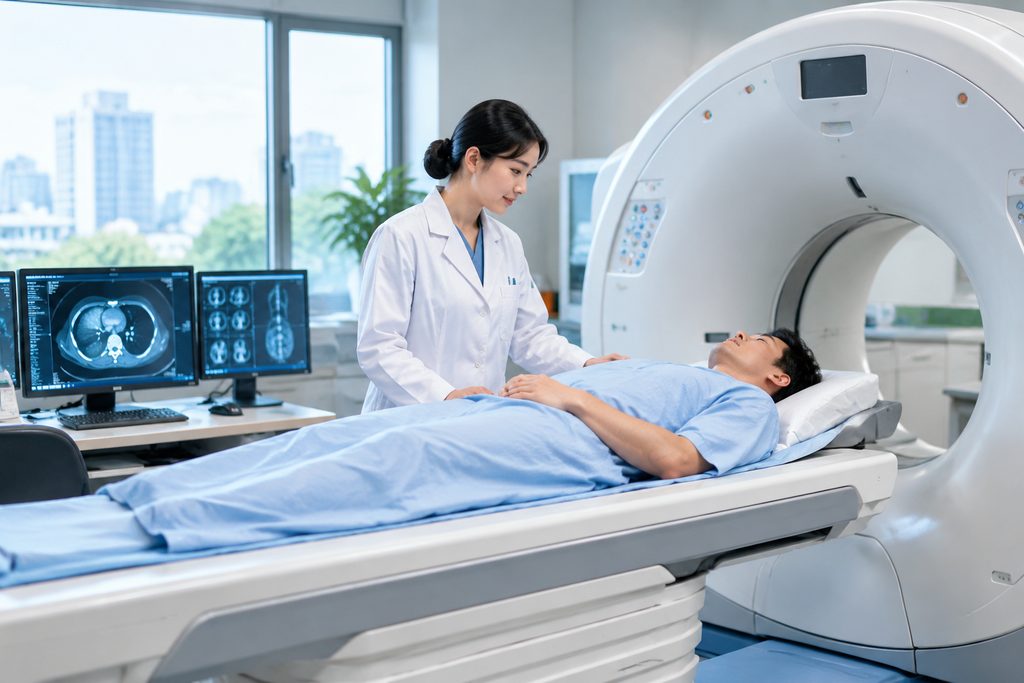
Lymphoma Screening in China: What Tests Show
You’ve probably been told that serious cancer screening in China means long queues, unclear answers, and a language wall you can’t climb. The reality runs the other way. Lymphoma screening cost China patients pay is often a fraction of U.S. pricing, and the imaging equipment at the country’s top hospitals matches anything in Boston or Berlin. The hard part isn’t the medicine. It’s knowing which door to knock on, and in what order.
So let’s answer the question you actually typed. Lymphoma screening in China typically combines a physical exam, complete blood count, lactate dehydrogenase (LDH) testing, and imaging — usually ultrasound, CT, or PET-CT — followed by a lymph node biopsy if anything suspicious appears. A biopsy is the only test that confirms lymphoma. Everything before it narrows the field.
That distinction matters more than most patients realize. Screening does not diagnose. It flags.
Lymphoma Screening in China: The Short Answer
Expect two to four days of testing at a major Chinese hospital, spread across a week once you add consultation and reporting. A self-pay PET-CT runs roughly $700–1,200 depending on the city and hospital tier. Blood work and ultrasound add a few hundred dollars more. If a biopsy is needed, pathology and immunohistochemistry push the total higher — often into the $1,500–3,000 range for the full workup.
The caveat: these are reference ranges. Final pricing varies by hospital and case complexity, and international departments charge more than standard outpatient channels. Nothing here replaces an evaluation by a qualified physician who has seen your records.
Key takeaway: In China, imaging is cheap and fast. The bottleneck is access — most public hospital outpatient slots cannot be reserved from overseas in advance. International departments and VIP channels exist precisely to solve that.
Who This Is Right For — and Who It Isn’t
Lymphoma screening isn’t a routine annual test the way a colonoscopy is. It’s driven by symptoms or risk factors. Being honest about who should pursue it — and who shouldn’t — is the only way this article earns your trust.
You’re typically a reasonable candidate if you have:
- Persistent, painless swollen lymph nodes lasting more than three to four weeks
- Unexplained night sweats, fever, or weight loss — the classic “B symptoms”
- Persistent itching, fatigue, or a growing abdominal or chest mass found incidentally
- A family history of lymphoma or a known immune disorder
- An existing overseas scan you want reviewed by a second specialist team
You should probably not pursue this if:
- A small, tender node appeared last week alongside a cold — this is usually infection, and it resolves
- You have no symptoms and no risk factors; whole-body PET-CT in asymptomatic people produces false positives that lead to unnecessary biopsies
- You’re medically unstable for travel, or your condition needs immediate local care, not a flight
- You’re seeking a guaranteed diagnosis. No screening package can promise that.
The Options, Compared
Patients weighing lymphoma screening abroad are really choosing between four paths. Here’s how they stack up on the numbers that matter.
| Path | Typical Out-of-Pocket | Time to Results | Language Support | Best For |
|---|---|---|---|---|
| U.S. academic center | $4,000–9,000 | 1–3 weeks | Native English | Insurance-covered cases |
| China public tertiary hospital (standard channel) | $400–1,200 | 2–5 days | Limited English | Cost-sensitive, self-directed patients |
| China hospital international department | $900–2,500 | 2–4 days | English-speaking staff | Foreign patients wanting coordination |
| Private international hospital (JCI-accredited) | $2,000–5,000 | 1–3 days | Full English, direct insurance billing | Insured patients, comfort priority |
Which column suits you depends on one question: do you want the lowest price, or the smoothest process? Standard public channels win on cost and lose on navigation. International departments sit in the middle and are where most foreign patients land. Private hospitals cost more but bill your insurer directly, which matters if you carry international coverage.
What Tests Are Done for Lymphoma Screening in China
This is where the Chinese workup differs from what many Western patients expect — not in technology, but in sequencing. Chinese tertiary hospitals tend to move quickly from bloodwork to imaging to biopsy, sometimes within the same week.
First-line tests:
- Complete blood count (CBC) — checks for anemia, low platelets, abnormal white cells. Cheap, fast, and often the first clue.
- LDH and beta-2 microglobulin — markers that can rise with lymphoma burden.
- Ultrasound — the fastest way to characterize superficial nodes. Widely available, inexpensive.
- Contrast CT — maps nodes in the chest, abdomen, and pelvis.
Second-line and confirmatory:
- PET-CT — combines metabolic and anatomical imaging. It shows which nodes are active, which guides where to biopsy.
- Excisional lymph node biopsy — the gold standard. A surgeon removes an entire node, and a pathologist examines it under a microscope.
- Immunohistochemistry and flow cytometry — protein-level staining that identifies the lymphoma subtype. This is the test that tells you Hodgkin from non-Hodgkin, and B-cell from T-cell.
- Bone marrow biopsy — used in selected cases to check marrow involvement.
One practical note. Chinese pathology departments are strong, but if you want an overseas second read, ask for your slides and blocks before you leave. Getting them later is possible but slow.
What It Costs and How Long It Takes
Here’s the honest breakdown. Lymphoma screening cost China pricing splits into three buckets: consultation, imaging, and pathology.
Consultation at a top-tier hospital runs roughly $30–80 for standard registration, or $150–400 through an international department. Imaging is where the savings show up — a PET-CT in China often costs a fifth of the U.S. equivalent. Pathology with immunohistochemistry typically lands between $200 and $600 depending on how many markers are stained.
Timeline, assuming no complications:
- Day 1: Registration, consultation, blood draw
- Day 2: Ultrasound and/or CT
- Day 3: PET-CT if indicated
- Day 4–7: Biopsy, if needed, plus pathology turnaround
Pathology is the variable. Simple cases report in three days. Complex subtyping can take a week or more, especially if the lab requests additional stains.
Tip: Ask upfront which tests are bundled into any “screening package” and which are billed separately. Packages often cover imaging but exclude pathology, which is frequently the largest single line item.
Practical Considerations: Records, Visas, and Follow-Up
Bring your existing imaging on disc and your pathology slides if you have them. Chinese specialists read outside films routinely, but having the actual digital files speeds everything up. Translated summaries help — not every department reads English reports fluently.
On visas: medical travel to China uses the S2 visa, which covers short-stay private affairs including medical treatment. Accompanying family members apply under the same category. The M visa is for commercial and trade activity and has nothing to do with medical care — don’t let anyone tell you otherwise. Requirements shift, so confirm current rules with the nearest Chinese embassy or consulate and bring supporting hospital documentation.
Payment is another gap worth planning for. Most public hospitals require prepayment, and you settle with insurance afterward. Private international hospitals often bill insurers directly. Carry a card that works internationally, and confirm the hospital’s accepted payment methods before you arrive.
Follow-up after you return home is the piece patients underestimate. Arrange for your Chinese hospital to release imaging and pathology reports in a format your local physician can read. Ask for both the original and an English translation.
If you want to understand how hospital selection works across specialties, our overview of China’s top-ranked hospitals by city is a reasonable starting point. For lymphoma specifically, hematology and oncology rankings matter more than overall reputation — a hospital ranked among China’s top 10 for oncology may outperform a famous general hospital in this narrow field.
Patients often ask whether they can book lymphoma screening in China directly. The short answer: not through standard public outpatient channels, which generally require same-day registration in person. International departments and private hospitals do allow advance scheduling. That structural difference is the single biggest reason foreign patients use coordination services at all.
Frequently Asked Questions
At top-tier hospitals, yes. PET-CT equipment and pathology labs at major Chinese cancer centers meet international standards, and many hold JCI accreditation. The reliability gap isn’t the technology — it’s communication. If you don’t speak Mandarin, you need interpretation to make sure your history is understood and your results are explained accurately.
A full self-pay workup in China commonly runs $1,000–3,000, versus $4,000–9,000 in the U.S. for comparable imaging and pathology. The gap widens with PET-CT. Final figures vary by hospital and case complexity, so treat any quoted range as an estimate, not a fixed price.
Through standard public hospital channels, generally no — registration happens on the day. International departments and private hospitals do permit advance booking. If you need a specific date, plan around those channels rather than the standard queue.
Screening can lead to a diagnosis, and that possibility should shape your planning. China’s top oncology hospitals treat large volumes of lymphoma cases annually, but treatment decisions belong to you and a qualified physician. Get your full records, seek a second opinion if you want one, and don’t commit to a treatment plan under time pressure.
Your Next Step
Lymphoma screening in China is fast, well-equipped, and dramatically cheaper than Western equivalents — but it rewards preparation over improvisation. Know which tests you need, which hospital tier fits your budget, and how you’ll get your records home.
We’re China Medical Services, a coordination team that connects international patients with 340+ top-ranked hospitals across 37 cities. We are not a hospital and we don’t diagnose or treat anyone. What we do is translate records, arrange appointments through official international departments, and provide bilingual companions who sit beside you through registration, payment, and results. If you’d like to talk through your situation with no obligation, start with a free consultation — and take your time deciding.
This article is for general information only and is not medical advice. Screening decisions, test interpretation, and any treatment should be made with a qualified physician who has reviewed your individual medical history.
For more medical information and treatment options in China, visit chinamedservices.com (China Medical Services).
