Second Opinion on Cancer Scans in China: Costs, Top Hospitals, and How It Works
Second Opinion on Cancer Scans in China: Costs, Top Hospitals, and How It Works
When 46-year-old Daniel from Oregon was told his lung nodule was “probably malignant,” his oncologist in Portland recommended surgery within six weeks. Daniel wanted a second read before anyone cut into his chest. He had the CT scans on a disc, a pathology report in a PDF, and no idea who to send them to. That is the exact moment most international patients start searching for a cancer second opinion cost China — because they have heard Chinese tertiary hospitals read enormous volumes of oncology imaging and charge a fraction of U.S. prices for a specialist review.
Here is the short answer. A written second opinion from a top-tier Chinese hospital typically runs $300–$500. A video consultation with a specialty team runs $100–$800 depending on seniority. A full multidisciplinary tumor board review costs $1,500–$2,000. None of those figures include travel, because for a second opinion you usually do not travel at all.
Key takeaway: You can get your existing cancer scans and biopsy slides reviewed by a Chinese oncology team without flying anywhere. The records travel; you stay home.
How This Actually Works, Step by Step
The sequence is simpler than most people expect, and it does not start with a plane ticket.
Step one — gather your records. You need the actual imaging files, not the printed report. Ask your hospital’s radiology department for the DICOM files on a disc or a secure download link. You also want the pathology report, the biopsy slides if a re-read is needed, your most recent lab work, and a short summary of treatments so far. If your slides are still held by the original lab, you can request paraffin blocks or unstained slides be released — this is routine, though some labs charge a release fee.
Step two — translation. Chinese specialists read English fluently at the top hospitals, but the hospital’s internal case file needs a Chinese version. Our team handles that translation as part of case management. This is not a formality; a mistranslated staging note can change the whole review.
Step three — routing. Your file goes to the department that matches your cancer type. A gastric case goes to a gastroenterology oncology team. A leukemia case goes to hematology. This routing decision matters more than most patients realize, and it is where a navigator earns their keep.
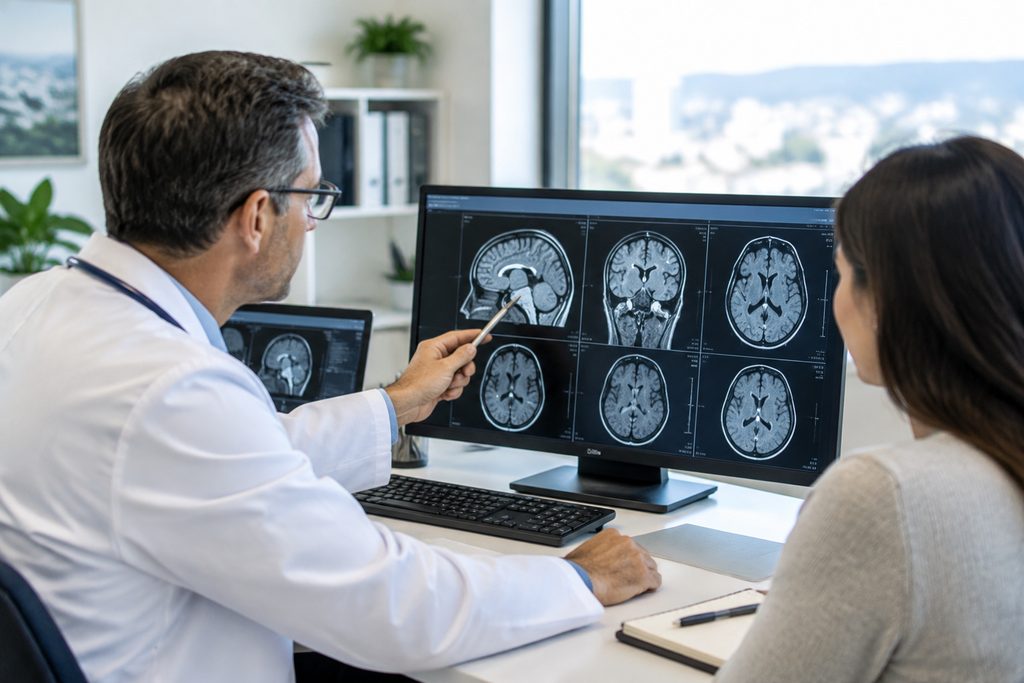
Step four — the review itself. A senior physician reads the imaging and pathology, compares them against your history, and writes a structured opinion: agreement or disagreement with the original diagnosis, staging assessment, treatment options available in China, and any additional testing they would recommend.
Step five — the conversation. If you want to hear the reasoning live and ask questions, you book a video consultation. That is where you find out whether the Chinese team sees something your local team missed.
Which Chinese Hospitals International Patients Actually Use for Oncology Review
Request the DICOM imaging files from your radiology department on a disc or secure download, along with your pathology report and recent labs. Upload them through a secure channel. Physical biopsy slides are only needed if a re-read is requested, and those ship by courier with customs documentation. Most cases are handled entirely digitally.
A written specialist review, including pathology re-reading where slides are available, typically falls in the $300–$500 range. If physical slides must be shipped internationally, add courier and handling costs. Final pricing varies by hospital and case complexity, and is confirmed before anything begins.
You can request one through our service, and the review is delivered remotely — there is no need to travel. What you cannot do is walk into a public hospital’s ordinary outpatient clinic from overseas and book a specialist slot yourself; that channel does not work for international patients. Coordination runs through the hospital’s international or VIP department instead.
It depends on your physician. Many oncologists welcome a second read, particularly on imaging. Some will weigh it lightly because they cannot examine you or order new tests. The opinion is written to be shared, so bring it to your next appointment and ask your doctor to walk through where they agree and disagree.
Your Next Step
The core message is simple: a second read on cancer imaging is affordable, does not require travel, and can be arranged in a few weeks if you start gathering records today. China Medical Services is a medical concierge organization — we are not physicians and we do not diagnose or treat anyone. What we do is translate your records, route them to the right department at a top-ranked Chinese hospital, coordinate the review or video consultation, and handle logistics if you later decide to travel.
If you have scans sitting on a disc and questions without answers, start with a conversation. You can request a free consultation and we will tell you honestly whether a Chinese second opinion is likely to add anything to your case.
Frequently Asked Questions
Yes. The hospitals used for international patients are JCI-accredited and follow the same international safety standards as top hospitals in the US and Europe. Surgical teams perform high volumes of procedures — often more than their Western counterparts — which studies show leads to better outcomes.
Costs vary by procedure and hospital, but international patients typically save 40-80% compared to US prices — even when factoring in travel and accommodation. A consultation with our team will give you an exact, all-inclusive quote with no hidden fees.
Send us your existing medical reports to get started. We handle everything from hospital selection and appointment scheduling to visa assistance and post-operative recovery planning. Your medical records are reviewed by the specialist before you even book a flight.
For more medical information and treatment options in China, visit chinamedservices.com (China Medical Services).
