Prostate Screening in China: PSA Testing, Costs & Top Hospitals
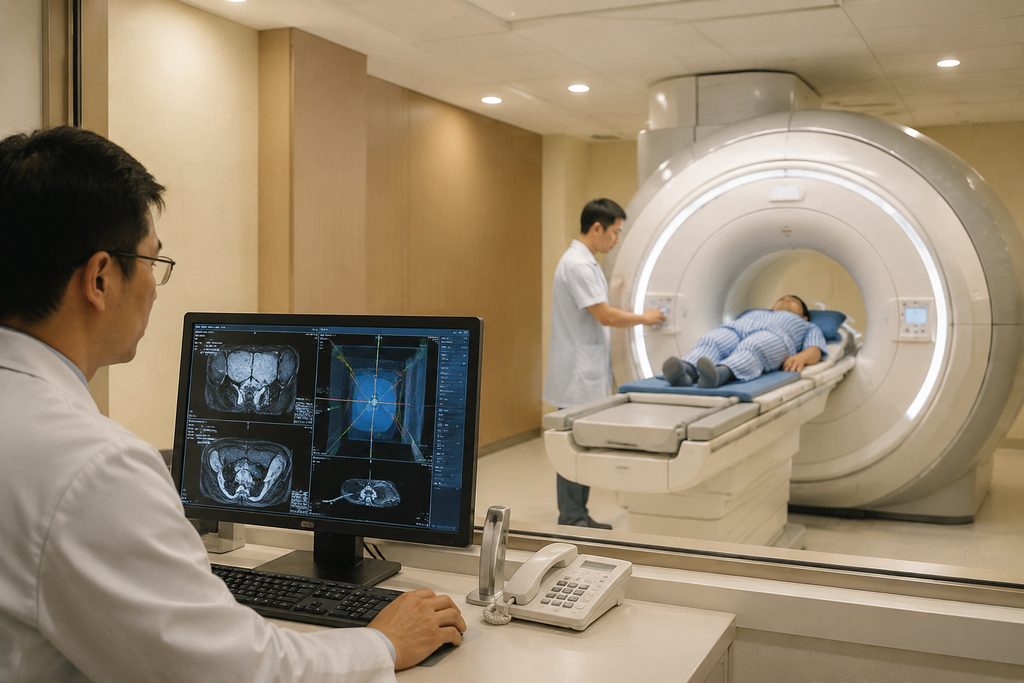
Prostate Screening in China: PSA Testing for International Patients
A PSA test — prostate-specific antigen testing — is a simple blood draw that measures a protein made by the prostate gland. Elevated levels can signal prostate cancer, benign enlargement, or infection. For international patients comparing options abroad, the prostate screening cost China hospitals charge is typically $25 to $120 for the test itself, far below the $100 to $300 common in the United States. That gap is why searches for prostate screening in China have climbed steadily among expats, medical travelers, and men who simply want a baseline reading without a six-week wait at home.
Here is the honest version, though. A cheap PSA number means nothing without context — a urologist who can interpret it, a lab you trust, and a clear plan for what happens if the result is abnormal. This guide covers all three.
Prostate Screening in China: The Short Answer
You can get a PSA test in China within 24 to 72 hours at most top-tier hospitals, usually without a referral. Results come back the same day or next morning. Total cost, including the consultation with a urologist, generally lands between $80 and $250 at a public tertiary hospital, or $300 to $600 at a private international clinic.
The catch is access. Most public hospitals in China do not let you book an outpatient slot from overseas in advance. You register on the day, in person, in Chinese. That single fact reshapes the entire trip — and it is the reason so many foreign patients use a coordinator rather than attempting it solo.
Who This Is Right For — and Who It Isn’t
Screening decisions are personal, and no article should make them for you. That said, here is a reasonable split.
Usually a good fit:
- Men aged 50 to 69 considering a first baseline PSA, or those 45+ with a father or brother who had prostate cancer
- Expats already living in China who want annual monitoring without flying home
- Patients whose home country has quoted a long wait for a urology appointment
- Men who already have an abnormal result abroad and want a second read plus imaging in China
Probably not the right move:
- Anyone with acute symptoms — inability to urinate, fever, severe pelvic pain. Go to the nearest emergency department, wherever you are.
- Men under 40 with no family history. Routine PSA screening in this group is not recommended by major guidelines.
- Patients expecting a definitive cancer diagnosis from one blood test. PSA is a signal, not a verdict.
- Anyone unwilling to arrange interpretation and follow-up. A number you cannot act on is worse than no number.
The Options, Compared
Where you get screened changes the price, the speed, and the experience. This table reflects typical 2025–2026 ranges. Real quotes vary by hospital and case complexity.
| Setting | Typical PSA Test Price | Wait Time | English Support | Best For |
|---|---|---|---|---|
| US urology clinic | $100–$300 (test only) | 2–6 weeks | Native | Insurance-covered routine care |
| UK private hospital | £80–£200 | 1–3 weeks | Native | Patients wanting NHS-adjacent records |
| China public tertiary hospital (standard queue) | $25–$60 | Same day to 48 hrs | Limited; interpreter needed | Cost-focused patients already in China |
| China public hospital international department | $60–$120 | 24–72 hrs | Yes, English-speaking staff | Medical travelers wanting speed plus clarity |
| Private international hospital (Beijing/Shanghai) | $150–$400 | Same day, often walk-in | Full English, direct insurance billing | Patients prioritizing comfort and insurance |
If you are paying cash and already in China, the standard public queue is unbeatable on price. If you are flying in specifically for this, the international department is the pragmatic middle ground — roughly 1.5 to 2 times the standard fee, but with a urologist who will actually explain your result in English.
How Accurate Is PSA Testing in Chinese Hospitals?
This is the question that decides whether the trip is worth it. The short answer: the assay itself is not the variable. PSA testing is a standardized immunoassay, and China’s top-tier hospitals run the same Roche, Abbott, and Siemens platforms used in Boston or Berlin. External quality assessment programs from the National Center for Clinical Laboratories cover thousands of Chinese labs, and major tertiary hospitals participate in international proficiency testing.
So is prostate screening in China reliable? At the top 100 hospitals — the ones ranked by Fudan University‘s annual hospital evaluation — the laboratory infrastructure is genuinely world-class. Several Chinese centers publish prostate cancer research in the same journals their Western peers read. What varies is not the machine. It is the reading of the result.
A PSA of 4.0 ng/mL is the traditional cutoff, but it is a blunt instrument. Chinese and international guidelines now emphasize PSA density, free-to-total PSA ratio, PSA velocity over time, and — critically — multiparametric MRI before any biopsy decision. A hospital that hands you a number and sends you home has not done the job. One that orders an mpMRI, calculates density, and discusses active surveillance versus biopsy has.
What It Costs — and What the Number Includes
At major tertiary hospitals, yes — the assay platforms are the same international systems used in Western labs, and top centers participate in external quality assessment. The variable is follow-up interpretation, not the machine. Insist on a urologist review and, if your PSA is elevated, a multiparametric MRI before any biopsy decision. A number without interpretation is not screening.
An elevated PSA is not a cancer diagnosis. It triggers a pathway: repeat testing to confirm, free-to-total PSA ratio, PSA density calculation, and usually mpMRI. If imaging is suspicious, a targeted biopsy follows. Chinese tertiary hospitals can complete this workup quickly — often within one to two weeks — but you should decide in advance whether you are prepared to stay for it, or whether you would rather return home with the results in hand.
For a short screening trip, yes — medical treatment falls under the S2 visa category, subject to current embassy requirements and supporting hospital documentation. If you already hold a valid tourist visa, check whether your purpose of travel is permitted under it before assuming it covers medical care. Requirements change; verify with the consulate closest to you.
Your Next Step
Screening is only useful if the result leads somewhere — a clear interpretation, a plan, and a doctor who explains both. China’s top hospitals can deliver that quickly and at a fraction of Western pricing, but the logistics of registration, language, and follow-up are real obstacles worth planning around.
We are China Medical Services, a coordination team — not a hospital, and we do not diagnose or treat anyone. What we do is help international patients navigate the system: matching you to appropriate hospitals, arranging appointments through official international departments, and providing bilingual companions on the ground. If you would like to talk through whether screening in China makes sense for your situation, start with a free consultation — no pressure, no obligation, just a clear picture of your options.
This article is for general information only and is not medical advice. Screening decisions should be made with a qualified physician who knows your history. Prices cited are typical ranges and vary by hospital and case complexity.
Frequently Asked Questions
Yes. The hospitals used for international patients are JCI-accredited and follow the same international safety standards as top hospitals in the US and Europe. Surgical teams perform high volumes of procedures — often more than their Western counterparts — which studies show leads to better outcomes.
Costs vary by procedure and hospital, but international patients typically save 40-80% compared to US prices — even when factoring in travel and accommodation. A consultation with our team will give you an exact, all-inclusive quote with no hidden fees.
Send us your existing medical reports to get started. We handle everything from hospital selection and appointment scheduling to visa assistance and post-operative recovery planning. Your medical records are reviewed by the specialist before you even book a flight.
For more medical information and treatment options in China, visit chinamedservices.com (China Medical Services).
