What a Dental X-Ray Costs in China: Real Prices, Top Clinics, and Safety
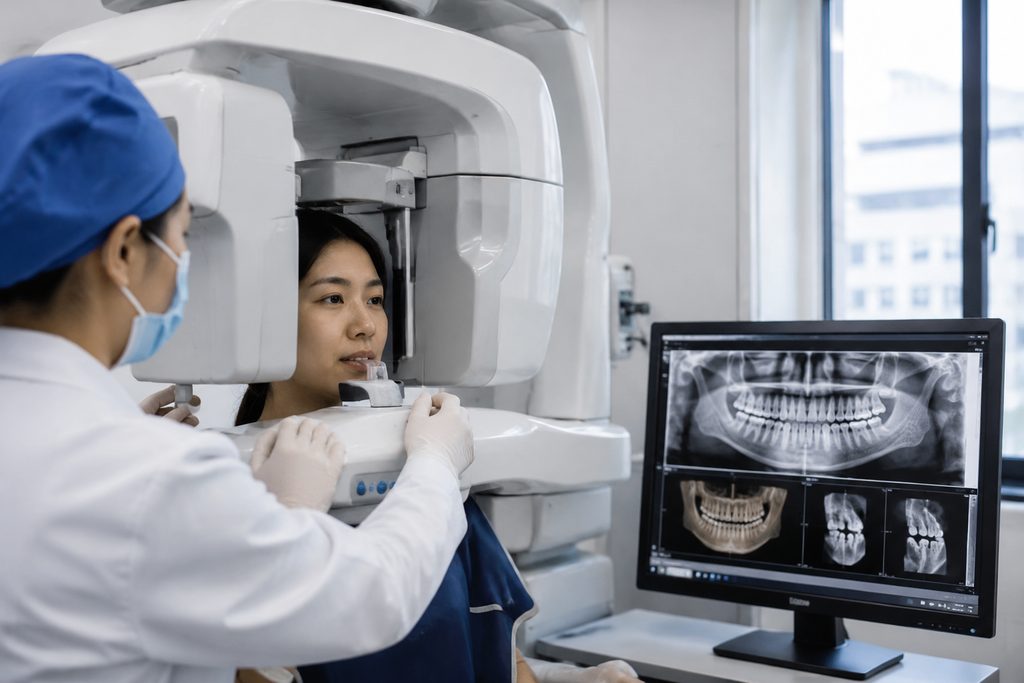
Key Takeaways
- A single periapical or bitewing X-ray at a Chinese public hospital typically runs 30–80 RMB (about $4–$11), while a full panoramic image costs roughly 100–300 RMB ($14–$42) — a fraction of US prices.
- Private international clinics in Beijing and Shanghai charge more, often $30–$120 per image, but offer English-speaking staff and same-week scheduling.
- Chinese dental radiology equipment at top-tier hospitals is overwhelmingly imported (Sirona, Planmeca, Carestream), and dose levels follow the same international safety standards used in Europe and North America.
- Walk-in care is possible at many public hospitals, but foreigners who want a guaranteed appointment and an English-speaking dentist usually need to plan ahead or use a coordination service.
The Problem: Dental Imaging Costs Are Quietly Draining Western Patients
Have you ever left a dental office in the United States or the UK with a bill that felt larger than the procedure itself?
You are not imagining it. A single panoramic dental X-ray in the United States commonly runs $100 to $150, and a full-mouth series can exceed $250 before insurance adjustments. In the UK, private dental radiographs typically cost £30 to £90 per image, and NHS dental X-rays are only free under specific exemption categories. For an uninsured patient or someone on a high-deductible plan, a routine check-up with imaging can easily cross $400.
That number matters more than most people realize. According to the CDC’s National Center for Health Statistics, roughly one in four American adults aged 20 to 64 has untreated tooth decay, and cost is consistently cited as a leading reason people skip dental visits. Delaying a $150 X-ray often means delaying a $200 filling — which becomes a $1,500 root canal, then a $4,000 implant. The financial logic of dental care punishes procrastination.
So when patients start researching dental care abroad, the first question is almost always the same: what does a dental x-ray cost China, and is it actually worth flying for?
Why China Delivers Real Value on Dental Imaging
The short answer is that China’s dental imaging prices sit at roughly 5–10% of US retail rates, without the quality gap that patients assume exists. Here is what that looks like in practice.
Equipment and Safety Standards That Match the West
If your worry is whether a machine in a Chinese clinic is safe, the answer is straightforward. Top-tier Chinese dental hospitals and international clinics overwhelmingly use the same imported equipment found in Western practices — Sirona Orthophos, Planmeca ProMax, Carestream CS 8100, and similar platforms. These are the exact models used in Germany, Japan, and the United States.
China’s radiation protection rules for medical imaging are set nationally by the Ministry of Ecology and Environment and enforced at the provincial level. Dental offices are required to use lead aprons and thyroid collars, and digital sensors have largely replaced film, which cuts radiation dose by 70–90% compared with older analog systems. A single digital bitewing delivers roughly 0.001 to 0.005 mSv — about the same as one hour of background radiation you would absorb on a transatlantic flight.
Volume Keeps Prices Low Without Cutting Corners
China trains more dentists per year than any other country, and its largest dental hospitals — such as the Peking University School and Hospital of Stomatology and the Ninth People’s Hospital affiliated with Shanghai Jiao Tong University — handle tens of thousands of outpatient visits annually. That throughput spreads equipment depreciation and staffing costs across a huge patient base.
Labor economics do the rest. A radiographer’s salary in Beijing is a fraction of a comparable role in Boston or London. The result is not a cheaper, worse X-ray — it is the same image produced at a structurally lower operating cost.
Cost Advantage That Holds Up Across the Full Treatment Chain
Imaging is only the entry point. A crown that costs $1,200–$2,000 in the US typically runs 2,000–5,000 RMB ($280–$700) at a Chinese public dental hospital. A single implant — including the CBCT scan, surgical placement, and abutment — commonly falls between 8,000 and 20,000 RMB ($1,100–$2,800), versus $3,000–$6,000 in the US. The savings on the X-ray itself are modest; the savings on what follows are not.
Dental X-Ray Price Shanghai vs. Beijing: A Real Comparison
Prices vary by hospital tier, imaging type, and whether you use a public dental hospital, a public hospital’s international department, or a private international clinic. The table below reflects typical 2025–2026 ranges. All figures are indicative and vary by hospital and case complexity.
| Imaging Type | Public Dental Hospital (Beijing/Shanghai) | Private International Clinic | Typical US Price |
|---|---|---|---|
| Single periapical X-ray | 30–60 RMB ($4–$8) | $30–$60 | $30–$75 |
| Bitewing series (4 films) | 80–150 RMB ($11–$21) | $60–$120 | $100–$200 |
| Panoramic (OPG) | 100–300 RMB ($14–$42) | $80–$180 | $100–$150 |
| Cone beam CT (CBCT) | 300–800 RMB ($42–$112) | $150–$400 | $250–$600 |
| Full-mouth series | 200–500 RMB ($28–$70) | $150–$300 | $200–$400 |
For a dental clinic x-ray Beijing cost comparison, the pattern is nearly identical to Shanghai. Public teaching hospitals cluster at the low end; international clinics at the high end. The gap between the two Chinese options is usually smaller than the gap between either of them and a Western dental office.
How to Book a Dental X-Ray Appointment in China as a Foreigner
This is where most foreign patients hit friction, and it is worth being honest about it.
Chinese public hospitals generally do not allow overseas patients to pre-book a routine outpatient slot from abroad. Registration happens on-site, often the same morning, and the queue starts early. Dental hospitals in Beijing and Shanghai can see thousands of outpatients per day. Without Mandarin, navigating registration, payment, and the imaging department is genuinely difficult.
There are three realistic paths:
- Walk-in at a public dental hospital. Cheapest option. Arrive before 7:30 a.m., bring your passport, and expect to spend half a day. Imaging is usually done the same visit.
- International department or VIP channel. Several top hospitals operate English-speaking international clinics. You can often schedule ahead, and pricing runs roughly 1.5–2x the standard channel. Still far below Western rates.
- Private international clinic. United Family, Jiahui, Parkway, and similar JCI-accredited facilities offer direct insurance billing, English-speaking dentists, and same-week appointments. Most expensive Chinese option, still competitive with US prices.
If you are combining dental work with a broader medical trip, our team can coordinate hospital selection across our database of 340+ top-ranked hospitals in 37 cities, and we can arrange a bilingual medical companion to handle registration, payment, and translation on the day.
Is Dental X-Ray in China Safe? Reading the Numbers
The honest answer: yes, at any accredited facility, for the same reason it is safe anywhere else — the dose is tiny and the equipment is regulated.
What matters is not the country but the specific clinic. Look for three things. First, a license displayed on the wall (all legal imaging facilities must hold a radiation safety permit). Second, digital sensors rather than film. Third, lead apron and thyroid collar offered without you asking.
If a clinic cannot show you a radiation safety permit, walk out. That rule applies in Chicago as much as in Chengdu.
One caveat worth stating plainly: dental X-rays are not a substitute for a full diagnostic workup. If you have a complex case — bone loss, suspected pathology, prior implant failure — a CBCT is usually the right call, and it costs more. A 300 RMB panoramic image will not answer every question.
Practical Considerations Before You Travel
Visa category matters. Medical treatment in China falls under the S2 visa, which covers short-stay private affairs including medical consultation and treatment. Accompanying family members apply under the same category. The M visa is for commercial and trade activities only — it is not a medical visa, and using it for treatment is a mistake. Requirements shift, so confirm the latest rules with your nearest Chinese embassy or consulate and bring supporting hospital documentation.
Payment is another practical point. Public hospitals generally require upfront payment and do not bill foreign insurance directly. Private international clinics often do. If you plan to claim reimbursement, request an itemized English-language receipt and a diagnosis note at the time of service — getting these retroactively is painful.
Records travel with you. Bring recent X-rays or a CBCT on a USB drive if you have them; Chinese dentists will happily review prior imaging and often skip repeat scans when the quality is adequate. That alone can save you money and radiation.
Finally, plan for follow-up. If you start a multi-stage treatment — implant, crown, orthodontics — confirm before you fly home how the remaining stages will be handled, whether remotely or on a return trip.
Frequently Asked Questions
Expect 30–80 RMB ($4–$11) for a single image at a public dental hospital and 100–300 RMB ($14–$42) for a panoramic. Private international clinics charge $30–$180 per image. Foreigners pay the same posted rates as Chinese citizens at public hospitals; the international department channel costs more but includes English service.
At public hospitals, yes — but expect queues and no English support. Registration is same-day and first-come. Private international clinics generally require an appointment and can usually schedule you within a week. If your schedule is tight, the private route is more reliable.
Most Western dental plans do not have direct billing arrangements with Chinese public hospitals. You will typically pay out of pocket and submit a claim afterward. Reimbursement depends entirely on your plan’s out-of-network policy. Private international clinics are more likely to work with international insurers directly.
No. Accredited Chinese facilities use the same imported digital equipment and follow comparable radiation protection rules. A digital bitewing delivers roughly 0.001–0.005 mSv — comparable to a few hours of natural background radiation. The clinic’s equipment and licensing matter far more than the country.
CBCT is widely available at Chinese dental hospitals and typically costs 300–800 RMB ($42–$112). It is the right choice for implant planning, impacted wisdom teeth, and suspected pathology. Bring any prior imaging you have — a good CBCT from home can often be reused.
Your Next Step
Dental imaging in China is inexpensive, safe at accredited facilities, and easy to arrange once you know which channel fits your case. The savings on the X-ray itself are real but modest; the savings on the treatment that follows are where the math gets serious.
We are China Medical Services — a coordination team, not a hospital, and we do not provide diagnoses. If you want help identifying the right dental hospital in Beijing, Shanghai, or another city, or arranging an English-speaking companion for your visit, you can start with a free consultation and we will walk you through the options at your own pace.
For more medical information and treatment options in China, visit chinamedservices.com (China Medical Services).
