EEG Monitoring Cost in China: What Foreign Patients Actually Pay
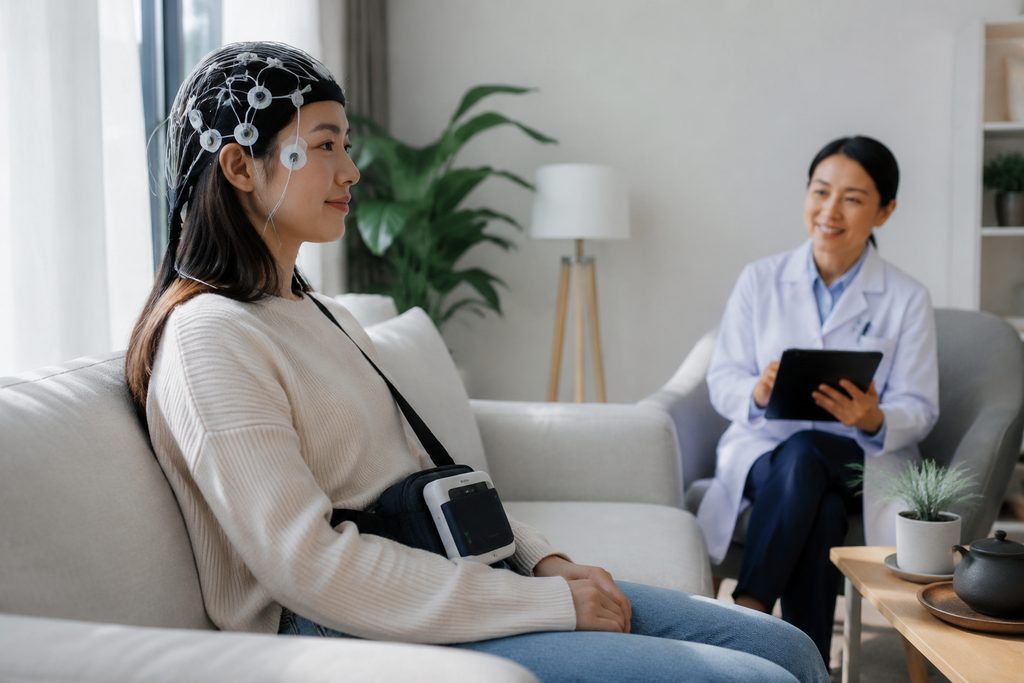
When 34-year-old Daniel from Melbourne started having episodes his neurologist called “suspicious but inconclusive,” he did what most people do: he opened a browser and typed the same question thousands of international patients type every month. What does an EEG actually cost in China, and is it worth flying there for one?
His first MRI in Australia had cost him $780 out of pocket. A 24-hour ambulatory EEG, he was told, would run closer to $1,400 with a private clinic — and the wait was five weeks. That’s the moment the search began. The EEG monitoring cost China comparison isn’t a niche curiosity anymore. It’s a real financial decision for people caught between a diagnosis they need and a price tag they can’t justify.
Here’s what we’ve learned from coordinating this exact test for patients across 37 cities and 340+ top-ranked hospitals.
How This Actually Works, Step by Step
An EEG in China is not a walk-in service you book from your laptop the way you’d book a hotel. The sequence matters, and skipping a step wastes money.
You start by sending us your existing records — the referral note, prior imaging, a summary of symptoms and episode frequency. A neurologist at the relevant Chinese hospital reviews those documents. What comes back is a written recommendation: which type of EEG is appropriate (routine 30-minute, sleep-deprived, or 24-hour ambulatory), which hospital department handles it, and a realistic cost estimate.
From there, you choose how far you want to go. A written second opinion costs $300–$500. A video consultation with the specialty team runs $100–$300 for a standard international department, or $500–$800 if you want a top-tier specialist. Only after that does travel make sense.
Once you commit, we handle registration, the hospital medical card, and appointment coordination — from $300. If we can’t secure the appointment we quoted, that fee is refunded in full.
Day of the test, a bilingual medical companion meets you at the hospital. They manage the queue, the payment window, the walk to the neurophysiology lab, and the translation. That’s from $300 per day.
What Drives the EEG Monitoring Cost in China
Let’s deal with the numbers directly, because vague answers waste everyone’s time.
A routine EEG at a major public tertiary hospital in Beijing or Shanghai typically falls between $150 and $350. A sleep-deprived EEG, which requires you to stay awake the night before and often involves a longer recording session, sits higher — roughly $250 to $450. A 24-hour ambulatory EEG, where you wear the electrodes home and return the next day, generally runs $400 to $600 at a top public hospital.
Private international hospitals — United Family, Jiahui, Parkway, Raffles — charge more. Expect $500 to $1,200 depending on recording length and whether a neurologist reads the results the same day. You’re paying for English-speaking staff, JCI-accredited facilities, and direct insurance billing.
| EEG Type | Public Tertiary Hospital | Private International Hospital | Typical US Price |
|---|---|---|---|
| Routine (30 min) | $150–$350 | $500–$700 | $800–$1,500 |
| Sleep-deprived | $250–$450 | $600–$900 | $1,200–$2,000 |
| 24-hour ambulatory | $400–$600 | $800–$1,200 | $1,400–$3,000 |
| Video EEG (multi-day) | $700–$1,500 | $1,500–$3,000 | $3,000–$8,000 |
Those figures vary by hospital and case complexity. They also exclude the neurologist’s interpretation fee, which is sometimes bundled and sometimes billed separately — usually $30 to $100. Ask before you book, because a $200 test with a surprise $150 reading fee isn’t a $200 test.
Is EEG Monitoring Safe in China?
This question comes up constantly, and it deserves a straight answer rather than reassurance.
An EEG is a passive recording. Electrodes on the scalp detect electrical activity in the brain. Nothing is injected, nothing is irradiated, no current enters your body. The procedure itself carries essentially no physical risk beyond minor scalp irritation from the adhesive. That’s true in Melbourne, Manchester, or Shanghai.
What patients are really asking is whether the equipment and the interpretation meet the standard they’d expect at home. At the hospitals in our network — the top 5% of China’s 35,000+ hospitals, ranked by Fudan University and JCI — digital EEG systems with video integration are standard. Many of these institutions handle thousands of epilepsy and sleep-disorder cases annually. Volume matters in neurophysiology. A lab that reads 40 EEGs a day catches patterns a low-volume clinic might miss.
Where the genuine friction lies is communication, not clinical quality. If you don’t speak Mandarin, navigating a hospital that sees 10,000+ outpatients daily is genuinely difficult. That’s a logistics problem, and it’s solvable.
How Much Does EEG Cost in Beijing vs. Shanghai?
Not much separates the two cities on price. Beijing tends to be marginally cheaper for routine studies because the concentration of top-tier public hospitals is higher — 21 Fudan Top 100 hospitals sit in Beijing, versus 18 in Shanghai. Competition keeps public pricing tight.
Shanghai edges ahead on convenience for international patients. More private international hospitals operate there, and the EEG test price at a Shanghai hospital’s international wing often includes English-language reporting as standard. You can browse the hospital listings by city on our Shanghai hospital guide to compare neurology departments directly.
If your case is complex — drug-resistant epilepsy, for instance — the specialty matters more than the city. China’s top neurology departments are concentrated in a handful of institutions, and the department rankings by specialty show which hospitals handle the highest volumes.
A Realistic Timeline
Patients consistently underestimate the front end. Here’s what the calendar actually looks like.
| Stage | Duration | What Happens |
|---|---|---|
| Record collection & translation | 3–7 days | You send reports; we translate and format for the Chinese neurology team |
| Written review / second opinion | 5–10 days | Specialist reviews records, recommends EEG type |
| Video consultation (optional) | 3–7 days to schedule | Live discussion of symptoms and plan |
| Appointment coordination | 1–3 weeks | Hospital registration, medical card, slot confirmation |
| Visa (S2, medical purpose) | 1–3 weeks | Requires hospital invitation documents; times vary by consulate |
| Travel & test | 2–5 days on the ground | Consultation, EEG, results review |
| Report delivery | 1–3 days after test | Translated report sent to you and your home physician |
Total realistic window from first contact to holding a result: four to eight weeks. Anyone promising a completed EEG in ten days is either skipping the visa stage or not being honest about appointment lead times.
What Can Go Wrong — and What Happens Then
The appointment doesn’t materialize. Public hospital neurology slots fill fast, and a quoted date can shift. Our coordination fee is refunded in full if we can’t secure what we quoted. That’s the recourse, and it’s written into the service terms.
The EEG comes back normal — and you still have symptoms. This happens more often than patients expect. A routine 30-minute EEG captures a snapshot; if your episodes are infrequent, it may miss them. The neurologist may then recommend a 24-hour ambulatory study or a multi-day video EEG. Budget for the possibility that one test isn’t enough.
Your visa is delayed. S2 processing times fluctuate by consulate and season. Build a two-week buffer into your travel plans. Never book non-refundable flights before the visa is in hand.
The results need interpretation your home doctor won’t accept. Occasionally a physician abroad wants raw data, not just a translated summary. Request the digital EEG files before you leave the hospital — it’s easier to obtain in person than by email three months later.
How to Evaluate Whether a Package Is Worth It
You’ll see “EEG medical tourism package China” offers floating around that bundle flights, hotel, and the test into one price. Some are legitimate. Many pad the EEG cost with services you don’t need.
Ask three questions. First, which hospital, by name, and is it in the Fudan Top 100 or JCI-accredited? Second, does the price include the neurologist’s interpretation and a translated written report, or just the recording? Third, who is physically with you at the hospital?
That third question separates real service from a booking engine. A hospital that processes 10,000 outpatients a day doesn’t have a concierge desk for foreign visitors. Someone has to stand in the registration line, navigate the payment system, and walk you to the right lab. If a package doesn’t name who does that, you’re paying for a PDF.
Our own model is deliberately unbundled. You can start with a written second opinion for $300–$500 and stop there. If you proceed to travel within 90 days, that consultation fee is credited in full toward the on-the-ground coordination service — a one-time credit applied to the coordination fee, never to hospital charges.
Practical Considerations: Records, Payment, and Follow-Up
You can arrange the evaluation remotely — records review, second opinion, and video consultation all happen before you fly. The EEG itself requires your physical presence. Appointment coordination can be locked in advance, but public hospital slots are confirmed subject to hospital scheduling rules.
The procedure carries no meaningful physical risk anywhere — it’s a passive recording with no injections or radiation. The real challenge for foreign patients is navigation and language inside very large hospitals. A bilingual medical companion addresses that directly.
Medical travel falls under the S2 short-stay category, with family companions applying under the same category. The M visa is for commercial activity and is not applicable. Always confirm current requirements with your nearest Chinese embassy or consulate.
That’s a common outcome and not a dead end. Your neurologist may recommend a longer recording — ambulatory or video EEG — or additional testing. Budget for the possibility that diagnosis takes more than one study, and discuss next steps with a qualified physician.
Your Next Step
The core message is simple: an EEG in China costs a fraction of Western pricing, and the clinical quality at top-ranked hospitals is genuinely strong. The hard part isn’t the test. It’s the logistics around it.
We’re China Medical Services — a coordination team, not a clinic. We don’t diagnose, we don’t treat, and we don’t promise outcomes. We connect you with the right hospital, translate your records, and make sure someone is standing beside you when you walk through the door.
If you’d like a realistic cost estimate for your specific case, start with a free consultation. No pressure, no obligation — just a clear picture of what’s possible.
This article is for general information only and does not constitute medical advice. Always consult a qualified physician about your individual condition and treatment options.
Frequently Asked Questions
Yes. The hospitals used for international patients are JCI-accredited and follow the same international safety standards as top hospitals in the US and Europe. Surgical teams perform high volumes of procedures — often more than their Western counterparts — which studies show leads to better outcomes.
Costs vary by procedure and hospital, but international patients typically save 40-80% compared to US prices — even when factoring in travel and accommodation. A consultation with our team will give you an exact, all-inclusive quote with no hidden fees.
Send us your existing medical reports to get started. We handle everything from hospital selection and appointment scheduling to visa assistance and post-operative recovery planning. Your medical records are reviewed by the specialist before you even book a flight.
For more medical information and treatment options in China, visit chinamedservices.com (China Medical Services).
