Cervical Fusion Surgery Cost in China: 2025 Price Guide & Top Hospitals
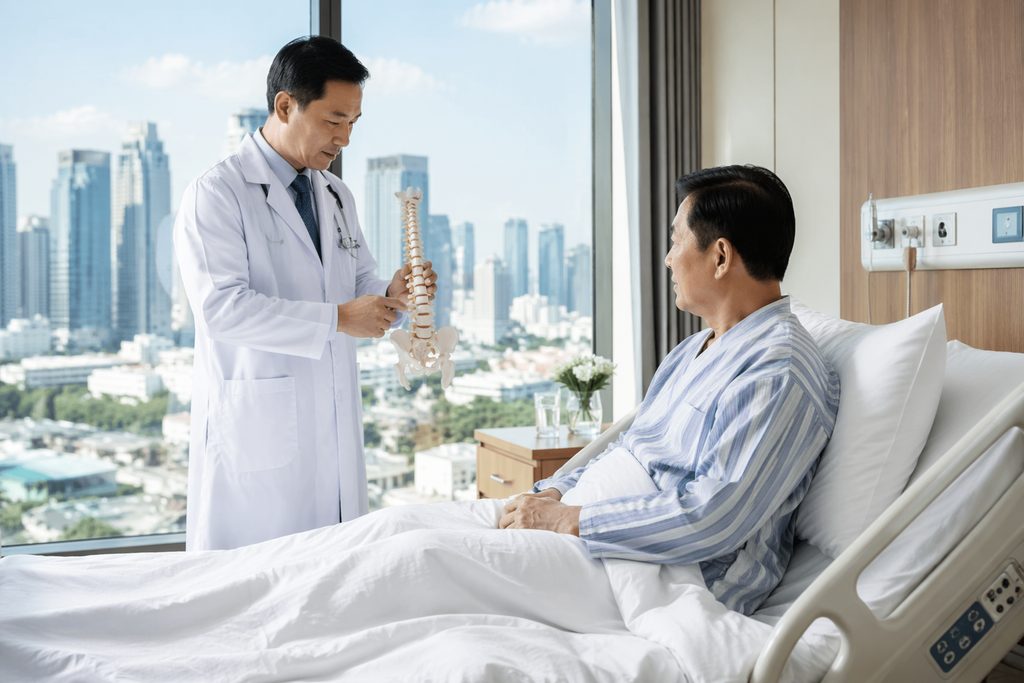
When 47-year-old Daniel from Oregon was told he needed a two-level cervical fusion, the quote from his local hospital came back at $94,000 before insurance adjustments. His employer’s high-deductible plan would leave him responsible for roughly $18,000. A colleague mentioned that the same procedure abroad might cost a fraction of that. Daniel started searching, and within a week he was comparing quotes from Seoul, Istanbul, and Shanghai.
What he found is what most Western patients find: the cervical fusion surgery cost in China at a top-tier public hospital typically falls between $8,000 and $22,000, all-in. That includes surgeon fees, hospital stay, implants, and imaging. The same procedure at a private international hospital in Beijing or Shanghai runs higher — often $25,000 to $40,000 — but comes with English-speaking staff and direct insurance billing.
Those numbers are real. They are also incomplete. The final figure depends on how many levels are fused, whether you need a corpectomy or just a discectomy, which implant system the surgeon uses, and whether you go through the standard public channel or the international department. This article breaks down every variable so you can decide whether China is the right choice for your situation.
Cervical Fusion Surgery Cost China: The Short Answer
At a top-ranked Chinese public hospital — the kind that appears on the Fudan Hospital Rankings — a single-level anterior cervical discectomy and fusion (ACDF) generally costs between $8,000 and $14,000. A two-level fusion runs $12,000 to $18,000. Three levels or more, or a posterior approach with instrumentation, can reach $20,000 to $22,000.
For comparison, the same single-level ACDF in the United States averages $75,000 to $110,000 before insurance. In the UK, private rates sit around £18,000 to £25,000 ($23,000–$32,000). Germany is similar. So the China price represents roughly a 75–85% reduction from US list prices.
Here is the caveat that matters: those figures assume you go through the standard public hospital channel. That means you queue for registration, see the surgeon in a regular clinic, and wait for a surgical slot. If you want to lock in a specific surgeon and a specific date before you fly, you need the international department or VIP channel. That roughly doubles the cost — but it is still far below Western prices.
Who This Is Right For — and Who It Isn’t
Cervical fusion in China makes sense for a specific type of patient. It is not for everyone.
You are likely a good candidate if:
- You have a confirmed diagnosis of cervical radiculopathy or myelopathy with clear imaging (MRI, CT) showing nerve compression or cord signal change.
- Your surgeon at home has recommended fusion, or you have tried conservative treatment for 6–12 weeks without adequate relief.
- You are paying out of pocket or have a high deductible, and the US or European quote exceeds what you can reasonably absorb.
- You are medically stable enough to fly (typically 10–14 hours from North America, 10–12 from Europe).
- You can arrange 2–3 weeks in China for surgery and early recovery, plus follow-up imaging before you fly home.
You should probably not pursue this if:
- You have severe osteoporosis, active infection, or uncontrolled diabetes — these raise fusion failure risk regardless of where you have surgery.
- You need emergency decompression. If you have progressive weakness or bowel/bladder changes, go to the nearest ER. Do not book a flight.
- You cannot tolerate general anesthesia or have significant cardiac/pulmonary contraindications.
- You expect a US-style private room with a nurse assigned to you alone. Chinese public hospitals are busy. The care is excellent, but the environment is not a Western boutique hospital.
- You cannot manage without full-time English translation. Very few public hospital staff speak fluent English. This is where a bilingual medical companion becomes essential, not optional.
The Options, Compared
Here is how the main pathways stack up. Prices are in USD and reflect 2025 ranges for a single-level ACDF unless noted.
| Pathway | Typical Cost (Single-Level) | Wait Time | English Support | Insurance |
|---|---|---|---|---|
| US hospital (in-network) | $75,000–$110,000 | 2–8 weeks | Full | Billed to insurer; patient pays deductible |
| US hospital (out-of-network) | $90,000–$140,000 | 1–4 weeks | Full | Partial reimbursement, higher patient share |
| UK private | £18,000–£25,000 ($23k–$32k) | 2–6 weeks | Full | Self-pay or private insurance |
| China public hospital (standard channel) | $8,000–$14,000 | 1–3 weeks after in-person consult | Limited; interpreter needed | Prepay; reimbursement varies by insurer |
| China public hospital (international dept.) | $16,000–$28,000 | Can be pre-arranged | Yes | Prepay; some insurers reimburse |
| China private international hospital | $25,000–$40,000 | Can be pre-arranged | Yes | Direct billing with select insurers |
| India (Apollo, Fortis) | $5,000–$9,000 | 1–2 weeks | Yes | Self-pay |
| Turkey (accredited hospitals) | $8,000–$15,000 | 1–2 weeks | Yes | Self-pay |
The column that matters most depends on your priorities. If cost is the only driver, India is cheaper. If you want the shortest flight and a familiar healthcare culture, Turkey or Europe may suit you. China sits in a middle zone: significantly cheaper than the West, more expensive than India, but with a concentration of high-volume spine centers that perform thousands of fusions annually. That volume matters for outcomes.
Why China’s Top Spine Centers Are Worth Considering
China performs an estimated 400,000+ cervical spine surgeries each year. The busiest centers — including those affiliated with Peking University, Fudan University, and Sichuan University — handle hundreds of ACDFs per surgeon annually. High volume correlates with fewer complications, shorter operative times, and better fusion rates. This is not marketing. It is surgical reality.
Several Chinese hospitals rank among the world’s largest by surgical throughput. Fuwai Hospital in Beijing, for example, performs over 14,000 cardiac surgeries a year — a volume that no US hospital approaches. The same principle of concentrated expertise applies to spine surgery at centers like West China Hospital in Chengdu and Zhongshan Hospital in Shanghai.
What does this mean for you? If you choose a high-volume center, your surgeon has likely performed the exact procedure you need hundreds of times. That is a meaningful safety factor. You can explore ranked hospitals by specialty on our department rankings page, which lists the top 10 hospitals for orthopedics and spine surgery based on the Fudan Specialty Reputation Survey.
What Drives the Price Up or Down
Two patients can have the same diagnosis and receive quotes that differ by $10,000. Here is why.
Number of levels fused. A single-level ACDF is the baseline. Each additional level adds roughly $3,000–$5,000 in implants, OR time, and hospital days.
Approach. Anterior (front of neck) is standard and cheaper. Posterior fusion with screws and rods is more complex and costs 30–50% more.
Implant choice. Titanium cages and plates are standard. Some surgeons use PEEK cages or zero-profile devices, which can add $2,000–$4,000. Ask what is included.
Hospital tier. A top-tier public hospital in Beijing or Shanghai charges more than a provincial hospital, but the expertise gap is real. Do not optimize purely on price.
Channel. Standard public channel is cheapest but requires in-person registration and waiting. International department or VIP channel lets you pre-book but costs 1.5–2x more.
Practical Considerations: Visas, Records, and Recovery
Visa. Foreign patients coming to China for medical treatment typically use the S2 visa, which covers short-term medical treatment and private affairs. If your treatment plan requires a stay exceeding 180 days, S1 applies. Accompanying family members also apply for S2. The M visa is for commercial and trade activities only — it is not a medical visa. Requirements change, so confirm the latest rules with your nearest Chinese embassy or consulate and bring your hospital’s invitation letter and treatment summary.
Medical records. Before any Chinese hospital will schedule surgery, they need your imaging (MRI and CT on disc or via secure upload), radiology reports, and a recent clinical note. Without these, no surgeon can give you a real opinion. Our team helps translate and format these documents so the Chinese specialist can review them efficiently.
Payment. Public hospitals require prepayment. International credit cards are accepted at larger hospitals, but you may need to arrange a bank transfer for larger sums. Private international hospitals often bill insurance directly. Check with your insurer before you travel — most US plans reimburse foreign emergency care but not elective surgery.
Language. This is the single biggest practical hurdle. A bilingual medical companion costs from $300 per day and handles registration, queueing, payment, translation, and navigation. For a surgical trip, budget 5–10 days of companion time. It is not a luxury; it is the difference between a smooth process and a stressful one.
Follow-up. You will need imaging and a wound check before flying home, typically 10–14 days post-op. Your Chinese surgeon will provide a discharge summary and imaging that your local doctor can use for ongoing care. Arrange that handoff before you leave.
Frequently Asked Questions
At high-volume, top-ranked hospitals, yes — complication rates are comparable to Western centers. The key variable is the hospital and surgeon, not the country. A 300-bed provincial hospital and a 5,000-bed academic medical center are not the same. Stick to hospitals on the Fudan rankings or JCI-accredited international hospitals. Also confirm that your surgeon performs at least 100 cervical fusions per year.
Prices are similar. A single-level ACDF at a top public hospital in either city runs $8,000–$14,000 through the standard channel, or $16,000–$28,000 through the international department. Beijing has more top-ranked hospitals overall (21 on the Fudan Top 100), while Shanghai has 18. The difference in price is negligible; the difference in surgeon preference and wait time may matter more. You can compare hospitals by city on our top hospitals directory.
You can book a consultation, not the surgery itself. Chinese public hospitals require an in-person examination before scheduling an operation. The workaround is the international department or VIP channel, where you can pre-arrange the consultation and often get a surgery date within days of arrival. Private international hospitals are more flexible. Either way, no reputable hospital will guarantee a surgery date before seeing you and reviewing your imaging.
A legitimate package typically includes hospital registration, surgeon consultation, pre-op imaging and labs, the surgery itself, implants, hospital stay (3–7 days for ACDF), medications, and a discharge summary. It usually does not include flights, hotel, meals, airport transfers, or a bilingual companion. Some packages bundle these; read the inclusions carefully. Our companion service page explains what we coordinate and what remains your responsibility.
This is the question every patient should ask. Your Chinese hospital will provide a discharge summary, operative report, and imaging. Give these to your local physician before you travel home. If a complication arises — infection, hardware issue, persistent pain — your local doctor can manage it, and you can request a remote consultation with your Chinese surgeon. No surgeon, in any country, can guarantee a perfect outcome. Plan for follow-up on both ends.
Your Next Step
The cervical fusion surgery cost in China is genuinely lower — often 75–85% below US list prices — but the decision is not purely financial. Surgeon volume, hospital tier, language support, and follow-up logistics all shape your outcome. Get those right, and China becomes a serious option. Get them wrong, and you save money on paper while adding risk.
We are China Medical Services. We are not a hospital and we do not provide diagnoses. What we do is connect international patients with the right Chinese specialists, coordinate appointments through official international departments, and provide bilingual support on the ground. If you have imaging and a surgical recommendation, we can help you get a written second opinion from a top Chinese spine center before you commit to anything. Start with a free consultation — no pressure, no obligation, just clarity.
For more medical information and treatment options in China, visit chinamedservices.com (China Medical Services).
