Tonsil Surgery Cost in China: What Foreigners Really Pay in 2026
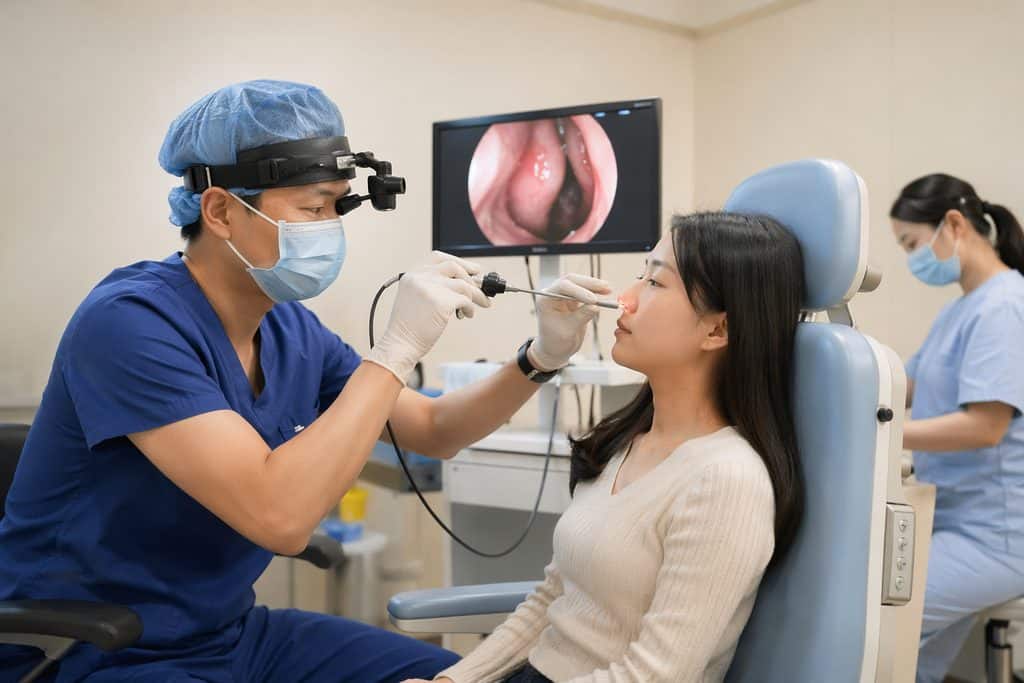
Tonsil Surgery Cost in China: What Foreigners Actually Pay in 2026
What if the procedure your ENT specialist quoted at $8,000 back home could be done in a Chinese tertiary hospital for a fraction of that — with a surgeon who performs hundreds of tonsillectomies a year? That question is exactly why so many international patients now look up the tonsil surgery cost China figure before booking anything. The short answer: at a top public hospital, a standard tonsillectomy typically runs $1,500 to $3,500 all-in, while a private international hospital lands closer to $4,000 to $8,000. The long answer involves which city, which hospital tier, and how complex your case is.
We coordinate medical travel for international patients across 340+ top-ranked hospitals in 37 cities. This guide lays out the real numbers, the honest risks, and the logistics nobody warns you about.
How This Actually Works, Step by Step
Here is the sequence, from your first email to your flight home. No fantasy shortcuts — this is how the system genuinely operates.
Step 1 — You send your records. Recent ENT examination notes, a scope report if you have one, history of recurrent tonsillitis or sleep apnea, and any prior imaging. We translate these into Chinese and route them to the relevant otolaryngology (ENT) department.
Step 2 — A written second opinion comes back. A Chinese ENT specialist reviews your file and confirms whether surgery is even indicated. This matters. Plenty of adults are told they need a tonsillectomy when watchful waiting or medical management would do.
Step 3 — Video consultation. If surgery looks reasonable, you speak online with the specialty team. You explain your symptoms and goals; they explain the approach, the anesthesia plan, and the realistic recovery timeline.
Step 4 — Appointment coordination. We help register you, create the hospital medical card, and book the in-person consultation. Note the rule that surprises people: at most public hospitals, surgery cannot be scheduled until a doctor examines you face to face. The pre-operative consultation is mandatory.
Step 5 — Travel and treatment. You arrive, attend the consultation, complete pre-op tests, and — assuming the surgeon confirms the plan — the procedure is scheduled, usually within days.
Breaking Down the Tonsil Surgery Cost in China
Prices vary by hospital tier, city, and case complexity. Here is a realistic comparison for an adult tonsillectomy without complications.
| Setting | Typical Total Cost (USD) | What’s Included |
|---|---|---|
| Top public tertiary hospital (Beijing, Shanghai, Guangzhou) | $1,500 – $3,500 | Surgeon fees, anesthesia, 2–4 night stay, medications, basic follow-up |
| Public hospital international/VIP department | $3,000 – $6,000 | English-speaking staff, faster scheduling, private room |
| Private international hospital (JCI-accredited) | $4,000 – $8,000 | Western-style care, direct insurance billing, English throughout |
| United States (for comparison) | $8,000 – $15,000+ | Varies wildly by state and insurer |
That gap is not a marketing trick. It reflects lower physician fees, subsidized public hospital infrastructure, and shorter administrative overhead. The trade-off is real too: public hospitals are enormous, crowded, and almost entirely Chinese-speaking at the general outpatient level. That is precisely where a bilingual companion earns their keep.
A Realistic Timeline
Surgery is rarely the bottleneck. Paperwork and scheduling are. Here is a grounded schedule.
| Stage | Timeframe | Notes |
|---|---|---|
| Records translation and review | 3–7 days | Faster if your reports are already in English and legible |
| Written second opinion returned | 5–10 days | Depends on department workload |
| Video consultation scheduled | 1–2 weeks | Top specialists book out further |
| S2 visa application | 1–3 weeks | Processing time varies by embassy; apply early |
| Flight and accommodation | Flexible | Book after the visa is in motion |
| Arrival to in-person consultation | 1–3 days | Pre-op tests often same week |
| Surgery and hospital stay | 2–4 nights | Typical adult tonsillectomy |
| Recovery before flying home | 7–14 days | Surgeon’s clearance required |
Add buffer. Nobody should book a return flight for day three after a tonsillectomy.
What Can Go Wrong — and What Happens Then
Honesty here matters more than reassurance.
The hospital says no. Sometimes the ENT team reviews your file and decides surgery is not appropriate, or that a different workup is needed first. That is a legitimate outcome, not a failure. You have still received a specialist opinion for a few hundred dollars.
The appointment can’t be secured. Top specialists are busy. If we cannot arrange the consultation you requested, the coordination fee is refunded in full. We do not promise a specific surgeon or a specific surgery date — we promise to try, and to be straight with you if it doesn’t work.
Complications arise. Post-tonsillectomy bleeding is the classic risk, occurring in roughly 2–5% of cases. Chinese tertiary hospitals handle this routinely, but you need to be reachable and to understand the aftercare instructions. This is a strong argument for having a bilingual companion during your stay.
Insurance won’t reimburse. Public hospitals require prepayment; you claim reimbursement afterward. Private international hospitals often bill insurers directly. Confirm your policy’s overseas coverage before you commit.
Never assume your home insurance covers treatment in China. Call them. Get it in writing.
Choosing a Hospital: Beijing vs. Shanghai and Beyond
If you are searching for the best hospital for tonsillectomy in Shanghai, you are looking at one of China’s two densest clusters of top-tier ENT departments. Beijing has 21 hospitals on the Fudan Top 100 list; Shanghai has 18. Both cities offer public tertiary hospitals with high surgical volumes and private international options with English-speaking staff.
For a broader view of what is available, our directory of Fudan-ranked hospitals by city groups facilities by tier, and the specialty rankings page lists the top ENT departments nationwide.
So how much does tonsil removal cost in Beijing versus elsewhere? Beijing and Shanghai sit at the top of the range — expect $2,000–$3,500 at a public tertiary hospital. Second-tier cities like Chengdu, Hangzhou, or Wuhan often come in 20–30% lower for equivalent surgical quality, though English support may be thinner.
Private options such as United Family, Jiahui, and Parkway offer a smoother experience at roughly double the public price. For families with children or patients anxious about language barriers, that premium is often worth it.
Is Tonsil Surgery Safe in China for Foreigners?
This is the question that keeps people up at night, and it deserves a direct answer.
Chinese tertiary hospitals perform tens of thousands of ENT procedures annually. Surgical technique, anesthesia protocols, and infection control at the top tier meet international standards, and many facilities hold JCI accreditation. The clinical safety profile is comparable to Western hospitals.
The real risk is not surgical — it is logistical. If you cannot communicate, you cannot report a symptom, ask about a medication, or understand discharge instructions. That is the gap that catches people out.
Our bilingual medical companion service exists to close it: queueing, registration, payment, translation, and accompaniment throughout. Companion support starts from $300 per day.
Practical Considerations: Records, Visas, and Payment
Visa. Foreigners coming to China for medical treatment apply for the S2 visa, annotated for medical purposes. Stays beyond 180 days use S1. Accompanying family members apply for S2 as well. The M visa is for commercial and trade activities only — it is not a medical visa, despite what some outdated blogs claim. Requirements shift, so verify with your nearest Chinese embassy or consulate and bring supporting hospital documents.
Records. Bring originals and translations. A scope report, blood work, and any allergy documentation save days.
Payment. Public hospitals: prepay, then claim. Private international hospitals: often direct insurance billing.
Language. Assume nothing is in English at the general outpatient level. Plan accordingly.
Follow-up at home. Arrange a local ENT review before you fly back. Your Chinese surgeon can provide a discharge summary in English.
Frequently Asked Questions
A standard adult tonsillectomy at a top Chinese public hospital typically costs $1,500–$3,500, versus $8,000–$15,000 or more in the United States. Private international hospitals in China run $4,000–$8,000. Final pricing depends on hospital tier, city, and case complexity.
Not directly at a public hospital. Chinese public hospitals generally require an in-person consultation before surgery can be scheduled. You can, however, obtain a written second opinion and a video consultation in advance, which clarifies whether surgery is appropriate and prepares your case. For a broader overview of how this works, see our main site.
Clinically, yes — top-tier Chinese hospitals meet international surgical standards, and many hold JCI accreditation. The practical risk is communication. Without language support, managing symptoms, medications, and aftercare becomes genuinely difficult. A bilingual companion mitigates most of that risk.
You need an S2 visa annotated for medical treatment. Accompanying family members also apply for S2. The M visa is strictly for commercial and trade purposes and does not apply to medical travel. Always confirm current requirements with your nearest Chinese embassy or consulate.
Be cautious. Genuine all-inclusive packages exist mainly through private international hospitals. Public hospital pricing is itemized, and the final bill depends on your actual length of stay and any complications. Treat any fixed quote as an estimate, and confirm exactly what is and isn’t covered.
Your Next Step
The core message is simple: tonsil surgery in China can cost a fraction of Western prices, and the clinical quality at top hospitals is genuinely strong — but the logistics require real planning. We are China Medical Services, a coordination team that connects international patients with 340+ top-ranked hospitals across 37 cities. We are not doctors, and we do not provide medical advice or guarantee outcomes. If you want to know whether your case fits, start with a free consultation and a written second opinion before committing to anything.
For more medical information and treatment options in China, visit chinamedservices.com (China Medical Services).
