Cosmetic Care in China or Thailand? A 2026 Cost and Safety Guide
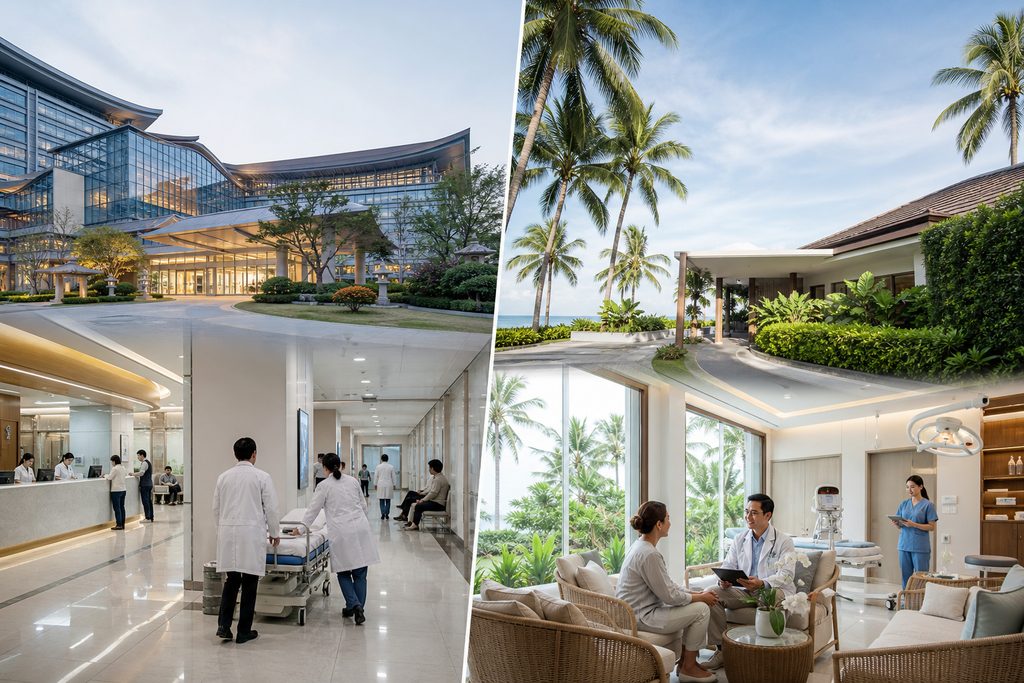
Cosmetic Care in China or Thailand? A 2026 Cost and Safety Guide
Have you ever stared at two quotes for the same procedure — one from Bangkok, one from Shanghai — and wondered which number actually reflects what you’ll get? When patients ask us to compare cosmetic surgery cost China vs Thailand, the honest answer is that the two countries compete on very different terms. Thailand wins on price for many body and facial procedures. China wins on hospital depth, complex revision work, and access to top-tier academic medical centers.
Neither is automatically “safer.” Both have excellent clinics and both have operators you should walk away from. What separates a good outcome from a bad one is rarely the country. It’s the specific surgeon, the specific facility, and how carefully the case was screened before anyone touched a scalpel.
Cosmetic Surgery Cost China vs Thailand: The Short Answer
For straightforward procedures — rhinoplasty, blepharoplasty, liposuction, breast augmentation — Thailand is usually 15–35% cheaper than China at comparable quality levels. A primary rhinoplasty in Bangkok often runs $2,500–5,000. The same operation at a reputable Shanghai or Beijing clinic typically lands between $4,000–9,000. For complex revision surgery, craniofacial work, or reconstruction after trauma or cancer, China’s top public hospitals frequently offer capabilities that simply aren’t available in most Thai private clinics — and at prices still well below Western rates.
So the real question isn’t “which country is cheaper.” It’s “which country has the right surgeon for my specific face, body, and medical history.”
Who This Is Right For — and Who It Isn’t
Medical tourism for cosmetic procedures suits some travelers and quietly harms others. Being clear about the line matters more than any price table.
Typically a reasonable fit:
- Healthy adults with a stable weight and no uncontrolled chronic disease
- Patients seeking a well-defined primary procedure with realistic expectations
- Travelers who can stay in-country for the full recovery window — usually 10–21 days
- People willing to do a remote consultation and share full medical records beforehand
- Those who understand that revision rates exist everywhere and budget for the possibility
Usually better served at home:
- Anyone with uncontrolled diabetes, clotting disorders, or active cardiac disease
- Patients whose primary goal is psychiatric rather than surgical — body dysmorphic concerns don’t resolve with an operation
- People who cannot arrange adequate follow-up after returning home
- Travelers hoping to combine a major procedure with a sightseeing vacation in the first two weeks
- Anyone being pressured by a package deal that skips the consultation stage
If you fall into the second list, staying home is not a compromise. It’s the correct medical decision.
The Options, Compared
Here’s how the two destinations stack up on the factors patients actually weigh.
| Factor | China (top public & international hospitals) | Thailand (Bangkok private clinics) |
|---|---|---|
| Primary rhinoplasty | $4,000–9,000 | $2,500–5,000 |
| Double eyelid surgery | $1,500–4,000 | $1,000–2,500 |
| Breast augmentation | $5,000–11,000 | $3,500–7,000 |
| Complex revision / reconstruction | Strong — academic centers with craniofacial and microsurgery teams | Limited outside a handful of hospitals |
| English-language service | Reliable at international departments; patchy elsewhere | Generally strong in medical-tourism clinics |
| JCI-accredited facilities | Available, concentrated in major cities | Widely available in Bangkok |
| Typical stay required | 14–21 days | 10–14 days |
| Visa route for treatment | S2 (short stay) or S1 (over 180 days) | Standard tourist or medical visa |
Which column fits you? If your case is a first-time, single procedure and price is the deciding factor, Thailand’s private clinics are hard to beat. If your case involves prior failed surgery, structural reconstruction, or a need for hospital-grade anesthesia and intensive care backup, China’s large academic hospitals carry capabilities that most standalone clinics cannot match.
Is Cosmetic Surgery Safe in China? What the Standards Actually Look Like
This is the question international patients ask us most often, and it deserves a straight answer. China’s top-tier public hospitals operate under the same regulatory framework as its other specialty departments — national hospital grading, mandatory surgeon credentials, and standardized anesthesia protocols. Aesthetic surgery performed inside a Grade 3A hospital shares the operating rooms, blood banks, and ICU support of that institution. That infrastructure is a genuine safety asset.
The risk sits elsewhere: in small, unregulated “beauty clinics” that advertise aggressively online. China has cracked down on illegal aesthetic practices repeatedly, which tells you the problem exists. The same is true in Thailand. In both countries, the facility matters more than the country label.
For patients who want to understand the broader hospital landscape, our overview of China’s top-ranked hospitals by city shows which institutions carry the highest official tier ratings.
Finding the Best Plastic Surgery Clinic in Shanghai and Beyond
Shanghai has become the default entry point for international patients seeking aesthetic procedures in China, and for good reason. The city concentrates several Grade 3A hospitals with dedicated plastic and reconstructive surgery departments, plus international medical centers with English-speaking coordinators.
But “best plastic surgery clinic Shanghai” is a search term that returns a lot of paid advertising. A more reliable approach is to look at department-level rankings. China’s Fudan Hospital Rankings evaluate 45 specialties individually, and plastic surgery is one of them. Hospitals appearing in the specialty reputation list have been assessed by peer physicians — not by marketing budgets.
Beijing and Guangzhou also host strong programs. Beijing skews toward reconstructive and craniofacial work because of its concentration of academic medical centers. Guangzhou serves many patients from Southeast Asia and has a well-developed private international sector.
One structural fact surprises most foreign patients: public hospital outpatient appointments generally cannot be booked from overseas in advance. You queue on the day. If you want to lock in a specific senior surgeon and a surgical date before you fly, you go through the hospital’s international or VIP department — where prices run roughly 1.5 to 2 times the standard channel. That premium buys scheduling certainty and English-language coordination, not better surgery.
How Much Does Rhinoplasty Cost in Thailand — and What Changes the Number
A primary rhinoplasty in Thailand commonly falls between $2,500 and $5,000 at reputable Bangkok clinics, with well-known surgeons charging at the upper end or above. Revision rhinoplasty costs more — often $5,000–9,000 — because it requires cartilage grafting and considerably more operating time.
What drives the variance? Surgeon reputation, whether the case is primary or revision, whether rib or ear cartilage is harvested, the type of anesthesia, and the length of the hospital stay. Package pricing sometimes bundles hotel and transfers but excludes revision surgery or extended recovery care. Read what’s excluded before comparing totals.
China’s pricing follows similar logic but at a higher base. A top public hospital in Shanghai might quote $4,000–9,000 for primary rhinoplasty, with revision cases reaching $10,000 or more at the most sought-after departments.
How to Book a Cosmetic Surgery Package in China Without the Guesswork
Packages sold online often compress the most important step — evaluation — into a form. That’s backwards.
A sound process looks like this. You send your existing photographs and medical records. The relevant specialty reviews them and gives you a written assessment: whether the procedure is appropriate, what technique is likely, what the realistic outcome range is, and what it costs. Only after that do you discuss travel dates.
Our specialty-by-specialty hospital directory lets you see which institutions rank highest in plastic and reconstructive surgery before you commit to anything. For patients weighing both destinations, the same evaluation step applies — a Bangkok clinic and a Shanghai hospital should both be willing to review your records before quoting.
Practical Considerations: Visas, Payment, and Follow-Up
If you’re traveling to China for treatment, the applicable visa category is S2 — the short-stay visa used for medical treatment and private affairs, typically valid for stays under 180 days. Stays exceeding 180 days fall under S1. Accompanying family members apply under the same S2 category. Requirements shift, so confirm current documentation with the nearest Chinese embassy or consulate and secure your hospital’s supporting letter before applying.
A common and costly mistake: the M visa is a commercial and trade visa. It has nothing to do with medical treatment. Don’t apply for it.
Payment works differently across facility types. Public hospitals generally require prepayment, with insurance reimbursement handled afterward in your home country. Private international hospitals in China often bill insurers directly. Most cosmetic procedures are elective and therefore excluded from standard travel insurance — check your policy carefully, and consider complication coverage separately.
Language is the practical hurdle people underestimate. China’s leading hospitals see thousands of outpatients daily. Signage, registration systems, and staff communication are predominantly in Chinese. Without support, even finding the correct department can consume a full morning.
Follow-up matters too. Plan how your sutures will be reviewed, how complications will be assessed, and who you’ll contact if something looks wrong three weeks after you’re home. Ask the operating surgeon this question directly, and get the answer in writing.
Frequently Asked Questions
Both countries have excellent facilities and both have unsafe ones. Safety tracks the individual surgeon and the specific hospital’s accreditation and emergency infrastructure — not the national flag. Verify credentials and facility grade independently before committing.
Thailand is generally cheaper for comparable primary procedures, often by 15–35%. China becomes competitive when your case is complex, requires hospital-grade support, or involves revision work that only a few centers can handle.
In China, standard public hospital outpatient appointments usually cannot be reserved from abroad — you attend in person first. Securing a specific surgeon and surgical date in advance generally requires the hospital’s international or VIP department, at roughly 1.5–2 times standard pricing.
This is the most under-planned part of medical travel. Establish your follow-up plan before surgery, confirm who reviews your recovery remotely, and understand that revision surgery — if needed — means another trip. Budget for that possibility rather than assuming it away.
Your Next Step
The country comparison is the easy part. The hard part is finding the right surgeon for your specific case and confirming it before you book a flight. A remote written assessment usually costs far less than a wasted trip.
We are China Medical Services — a coordination service, not a hospital and not a provider of medical advice. Our team connects international patients with appropriate departments at top-ranked Chinese hospitals, arranges record review and consultations, and supports bilingual accompaniment once you arrive. We don’t diagnose, and we don’t promise outcomes.
If you’d like a second opinion on your options before deciding between destinations, you can start with a free consultation. No pressure, no obligation — just a clearer picture of what’s realistic.
This article is for general information only and does not constitute medical advice. Cosmetic procedures carry risks, and individual suitability varies. Consult a qualified, licensed physician in your jurisdiction before making any treatment decision.
For more medical information and treatment options in China, visit chinamedservices.com (China Medical Services).
